TL;DR Manufacturing server racks and electrical enclosures involves cutting cabinet panels, mounting plates, ventilation openings, and other sheet metal components. Fiber laser cutting offers flexibility for complex contours, multiple hole patterns, and frequent product changes. Choosing the right machine requires evaluating working area, laser power, material thickness, production requirements, and overall operating costs.
Key Takeaways
- Adaptable to Complex Hole Patterns: Laser cutting is suitable for ventilation openings, mounting holes, cable routing holes, and various irregular sheet metal contours.
- Improved Production Flexibility: Eliminates the need to build dedicated punching dies for every cutting contour, making it ideal for high-mix, low-volume production and frequent product changeovers.
- Focus on the Complete Workflow: Cutting dimensions, hole positioning, and cutting edge quality directly impact downstream bending, welding, and assembly efficiency.
- Select Equipment by Part Size: Working area, material type, thickness range, and production cycle time should be evaluated together during machine selection.
- Matching Diverse Production Needs: Baison’s EC3 and M13 offer different working areas and power configurations to suit specific part dimensions and manufacturing requirements.
Sheet Metal Fabrication Challenges in Server Rack and Electrical Enclosure Manufacturing
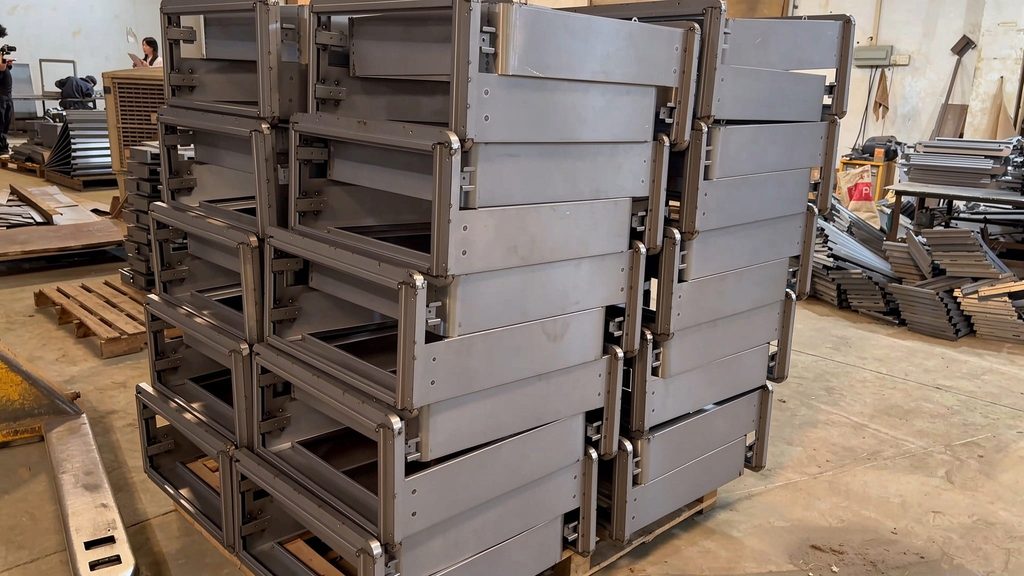
With the continuous development of data centers, power distribution, and industrial automation, the structural design of server racks, electrical enclosures, and power distribution cabinets has become increasingly diversified. Manufacturers must process various cabinet panels as well as handle numerous holes, openings, and connection structures.
These components typically present the following manufacturing characteristics:
- High Volume of Ventilation and Mounting Holes
Server racks and electrical enclosures often require numerous ventilation openings, equipment mounting holes, cable routing holes, and connection holes on their panels. Hole diameters, spacing, and arrangements can vary across parts. For panels with repetitive hole patterns, manufacturers must pay close attention to hole consistency, cutting dimensions, and post-cutting edge quality.
- Frequent Product Changeovers Increase Pressure
Cabinet products are frequently customized based on client requirements, internal equipment layouts, and installation methods. A single production floor may need to process various dimensions of cabinet doors, side panels, mounting plates, and structural components. When product specifications change frequently, traditional die processing often requires time-consuming die replacement, adjustment, and maintenance, increasing production preparation work.
- Cutting Quality Affects Downstream Bending and Assembly
Sheet metal cabinet components usually undergo subsequent processes such as bending, welding, surface treatment, and assembly. Deviations in cutting dimensions, hole locations, or contours can complicate positioning and adjustment in downstream steps. Therefore, the cutting process must not only meet individual part requirements but also ensure smooth integration with subsequent manufacturing workflows.
- Production Costs Go Beyond Cutting Speed
For sheet metal manufacturers, operational costs also involve material utilization, consumables, electricity, auxiliary gases, die maintenance, manual labor, and rework. Comparing cutting speeds alone is insufficient for evaluating overall production costs. A more rational approach is to analyze how equipment impacts overall manufacturing efficiency based on actual parts, batch sizes, and the complete production workflow.
Laser Cutting vs. Punching: Which Process Is Right for Your Production?
In cabinet and electrical enclosure manufacturing, fiber laser cutting and traditional punching are both common methods, though their optimal production scenarios differ.
| Comparison Dimension | Fiber Laser Cutting | Traditional Punching |
| Processing Method | Cuts material via a high-energy laser beam | Processes material using dies and mechanical punching force |
| Tooling Requirements | Typically requires no dedicated custom dies for different contours | Specific hole shapes and forming features generally require dedicated dies |
| Product Changeover | Contours can be adjusted by modifying the cutting program | May require physical die replacement or mechanical adjustment |
| Complex Contours | Well-suited for various irregular contours and complex hole patterns | Limited by die structure and mechanical constraints |
| Batch Production | Ideal for high-mix, low-volume, and batch-tailored production | Advantageous for mature, stable, high-volume production runs |
| Special Forming | Cannot directly replace all stamping-formed features | Can execute louvers, embossed ribs, and other forming features |
Where Laser Cutting Fits Best
When manufacturers need to frequently adjust part designs, process diverse hole patterns and complex contours, or reduce die preparation time between different products, laser cutting offers superior manufacturing flexibility.
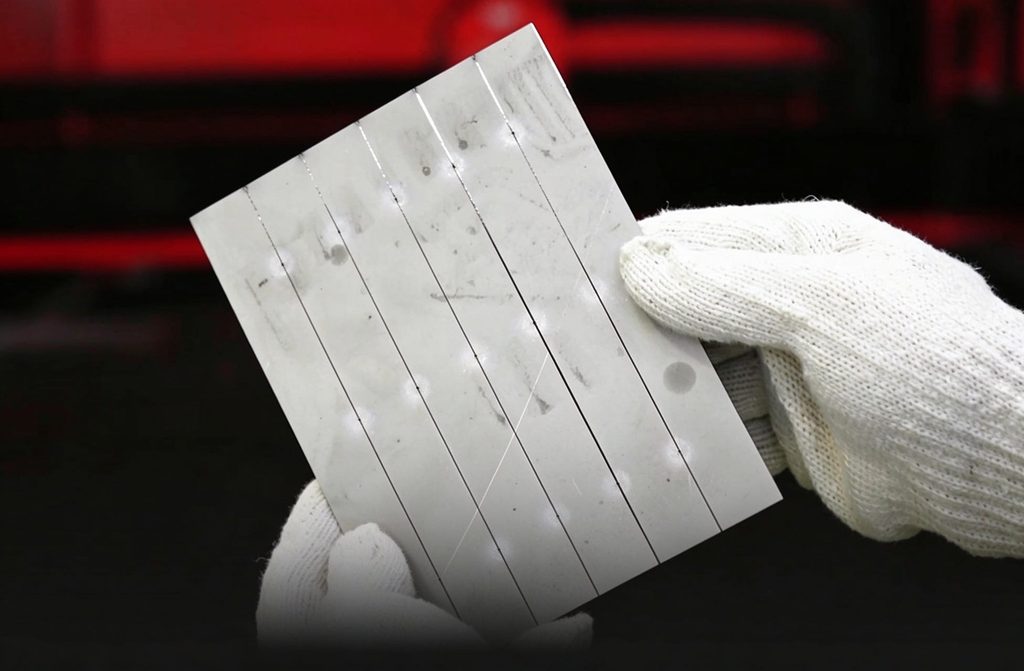
For example, server rack mounting panels often require adjusted hole layouts and openings based on internal equipment arrangements. Fiber laser cutting accommodates these design changes through program modifications, minimizing reliance on dedicated punching dies.
Where Traditional Punching Still Applies
Traditional punching maintains its value for parts with long-term structural stability, large production batches, and specific stamped features such as louvers or embossed ribs.
Consequently, laser cutting does not fully replace punching. Manufacturers should select the appropriate process based on part geometry, production volume, tooling costs, and downstream requirements. For components containing both cutting and forming features, combining processes can also be considered.
How Laser Cutting Improves Sheet Metal Fabrication
The value of laser cutting extends beyond the initial cutting stage; it also optimizes the transition into downstream sheet metal fabrication steps.
- Flexible Processing of Complex Holes and Contours
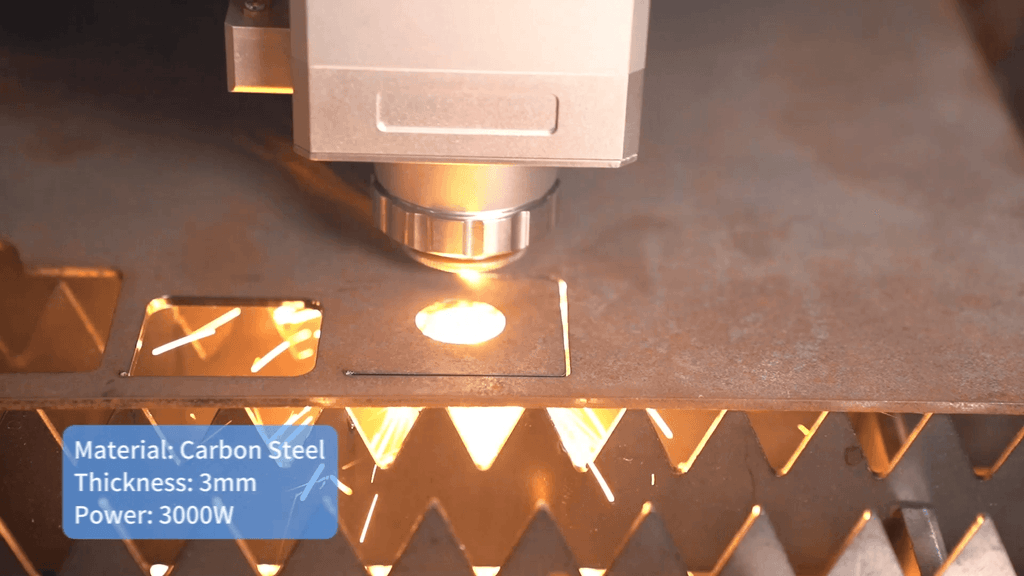
Server rack and electrical enclosure panels feature diverse mounting holes, ventilation slots, cable passages, and irregular cutouts. Fiber laser cutting follows digital programs to finish varied contours, adapting smoothly to multiple part designs. For manufacturers facing frequent design adjustments, this flexibility helps minimize tooling preparation and changeover overhead.
- Providing a Stable Foundation for Bending and Assembly
The dimensional accuracy, hole placement, and edge condition of cabinet parts directly influence downstream bending alignment, joining, and assembly. Consistent cutting performance helps maintain tight dimensional tolerances, reducing alignment adjustments during subsequent fabrication. This is crucial for production lines handling large volumes of similar panels and structural frames. However, final assembly quality is also governed by material properties, bending precision, fixture positioning, and operational procedures rather than cutting equipment alone.
For manufacturers aiming to streamline the entire cabinet workflow from blanking to enclosure assembly, see how an integrated cut-bend-weld line cuts metal fabricator lead time.
- Optimizing Sheet Nesting and Material Utilization
Cabinet manufacturing typically involves panels of various dimensions. Optimizing cutting paths and sheet nesting maximizes material utilization and reduces scrap. For production tasks involving mixed part specifications, manufacturers can optimize nesting layouts based on component sizes, material gauges, and order volumes.
- Reducing Tooling Preparation and Maintenance
When product specifications vary and order batches fluctuate, traditional punching involves preparing, tuning, and maintaining multiple sets of dies. By controlling contours via software, laser cutting reduces dependency on specialized tooling, enabling production lines to respond more fluidly to design modifications.
How to Choose a Fiber Laser Cutting Machine for Cabinet Fabrication
Machine selection should look beyond laser power, taking into account actual part dimensions, material types, plate thickness, cycle times, and workshop layout.Before finalizing specifications, reviewing the 7 costly mistakes sheet metal shops make when buying fiber lasers can help prevent common procurement pitfalls.
- Does the Working Area Match Your Part Dimensions?
Server rack and electrical enclosure components vary significantly in size, ranging from full cabinet doors and side panels to medium and small internal mounting brackets. Equipment selection should verify whether unfolded part sizes fit comfortably within the working area while leaving adequate space for nesting and clamping.
- Is the Laser Power Suited to Your Materials and Thicknesses?
Different materials and thicknesses dictate specific laser power, cutting speeds, auxiliary gases, and process parameters. Manufacturers should choose power configurations based on standard materials, working thickness ranges, and edge quality requirements rather than chasing maximum power blindly. For materials like galvanized steel, attention must be paid to edge quality, dross formation, and fume extraction through actual material testing.
Similarly, when working with thin-gauge outdoor cabinets, controlling heat input is critical—learn more about engineering out thermal distortion in thin stainless steel EV enclosures.
- Does It Fit Your Existing Production Workflow?
Equipment procurement must account for loading/unloading methods, operational space, cycle times, operator allocation, and integration with downstream bending and welding. If a facility processes multiple cabinet dimensions, the equipment’s adaptability should be verified against typical parts and order structures.
- Evaluating Total Cost of Ownership (TCO)
Initial equipment purchase price represents only a fraction of the Total Cost of Ownership (TCO). Manufacturers should also factor in:- Equipment depreciation and initial capital investment;
- Electricity, auxiliary gases, and consumable costs;
- Routine maintenance and replacement parts;
- Tooling preparation, upkeep, and changeover expenses;
- Labor, rework, and production downtime costs.
Conducting cutting tests with typical parts using actual production data is recommended—you can also refer to our ultimate sheet fiber laser cutting machine TCO & evaluation guide to structure your long-term cost analysis.
Baison EC3 and M13: Laser Cutting Solutions for Different Sheet Metal Requirements
To address varying sheet dimensions and processing demands in server racks, electrical enclosures, and power distribution cabinets, Baison Laser offers two fiber laser cutting models: the EC3 and the M13.
These models feature distinct working areas and power configurations, allowing manufacturers to choose based on component size, material characteristics, and production targets.
Baison EC3: For Larger Sheet Metal Components
- Working Area: 3000 × 1500 mm
- Laser Power: 1,500W–12,000W
The EC3 features a 3000 × 1500 mm working area, making it suitable for evaluating larger sheet metal components used in server racks and electrical enclosures, such as cabinet doors, side panels, and mounting plates. For parts with larger unfolded dimensions or production tasks requiring multiple parts nested on a single sheet, a larger working area provides flexible layout space. Specific processing capabilities should be confirmed against material types, thicknesses, and actual component dimensions.
For a deeper look at how this model optimizes operational expenses on large-format sheets, explore our detailed breakdown on how to cut hidden manufacturing costs with the Baison EC3 fiber laser cutter.
Baison M13: For Smaller Sheet Metal Components
- Working Area: 1325 × 1350 mm
- Maximum Configurable Laser Power: 6,000W
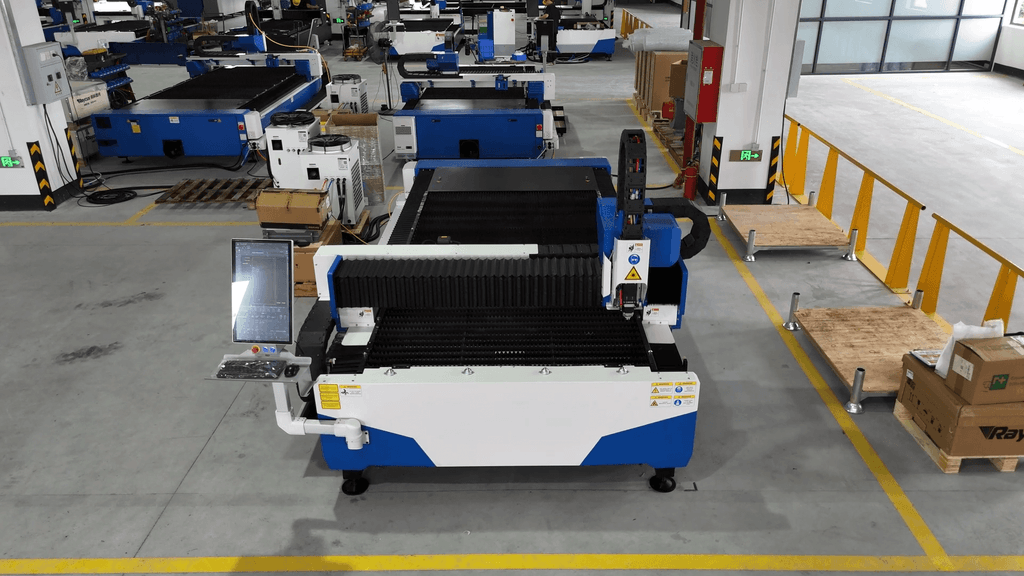
The M13 features a 1325 × 1350 mm working area and can be considered for smaller sheet metal components, including mounting plates, electrical cabinet panels, and selected structural parts. For production tasks centered on compact panels, manufacturers can assess M13’s processing adaptability based on regular materials, thicknesses, and batch sizes.
If workshop footprint and enclosed safety compliance are key factors for your facility, read our comprehensive guide to choosing a compact enclosed fiber laser cutter like Baison’s M13.
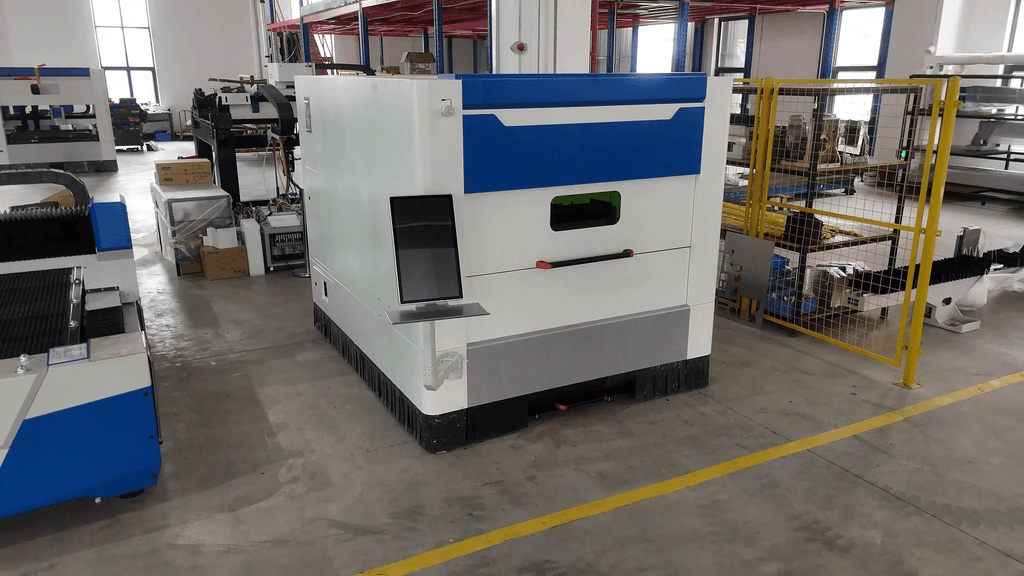
EC3 vs. M13: Selection Guide
| Evaluation Item | Baison EC3 | Baison M13 |
| Working Area | 3000 × 1500 mm | 1325 × 1350 mm |
| Laser Power Configuration | 1,500W–12,000W | Up to 6,000W (Max Configurable) |
| Typical Part Reference | Large cabinet doors, side panels, mounting plates | Small-to-medium mounting plates, enclosure panels, structural parts |
| Selection Focus | Large-format components and sheet nesting needs | Compact components and corresponding gauge requirements |
Note: The referenced part categories are general application guidelines based on machine working areas and do not imply that every cabinet part fits a specific model. Actual machine selection must be validated against unfolded dimensions, material specifications, plate thickness, and processing requirements.
If your facility processes a mixed range of cabinet specifications, you are encouraged to submit typical part drawings so our team can evaluate a production-ready processing solution.
Frequently Asked Questions
1.Is laser cutting suitable for processing server rack sheet metal parts?
Yes. Laser cutting is widely used for server rack doors, side panels, mounting plates, and other sheet components, especially those featuring ventilation slots, mounting holes, and complex contours.
2.Between laser cutting and punching, which process is better suited for electrical enclosure manufacturing?
It depends on component design and production volume. Laser cutting excels in high-mix, complex contour, and frequent changeover scenarios, whereas punching suits stable, high-volume production runs with specific forming features.
3.Can fiber laser cutting process galvanized steel sheets?
Yes, but actual cutting performance relies on galvanized material grade, thickness, laser power, auxiliary gases, and parameter optimization. Manufacturers should verify cut quality, dross formation, and downstream requirements through physical material testing.
4.What should be prioritized when selecting a laser cutting machine for cabinet sheet metal?
Key evaluation criteria include working area, laser power, standard materials and thicknesses, cutting edge quality, production rhythm, downstream integration, along with operating and maintenance costs.
5.Which model—EC3 or M13—is better for electrical enclosures and server racks?
The EC3 features a 3000 × 1500 mm working area, making it ideal for evaluating larger sheet metal parts. The M13 features a 1325 × 1350 mm working area, tailored for compact components. Final selection should be based on actual part sizes and manufacturing requirements.
Conclusion: Optimizing Cabinet Sheet Metal Fabrication from the Cutting Stage
For server rack, electrical enclosure, and power distribution cabinet manufacturers, laser cutting is more than just a blanking method—it directly influences product changeovers, material nesting, downstream bending/assembly, and overall manufacturing costs.
Compared to traditional punching, fiber laser cutting provides distinct flexibility advantages in managing complex contours, multi-specification parts, and frequent product switches. However, determining true production fit requires a comprehensive review of materials, thicknesses, part sizes, batch volumes, and total operating expenses.
Baison Laser offers both the EC3 and M13 models with varied working areas and power configurations to support diverse cabinet sheet metal processing requirements.
If you are currently planning a sheet metal production line for server racks, electrical enclosures, or distribution cabinets, feel free to submit your typical part drawings, material specifications, and production targets to Baison Laser to receive tailored equipment configuration recommendations.