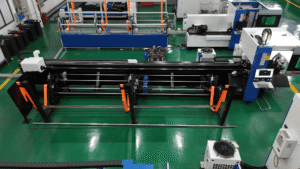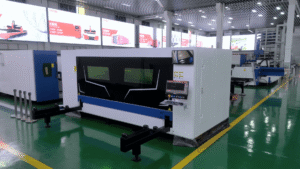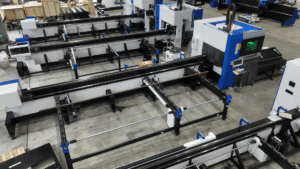
Many low-priced laser cutting machines look impressive in showroom demos, but frequently break down once deployed in real-world overseas workshops dealing with high heat and heavy dust. The Baison EC3 is engineered to combat harsh factory conditions, effectively suppressing hidden operational expenses such as unexpected downtime, secondary rework, and premature maintenance.
In the global metal fabrication industry, evaluating a laser cutting system requires looking beyond showroom peak specifications. For small-to-medium sheet metal job shops across North America, Europe, the Middle East, and Southeast Asia, profit margins are often quietly eroded by downtime, rework, and high-frequency maintenance occurring in real factory environments plagued by high temperatures, ambient dust, and voltage fluctuations.
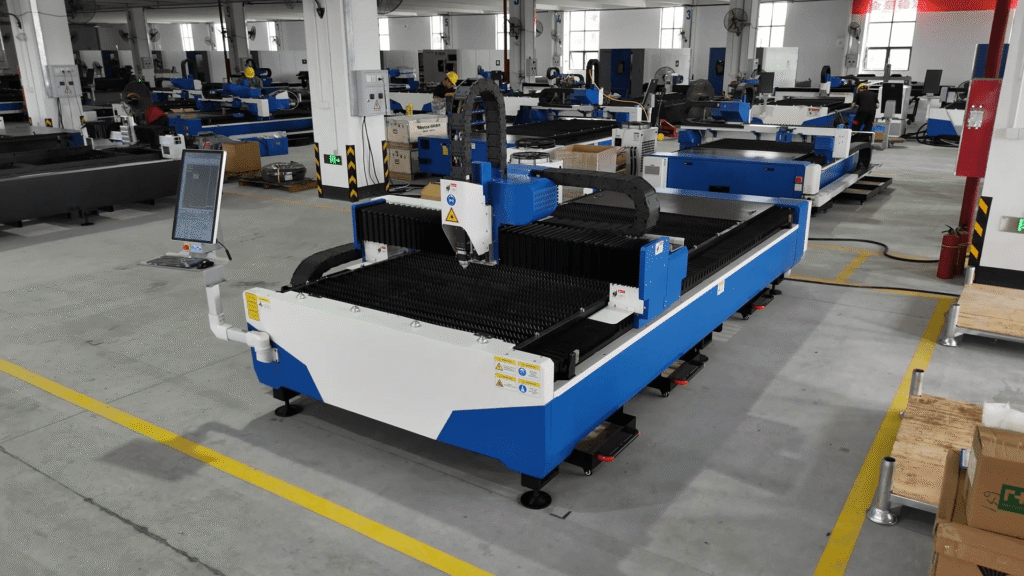
Tailored specifically for light-to-medium metal fabrication, the Baison EC3 Single-Table Fiber Laser Cutting Machine relies on a robust machine structure, comprehensive electrical protection, and operator-friendly design rather than isolated marketing gimmicks. It helps factories control three major core hidden costs: grinding/rework, unscheduled downtime, and premature equipment aging.
The Hidden Cost Ledger: How Ordinary Equipment Quietly Erodes Net Profits
Purchasing a laser cutting machine requires calculating the total cost of ownership (TCO) over its entire lifecycle, rather than just comparing upfront price tags. Many factories that invest in low-cost fiber lasers or outdated plasma systems fall into three financial traps:
1.Secondary Grinding Consumes 15% to 25% of Additional Processing Costs:
When processing medium-to-thick carbon steel or stainless steel, traditional cutting equipment often leaves dross and burrs along the cut edge. Manual grinding is required to meet subsequent welding and assembly standards. With high overseas labor costs, grinding directly drags down overall output, increasing individual part processing costs by 15% to 25%.
2.Unplanned Downtime Triggers Severe Delivery Default Risks:
Many entry-level models perform adequately in showroom environments, but fail when placed in hot, dusty production floors due to a lack of dust-proofing, thermal management, and electrical protection. Once optical or electrical components fail, the issue extends beyond spare parts costs—the entire production line halts, risking heavy financial penalties for delayed orders.
3.Bed Accuracy Drift Drives Up Scrap Rates Within 6 to 12 Months:
Some budget equipment utilizes simplified welded beds lacking complete stress-relieving heat treatments. After prolonged high-speed reciprocal motion, the machine bed suffers irreversible deformation. Cutting tolerances gradually widen, round holes turn oval, and scrap rates continuously climb.
Baison EC3 System-Level Design: Engineered for Real-World Factory Conditions
Designed for the standard metal sheets most frequently handled by overseas small-to-medium workshops, the EC3 features a mature 3000×1500mm working area, seamlessly accommodating mainstream carbon steel, stainless steel, and aluminum sheets—whether for electrical enclosure shells or metal furniture frames.
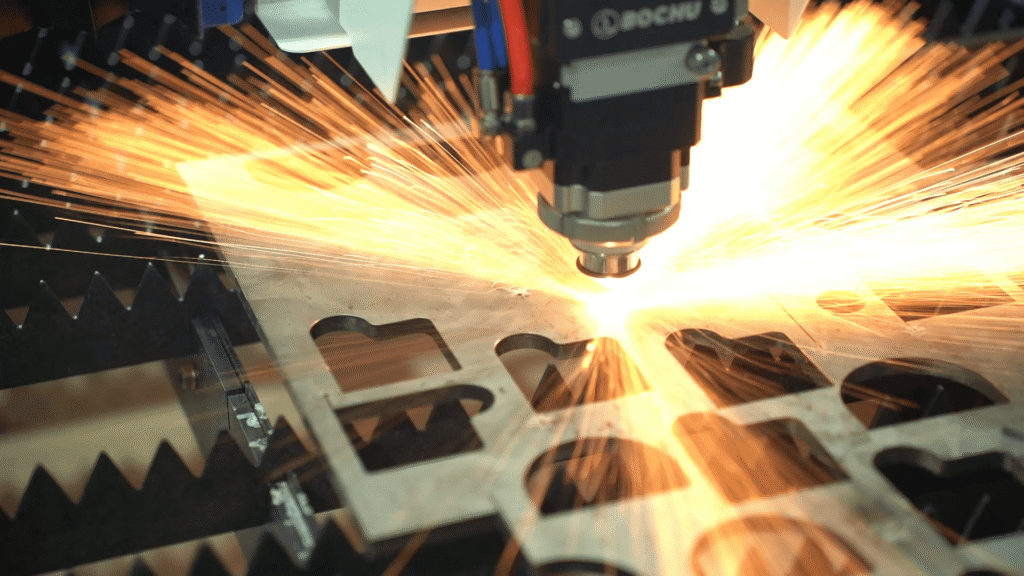
In actual factory operation, it does not rely merely on stacked peak speeds; instead, through solid dynamic response and high-precision positioning (repeatability of ±0.03mm), it ensures complex hole patterns and edges are formed in a single pass during batch cutting.
This means workers remove components with cleaner edges directly from the machine, completely bypassing tedious secondary grinding and hole-alignment corrections, enabling production lines to deliver with maximum efficiency and stability.
1. Fully Stress-Relieved Bed System to Resist Long-Term Accuracy Drift
- The bed is constructed using automated welding processes with “丰”-shaped reinforcing ribs, undergoing multi-stage vibration aging, high-temperature annealing, and precision machining to fully release internal welding stress and minimize deformation risks under long-term high-speed operation.
- The gantry utilizes an aviation-grade aluminum integrated extrusion process, offering light self-weight and superior dynamic response, paired with grade-6 precision racks and H-class linear guides.
- Guide rail and rack bases are built from thick, full-width steel plates precision-machined by a gantry milling machine.
- Equipped with an automatic timed-and-quantified rail lubrication system and waste oil recovery trough, reducing manual maintenance workload. Guide rails feature dust-proof bellows to block metal dust and high-temperature debris from invading transmission components, slowing down wear and tear.
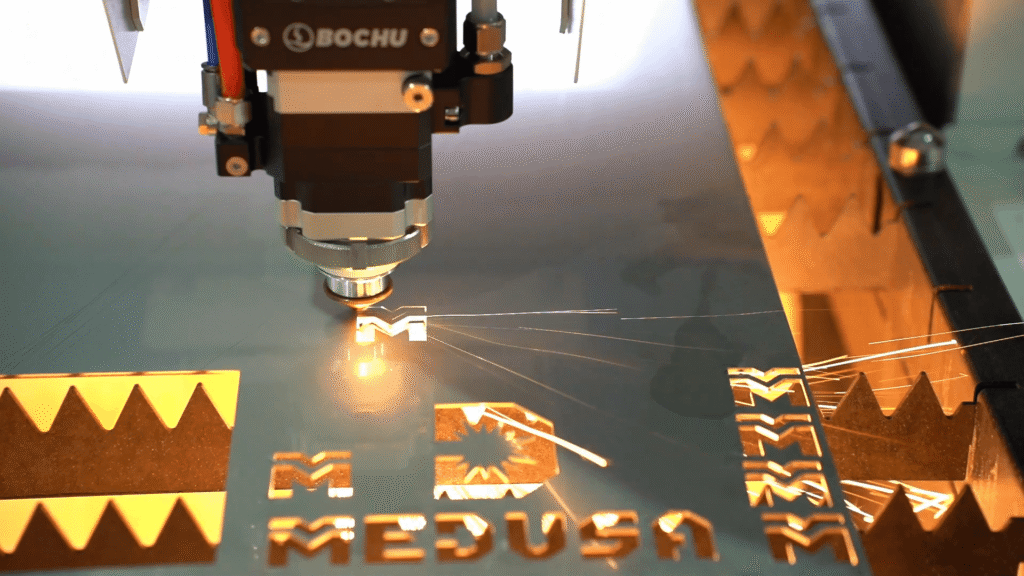
2. Rear-Integrated Constant-Temperature Electronics: Essential Design for Dusty, High-Heat Workshops
- Unlike many models that place electrical enclosures near the cutting zone, the EC3 positions its entire electrical control cabinet at the rear, physically isolating it from cutting sparks, smoke, and debris splash zones.
- The control cabinet comes standard with an independent industrial air conditioner, maintaining a stable temperature and humidity environment for electrical components. This design is exceptionally beneficial for factories in regions with severe summer heat and heavy dust (such as the Middle East and Southeast Asia), reducing electrical failures caused by heat accumulation and dust ingress while cutting down unplanned downtime probabilities.
- Strong and weak current layout separation, paired with Schneider electric components, phase-sequence protectors, braking resistors, and air-source pressure-alarm filtering assemblies, provides superior resilience against on-site voltage fluctuations and compressed air impurities.
3. Ergonomics and Safety Details to Lower Operator Thresholds and Risks
- The side of the worktable is equipped with universal auxiliary loading rollers, allowing a single operator to handle material loading while minimizing surface scratches and scrap rates.
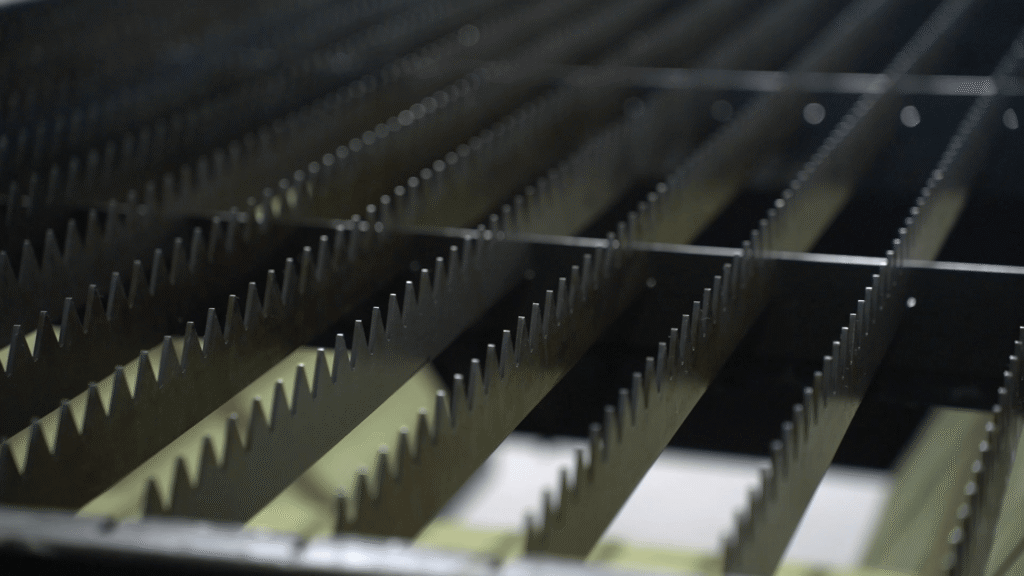
- Modular, replaceable rack worktables allow localized replacement of damaged rack sections without swapping the entire table, lowering spare parts expenses.
- With safety light curtains, laser-protective glass windows, and safety curtains immediately trigger a stop and alarm if personnel cross boundaries, helping factories satisfy overseas safety audit compliance.
4. Process Capabilities: Versatile Thin and Medium Plate Processing Options
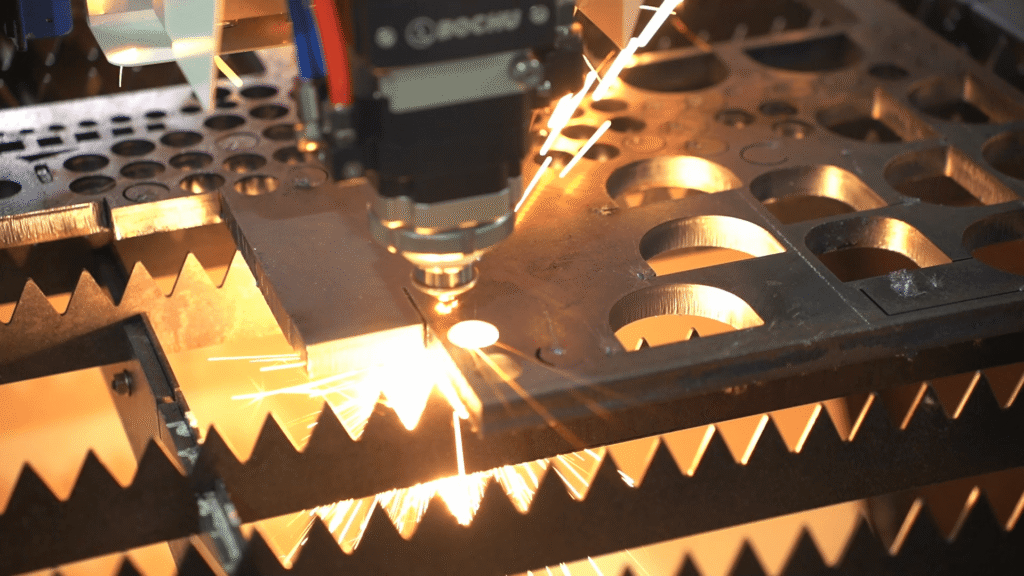
- Powered by first-tier brand fiber lasers, the machine supports carbon steel, stainless steel, aluminum alloys, galvanized sheets, and more, compatible with oxygen, nitrogen, and dry compressed air cutting processes.
- Boundary Note: Air cutting helps reduce gas purchasing expenses, but cutting quality depends heavily on air-source drying/filtering levels and plate thickness; thick plates cut with air may exhibit bottom burrs. Due to regional variations in electricity and gas prices, operating costs serve as evaluation references only.
👉 Request EC3 Custom Cutting Solutions & Actual Test Parameter Sheet — Curious about how much you can save on your specific material thickness? Tell us your daily cutting volume, and let’s calculate your exact ROI potential.
Scene-Based Case Studies: Business Transformations in Overseas Small-to-Medium Shops
Case Study 1: Electrical Cabinet Manufacturer in Ho Chi Minh City, Vietnam (Capacity Boost, ~8-Month ROI)
Challenge: The client primarily manufactured stainless steel and galvanized electrical distribution boxes using legacy low-end plasma cutters and traditional punch presses. Severe burrs and large hole tolerances required manual grinding and re-reaming for every cabinet prior to assembly. Daily output hovered around 50 units, making it difficult to secure high-margin international orders.
Solution & Results: After introducing one EC3 3000W:
- Cut edges are clean, eliminating massive manual grinding procedures and reducing labor costs by approximately 65%.
- Utilizing CNC flight cutting and frog-leap lifting, cutting speed increased nearly 3x, raising daily electrical cabinet production from 50 units to approximately 140 units.
- Successfully secured multiple local commercial real estate distribution box contracts, recovering equipment investment in roughly 8 months.
Case Study 2: Metal Furniture & School Equipment Exporter in Istanbul, Turkey (Enhanced High-Heat Stability, Compressed Gas Expenses)
Challenge: Focused on exporting metal dining chair legs and desk steel frames to European markets. Local summer workshops suffered from high temperatures and heavy dust, causing frequent breakdowns on old equipment. Meanwhile, long-term reliance on high-purity nitrogen cutting imposed heavy gas cost pressures.
Solution & Results: After upgrading to the EC3:
- The rear-positioned constant-temperature electrical cabinet significantly improved overall machine operational stability under high-temperature conditions.
- The factory integrated an air compressor drying and filtration system to utilize compressed air cutting processes effectively, keeping gas costs under tight control.
- Enhanced equipment stability and improved product consistency helped expand European export orders successfully.
Total Cost of Ownership (TCO) Comparison
| Evaluation Dimension | Baison EC3 3000W | Common Market Budget Assembled Machine | European Imported High-End Models |
| Bed Processing Technology | Automatic welding + multi-stage vibration aging + high-temperature annealing, suppressing long-term deformation | Simple welding, lacks complete stress-relieving treatment, prone to accuracy drift | Heavy-duty high-quality bed, stable performance, exorbitant purchase price |
| Electrical Control Design | Rear-positioned away from cutting zone, standard cabinet constant-temp AC, full electrical protection suite | Electronics close to cutting zone, no thermal protection, vulnerable to dust/heat damage | Comprehensive temp control & protection, expensive OEM spare parts and service labor |
| Maintenance-Friendly Config | Auto-lubrication + waste oil recovery; modular rack table; universal loading rollers | Basic configuration, lacking protective and convenient maintenance design | Comprehensive, but poor parts interchangeability and high maintenance overheads |
| Workshop Safety Config | Safety light curtains, laser-protective glass, and safety shielding curtains | Reduced or missing safety configurations | Full CE safety configuration set |
| Repeatability Precision | ±0.03mm industrial grade | ±0.1mm ~ 0.2mm, tolerances widen over long-term use | ±0.02mm, ultra-precision grade |
| Comprehensive Investment Return | Moderate upfront input, focused on suppressing long-term downtime/rework loss, estimated ROI in 6–9 months | Low initial purchase price, high hidden downtime & scrap losses | Massive initial investment, extended payback period |
Boundary Note: Payback periods are for evaluation reference only and are influenced by factory rental rates, annual output, local utility/gas prices, and maritime spare parts logistics; they do not constitute an investment guarantee.
Frequently Asked Questions (FAQs)
1.What types of factories are best suited for the EC3?
It is ideal for small-to-medium sheet metal shops handling light-to-medium plate processing: sheet metal job shops, electrical enclosures, metal furniture, school equipment, and signage. It is optimized for plates within 3000×1500mm. For frequent processing of oversized plates exceeding 3 meters or heavy structural steel, large-format models are recommended. Unsure if your primary material falls into the optimal sweet spot? Share your specs with our engineering team for a quick compatibility audit.
2. Can overseas workshop power supplies be accommodated?
The equipment comes standard with three-phase 380V/50Hz. Industrial voltages and frequencies vary across countries; site power conditions can be verified prior to ordering to provide an adaptation evaluation.
3. What are the most common pitfalls when purchasing this type of equipment?
Comparing paper purchase prices alone while ignoring bed heat-treatment processes, electronic thermal/dust-proof design, and complete electrical protection. Low-priced equipment displays attractive showroom parameters, but in real hot, dusty workshops, subsequent downtime, scrapping, and maintenance costs will quickly swallow up the budget saved on purchase day.
4. How are overseas installation, commissioning, and operation training handled?
Baison maintains a comprehensive overseas service system, supporting customers through a professional overseas engineer team or remote technical assistance for installation and commissioning. Systematic operation and routine maintenance training are also provided to help local new operators get up to speed quickly, minimizing downtime risks caused by improper operation.
5. How are overseas after-sales service and spare parts guaranteed?
Baison operates a global network of 200+ service points and over 150 after-sales engineers, providing rapid response, remote troubleshooting, and technical training. Since regional temperature, humidity, and gas conditions impact processing performance, feel free to reach out and claim your customized process optimization guide tailored to your local climate.
Conclusion
For overseas small-to-medium sheet metal job shops, equipment value is not dictated by showroom peak parameters, but by whether it can withstand heat, dust, and voltage fluctuations once deployed on the real production floor—keeping downtime, rework, and maintenance hidden costs under control.
The EC3 strikes a balance between initial procurement investment and long-term operational stability through robust bed craftsmanship, rear constant-temperature electronics, comprehensive electrical protection, and operator-friendly design, making it a pragmatic equipment choice for growing sheet metal workshops.
If you need to evaluate whether this equipment matches your specific sheet materials, thicknesses, and workshop conditions, contact the Baison technical team today to secure your custom solution and sample-cutting assessment report.