TL;DR: Manufacturing outdoor EVSE (Electric Vehicle Supply Equipment) stainless steel enclosures requires strict adherence to surface quality, dimensional precision, and IP-rated weatherproofing. Surface scratches, heat warping, and slag buildup cause severe rework, wasted raw material, and missed delivery deadlines.
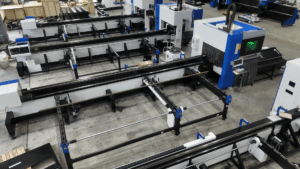
The Baison EC3 Sheet Metal Laser Cutting Machine uses omni-directional roller feeding and a modular rack worktable to eliminate physical scratches at the source. Engineered with a high-rigidity frame, climate-controlled electronics, and synchronized point dust extraction, the EC3 ensures zero-scratch cutting and airtight precision.
With standard and upgraded enclosed beam protection options (each independently tuned for optimal dynamics) and seamless compatibility with Baison’s press brakes and laser welders, EV charging station fabricators can slash unit production costs and easily pass North American and European anti-corrosion and IP sealing inspections.
The High-Stakes Reality of EVSE Enclosure Fabrication
Commercial DC fast-charging stations operate in harsh outdoor environments exposed to salt spray, rain, snow, and UV radiation. To survive, 304 stainless steel and pre-galvanized sheet metal are the materials of choice for global EVSE OEMs.
However, any surface scratch, thermal deformation, or heavy slag destroys the material’s passivation layer, causing IP sealing failures and premature internal corrosion. When flawed enclosures enter downstream assembly, fabricators face:
- Excessive scrap rates and wasted high-grade alloy sheets.
- Labor-intensive manual polishing that drains shop-floor productivity.
- Costly delivery delays triggering strict breach-of-contract penalties from international buyers.
For sheet metal manufacturers targeting the booming EV charging infrastructure market in North America and Europe, balancing high-speed thin-plate processing with scratch-free aesthetics and strict dimensional tolerances is mandatory.
Curious how leading Tier-1 suppliers maintain a sub-1% scrap rate on Class-A stainless steel exterior panels? Let’s break down the mechanics behind next-generation laser blanking.
Top 4 Production Bottlenecks in EVSE Enclosure Manufacturing
Commercial EV charger housing is an engineered protective shell designed to safeguard high-voltage modules and sensitive electronics. When fulfilling high-volume overseas OEM contracts, fabricators face four critical cost drivers:
1. Surface Scratches Drive Up Rework & Scrap Costs
Tier-1 EVSE buyers enforce strict visual inspection standards—demanding zero visible scratches on Class-A exterior surfaces. Traditional laser cutter tables with rigid supports and high-friction loading setups leave irreversible gouges. Polishing out these marks requires heavy manual labor; severe scratches force complete sheet rejection, destroying profit margins.
2. Thermal Distortion Causes IP Sealing Failures
Charger enclosures require multi-bend folding and tight seam welding. Heat buildup during high-speed laser cutting causes localized thermal warping. This leads to oversized assembly gaps, compromising the IP55/IP65 ingress protection rating and causing the enclosure to fail salt-spray and water-tightness tests.
3. Unplanned Downtime Eats Into High-Volume Margins
Overseas OEM orders operate under aggressive delivery schedules requiring multi-shift, 24/7 continuous runs. Standard laser machinery frequently experiences unexpected downtime when cutting dust and high heat penetrate electrical cabinets and motion components, causing scheduled production shifts to collapse.
To mitigate the financial threat of unexpected downtime, high-volume fabricators rely not only on heavy-duty machine builds but also on a robust global post-purchase support network that guarantees rapid spare parts delivery and on-site technical response.
4. Slag & Smoke Buildup Add Unnecessary Cleaning Steps
High-speed thin-sheet cutting generates heavy metallic dust and vapor. Inadequate dust collection causes backside discoloration, smoke stains, and dross adherence. Fabricators are forced to add secondary chemical or manual washing steps, while airborne dust threatens factory environmental compliance.
Baison EC3 Series: Purpose-Built Precision for EVSE Enclosures
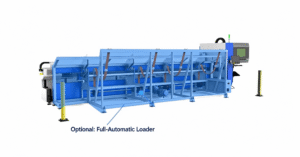
Designed specifically to solve thin-sheet fabrication challenges, the Baison EC3 Single-Platform Fiber Laser Cutting Machine incorporates targeted engineering upgrades to deliver consistent, high-yield production.
Zero Scratching from Day One: Omni-Rollers & Modular Rack Table
- Omni-Directional Roller Assist: The loading bed features integrated omni-directional ball rollers, allowing heavy stainless steel and aluminum sheets to slide effortlessly, eliminating hard friction scratches during loading.
- Modular Tooth-Rack Worktable: Removable, narrow point-contact teeth support the sheet while maximizing open space below, minimizing laser back-reflection and preventing dross welding.
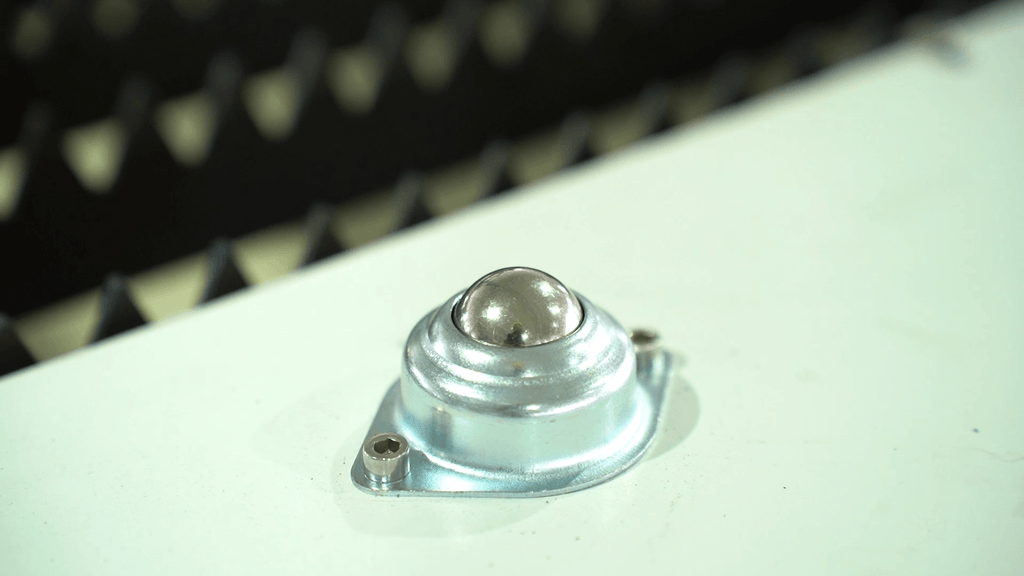
High Rigidity Meets Dynamic Speed: Zero Thermal Warping
- Annealed Heavy-Duty Bed: Built with a multi-beam reinforced frame subjected to strict annealing and aging treatments, the EC3 frame reflects Baison’s commitment to vertically integrated precision manufacturing, absorbing structural vibrations and thermal stress to preserve strict dimensional tolerances across long sheets.
- Aviation-Grade Aluminum Gantry: Extruded for low weight and maximum stiffness, the dynamic beam delivers high acceleration without compromising cutting edge precision.
Built for Harsh Duty: Climate Control & Targeted Extraction
- Rear-Mounted Electrical Cabinet: Core electronics are relocated to the rear of the machine, safely isolated from cutting sparks and debris.
- Independent AC Climate Control: The cabinet features a dedicated air conditioner maintaining constant temperature and humidity, preventing thermal drift and electrical failure during intense operations.
- Point-Synchronized Dust Extraction: A localized dust suction port follows the laser head directly, paired with dual-side ventilation ducts to rapidly evacuate metal vapors before they condense as dark smoke on the workpiece.
Beyond scratch prevention and extraction, optimizing your overall operating margin requires a closer look at consumable efficiency and power consumption. Learn more about eliminating hidden manufacturing costs with the EC3 before finalizing your shop floor layout.
Selecting the Right Gantry Protection: Standard vs. Fully Enclosed
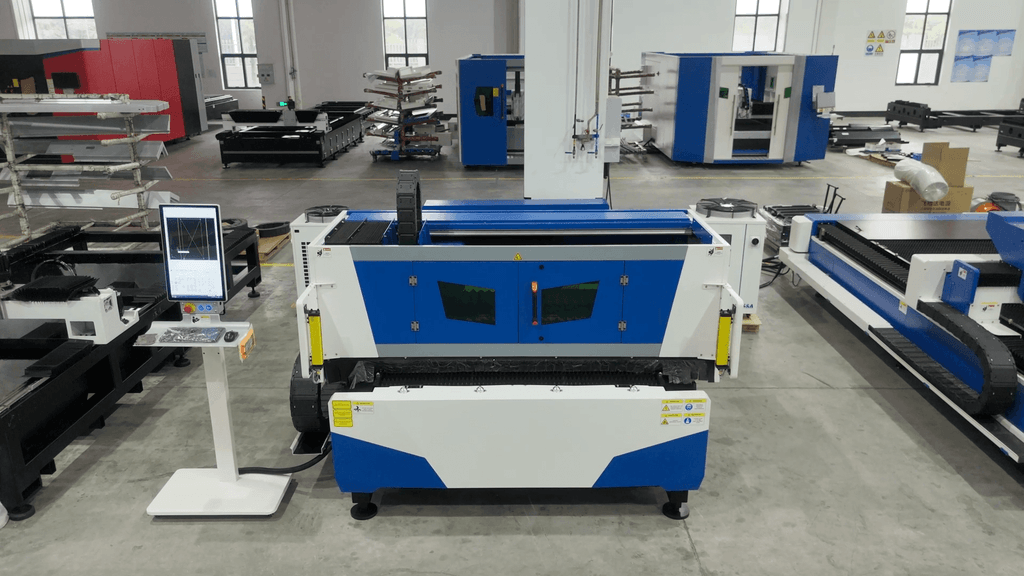
The Baison EC3 offers two distinct beam protection configurations. While both share the same underlying high-rigidity aluminum profile, the added mass and aerodynamic properties of the protective housing require independent servo parameter tuning at the factory for each version.
| Feature / Metric | EC3 Standard Beam Protection DOCX | EC3 Upgraded Fully Enclosed Beam Protection DOCX |
| Protection Architecture | Standard extruded aluminum beam with conventional bellows guarding guide rails. | Fully enclosed aluminum shield creating a sealed isolation barrier over guide rails and drives. |
| Dust & Splatter Resistance | Ideal for facilities with centralized dust collection and standard shift schedules. | Optimized for high-volume stainless steel cutting with heavy fine dust and hot slag splatter. |
| Long-Term Uptime Performance | Proven reliability for standard batch runs with routine maintenance intervals. | Prevents fine dust ingress, drastically reducing rail wear, servo strain, and unexpected downtime during 24/7 runs. |
| Target Fabricator Profile | Job shops balancing prototype development, small-to-medium batches, and initial capital expenditure. | High-volume OEM manufacturers running continuous multi-shift production seeking maximum overall equipment effectiveness (OEE). |
Strategic Commercial Insight
Both configurations utilize identical core gantry profiles, but feature custom factory-tuned dynamics optimized for specific shop floor conditions.
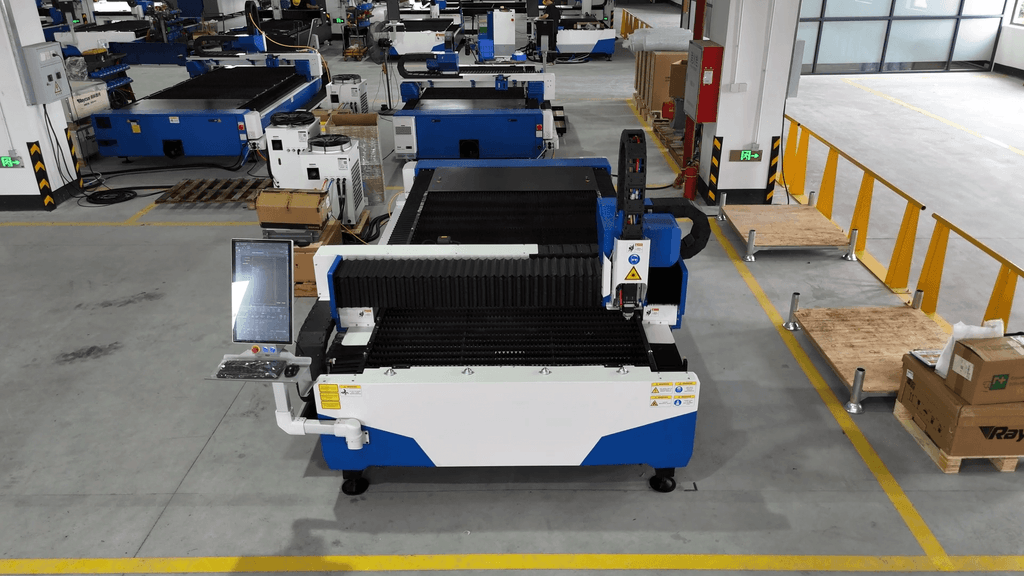
- Choose Standard Protection if your shop floor has robust central air filtration and your production focuses on small-to-medium batches.
- Choose Fully Enclosed Protection if your facility runs multi-shift continuous production with heavy stainless steel fine dust, eliminating unexpected thermal or particulate downtime.
Not sure which beam protection configuration fits your specific facility layout and daily output goals? Contact our engineering team to request a tailored Total Cost of Ownership (TCO) comparative evaluation.
End-to-End Sheet Metal Ecosystem: From Flat Sheet to IP-Rated Box
A top-tier EVSE housing requires seamless execution across cutting, bending, and joining. Much like our integrated sheet metal enclosure solutions engineered for thin-gauge cabinetry, Baison Laser provides an end-to-end fabrication ecosystem that ensures precision from flat blanking to full cabinet assembly.
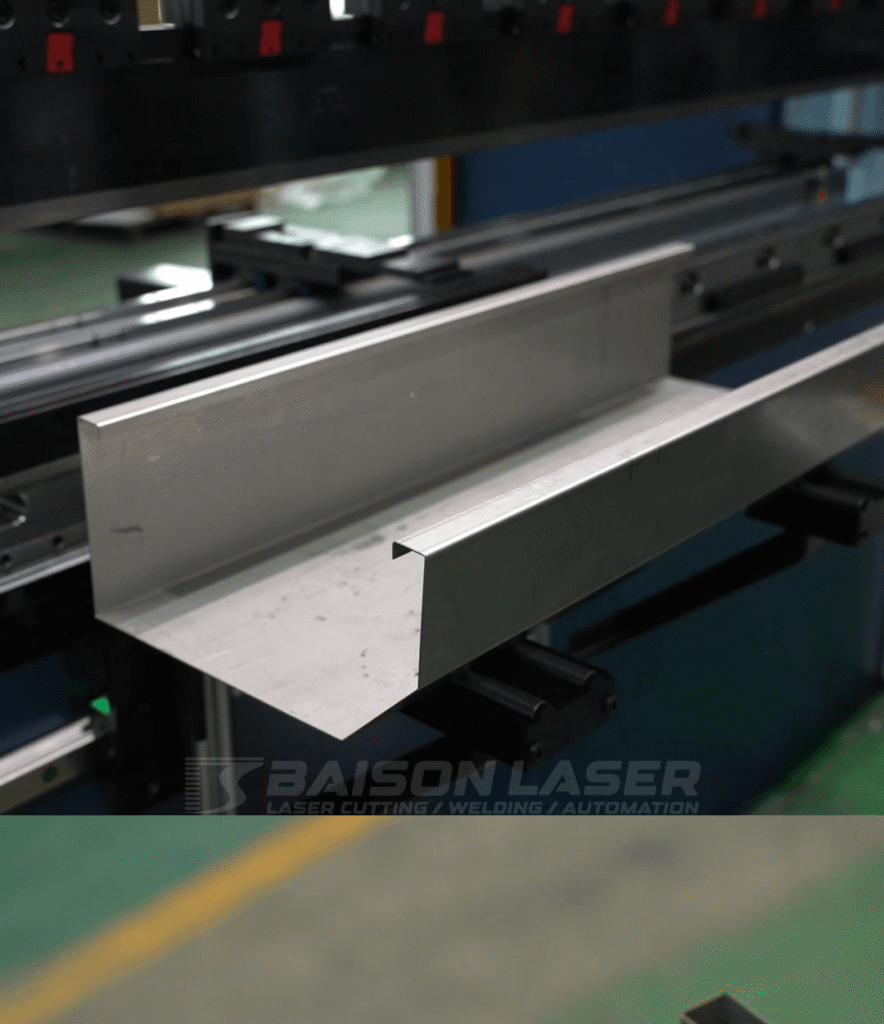
- Baison CNC Press Brake: Features high-precision servo positioning and automated springback compensation, ensuring exact bend angles and uniform corner gaps for optimal IP sealing.
- Baison Fiber Laser Welder: Produces smooth, low-heat-input corner joints on stainless steel with minimal porosity, allowing enclosures to easily pass outdoor weatherproofing and anti-corrosion tests.
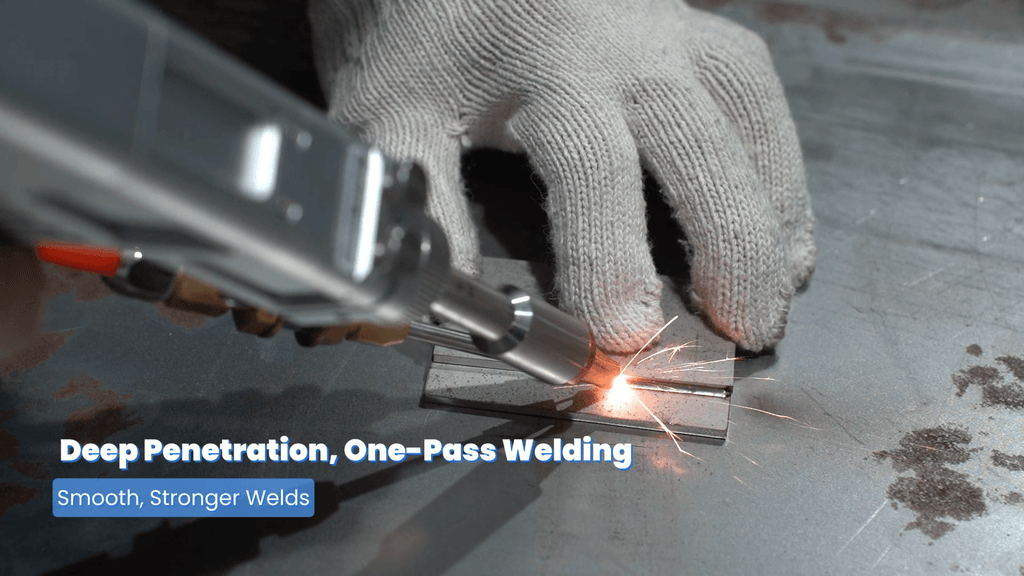
By combining the EC3 Laser Cutter, CNC Press Brake, and Laser Welder into an automated manufacturing cell, factories eliminate cross-vendor communication barriers and stably fulfill large-scale overseas custom orders.
Frequently Asked Questions (FAQ)
Q1: How does the Baison EC3 physically prevent surface scratches during stainless steel cutting?
A: The machine’s worktable is equipped with omni-directional support rollers and a removable, modular point-contact tooth structure. This minimizes hard physical friction during material loading and cutting support phases, protecting stainless steel surfaces from scratching and cutting down on manual polishing.
Q2: What is the core difference between the Standard and Upgraded Fully Enclosed beam protection?
A: Both versions share the exact same structural gantry profile and rigidity. The core difference lies in the external shielding architecture and independent factory servo tuning. The fully enclosed version adds an integrated aluminum armor shroud that completely isolates guide rails and drives, making it ideal for high-dust, continuous-production environments.
Q3: How does the EC3 ensure electrical system stability in high-temperature, dusty summer environments?
A: The EC3 utilizes a rear-mounted integrated electrical layout paired with an independent air-conditioning climate control system. Laser sources and core electronic components operate under constant temperature and humidity, mitigating heat- and dust-induced downtime during long production runs.
Q4: Does high-speed thin-sheet cutting cause smoke discoloration on the back of workpieces?
A: No. The EC3 is equipped with a point-synchronized dust extraction system that moves directly alongside the cutting head, combined with dual-side ventilation channels. Vaporized metal smoke is evacuated instantly, keeping workpiece edges clean and minimizing subsequent cleaning processes.
Q5: Can Baison provide a complete machinery package for EVSE enclosure manufacturing?
A: Absolutely. Baison Laser delivers a complete sheet metal equipment solution covering fiber laser cutting machines, CNC press brakes, and laser welding systems, helping new energy suppliers achieve a one-stop flexible manufacturing loop.
Conclusion
For EVSE enclosure manufacturers, market competitiveness relies on continuously controlling unit costs, stabilizing high yield rates, and avoiding rework, scrap, and delivery penalties caused by scratches or thermal warping.
Powered by a zero-scratch worktable, climate-controlled electronics, and optional beam protection systems tuned independently for diverse factory conditions—alongside complementary bending and welding systems—the Baison EC3 Fiber Laser Cutting Machine helps you reliably satisfy strict overseas surface, sealing, and anti-corrosion standards.
🛠️ Ready to Evaluate Your EVSE Enclosure Production Line? Send us your capacity requirements today to get a customized laser cutting configuration proposal and a detailed TCO calculation.