TL;DR: Executive Summary
Fragmented, multi-vendor machinery across cutting, bending, and welding creates severe material-handling bottlenecks and bloated WIP (Work‑in‑Progress) inventory, dragging down order delivery speed. By replacing disconnected equipment from separate suppliers with an integrated “Cut‑Bend‑Weld” automated production line, metal fabricators can systematically eliminate inter-process transit delays, slash post‑weld finishing costs, and lower overall Total Cost of Ownership (TCO).
Featuring high‑power fiber laser cutters , dual‑servo hybrid CNC press brakes (JES Series), and laser welding/cleaning workstations, this unified ecosystem empowers plant managers to cut project lead times by up to 40%.
Shop Floor Reality: Is Your Facility Trapped in a “Work‑in‑Progress” Bottleneck?
Walk through almost any mid‑to‑large custom fabrication shop, and you will see a familiar, costly imbalance: a high‑speed fiber laser cutter blanks steel sheets at blistering speeds, yet massive stacks of cut parts sit idle in staging areas for days.
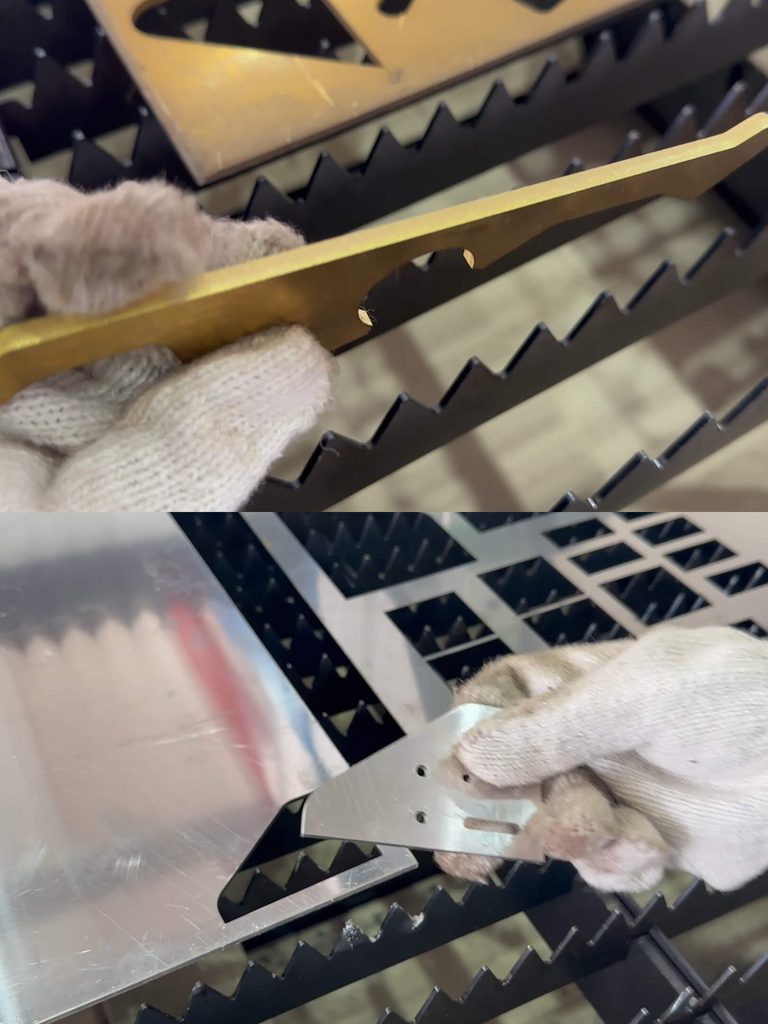
Downstream press brakes struggle with tedious manual setups and slow throughput, forcing the cutting department to throttle output. Further down the line, traditional MIG/TIG welding introduces heavy thermal distortion, leaving expensive certified welders spending half their shifts grinding slag and straightening warped frames.
This is the classic “Standalone Optimization Trap.” Sourcing cutting, bending, and welding machinery from separate vendors may look good on individual specification sheets, but it creates operational friction on the shop floor.
Disconnected control systems, incompatible processing tolerances, rising hourly labor overhead, and constant vendor finger‑pointing during equipment faults turn your workshop into a costly maze of idle waiting.
The Shift in B2B Procurement: From Individual Specs to Total Lead Time Velocity
In today’s volatile supply chain landscape, global B2B buyers no longer evaluate suppliers solely by raw cutting speed. The defining competitive metric is total order‑to‑delivery lead time.
Profits in precision metal fabrication are won through flow velocity, not static inventory stacked on the shop floor. True operational efficiency requires mastering the complete manufacturing continuum: Sheet Blanking → Precision Bending → Structural Laser Welding.
Achieving this velocity demands equipment built under a unified engineering standard and a single‑source architecture, delivering single‑point accountability and seamless support.
Synchronized Hardware Architecture: The “Cut + Bend + Weld” Advantage
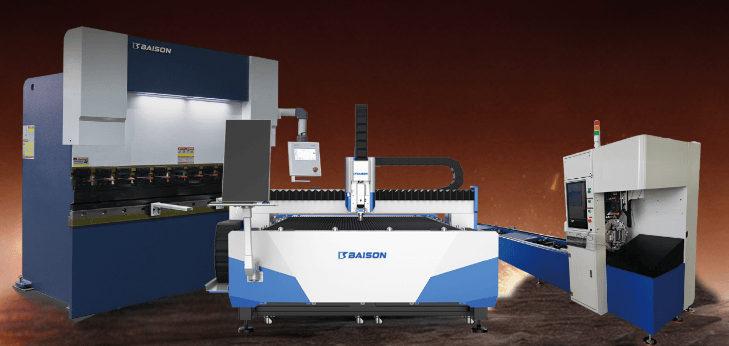
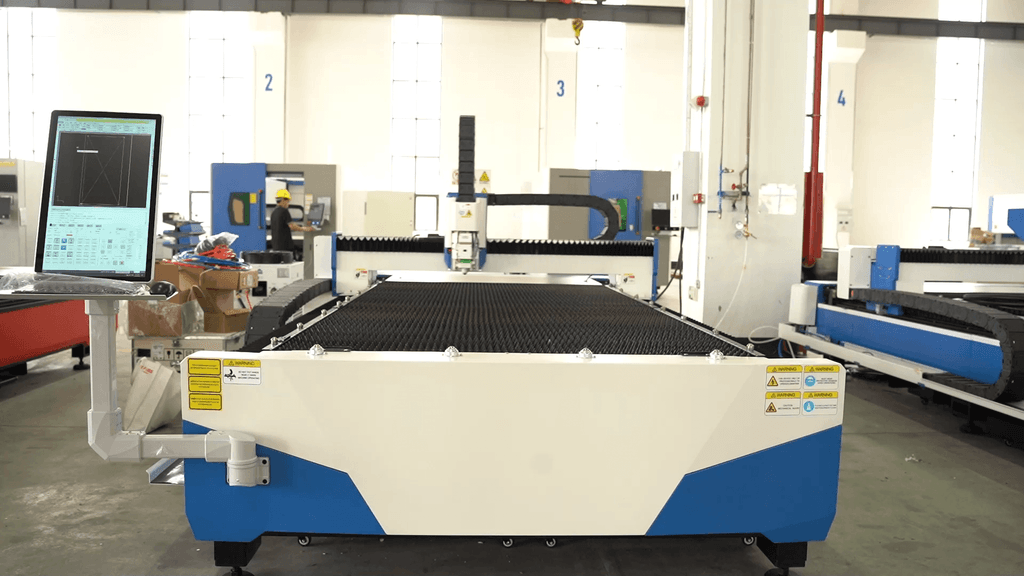
Engineered specifically to solve cross‑process bottlenecks, Baison Laser provides an end‑to‑end hardware matrix that synchronizes every stage of fabrication:
- Step 1: High‑Precision Blanking Baseline Built on heavy‑duty, stress‑relieved machine beds paired with aerospace‑grade extruded aluminum crossbeams, Baison high‑power fiber laser cutters yield burr‑free edges and tight geometric tolerances—establishing a perfect dimensional foundation that eliminates manual edge prep before bending.
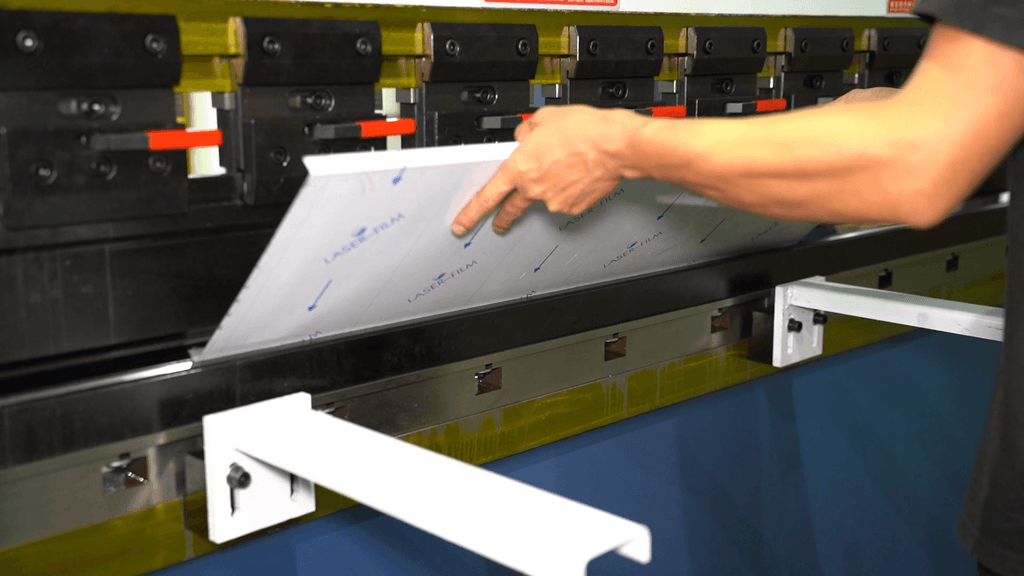
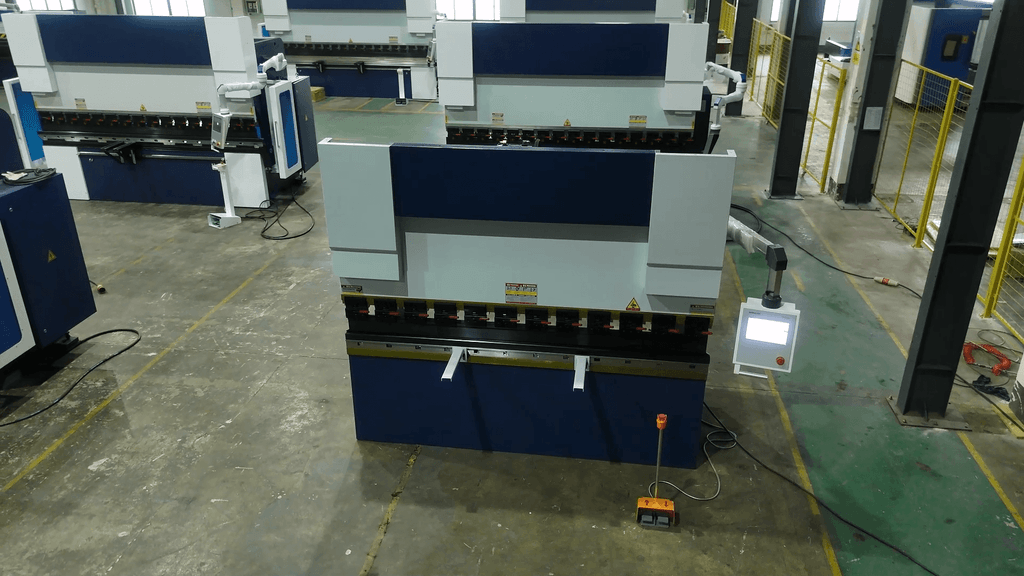
- Step 2: High‑Rigidity, Low‑Energy Bending (JES/JB Series) Eliminate angular inconsistency across long parts. Baison JES series dual‑servo electro‑hydraulic CNC press brakes utilize on‑demand direct‑drive servo pumps, delivering over 60% energy savings compared to conventional hydraulic systems. Integrated mechanical crowning systems dynamically neutralize bed deflection under full tonnage.
If you are looking to balance your cutting and bending capacities, check out this comprehensive Sheet vs. Tube Laser Cutters Selection, Process & ROI Guide for Metal Fabrication Shops to match your exact throughput requirements.
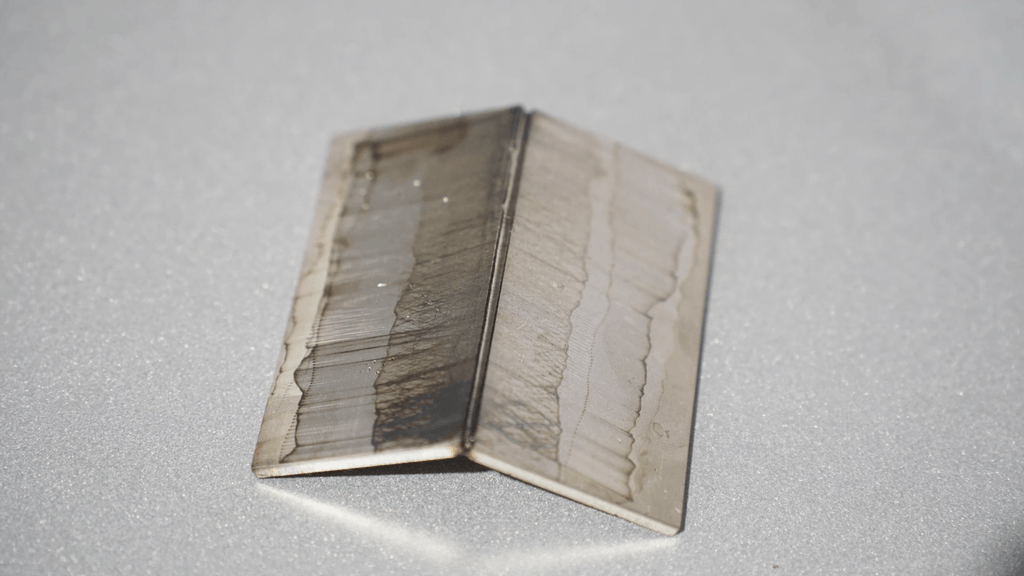
- Step 3: Low‑Distortion Laser Welding & Surface Prep Baison handheld and robotic laser welding stations deliver localized heat input with an ultra‑narrow Heat‑Affected Zone (HAZ). This minimizes heat warping and can reduce post‑weld grinding by up to 80% under suitable working conditions. To further minimize downstream manual prep, you can also explore how Laser Bevel Cutting for Plates and Tubes helps eliminate tedious secondary grinding.Paired with fiber laser cleaning systems to strip rust and scale, shops can bypass hazardous chemical pickling.
Curious how a synchronized layout fits into your current plant footprint? Request a custom shop floor layout & flow analysis from our engineering team.
Operational Comparison: Multi‑Vendor Sourcing vs. Baison Integrated Line
| Evaluation Metric | Traditional Multi‑Vendor Setup | Baison Integrated “Cut‑Bend‑Weld” Line | Commercial Bottom‑Line Impact |
|---|---|---|---|
| Material Handling & Flow | Isolated operations; heavy WIP buildup between departments; constant forklift traffic. | Synchronized workflow; matched throughput speeds; continuous part movement. | Drastically reduces WIP capital lockup and eliminates internal transit damage. |
| Energy & Maintenance Overhead | Traditional hydraulics run full power continuously, generating massive heat and oil degradation. | Dual‑servo pump architecture supplies oil strictly on demand with near‑zero standby power. | Cuts utility bills by 40%–60% and significantly lowers hydraulic oil change costs. |
| Labor & Skill Dependency | Requires scarce, highly paid certified welders for manual joint preparation and heavy grinding. | High‑precision cut edges + low‑heat laser welding = minimal joint prep and near‑zero grinding. | Alleviates the acute skilled welder shortage and lowers cost‑per‑part labor expenses. |
| Service & Vendor Accountability | Multiple manufacturers blame each other during line stoppages, delaying field service. | Single‑source machinery backed by 200+ global agency outlets and unified technical support. | Eliminates vendor finger‑pointing and protects strict delivery commitments. |
Cost Structure & ROI Benchmark Analysis
Financial Impact Disclaimer: The metrics below reflect reference benchmarks modeled from typical North American agricultural equipment OEMs and European subcontracting fabricators. Actual financial ROI varies depending on part complexity, batch size, local labor rates, and shift schedules.
For a typical mid‑sized metal fabrication plant processing medium‑gauge carbon and stainless steel, transitioning to a synchronized line yields measurable balance‑sheet gains:
- Direct Labor Optimization: Because automated bending setup and low‑distortion laser welding reduce reliance on specialized manual labor, direct line operating headcounts can typically be streamlined from 12 operators down to 5.
- Quality & Scrap Reduction: Uniform cutting datums and automatic press brake crowning reduce secondary rework and scrap rates by up to 30%, driving an overall order lead time reduction of up to 40%.For heavier structural applications, mitigating thermal warpage is critical. Learn more in our technical breakdown on Eliminating Thermal Distortion and Residual Stress in Heavy Agricultural Machinery Thick Plates.
- Capital Recovery Timeline: Based on energy savings, labor optimization, and scrap reduction, typical plant upgrades achieve full capital payback within 14 to 18 months.
Procurement Checklist: Avoiding Common Equipment Upgrade Pitfalls
Before committing capital to your next shop floor upgrade, ensure your team avoids these common traps:
- Focusing Solely on Laser Cutting Wattage: Purchasing a high‑wattage laser cutter without upgrading downstream bending capacity simply pushes the bottleneck further down the aisle.
- Accepting Control System “Tower of Babel”: Sourcing machines with incompatible CNC controllers increases operator error, complicates nesting/bending software workflows, and spikes operator training overhead.
- Ignoring Local Field Support Infrastructure: Unplanned downtime on an international machine without local spare parts or field service engineers can result in thousands of dollars per day in contract penalties.
Global Compliance & Support Ecosystem
Built in a 100,000 m² smart manufacturing facility, Baison Laser operates under certified ISO9001, ISO14001, and ISO45001 quality management systems. All machinery holds full European CE certification and U.S. FDA registration for seamless international deployment.
- Pre‑Sales Line Modeling: 1‑on‑1 engineering consults to map equipment sizing against your CAD models and monthly throughput targets.
- Field Installation & Training: Certified technicians provide on‑site commissioning, machine calibration, and operator safety training.
- Global Technical Support Network: Supported by over 200 service outlets worldwide, ensuring rapid remote diagnostics and localized field support.
Frequently Asked Questions (FAQ)
- Q1: Does installing a complete “Cut‑Bend‑Weld” system require a massive facility footprint?
- A1: Not necessarily. Baison offers modular configurations (including compact ST series laser cutters, space‑saving press brakes, and portable welders). Our applications engineers can design linear, U‑shaped, or cellular layouts tailored to your exact floor plan and material flow.
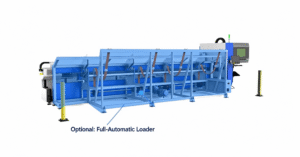
Automation is key to maintaining smooth flow. If you are weighing automated options against manual handling, read our analysis on Is a Tube Laser Automatic Loader Worth the Extra Cost?
- Q2: How does Baison’s hybrid press brake technology reduce operating costs compared to conventional hydraulics?
- A2: Baison JES/JB series press brakes use servo motors to drive hydraulic pumps only when the ram is actively moving. Standby energy draw is virtually zero, resulting in 40%–60%+ energy savings, lower oil thermal degradation, and reduced maintenance overhead.
- Q3: How difficult is it for our existing shop personnel to operate these CNC systems?
- A3: The learning curve is fast. Baison equipment integrates industry‑standard CNC interfaces (such as Swiss Cybelec, Dutch Delem, or intuitive touchscreens) featuring 2D/3D graphical programming and automatic bend sequencing. This significantly reduces reliance on rare, highly experienced setup technicians.
- Q4: How does Baison manage field service and technical support for overseas customers?
- A4: Through a network of over 200 authorized global service centers, Baison delivers rapid online remote diagnostics, fast‑track spare parts dispatch, and localized engineer support to keep your line running.
- Q5: What is the estimated delivery lead time for an integrated production line?
- A5: Lead times vary based on machine specs, custom automation options, and ocean freight logistics. Need an accurate timeline for your facility expansion? Submit your monthly volume targets to receive a custom implementation schedule.
- Q6: How do Baison machines ensure dimensional alignment between cutting, bending, and welding?
- A6: All Baison machinery operates under a unified manufacturing tolerance standard. Clean laser‑cut edges provide consistent reference points for press brake backgauges and tight seam fit‑ups for laser welding, eliminating compounding tolerance errors.
Conclusion & Actionable Next Steps
Don’t let fragmented machinery hold back your shop’s throughput and profitability.
Ready to Eliminate Your Shop Floor Bottlenecks?
Submit your monthly tonnage requirements, plant dimensions, or sample CAD drawings to receive a complimentary Shop Floor Layout Plan and a customized TCO Investment Analysis.
Contact the Baison Laser Engineering Team Today to Request Your Custom Line Proposal