When shopping for a sheet fiber laser cutting machine, the upfront quotation is usually the first thing buyers look at. However, the sticker price rarely reflects the real cost of owning and operating the machine over its lifespan.
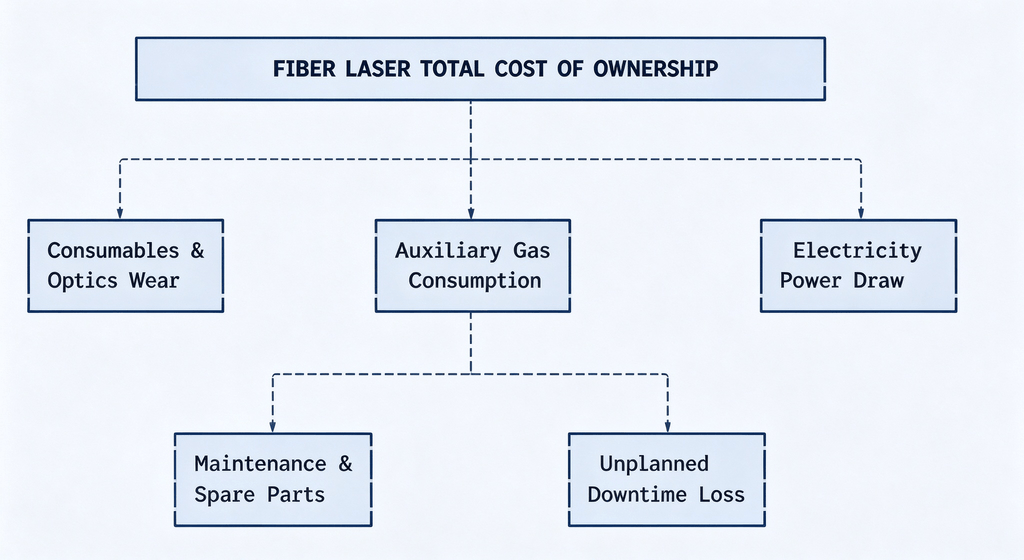
A laser cutter’s true financial impact encompasses ongoing protective lens and nozzle replacements, auxiliary gas consumption, electricity bills, scheduled maintenance, and unpredicted downtime. Two machines with identical upfront quotes can yield drastically different operational overheads on your shop floor.
To make a profitable investment, metal fabricators and job shop owners must evaluate the Total Cost of Ownership (TCO)—the comprehensive expenditure from initial acquisition and installation to daily operation and long-term maintenance.
This guide breaks down the five primary hidden operating costs, structural manufacturing quality, after-sales service, and a practical math model for calculating TCO before you sign your next purchase order.
TL;DR: Executive Summary
Price ≠ TCO: A machine’s initial quote is only a fraction of its total cost. Consumables, auxiliary gas, power draw, maintenance, and unexpected downtime dictate your true ROI.
Normalize Your Data: To accurately compare competing machines, evaluate them under standardized conditions: identical material, sheet thickness, gas pressures, duty cycles, and evaluation periods.
Focus on Cost per Good Part: Calculate total expenses divided by net yield.
Verify Manufacturing Quality: Machine bed stability, cleanroom optical assembly, and local technical support directly dictate whether your machine operates as an asset or a money pit.
Why the Upfront Quotation Lies About Your Real Costs
An initial quote only covers the acquisition phase. TCO measures the long-term cash flow required to keep that laser cutting on your factory floor.
Consider two common scenarios in sheet metal fabrication:
Option A (Low Upfront Price): Suffers from frequent optical contamination, high auxiliary gas leaks, and delayed remote tech support. The initial savings disappear within 18 months due to runaway operating expenses and lost cutting hours.
Option B (Higher Upfront Investment): Built on a stress-relieved heavy-duty machine bed, assembled in certified optical cleanrooms, and engineered for optimized gas flow. It delivers high uptime, predictable consumable wear, and a significantly lower long-term cost per cut.
To make an apples-to-apples comparison, every purchasing evaluation must separate expenditure into two distinct buckets:
Capital Expenditure (CapEx): Machine purchase, freight, installation, and commissioning.
Only when both are calculated over a fixed lifecycle (e.g., 5 years) can you determine the true economic value of a fiber laser cutting machine.
The 5 Hidden Costs of Sheet Fiber Laser Cutting
1. Consumables and Optical Components
Protective windows (cover glass), copper nozzles, and ceramic rings are wear items that require routine replacement. Furthermore, internal cutting head optics and fiber delivery cables require strict maintenance.
Consumable lifespan is not a fixed metric. It fluctuates based on material type, plate thickness, pierces per hour, assist gas purity, and workshop air quality.
Key audit items before buying:
Standard pricing and replacement intervals for protective lenses and nozzles.
Expected consumable consumption rates when cutting thin gauge vs. thick plate.
Cleanliness requirements and optical check procedures for the laser head.
Lead time and local availability of critical spare parts.
Pro Tip: Don’t just audit the unit cost of a single protective lens—calculate the estimated quarterly consumable spend under your actual production volume.
2. Auxiliary Gas Consumption
Auxiliary gas represents one of the largest single operating expenses in sheet metal fiber laser cutting. Whether using Oxygen (O₂), Nitrogen (N₂), or Compressed Air, each gas changes your operational cost structure:
Nitrogen (N₂): Offers oxidation-free, high-speed edges on stainless steel and aluminum, but consumes high volumes at high pressures (16 – 25 bar).
Oxygen (O₂): Used for thick carbon steel exothermic cutting at lower pressures, but incurs recurring gas bottle/dewar costs.
Compressed Air: Significantly reduces gas cost per meter, but requires heavy upfront investment in high-pressure air compressors, oil-water separators, and cold dryers to prevent lens destruction.
Gas consumption varies based on nozzle diameter, cutting speed, pressure settings, and standoff distance. Always demand gas consumption data per meter or per hour based on your specific sheet thicknesses during cut testing.
If you plan to run high-pressure nitrogen continuously, remember to include the CapEx and maintenance of an On-Site Nitrogen Generator into your TCO equation.
Total electricity consumption goes far beyond the rated power of the fiber laser source itself. A complete laser cutting system includes:
The fiber laser resonator (e.g., 6kW, 12kW, 20kW, or 30kW)
Machine motion system (servo motors, drives, CNC control)
High-capacity industrial water chiller
Heavy-duty dust collector / fume extractor
Auxiliary air processing systems
Estimating electricity costs purely from the laser generator’s kilowatt rating leads to massive budget errors. Calculate true electrical load by measuring total system power draw during active cutting cycles, standby states, and idle modes, then multiply by your local commercial kWh electricity rates.
4. Scheduled Maintenance & Spare Parts
As machine hours accumulate, rack-and-pinions, linear guides, ball screws, chillers, and electrical cabinets demand preventative maintenance.
Key questions to ask manufacturers:
What is the mandatory preventative maintenance schedule for 2,000 / 4,000 / 8,000 operating hours?
What are the costs and lead times for high-value spare parts (e.g., servo drives, cutting head module components, chiller pumps)?
Does the system come with automated lubrication and diagnostic software alerts to prevent premature wear?
5. The Hidden Killer: Unplanned Downtime Costs
For high-output job shops and continuous manufacturing lines, downtime is vastly more expensive than any spare part.
When a laser cutting machine stops unexpectedly due to optical contamination, drive faults, or lack of tech support, the financial damage compounds:
Direct Loss: Idle operator wages and unearned machine hourly rates.
Upstream/Downstream Disruption: Press brakes, welding cells, and assembly lines sit idle waiting for cut blanks.
Commercial Damage: Missed delivery deadlines, rush shipping surcharges, or outsourcing emergency cut jobs to local competitors at premium prices.
Beyond standard sheet-by-sheet loading, fabricators dealing with high-volume ductwork can dramatically cut handling labor by exploring specialized automated solutions. For deeper insights into scaling duct manufacturing, see how Ditch Sheet-Fed Bottlenecks: How Coil-Fed Automation Scales HVAC Duct Production Yields streamlines continuous coil feeding.
Thinking of buying a high-power sheet fiber laser machine? Don’t leave your operating margins to guesswork.
Long-term cutting reliability is built into the machine frame and cleanroom assembly line. Evaluating the manufacturer’s structural engineering and quality control reveals whether a machine will maintain its precision over 5 to 10 years.
Machine Bed Construction & Annealing
The structural integrity of the machine bed determines long-term positioning accuracy and dynamic response. High-speed acceleration (e.g., 1.5G to 2.0G) puts severe stress on the machine frame.
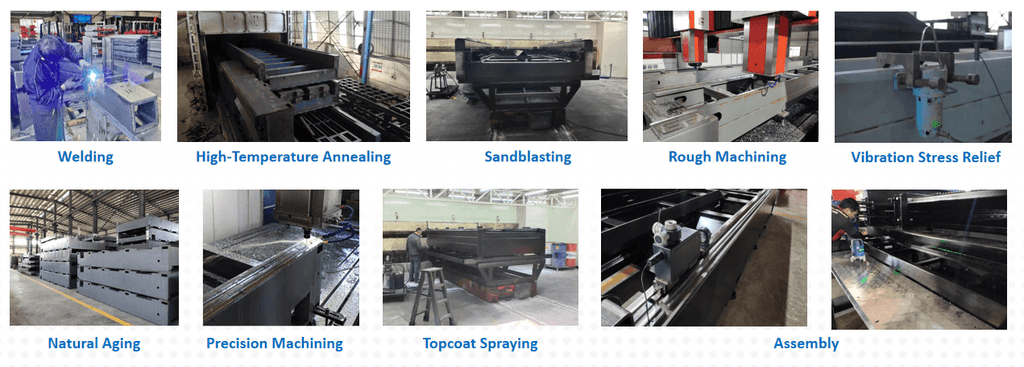
Stress Relieving: A high-quality bed must undergo high-temperature thermal annealing/aging to eliminate internal welding stress, preventing structural deformation over time.
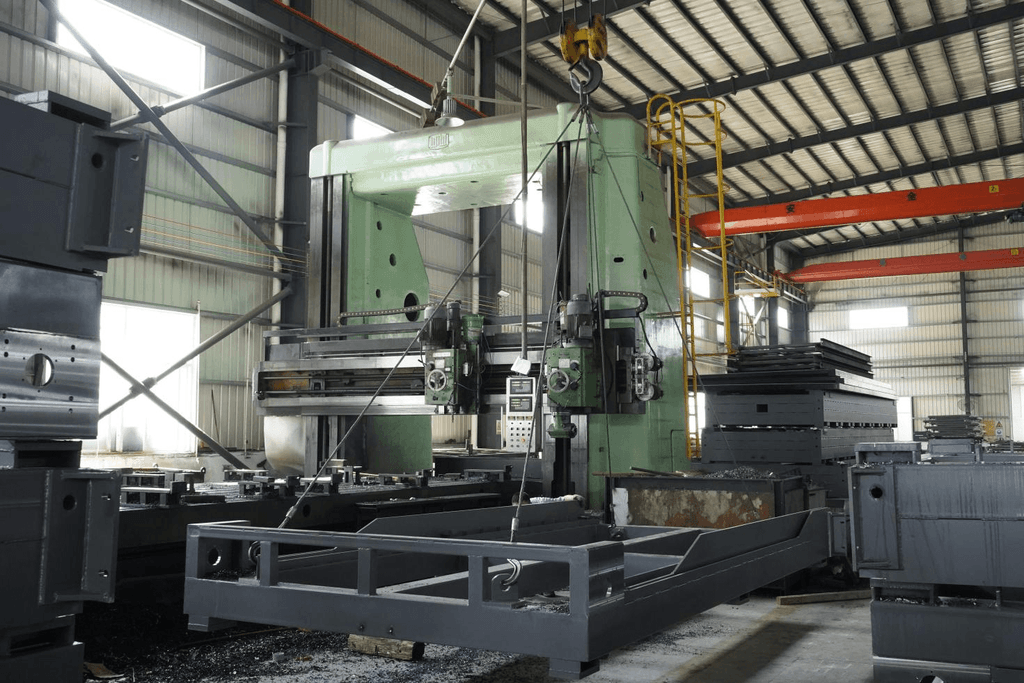
Precision Machining: Machine beds should be milled on large-scale, high-precision gantry milling machines to ensure tight perpendicularity and parallelism for linear guide rails.
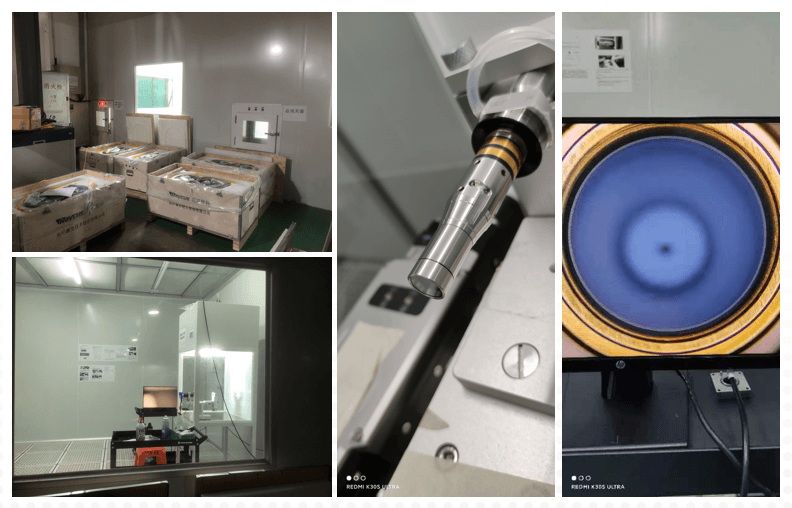
Manufacturing Benchmark: Premium fiber laser manufacturers operate in-house heavy-duty gantry milling centers (capable of single-pass milling up to 9.3 meters) to process machine beds in a single setup, followed by dial indicator and laser interferometer verification.
Optical Cleanroom Inspection
Fiber laser cutting heads and fiber QBH connectors operate under extreme power density. A single microscopic dust particle on a quartz crystal or protective lens can absorb laser energy, heat up, and cause thermal lensing or catastrophic lens explosion.
Leading manufacturers perform optical assembly and fiber connection inside certified Class 100 cleanroom environments, utilizing high-magnification fiber microscopes to verify optical cleanliness prior to factory shipment.
Evaluating After-Sales Service and Global Support
A fiber laser machine is only as profitable as the support team behind it. When evaluating vendor service capabilities, inspect the following critical markers:
Global Service Network: Do they have local service hubs or field service engineers stationed near your region?
Technical Response Time: What is the guaranteed response window for remote diagnostics and emergency on-site visits?
Software Updates: Are CNC and nesting software updates included for free over the machine’s lifecycle?
Out-of-Warranty Transparency: Are post-warranty labor rates, travel costs, and spare parts pricing clearly defined upfront?
For international machine buyers, verifying local spare parts stock and regional engineering coverage is essential to guarding against multi-week downtime delays.
How to Calculate and Compare Machine TCO (With Formulas)
To evaluate competing fiber laser quotes fairly, normalize your operational variables into a unified comparison framework.
CapEx: Machine cost, shipping, duties, site prep, installation, and operator training.
OpEx: Total cost of protective optics, nozzles, auxiliary gases (N₂/O₂/Air), electricity, and operator labor over the chosen period.
Maintenance: Scheduled preventative maintenance contracts and routine replacement parts.
Downtime Losses: Estimated financial loss from unprogrammed machine stops.
Salvage Value: Estimated resale value of the machine at the end of the evaluation cycle (e.g., 5 years).
Step-by-Step TCO Comparison Matrix
Use the matrix below to standardize data collected from competing equipment vendors:
Cost Item
Vendor A (Budget Choice)
Vendor B (Mid-Tier)
Vendor C (Premium)
Initial Purchase Price (CapEx)
$
|
Consumables Cost (Est. 3-Yr)
$
|
Auxiliary Gas Cost (Est. 3-Yr)
$
|
Electricity Cost (Est. 3-Yr)
$
|
Maintenance & Servicing (3-Yr)
$
|
Estimated Downtime Overhead
$
|
Total 3-Year TCO
$
$
$
Total Qualified Parts Cut (3-Yr)
pcs
pcs
pcs
Cost Per Good Part
$/pc
$/pc
$/pc
Cost Per Good Part = Total Multi-Year TCO / Total Yield of Qualified Parts Cut
Key Takeaway: The machine with the lowest purchase price often yields a higher Cost Per Good Part due to slower cutting speeds, higher gas consumption, and frequent unprogrammed downtime.
When optimizing your facility’s long-term operational efficiency, reducing standalone machine overhead is only the first step. Expanding your evaluation toward an integrated manufacturing ecosystem can transform your overall throughput—discover more in How an Integrated Cut-Bend-Weld Line Cuts Metal Fabricator Lead Time by 40%.
Five Critical Questions to Ask Suppliers Before You Buying
Before finalizing your equipment contract, insist on receiving documented answers to these five technical questions:
Material & Thickness Suitability: Can this specific laser power and cutting head configuration maintain high-speed, burr-free cuts on our daily material mix? (Request live cutting tests on your sample sheets).
Verified Operational Data: What are the actual measured gas consumption rates (m³/hr or bar pressure) and total system power draws (kW) during active cutting of our primary gauges?
Machine Bed Processing: How is the machine bed stress-relieved, and what precision equipment is used for machine tool bed milling and alignment checks?
Local Service & Parts Availability: Where is the nearest field service engineer located, and what is the typical dispatch time and local spare parts inventory depth?
Standardized Benchmarking: Can you provide a detailed cut speed table, gas consumption matrix, and recommended consumable changeout intervals under real-world factory conditions?
Ready to optimize your sheet metal cutting economics?[ Schedule a Technical Consultation & Live Cut Audit ]Connect with our application engineers to analyze your job shop’s true cost-per-part and find the ideal fiber laser configuration.
Frequently Asked Questions (FAQ)
Q1: What is Fiber Laser Machine TCO (Total Cost of Ownership)?
Fiber Laser TCO is a financial metric that accounts for the total expenditure of owning and operating a laser cutting machine over its operational lifespan. It includes the upfront purchase price, delivery, installation, electricity draw, auxiliary gas consumption, optical consumables, routine maintenance, and potential downtime losses.
Q2: What are the biggest operational costs in sheet fiber laser cutting?
The largest ongoing operational costs are auxiliary cutting gases (especially high-pressure Nitrogen) and electricity consumption (chillers, laser sources, and dust collectors). Optical consumables (protective lenses, nozzles) and unscheduled downtime also contribute significantly over multi-shift operations.
Q3: How do you accurately compare TCO between different laser cutter manufacturers?
Normalize all test parameters: run identical sheet materials, thickness, part geometry, gas type/pressure, and duty cycle. Then calculate the Cost Per Good Part by dividing total projected operating costs over a 3 to 5-year period by the total net output of usable cut parts.
Q4: Does auxiliary gas choice dramatically alter total operating costs?
Yes. High-pressure Nitrogen cutting provides high-speed, oxide-free edges on stainless steel and aluminum, but incurs higher hourly gas costs. Oxygen cutting uses less volume at lower pressures for carbon steel. High-pressure compressed air cutting reduces per-meter gas expenses but requires upfront CapEx for specialized high-pressure air filtration systems.
Q5: How can fabricators minimize their fiber laser cutting TCO?
Fabricators can lower TCO by selecting appropriate laser power for their material range, optimizing cut speed parameters, utilizing compressed air cutting where edge quality permits, adhering to strict cleanroom optical maintenance, and investing in a stress-relieved machine bed to prevent alignment errors.
Q6: Does a lower machine purchase price guarantee a lower TCO?
No. Budget-tier machines with lower initial price tags frequently suffer from higher gas leaks, lower electro-optical conversion efficiency, accelerated component wear, and slower local service response times—resulting in a significantly higher overall cost per cut part over time.
Get a Fiber Laser System Quote!
Share The Post Now:
Hey there, I’m Sam!
I’m the founder of Baison. We have been helping manufacturing industries increase their productivity and capacity with our advanced fiber laser systems for over 20 years.
Have questions? Reach out to us, and we will provide you with a perfect solution.
TL;DR | Core Takeaways For structural steel fabricators and heavy equipment manufacturers, thick steel plates and complex components often require secondary beveling after initial profile
Event: FABEX Saudi Arabia 2026Dates: October 11–14, 2026Location: Riyadh, Saudi ArabiaBooth: A77Featured Machine: BAISON EC3 Single-Table Fiber Laser Cutting Machine At a Glance Metal fabrication