TL;DR: Heavy agricultural machinery—like tractor chassis and combine harvester main beams—and construction equipment rely heavily on high-strength thick carbon steel (20 mm to 50 mm+). Traditional oxy-fuel and plasma cutting introduce massive heat input, wide kerfs, severe thermal deformation, and lingering weld stresses that jeopardize field reliability.
Baison Laser’s ST3A (20 kW–40 kW) and EL6A (20 kW–60 kW) high-power fiber laser cutting machines solve these challenges with semi-hollow thermal insulation beds, heavy-duty payload capacities up to 6,500 kg, automated Bus CNC systems, and optional bevel cutting. This unified cutting-and-beveling workflow cuts post-processing labor costs by 60%+, eliminates subcontractor dependency, and ensures on-time delivery during peak farming seasons.
On-Site Bottlenecks: Harsh Processing Challenges in Heavy & Ag Equipment
The global agricultural and heavy construction equipment industry is continuously shifting toward higher horsepower and heavier payloads. Structural core components—such as tractor front/rear axle housings, harvester header frames, and excavator booms—are increasingly fabricated from high-strength, thick carbon steel and alloy plates.
Unlike standard sheet metal, structural components in ag machinery have a uncompromising standard: the initial blanking quality directly dictates long-term field safety.
When thermal deformation forces operators to forcibly align parts during assembly, residual welding stress builds up inside the frame. Over time, these hidden stresses lead to catastrophic structural cracking under heavy field operations.
overseas fabricators relying on legacy oxy-fuel or plasma cutting regularly face severe manufacturing bottlenecks:
- Slow Piercing & Heavy Dross: Cutting plates thicker than 30 mm creates massive slag build-up that requires hours of manual grinding. High labor costs quickly erode profit margins while dragging down assembly line rhythm.
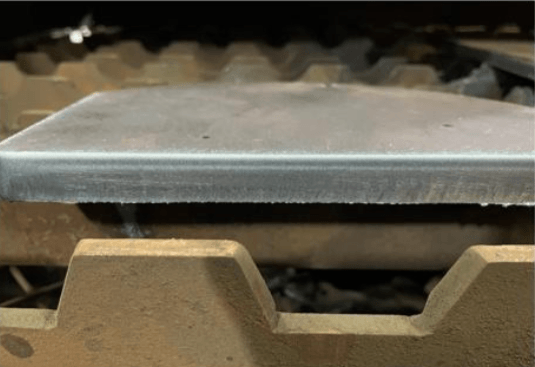
- Uncontrollable Thermal Distortion & Stress: Extra-long side beams and chassis plates drift out of tolerance. Forcing these distorted parts into jig alignment increases internal weld stress and heightens the risk of field failure.
- Bed Size & Weight Limits: Standard machine beds cannot handle extra-long main beams. Repeated crane re-positioning, flipping, and secondary alignments waste valuable labor hours and introduce cumulative mechanical errors.
- Subcontractor Bottlenecks in Peak Season: Unpredictable third-party delivery schedules mean OEM plants miss crucial delivery windows, losing seasonal market share to competitors.
Core Solution: Dual High-Power Setup with Baison ST3A & EL6A
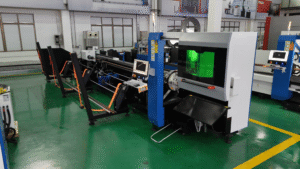
To accommodate distinct production scenarios in heavy equipment workshops, Baison Laser provides two specialized high-power fiber laser series to prevent hardware mismatch.
Comparison Matrix: Baison ST3A vs. EL6A Fiber Laser Cutters
| Feature / Metric | ST3A High-Precision Exchange Table Laser | EL6A Ultra-Large Format High-Power Laser |
| Equipment Positioning | Workhorse machine for long-term precision on thick plates | High-throughput solution for extra-long, heavy plates |
| Laser Power Range | 6 kW – 40 kW (Primary: 20 kW–40 kW) | 6 kW – 60 kW (Primary: 20 kW–60 kW beveling) |
| Processing Format | 3,000 × 1,500 mm | Straight Cut: 6,000 × 2,500 mm Bevel Cut: 5,500 × 2,200 mm |
| Max Bed Load | 1,500 kg | 6,500 kg |
| Ideal Applications | Batch chassis & boom precision cutting | Extra-long longitudinal beams & large chassis |
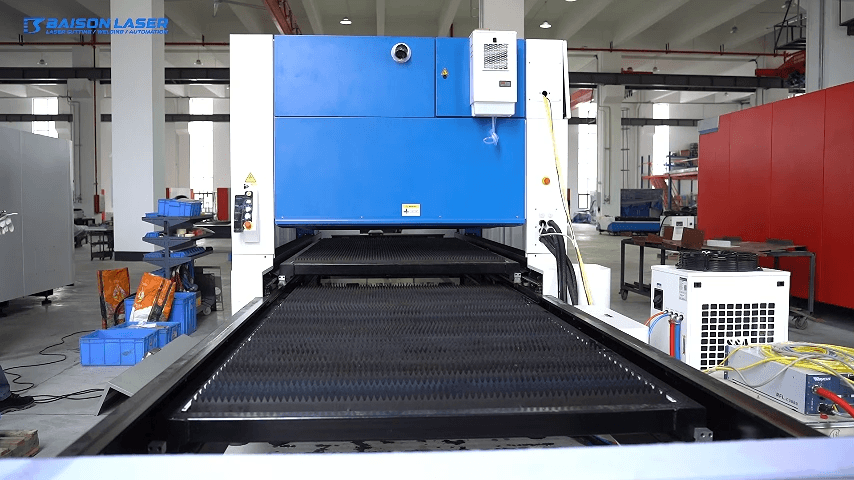
Baison ST3A: The High-Precision Thick Plate Workhorse
- Laser Power Configuration: Supports 20 kW to 40 kW high-power fiber lasers engineered for continuous heavy-plate production runs.
- Thermal Isolation Bed Structure: Built with a semi-hollow thermal insulation bed that prevents intense cutting heat from transferring to the main machine frame. This ensures virtually zero thermal drift during long continuous shifts, guaranteeing part consistency for chassis and boom assemblies.
- Bus Control System: Equipped with the FSCUT bus control system featuring multi-stage dynamic piercing, anti-dross algorithms, and intelligent vibration suppression for mirror-finish thick plate edges.
- Optional Bevel Processing: Supports integrated bevel cutting modules to complete blanking and weld-prep beveling in a single setup.
Baison EL6A: High-Throughput Ultra-Large Format Powerhouse
- Laser Power Configuration: Configurable from 20 kW up to 60 kW, enabling rapid processing of ultra-thick structural plates for ag and mining equipment.
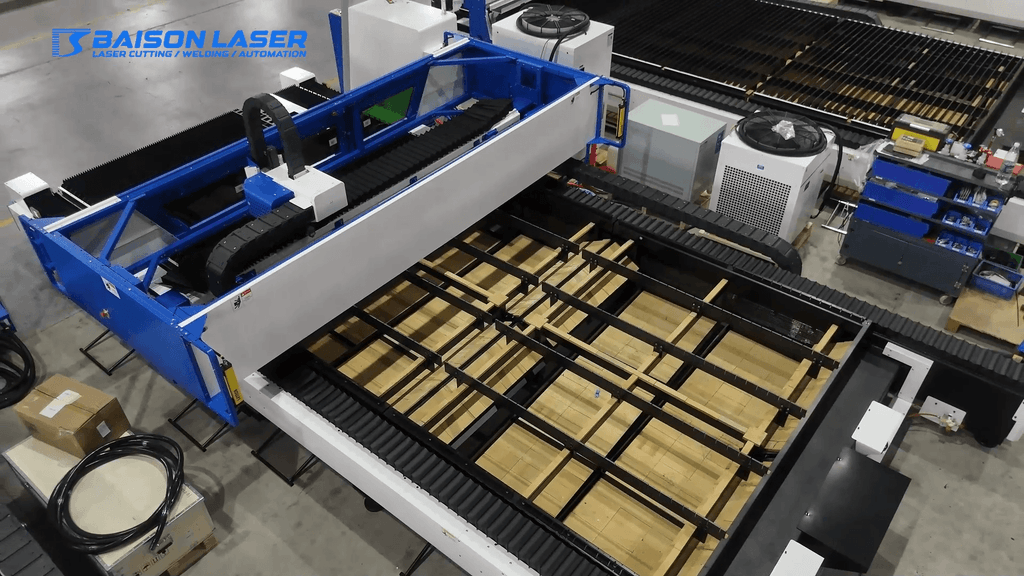
- Expansive Processing Area: Standard straight-cutting bed of 6,000 × 2,500 mm. With the optional bevel module, it delivers a 5,500 × 2,200 mm beveling envelope (5,400 × 1,700 mm for >30 kW power setups). Process full-length main beams without secondary repositioning.
- Heavy-Duty Table Payload: Built to withstand up to 6,500 kg, effortlessly absorbing the high impact of heavy raw plate loading.
- High-Speed Dynamics: Features an integrated extruded aviation-aluminum gantry. Simultaneous X/Y acceleration reaches up to 1.2 G with linkage speeds up to 120 m/min (enclosed configuration: 80 m/min, 0.4 G), balancing massive formats with fast cycle times.
For a deeper dive into how this ultra-large format machine eliminates third-party reliance, read our guide on how heavy duty fiber laser cutters slash subcontracting costs by 30 percent.
Process Breakthrough: Legacy Cutting vs. Baison Fiber Laser
How does high-power fiber laser technology compare to traditional thermal cutting methods in heavy equipment manufacturing?
| Evaluation Criteria | Traditional Oxy-Fuel / Plasma | Baison ST3A / EL6A High-Power Fiber Laser |
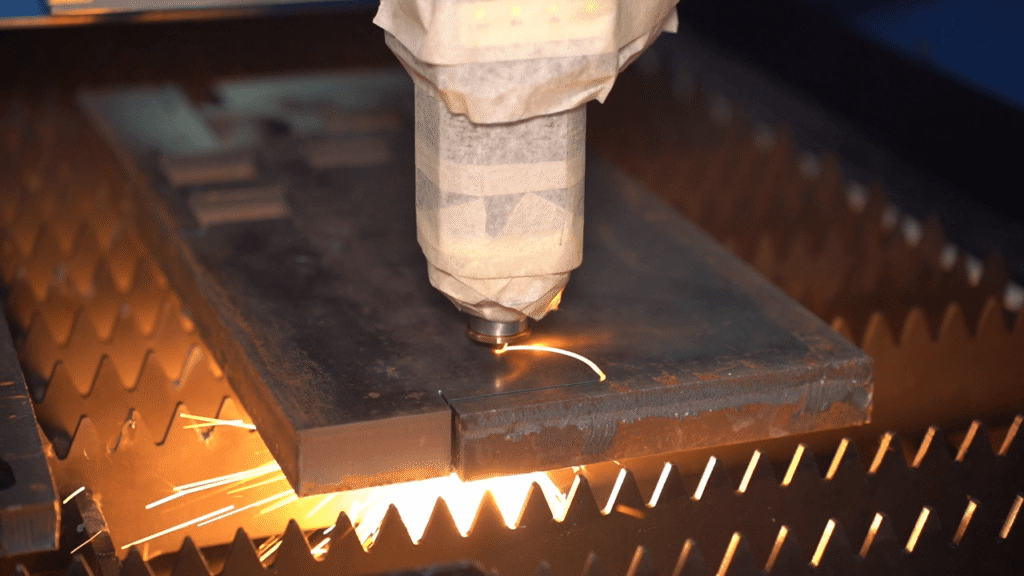
| 20–50 mm Carbon Steel Speed | Slow speed, high heat input, heavy edge collapse, thick slag | Highly concentrated energy density, fast feed rates, minimal HAZ |
| Edge & Bevel Quality | Heavy dross requiring manual chipping; poor bevel accuracy | Superior edge perpendicularity; optional ±45° continuous beveling |
| Format & Weight Capacity | Requires multiple plate repositionings; high cumulative error | EL6A handles up to 6,000 × 2,500 mm and 6,500 kg loads in one pass |
| Post-Processing Labor | Demands extensive grinding, straightening, and skilled labor | Reduces secondary grinding and rework labor by over 60% |
| Workplace Environment | High smoke, heavy dust, intense radiation exposure | Clean operating environment with multi-zone partitioned dust extraction |
| Operation & Automation | Heavily dependent on operator experience and manual tuning | Intelligent CNC with pre-loaded thick-plate parameter databases |
Commercial Impact for Ag OEMs
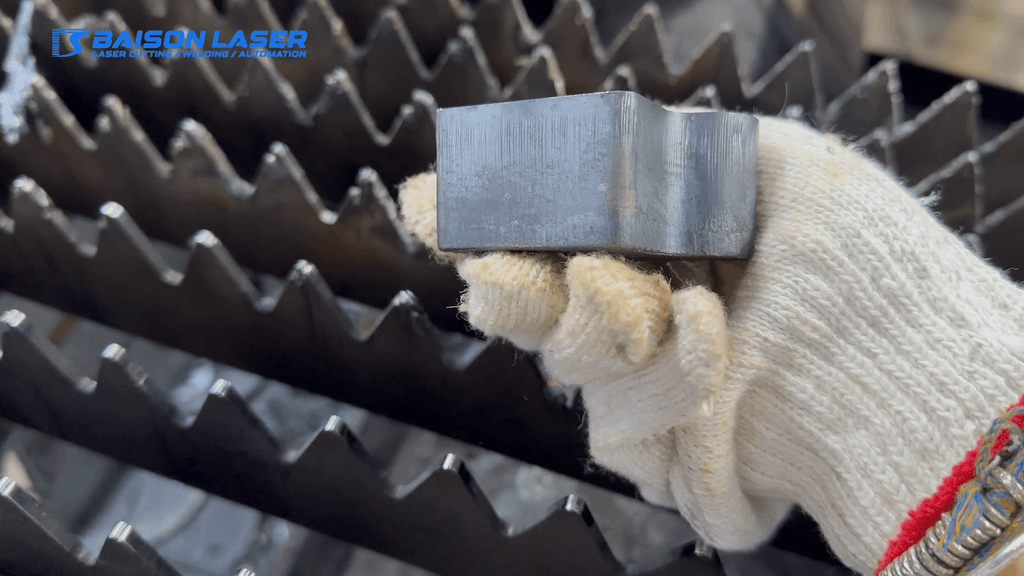
Bringing thick plate cutting back in-house eliminates third-party markups and delivery uncertainty. Laser cutting controls thermal deformation at the source, streamlining down-line assembly while removing dangerous weld stress.
By integrating one-step beveling for weld preparation, fabricators can completely stop secondary grinding with Baison laser bevel cutting for plates and tubes, accelerating final machine assembly.
💡Exclusive Production Benchmark: Want to see exact cutting speeds, gas consumption data, and real edge quality photos for 30 mm, 40 mm, and 50 mm carbon steel processed at 30 kW vs. 40 kW?
Converting Technical Specs into Financial ROI
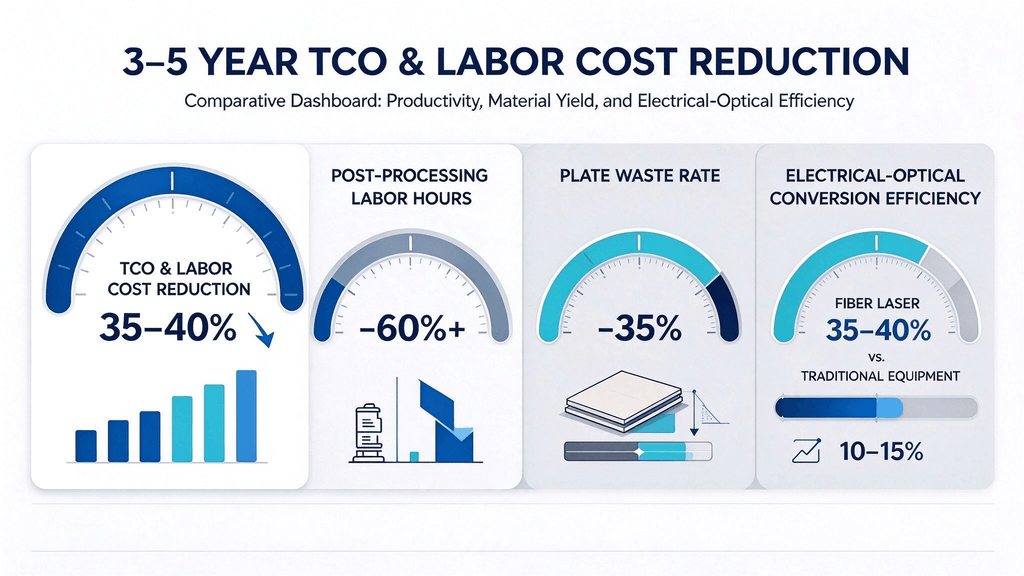
Investing in heavy industrial fiber laser equipment requires analyzing the 3-to-5-year Total Cost of Ownership (TCO).
If you are currently evaluating wattage options and capital expenditure, check out our comprehensive Fiber Laser Cutting Machine Buying Guide: Specs, Cost & ROI to align machine specs with your production scale.
The ST3A and EL6A are optimized for maximum operational uptime and energy savings:
- Higher Photoelectric Efficiency: Advanced fiber laser sources achieve 30%–40% wall-plug efficiency. Paired with independent climate-controlled electrical cabinets and zoned dust extraction, operational power costs per part are drastically lowered.
- Minimal Unplanned Downtime: A drawer-style quick-change optics assembly allows protective lens swaps in under 5 minutes, maximizing machine availability during high-demand peak seasons.
Global Turnkey Delivery: Layout, Installation & On-Site Training
Baison Laser delivers complete end-to-end support for international manufacturing facilities:
- Pre-Sales Workshop Planning: Customized plant layouts tailored to your factory floor, complete with electrical, gas supply, and foundation engineering guidance.
- On-Site Global Commissioning: Experienced application engineers handle full site installation, beam alignment, and calibration.
- 7-Day System Operator Training: Comprehensive on-site training covering CAD/CAM nesting software, high-power thick plate parameter tuning, and preventive maintenance routines to build immediate in-house expertise.
To guarantee maximum machine availability during peak harvest seasons, international buyers can rest easy and never fear machine failure again inside Baison Laser’s global support network.
Frequently Asked Questions (FAQ)
Q1: Why are agricultural equipment manufacturers upgrading to 20 kW+ fiber lasers?
Ag equipment relies on 20–50 mm+ high-strength carbon steel structural parts. High-power fiber lasers (20 kW–40 kW) offer ultra-fast piercing and cutting speeds with negligible heat distortion. This prevents internal weld stress and significantly reduces the risk of structural frame cracking under heavy field usage.
Q2: What are the key differences between the Baison ST3A and EL6A models?
The ST3A utilizes a semi-hollow thermal insulation bed focused on long-term thermal stability for batch chassis and arm parts. The EL6A is built for massive parts, offering a 6,000 × 2,500 mm cutting format, 6,500 kg table capacity, and up to 60 kW laser power for extra-long main beams and heavy chassis plates.
Q3: What is the maximum carbon steel production thickness for Baison high-power lasers?
With a 40 kW laser source, the maximum oxygen-assisted cutting thickness for carbon steel reaches 50–80 mm. Stable, high-volume production quality is achieved consistently across 1–70 mm plate ranges.
Q4: How fast is the return on investment (ROI) for an in-house high-power fiber laser?
With 30%–40% electro-optical efficiency and reduced secondary grinding labor (60%+ savings), most heavy equipment plants recoup their capital investment rapidly.
(Weighing new technology against older machinery? Learn why a used European laser or new Chinese fiber option impacts your TCO long-term).
📊Calculate Your Payback Period:Our engineering team provides custom ROI evaluations based on your specific plate thickness mix, electricity rates, and local labor costs.[Contact a Baison Application Specialist to Request Your Custom ROI Analysis]
Q5: What international support does Baison offer for overseas manufacturing plants?
Baison offers full overseas support including factory layout design, on-site commissioning by field engineers, and a minimum of 7 days of operator and process training.
Q6: When should a plant NOT choose the ST3A or EL6A?
Additionally, if your ag-equipment production primarily involves heavy structural steel pipes and tubes rather than flat plates, explore our Heavy Duty Laser Pipe Cutter Selection Guide for specialized tube processing options.
If your facility processes exclusively ultra-high-hardness wear-resistant plates or requires standalone offline 3D robotic beveling, alternative specialized machinery may be recommended. Contact our engineering team for an exact application audit.
Take Control of Your Production Lead Times
In the competitive agricultural and heavy machinery market, winning comes down to structural reliability and predictable delivery schedules. Legacy plasma and oxy-fuel cutting bottlenecks no longer need to restrict your plant’s throughput.
Ready to upgrade your manufacturing capability?
Get Your Customized Feasibility Package
Submit your main beam or chassis part drawings to the Baison Laser application engineering team today. We will provide:
- A One-on-One Cutting Cycle Time Analysis
- Per-Part Consumable & Gas Cost Breakdown
- A Detailed Tailored ROI & Payback Evaluation Report
📩[Submit Your Part Drawings & Contact Baison Application Engineers Today]