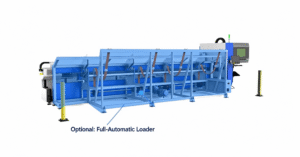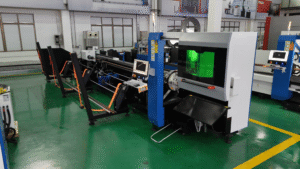
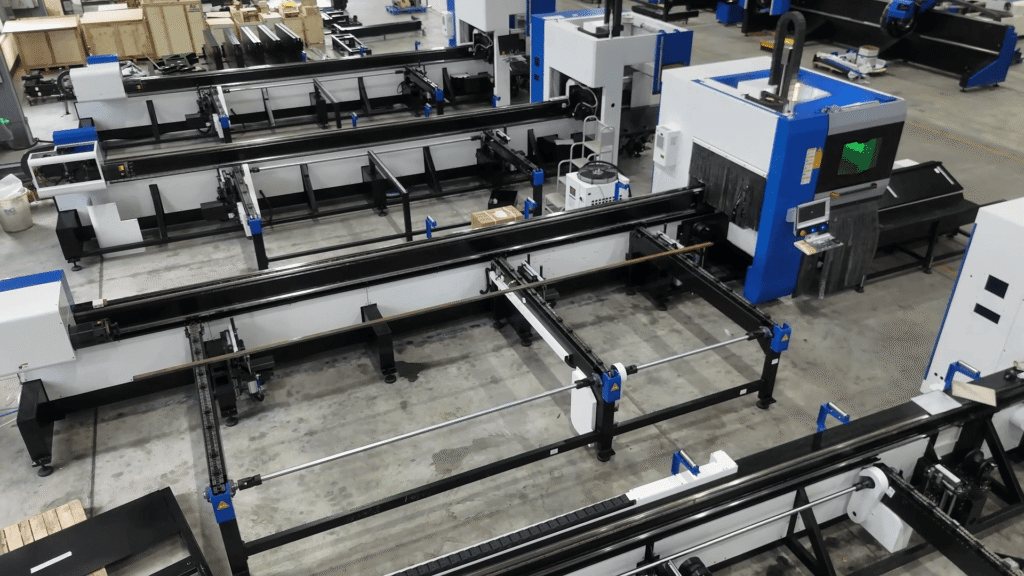
TL;DR: To meet the explosive growth of global solar and wind infrastructure, Baison Laser introduces the G24C side-mounted dual-chuck heavy-duty laser tube cutting machine. Featuring a standard tailing length of ≥90mm and an optional zero-tailing system (0mm remnant), this machine combines an automatic chain feeding system with a servo-following unloading table.
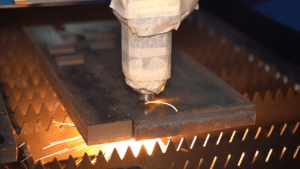
The minimal heat-affected zone (HAZ) preserves pre-galvanized anti-corrosion layers, effectively eliminating common industry bottlenecks: slow material changeover, high scrap rates, long-tube sag/vibration, and edge rust. Designed specifically for high-volume continuous production of renewable energy structural components.
The Hidden Profit Killers in Solar Structural Manufacturing
A single 100MW utility-scale solar farm requires tens of thousands of tons of pre-galvanized C-channels, H-beams, and steel tubing. For contract manufacturers and OEMs in the solar racking sector, even a minor percentage loss in scrap steel per ton compounds into massive financial losses over annual production runs.
Traditional fabrication methods rely heavily on mechanical sawing and punching:
- Severe coating damage: Sawing scrapes and burns off the protective zinc coating, forcing manufacturers to add costly manual deburring and post-galvanized repair sprays.
- Bottlenecked output: Multi-step processing slows down lead times and shrinks gross margins in an increasingly competitive renewable energy market.
The Core Operational Challenges facing Solar Racking Manufacturers
Modern structural fabrication shops face four main operational hurdles:
- Complex Profile Swapping & Downtime: Solar mounting designs vary wildly. Switching frequently between C-channels, U-channels, structural angles, and box tubing using traditional stamping dies requires extensive setup downtime, disrupting continuous scheduling.
- Material Waste Bleeding Margins: Conventional tube cutting machinery leaves long scrap ends. With fluctuating global steel prices, excess remnant scrap directly eats into contract profitability.
- Inaccurate Processing on Long Tubes: Tubing over 6 meters (20 ft) in length tends to sag and vibrate under its own weight during high-speed rotation, causing hole alignment errors and elevated scrap rates.
- Secondary Anti-Corrosion Work: Mechanical cutting tearing through pre-galvanized layers leads to edge rust, requiring labor-intensive secondary grinding and zinc re-coating.
One Machine for All Profiles: The Engineering Breakthrough of the Baison G24C
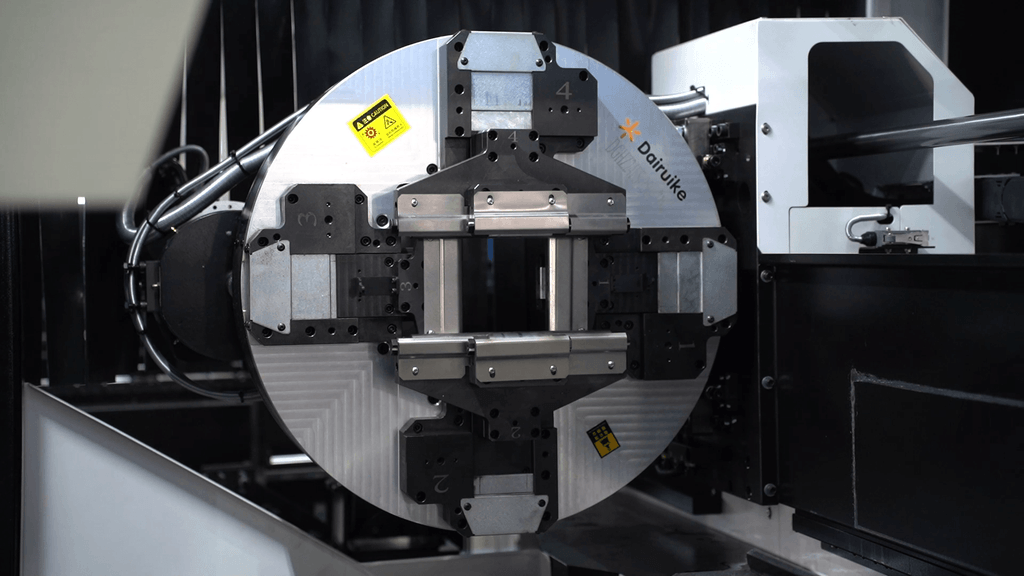
Mass production of solar racking systems demands a flexible machine that handles diverse structural profiles without splitting processes across multiple workstations. The Baison G24C accomplishes this through a heavy-duty side-mounted bed structure and large-capacity square-hole chucks.
For structural fabricators looking to dive deeper into the mechanics of remnant reduction, read our technical breakdown on how zero-tailing technology redefines structural steel profitability.
Key Technical Capabilities:
- Unrivaled Profile Compatibility: Handles round tubes ($\Phi$10 – 240mm), square tubes (10×10 to 220×220 mm), and #5 – #24C structural steel (C-channels, U-channels, I-beams, angle irons) in a single setup.
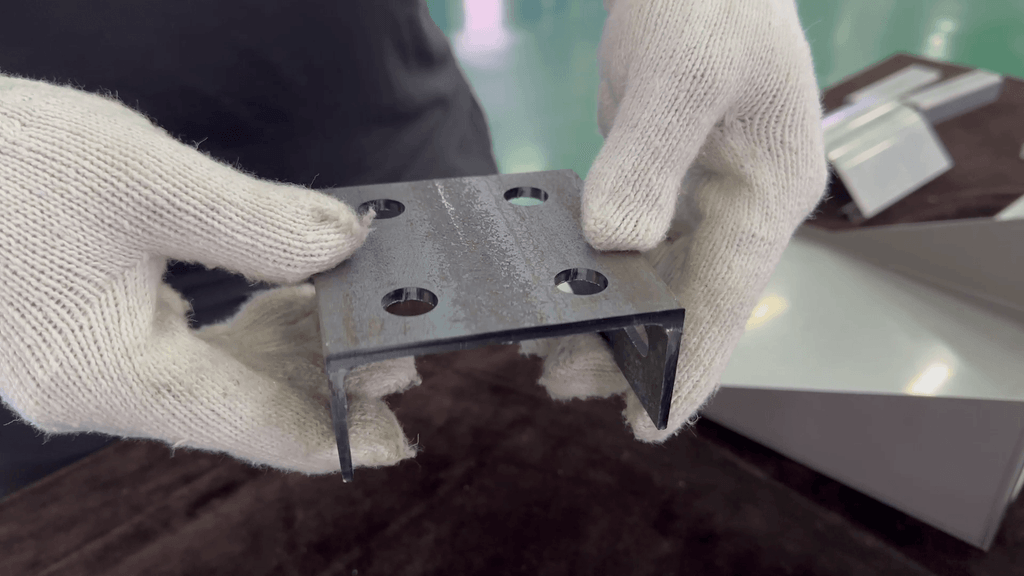
- Zinc Layer Protection: A tight heat-affected zone (HAZ) yields clean, burr-free cuts while preserving the original zinc anti-corrosion barrier, eliminating secondary refinishing.
- Dust-Proof Chuck Design: Fully enclosed front chuck protects internal precision components from airborne debris, minimizing maintenance downtime during 24/7 continuous operation.
ROI & Cost-Benefit Analysis: Customized Configuration for Target Payback
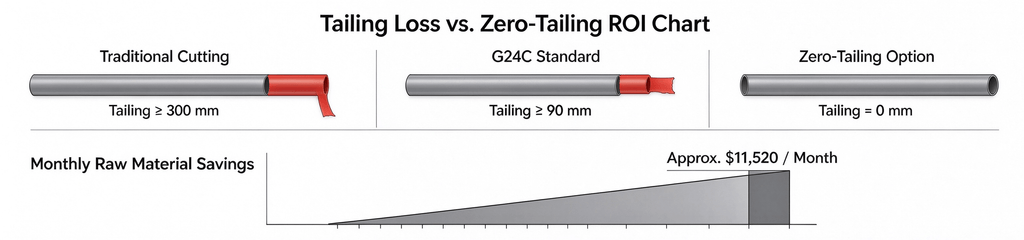
Solar mounting manufacturing runs on tight margins. Profits live inside higher material utilization, lower labor requirements, and reduced secondary operations. Baison offers two tailing configurations tailored to your order structure:
Financial & Operational Comparison Matrix
| Feature / Metric | Traditional Sawing & Stamping Line | Baison G24C (Standard Edition) | Baison G24C (Zero-Tailing Edition) |
| Tailing / Remnant Control | Long remnants; high scrap rate | ≥90mm scrap length (significant saving over standard cutters) | Near 0mm remnant (zero tailing loss at tube ends) |
| Material Utilization Rate | ~70% – 75% | Up to 30% yield increase (varies by nesting scheme and tube specs) | Maximum nesting density; near-100% linear yield |
| Labor Requirement | 3–4 operators (feeding, handling, deburring, zinc spray) | 1 supervisor (automatic chain feeder + servo unloading) | 1 supervisor (automatic chain feeder + servo unloading) |
| Profile Changeover | Tooling swaps required; separate cutting & punching steps | Seamless software switching; dynamic multi-profile processing | Seamless software switching; dynamic multi-profile processing |
Estimated ROI Breakdown
Scenario: A plant processes 80 tons of pre-galvanized structural steel per month at an average steel cost of $1,200/ton.
Switching to the standard G24C increases material utilization by 12%, saving roughly 9.6 tons of raw steel per month (≈ $11,520/month in direct material savings). Combined with the elimination of 2 manual deburring/zinc-spraying labor roles and higher overall throughput, most solar racking fabricators achieve full capital payback within months.
If your shop is still heavily reliant on traditional mechanical punch presses, you can explore our detailed comparison on why multi-step tubing lines and stamping dies erode plant margins.
💡 Actual savings vary based on tube specifications, order segment lengths, and regional raw material costs. Want a personalized scrap reduction report based on your CAD drawings? Request a Custom Engineering ROI Assessment from our team today.
Engineered for Heavy-Duty, Non-Stop Production
To sustain intense production schedules in industrial manufacturing plants, the G24C is built with reinforced mechanical stability:
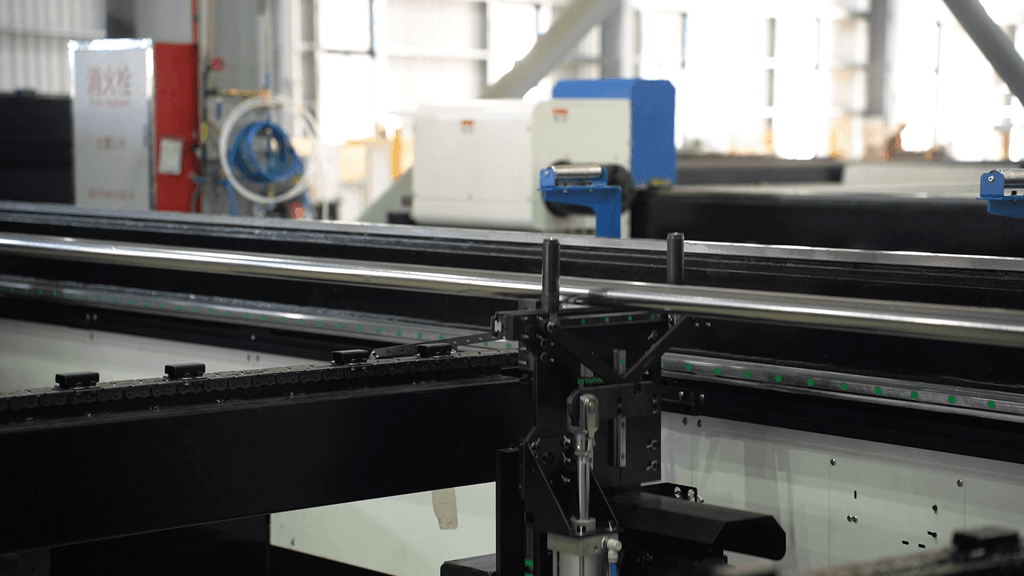
- Triple Servo-Following Supports: Engineered for extra-long workpieces up to 6,500mm, three set units of servo-following mechanisms prevent tube sagging and dynamic chatter during rotation.To evaluate whether automated loading systems fit your operational budget, check out our guide on calculating the ROI of an automatic tube laser loader.
- Pneumatic Dust Removal: The rear chuck integrates a continuous blow-through air mechanism to clear internal slag and chips, extending movement component lifespans.
- Industrial Gantry & Auto-Lubrication: High-rigidity gantry architecture driven by precision rack-and-pinion gearing paired with automated timed lubrication for continuous long-term reliability.
Global Compliance & Delivery Specifications
The Baison G24C fully complies with CE safety standards and fits into standard ocean shipping containers for global delivery. Every unit includes complete English operational manuals, predefined material process parameter libraries, and remote commissioning support to ensure rapid factory integration.
Frequently Asked Questions (FAQ)
Q1: What is the scrap rate performance of the Baison G24C? What is the difference between standard and zero-tailing options?
The standard dual-chuck setup limits remnant tailing to ≥90mm. For shops striving for absolute minimum raw material waste, our optional zero-tailing system reduces scrap down to 0mm, eliminating raw material waste on high-cost structural orders.
Q2: Can this machine cut pre-galvanized C-channels and U-channels commonly used in solar racking?
Yes. The G24C is specifically engineered for medium-to-heavy structural profiles, including #5 to #24C C-channels, U-channels, angle steel, and hollow structural sections (HSS). Its precise laser thermal control keeps the protective zinc layer intact, eliminating post-cut corrosion risks.
Planning a facility upgrade? Read our complete heavy-duty laser pipe cutter selection guide to choose the right chuck capacity and laser power for your target profiles.
Q3: How does the machine prevent sag and wobble when cutting 6-meter (20ft) long tubes?
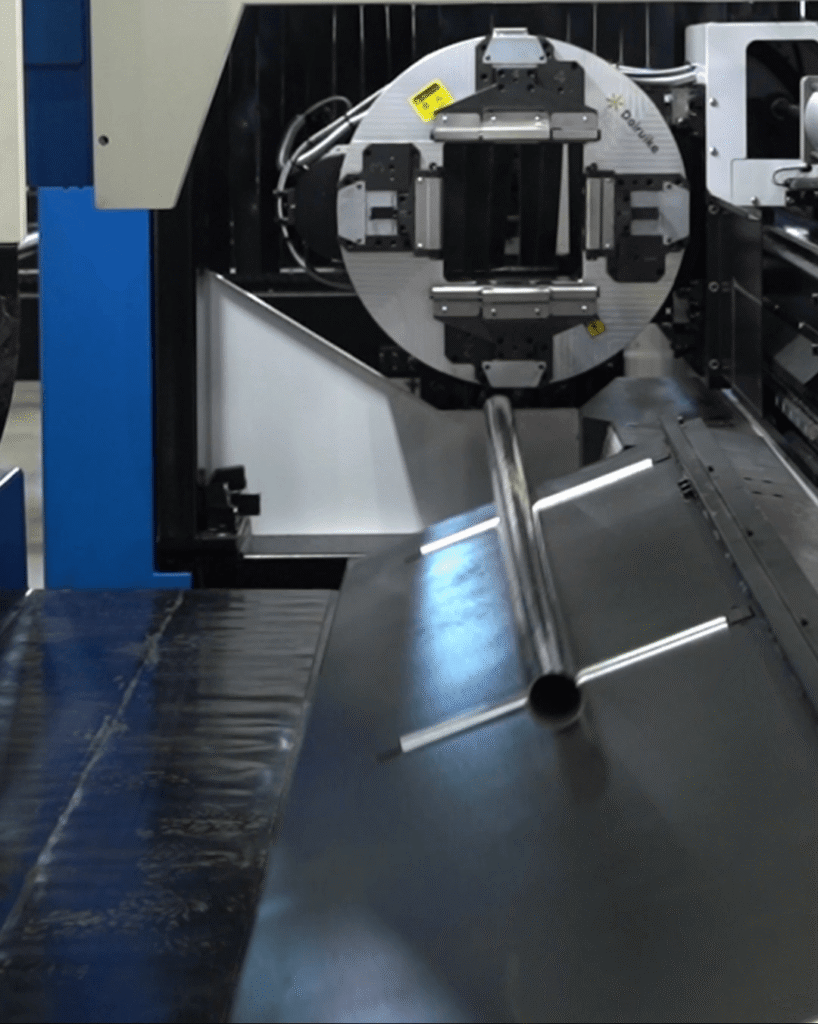
Standard configurations feature an automatic chain loading feeder, a servo-driven dynamic unloading mechanism, and 3 synchronized support units. These mechanisms stabilize workpieces up to 6,500mm in length and 300kg in weight, ensuring hole alignment accuracy across the entire tube length.
Q4: How automated is the G24C, and does it require highly specialized laser operators?
The system is engineered for high automation. With automated chain feeding, dynamic unloading, and an intuitive CNC control panel, a single operator can oversee continuous production runs, drastically lowering skilled labor dependencies.
Q5: How reliable is the G24C during continuous heavy-duty operation?
Built around a rigid gantry bed, rack-and-pinion drive systems, and automated central lubrication, key mechanical parts stay protected against wear. The machine delivers predictable uptime, straightforward maintenance, and full CE international compliance.
💡 Many solar racking fabricators struggle to choose between standard and zero-tailing setups when managing mixed batch orders. Send us your structural BOMs and daily production schedule, and our technical team will generate a Total Cost of Ownership (TCO) comparison tailored to your factory layout.
Take the Next Step Toward Efficient Solar Bracket Manufacturing
For renewable energy equipment manufacturers, long-term profitability isn’t just about raw cutting speed—it’s about reducing steel scrap, eliminating secondary finishing steps, and maintaining batch accuracy.
The Baison G24C integrates tailing control, galvanized layer protection, and flexible profile cutting into a single automated workcell. If you are evaluating a production line upgrade, contact Baison Laser today to receive a customized equipment configuration and cost-benefit report based on your specific profile mix.