When evaluating industrial fiber laser cutting machines, overseas B2B buyers and fabrication plant owners often focus exclusively on standard spec sheet metrics: laser source power, peak cutting speed, CNC controller models, or maximum acceleration.
Yet, a critical question persists across sheet metal fabrication workshops worldwide: why do two fiber laser cutters with identical initial parameters perform so differently after one or two years of heavy-duty operation?
While one maintains flawless cutting accuracy and edge quality, another begins to drift, requiring frequent calibration or exhibiting burrs. The secret isn’t found in a brochure—it is forged directly on the factory floor.
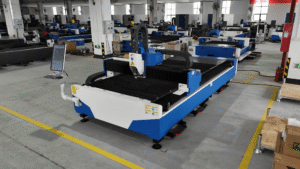
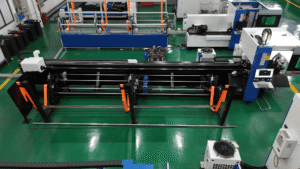
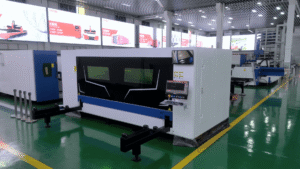
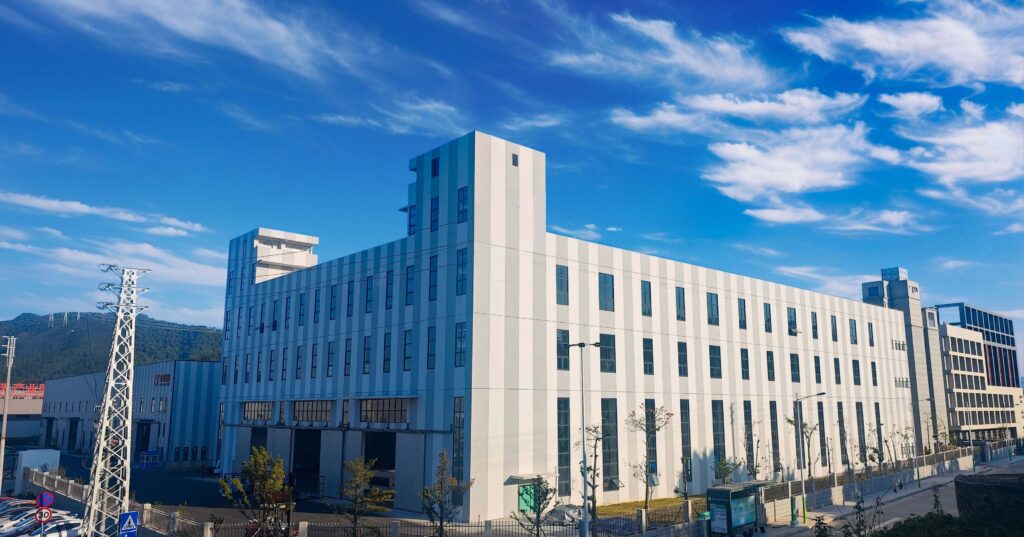
Spanning a nearly 100,000-square-meter state-of-the-art production base in Gaoming, Foshan, Baison Laser implements a completely vertically integrated manufacturing ecosystem. From R&D and raw bed fabrication, beam construction, and precision sheet metal processing to heavy-duty gantry milling and final assembly, let’s explore the core engineering behind high-precision fiber laser cutting systems.
Precision Sheet Metal Fabrication: The Foundation of Structural Integrity
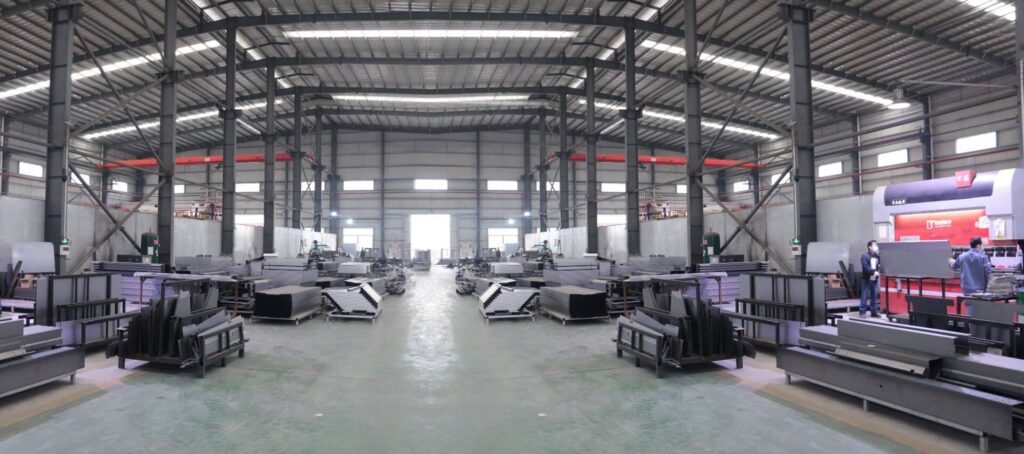
A machine’s dimensional accuracy and long-term alignment begin the moment raw sheet metal is blanked. Many machine assemblers outsource enclosures, chassis covers, and frames to third-party workshops, leading to inconsistent dimensional tolerances, assembly gaps, and structural warping under workshop vibration.
Baison operates a dedicated, fully equipped sheet metal fabrication workshop featuring advanced CNC press brakes, high-speed fiber laser cutting systems, and standardized welding stations. Every enclosure, electrical cabinet, and protective shell undergoes stringent dimensional tolerance control, establishing a solid mechanical foundation for final machine integration.
Curious about how custom enclosure tolerances or structural designs impact your specific manufacturing plant layout? Contact our engineering team today for a tailored technical consultation and specification audit.
Automated Robotic Welding: Eliminating Human Inconsistency & Structural Flaws
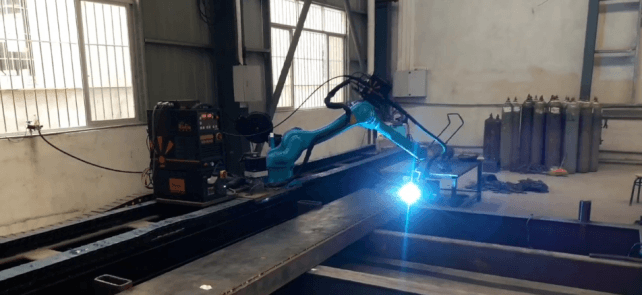
The machine bed and crossbeam serve as the primary structural backbone of any high-power fiber laser cutting machine, absorbing intense dynamic loads and high-speed inertial accelerations. Their welding quality directly dictates the equipment’s resistance to long-term mechanical deformation.
Traditional manufacturing relies heavily on manual welding, which is susceptible to human error, incomplete penetration, undercutting, or slag inclusions. Baison utilizes advanced automated robotic welding systems for all core bed structures. Robots execute precise programmed welding paths to ensure uniform weld penetration and exceptional structural rigidity.
Furthermore, every welded structural assembly undergoes rigorous infrared flaw detection to intercept internal defects before parts advance to the next production stage.
Want to evaluate how automated robotic welding prevents structural fatigue compared to conventional manual techniques? Reach out to our technical experts to request detailed weld inspection reports for your upcoming production line.
High-Temperature Annealing & Stress Relief: Locking in 15-Year Structural Stability
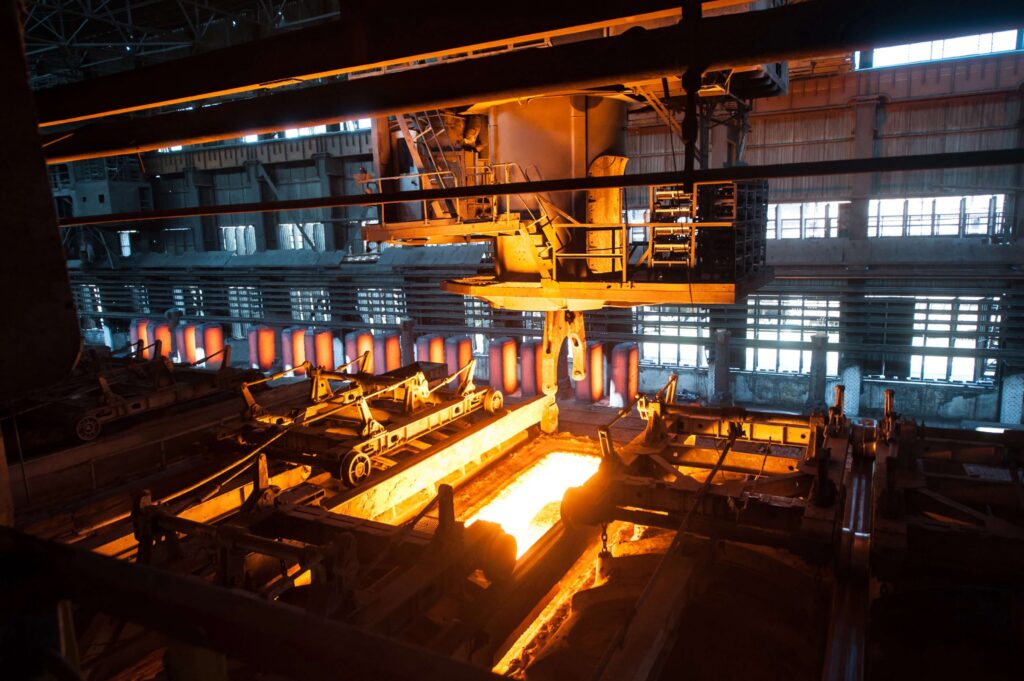
Internal residual metal stress generated during heavy steel welding and rough machining is the invisible enemy of long-term laser cutting precision. If left unrelieved, internal stress causes the machine bed to warp microscopically over time under continuous high-acceleration operations.
To neutralize internal stress, Baison operates large-scale CNC high-temperature annealing furnaces utilizing a rigorous multi-stage intermittent annealing process: workpieces undergo gradual heating across controlled temperature checkpoints (180°C, 250°C, 360°C, 450°C, 550°C, up to 650°C), are held at a constant 650°C for 3 hours, and then undergo slow micro-seam furnace cooling over a complete 12-hour cycle.
This process completely stabilizes the metal molecular structure, ensuring a theoretical stable service life of up to 15 years without deformation. This is further reinforced by natural aging and vibration seasoning.
Struggling with machine bed warping or loss of calibration in your current equipment? Get in touch with Baison’s specialists today to discover how our 12-hour thermal annealing process safeguards your long-term investment.
Heavy-Duty Gantry Milling: Delivering Micrometer-Level (≤ 0.02mm/m) Precision
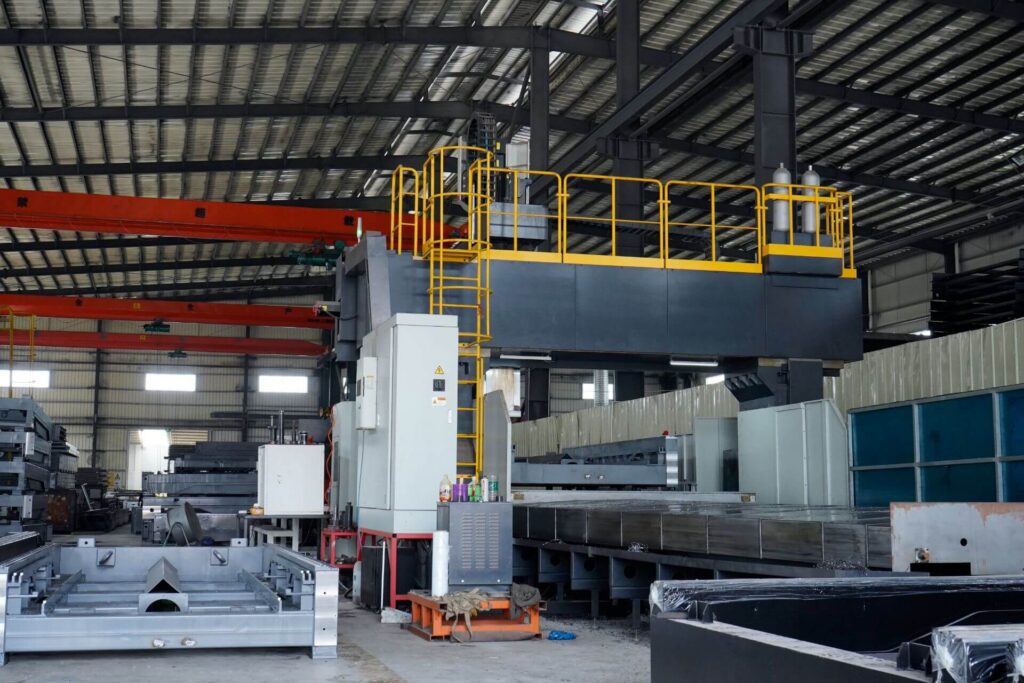
Following structural annealing, achieving straight, accurate cutting trajectories relies entirely on the precise machining of guide rail and gear rack mounting surfaces. Very few fiber laser manufacturers possess the massive capital equipment required for ultra-precise heavy machining.
Baison houses multiple ultra-heavy-duty CNC gantry milling centers capable of precision-machining guide mounting surfaces up to 9.3 meters in length with linear precision strictly controlled at ≤ 0.02mm/m. This creates an exceptionally flat, rigid physical datum for linear guides and rack-and-pinion transmissions, ensuring micron-level cutting accuracy and sharp corner definition across years of continuous industrial operation.
| Manufacturing Process | Traditional / Outsourced Approach | Baison Laser Vertically Integrated Approach |
| Bed Structure Welding | Manual welding; prone to human error & internal flaws | Automated robotic welding with infrared inspection |
| Stress Relieving | Natural aging or short/omitted annealing | 12-hour multi-stage thermal annealing up to 650°C |
| Guide Rail Milling | Standard third-party subcontracted milling | In-house 9.3m ultra-heavy gantry milling (≤0.02mm/m) |
Looking to achieve tight tolerances on thick carbon steel or aerospace alloys? Send us your part drawings today for a professional cutting accuracy and machine configuration proposal.
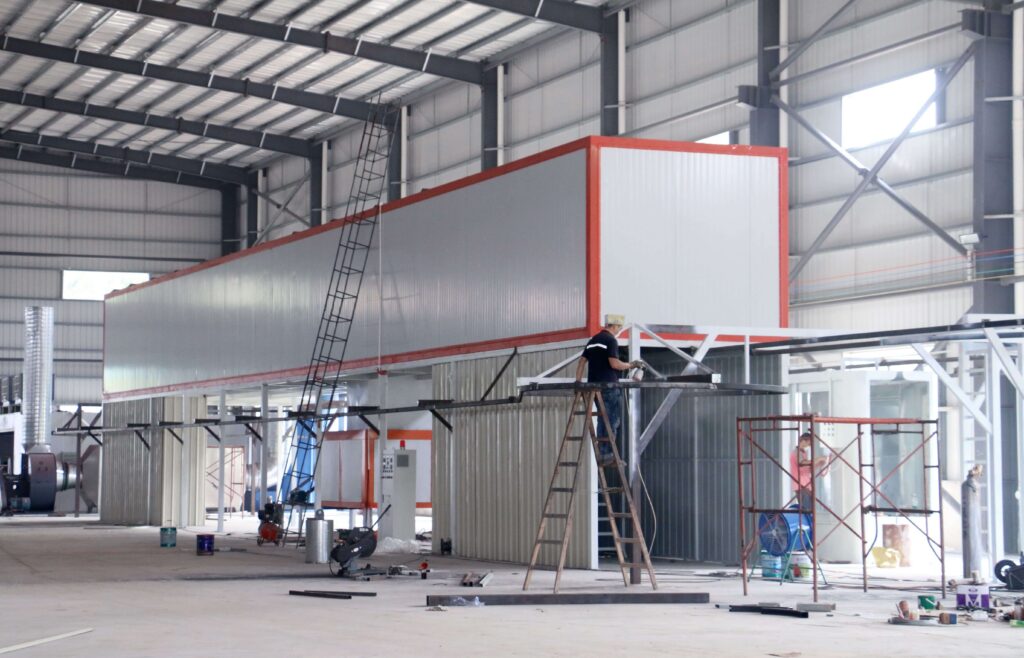
Automated Electrostatic Spray Coating: Armor Against Harsh Industrial Environments
Industrial sheet metal fabrication workshops are demanding environments characterized by heavy metal dust, high humidity, and cutting lubricant exposure. Inadequate surface treatment quickly leads to paint peeling and structural corrosion.
Baison implements a standardized 7-stage surface treatment process: degreasing, water rinsing, surface conditioning, phosphating, secondary rinsing, drying, and electrostatic powder coating. Utilizing high-voltage electrostatic spray technology combined with high-temperature thermal curing, a dense, resilient protective armor is formed on the exterior.
This coating delivers superior resistance to scratching, high temperatures, humidity, and workshop particulate accumulation, ensuring pristine equipment aesthetics and longevity.
Planning a heavy-duty fabrication upgrade for harsh workshop conditions? Contact our sales engineers today to discuss custom color schemes, anti-corrosion specifications, and lead times.
Rigorous Total Quality Control: Over 100 Inspection Checkpoints
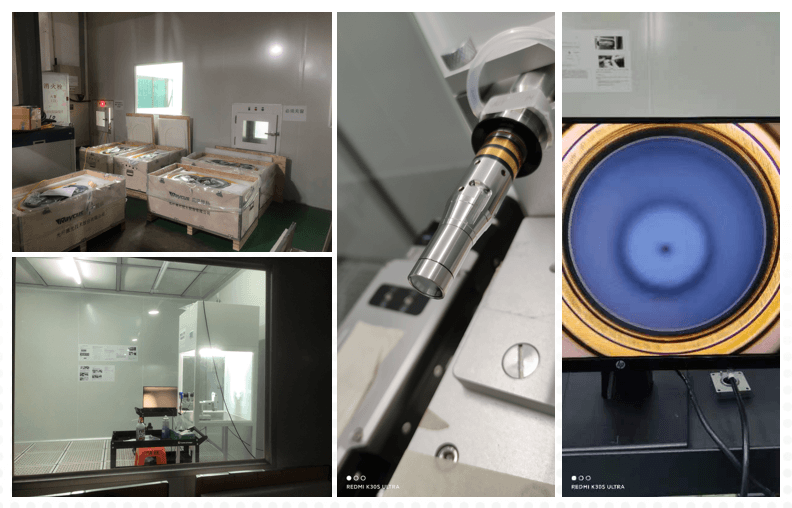
Quality cannot be achieved merely through final inspection; it must be engineered into every single manufacturing step. Baison enforces a comprehensive quality traceability framework incorporating over 100 critical quality control checkpoints from raw material ingestion to final factory testing.
Baison’s extensive industrial product lineup spans laser power ratings from 1,500W to an ultra-high 120,000W, covering fiber laser sheet cutting machines, professional tube/pipe cutters, sheet & tube combo systems, handheld laser welders, metal laser cleaners, and fully automated flexible manufacturing lines, serving diverse global heavy industry requirements.
Unsure which laser power or automation configuration best matches your output volume? Speak with our application engineers today for a free customized equipment selection guide.
Conclusion: Why Vertically Integrated Manufacturing Matters
Empowering global smart manufacturing with reliable laser technology and ensuring that every delivered machine withstands the test of time remains Baison Laser’s unwavering commitment. From bed rigidity and high-temperature thermal annealing to heavy gantry milling precision, Baison controls every critical variable in-house.
Backed by over 20 years of industry expertise and a nearly 100,000-square-meter production headquarters, our vertically integrated manufacturing model delivers the robust industrial reliability your business demands.
Words and specifications tell only part of the story; true manufacturing excellence is witnessed on the factory floor. Baison’s state-of-the-art industrial park in Foshan, China, is open to global partners, distributors, and metal fabrication enterprises. Whether you prefer an immersive virtual tour or an in-person facility inspection, we invite you to experience our advanced gantry milling centers, robotic welding lines, and annealing furnaces firsthand.
Ready to elevate your fabrication capabilities and secure a competitive edge? Contact Baison Laser today to schedule your private factory tour, request detailed technical specifications, or get an immediate quotation from our expert engineering team.
Frequently Asked Questions (FAQs)
Q1: Why is high-temperature annealing critical for fiber laser cutting machine beds?
During heavy steel welding and rough machining, intense localized heat generates significant internal residual stresses. Without comprehensive high-temperature stress relief—such as Baison’s 12-hour multi-stage 650°C thermal annealing cycle—these hidden stresses cause microscopic structural warping over months of high-acceleration operation, leading to guide rail misalignment and precision loss.
Proper annealing stabilizes the metal lattice, guaranteeing decades of unwavering structural integrity.
Have specific questions about bed stability for high-power 30kW+ cutting systems? Contact our technical engineering department for detailed metallurgical whitepapers.
Q2: What distinct advantages does in-house vertical integration offer international B2B buyers?
Complete vertical integration ensures absolute quality control, consistent component compatibility, and supply chain reliability. Unlike assembly-only brands dependent on outsourced third-party frames and components, Baison oversees every production phase—from raw sheet metal blanking and robotic welding to annealing and heavy gantry milling.
This eliminates intermediary markups, reduces defect rates, and ensures responsive, direct manufacturer technical support.
Interested in partnering with a reliable, manufacturer-direct laser brand for your regional distribution? Reach out to our global partnership desk today to explore dealership opportunities.
Q3: What power capacities and machine models does Baison Laser offer?
Baison provides an extensive industrial portfolio ranging from 1,500W to ultra-high 120,000W fiber laser cutting systems. Our core product lines include high-precision fiber laser sheet cutters, dedicated CNC pipe/tube cutting machines, heavy-duty sheet & tube combo systems, handheld laser welding systems, industrial laser cleaning machines, and fully automated flexible manufacturing lines tailored for diverse metal processing industries.
Looking for a custom power rating or specialized automation integration for your factory? Consult with our application engineering team to receive a tailored system configuration.
Q4: Can international clients and overseas engineering teams visit Baison’s manufacturing facilities?
Absolutely! We regularly welcome international clients, industry experts, and distribution partners to our nearly 100,000-square-meter modern production headquarters in Foshan, Guangdong, China. Visitors can inspect our heavy-duty gantry milling centers, automated robotic welding cells, and industrial annealing furnaces in person, or participate in guided live-streamed virtual plant tours.
Ready to plan your visit or schedule a live virtual factory demonstration? Contact our international sales team today to book your personalized walkthrough.