In sheet metal fabrication and metalworking, there is no universal winner among handheld laser welding, TIG (GTAW), and MIG/MAG (GMAW). The optimal process depends on part geometry, joint fit-up tolerances, and post-weld finishing standards.
- Handheld Laser Welding: Delivers high energy density with a minimal heat-affected zone (HAZ). When joint fit-up is controlled, it excels in thin-to-medium gauge and high-mix sheet metal jobs where welding speed, seam cosmetics, and reduced grinding hours are top priorities.
- TIG Welding (GTAW): Offers unmatched arc and weld-pool control, making it indispensable for precision components, complex multi-axis joints, and parts with strict cosmetic or metallurgical requirements.
- MIG/MAG Welding (GMAW): Provides continuous wire feed and high deposition rates, making it the workhorse for heavy structural plate, long straight seams, and joints requiring substantial filler metal.
If your shop is transitioning from traditional arc welding to handheld laser welding, validate three critical variables before purchasing: whether upstream cutting and bending tolerances remain consistent, whether weld penetration and mechanical strength meet your inspection standards, and whether total floor-to-floor cycle time (including fixturing and grinding) actually drops.
Key Takeaways
- Do Not Compare Travel Speed Alone: True shop efficiency is measured by total part-to-part cycle time:
Fixturing + Arc/Laser-On Time + Grinding & Polishing + Inspection & Rework. - Joint Fit-Up Is the Primary Process Boundary: Laser welding is sensitive to joint gaps. While wire feeding helps bridge minor tolerances, wide-gap or heavy-fill joints are usually handled more economically by MIG/MAG.
- Laser Wattage Does Not Equal Fixed Weld Thickness: The actual capacity of a 1500W, 2000W, or 3000W system depends on alloy grade, gauge, joint design, wire-feed synchronization, and your specific penetration/strength standards.
- Laser Safety & Export Compliance Must Be Engineered Upfront: Handheld systems carry direct beam and specular reflection hazards. Deployment requires proper Class 4 enclosures/curtains, safety interlocks, wavelength-specific OD-rated eyewear, and fume extraction—plus compliance with local regulations (e.g., CE for Europe, FDA/CDRH for the U.S.).
- Test Using Production-Grade Parts, Not “Golden Samples”: Always run sample trials using parts with normal shop-floor shearing, laser-cutting, and press-brake tolerances.
Handheld Laser Welding vs. TIG vs. MIG: Core Process Differences
For fabricators producing stainless steel enclosures, commercial kitchen equipment, metal furniture, architectural railings, and electrical cabinets, welding dictates both structural integrity and downstream labor costs.
In thin-gauge sheet metal, excessive heat input from conventional arc welding frequently causes warping, distortion, and heavy heat tint, driving up straightening, grinding, and passivation hours. For cosmetic-grade products, post-weld finishing often becomes the primary production bottleneck.
Handheld laser welding entered sheet metal shops specifically to solve this bottleneck, though its advantages operate within strict engineering boundaries.
| Comparison Metric | Handheld Laser Welding | TIG Welding (GTAW) | MIG/MAG Welding (GMAW) |
| Heat Source | High-energy-density focused laser beam | Non-consumable tungsten electrode arc | Continuously fed consumable wire arc |
| Filler Metal | Autogenous (no wire) or automated wire feed | Autogenous or manual filler rod addition | Continuous automatic wire feed |
| Heat Input & Distortion | Concentrated energy; small HAZ; minimizes thin-sheet warping | Finely controllable heat input; broader thermal spread | High heat input; requires distortion control on thin parts |
| Travel Speed | Fast on well-fitted joints | Slow; heavily dependent on welder dexterity | High deposition and fill rate via continuous feed |
| Weld Appearance & Post-Processing | Clean, uniform bead; drastically reduces grinding | Precision, cosmetic-grade bead profile | Fuller bead profile; typically requires post-weld cleanup |
| Gap Tolerance (Fit-Up) | Gap-sensitive; requires tight fit-up or wire feed | Moderate; skilled welders can bridge gaps manually | High gap tolerance; ideal for heavy-fill joints |
| Operator Skill Requirement | Parameter setup, gun angle/path control, and laser safety | High skill required for arc and puddle control | Voltage/wire-feed tuning and consistent gun manipulation |
| Typical Applications | Stainless/carbon thin sheet, cosmetic parts, high-mix low-volume | Precision components, complex joints, thin-wall tubing | Structural carbon frames, heavy plate, long straight seams |
(Note: Both MIG and MAG fall under Gas Metal Arc Welding (GMAW). MIG uses inert shielding gases, while MAG uses active gas mixtures; selection depends on base alloy and welding procedure specifications.)
1.1 Handheld Laser Welding: Slashing Thin-Sheet Distortion and Grinding Hours
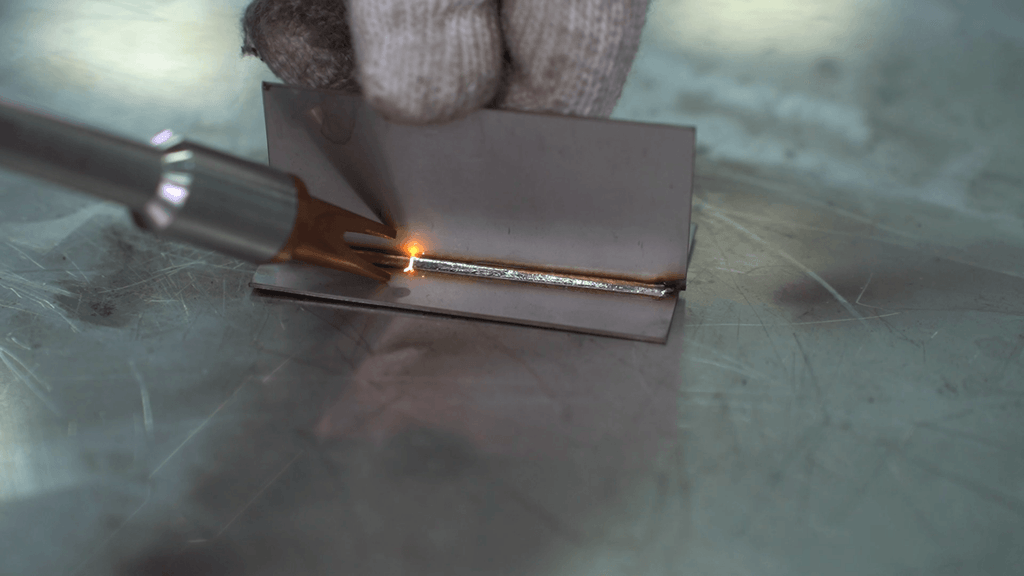
Handheld laser welding delivers a focused beam via fiber-optic cable to create an instantaneous, localized melt pool. Because heat does not soak broadly into the surrounding base metal, fabricators working with well-fitted stainless or carbon steel sheet achieve faster linear travel speeds while eliminating heavy post-weld straightening and aggressive abrasive grinding. Combined with modular fixturing, it is highly effective for high-mix, variable-batch job shops.
1.2 TIG Welding (GTAW): Irreplaceable Control for Precision Work
TIG utilizes a non-consumable tungsten electrode, allowing the welder to decouple heat input from filler addition. For intricate 3D joint geometries, thin-walled precision assemblies, exotic alloys, and strict cosmetic or X-ray-grade welds, TIG remains unmatched—though its low travel speed and reliance on scarce master welders limit throughput.
1.3 MIG/MAG Welding (GMAW): The Heavy-Duty Standard for Structural & High-Fill Work
MIG/MAG achieves high metal deposition rates through continuous wire feeding. On machine bases, heavy structural frames, thick plate splicing, and assemblies with wider fit-up tolerances, MIG/MAG offers superior fill efficiency, lower capital cost, and seamless integration into existing standardized lines.
Why Travel Speed Does Not Equal Shop-Floor Throughput
When evaluating welding systems, linear inches-per-minute (IPM) grabs the most attention. On an actual shop floor, however, torch-on time represents only a fraction of total part cost:
Total Part Cycle Time = Fit-Up & Fixturing + Actual Welding + Grinding & Cleanup + Inspection & Rework
- When Laser Welding Truly Boosts Throughput: When upstream fiber laser cutting and CNC press-brake bending hold tight tolerances and seams mate cleanly, handheld laser welding not only runs fast—it often leaves a bright, low-profile bead requiring only light brushing or electrochemical cleaning. On stainless enclosures, furniture, and food-service equipment, the hours saved in the grinding bay frequently outweigh the raw welding speed gain. (Note: Whether post-weld pickling or polishing is required still depends on oxidation levels and end-product finish specs.)
- When Laser Welding Actually Slows Down Production: If upstream shearing errors or inconsistent bend springback create erratic joint gaps, operators must stop to hammer parts into alignment or slow down to feed wire. Once gaps exceed the process window, lack of fusion or burn-through occurs—and rework immediately wipes out any speed advantage. Under loose fit-up conditions, an established TIG or MIG/MAG line delivers more predictable net output.
Shop-Floor Selection Tip: Never benchmark machines on an ideal, machined straight butt joint. Pull 2 to 3 representative production parts directly from your floor and time the entire workflow—from clamping to final inspection—across each process. (Not sure if your current press-brake tolerances will bottleneck a laser system? Keep reading for the exact fit-up variables that dictate weld quality.)
Joint Fit-Up Requirements: Upstream Precision Sets Your Weld Ceiling
Among all variables governing handheld laser weld quality, joint gap and part fit-up form the hardest engineering boundary. Because a focused laser spot is small, gaps exceeding the melt pool’s bridging capacity quickly result in undercut, concavity, or incomplete fusion.
3.1 Five Core Factors Governing Gap Tolerance
Allowable joint gap cannot be reduced to a single millimeter rule of thumb; it is governed by five interacting parameters:
- Base Material Properties: Stainless steel, carbon steel, and aluminum differ dramatically in thermal conductivity, laser absorptivity, and melt-pool fluidity.
- Gauge & Joint Geometry: Butt, lap, outside corner, and flange joints each provide different thermal mass and molten-metal support.
- Wire-Feed Synchronization: Handheld laser welding is not limited to autogenous seams. Integrating an automatic wire feeder improves bead reinforcement and bridges moderate gaps, provided laser power, wire feed speed, travel speed, wire diameter, and feed angle are precisely synchronized.
- Spot Size & Wobble Configuration: Programmable beam oscillation (wobble) widens the effective melt pool to improve tolerance for minor fit-up variations (specific wobble modes depend on the welding head configuration).
- Upstream Cutting, Bending & Fixture Repeatability: Squareness of laser-cut edges, bend angle consistency, and jig repeatability directly dictate weld stability. Tightening upstream fit-up is almost always more effective than simply buying higher laser wattage.
To see how upstream fiber laser cutting and CNC press-brake precision eliminate fit-up bottlenecks before welding even begins, explore our breakdown on how an integrated cut-bend-weld line cuts metal fabricator lead time by 40%.
Practical Rule of Thumb: If your assemblies routinely exhibit wide gaps or require multi-pass, heavy-fillet welds, sticking with MIG/MAG is far more cost-effective and reliable than trying to overpower the gap with a high-wattage laser.
Material & Application Assessment Across Four Key Sectors
4.1 Stainless Steel Sheet Metal (Commercial Kitchens, Food Machinery, Architectural Trim)
This is the highest-ROI application for handheld laser welding. Because stainless steel has low thermal conductivity, conventional arc welding traps heat, causing severe warping and heavy black oxide scale that is expensive to grind and polish.
With controlled fit-up, handheld laser welding produces clean, low-heat seams that slash finishing labor. During trials, verify both face and root bead profile, distortion control, and compliance with food-grade sanitation or corrosion standards.
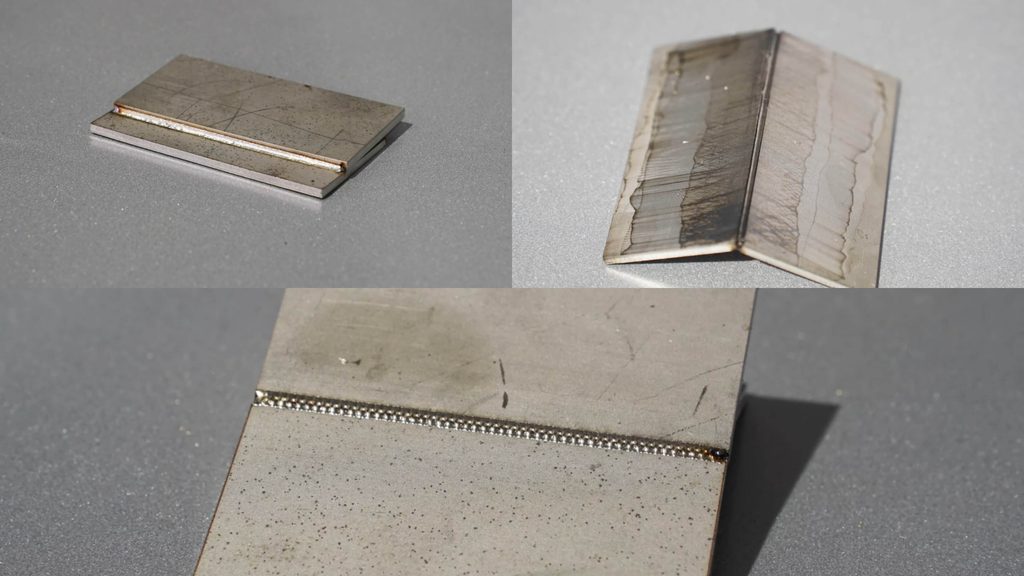
4.2 Carbon Steel Fabrication (Electrical Enclosures, Equipment Frames, Housings)
Thin-gauge carbon steel cabinets and precision brackets are strong candidates for laser welding due to speed and minimal warping. Conversely, heavy structural load-bearing bases or wide-gap frames should be benchmarked against MAG welding first. For structural or safety-critical components, never judge weld integrity by surface appearance alone—qualify the joint according to applicable mechanical testing codes.
For shops specializing in cabinet fabrication, pairing tight-tolerance cutting with low-heat laser welding is key—learn more in our guide to laser cutting for server racks and electrical enclosures.
4.3 Aluminum Fabrication (EV Battery Enclosures, Lightweight Housings & Assemblies)
Aluminum poses unique challenges due to high thermal conductivity, high laser reflectivity, and a tenacious high-melting-point oxide layer. While handheld laser welding works well on select aluminum sheet assemblies, parameters from stainless or carbon steel cannot be transferred.
You must validate alloy-specific settings (e.g., 5052 vs. 6061), pre-weld oxide removal, shielding gas blends, and wire-feed parameters to prevent porosity, hot cracking, and lack of fusion.
4.4 Metal Furniture, Doors, Windows & Railings
These products combine sheet-to-tube and tube-to-tube joints across frequent SKU changeovers. The maneuverability of a handheld laser torch excels in high-mix job shops, provided the facility establishes standardized parameter presets by wall thickness and joint type rather than letting individual shifts tune machines by feel.
Five Scenarios Where You Should NOT Rush Into Handheld Laser Welding
Smart equipment investment is defined as much by knowing when not to adopt a technology. Retain your existing TIG/MIG workflows—or run rigorous side-by-side trials before buying—if your operation faces any of the following five conditions:
Chronically Uncontrolled Fit-Up: Upstream cutting and bending tolerances vary widely and cannot be economically corrected with fixturing in the short term.
Heavy-Plate, Multi-Pass Structural Welds: Applications requiring high-volume filler deposition favor the continuous duty cycle and proven economics of MIG/MAG.
Code-Regulated Structural or Pressure Vessels: Before deploying laser welding on code-critical work, confirm whether the process is permitted under your governing standards and whether you can complete full WPS/PQR (Welding Procedure Specification / Procedure Qualification Record) qualification.
Bottleneck-Free Legacy Lines: If your current TIG or MIG cells already meet takt time, yield targets, and labor budgets, replacing them will not generate an attractive ROI.
Inability to Meet Laser Safety & Regulatory Standards: High-power handheld lasers pose severe eye and skin hazards from direct and reflected beams. Facilities must implement dedicated laser safety enclosures/barriers, door interlocks, OD-rated protective eyewear matched to 1064nm wavelength, local fume extraction, and formal operator safety training.
For exported machinery or overseas plants, local regulatory compliance is mandatory—for example, CE marking requirements in the EU and FDA/CDRH laser product regulations in the United States follow distinct compliance frameworks that must be verified prior to deployment.
Evaluating workshop safety enclosures and European regulatory standards? Review our EuroBLECH 2026 laser safety compliance and ROI guide to avoid costly compliance pitfalls.
Six-Point Pre-Purchase Verification Checklist
Before requesting final quotes or scheduling sample trials with any equipment vendor, lock down these six items:
Define Exact Alloy Grades, Gauges & Surface Finishes: Specify exact grades (e.g., 304, 316L, Q235, 5052), thickness ranges, and surface conditions (brushed, mirror, mill scale, galvanized).
Ship Standard Production Parts for Testing: Send parts cut and bent on your actual shop floor—complete with normal dimensional tolerances—rather than hand-fitted prototype samples.
Verify Internal Penetration & Mechanical Strength: Beyond visual inspection, evaluate macro-etch cross-sections, tensile/bend tests, and applicable NDT to confirm true fusion depth.
Audit Wire-Feeder & Consumable Specs: Confirm whether the wire feeder is standard or optional, verify compatible wire diameters and feed stability, and calculate replacement intervals and costs for protective lenses, copper nozzles, and tips.
Measure Total Part-to-Part Cycle Time & Consumables: Track combined fixturing, welding, grinding, and rework minutes—alongside wire, shielding gas, and lens consumption—before and after testing.Just like evaluating cutting systems, looking past the upfront quote to gas, consumables, and labor savings is essential—use the framework in our ultimate fiber laser TCO & evaluation guide when comparing vendor proposals.
Evaluate OEM Manufacturing Depth & Local Service Support: Verify core component specs (laser source, welding head, chiller), factory inspection protocols, safety guidance, operator training, and local spare-parts availability.
Baison Laser CW Series: Industrial Water-Cooled Handheld Laser Welding Solutions
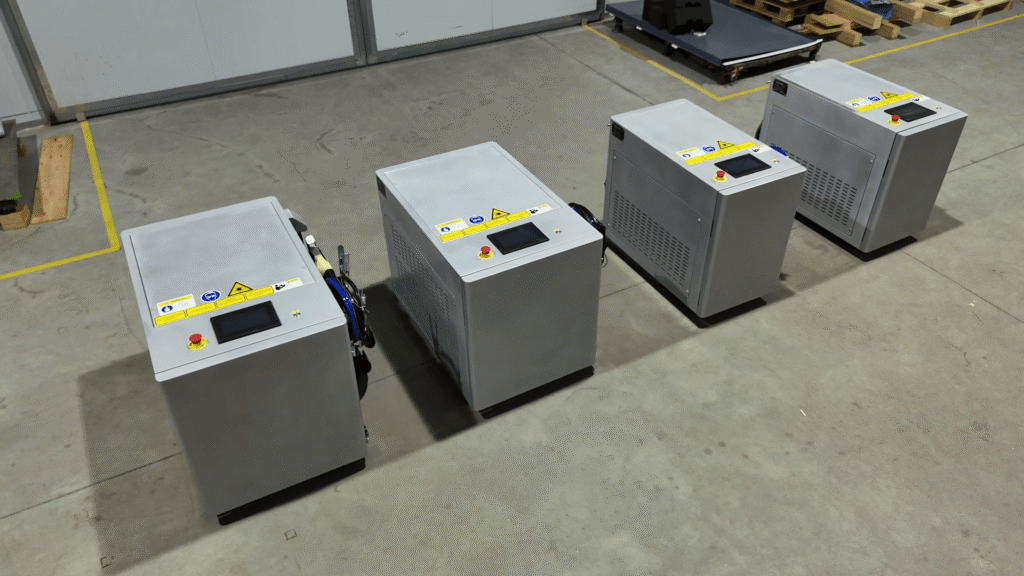
For metal fabricators seeking process repeatability, shop-floor flexibility, and application-backed engineering support, Baison Laser offers the CW Series water-cooled handheld laser welding systems in 1500W, 2000W, and 3000W configurations.
7.1 CW Series Core Specifications
| Specification | CW15 | CW20 | CW30 |
| Laser Power | 1500W | 2000W | 3000W |
| Laser Wavelength | 1064nm | 1064nm | 1064nm |
| Cooling Method | Industrial Water Chiller | Industrial Water Chiller | Industrial Water Chiller |
| Fiber Cable Length | 10m Standard (30m Optional) | 10m Standard (30m Optional) | 10m Standard (30m Optional) |
Selection Logic: Higher wattage is not automatically better. At identical power levels, thermal conductivity, surface reflectivity, and joint geometry dramatically alter fusion behavior. Selecting between CW15, CW20, and CW30 should always be validated through sample testing on your actual alloy, gauge, joint design, and wire-feed setup.
(Wondering which wattage matches your specific stainless or carbon gauge without risking burn-through? Our engineers run this exact validation before recommending a model.)
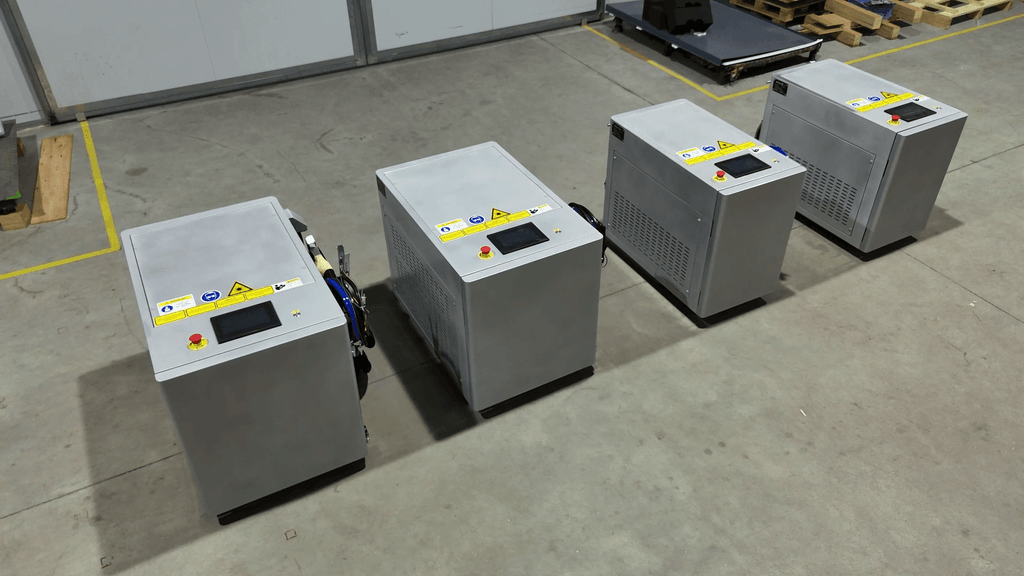
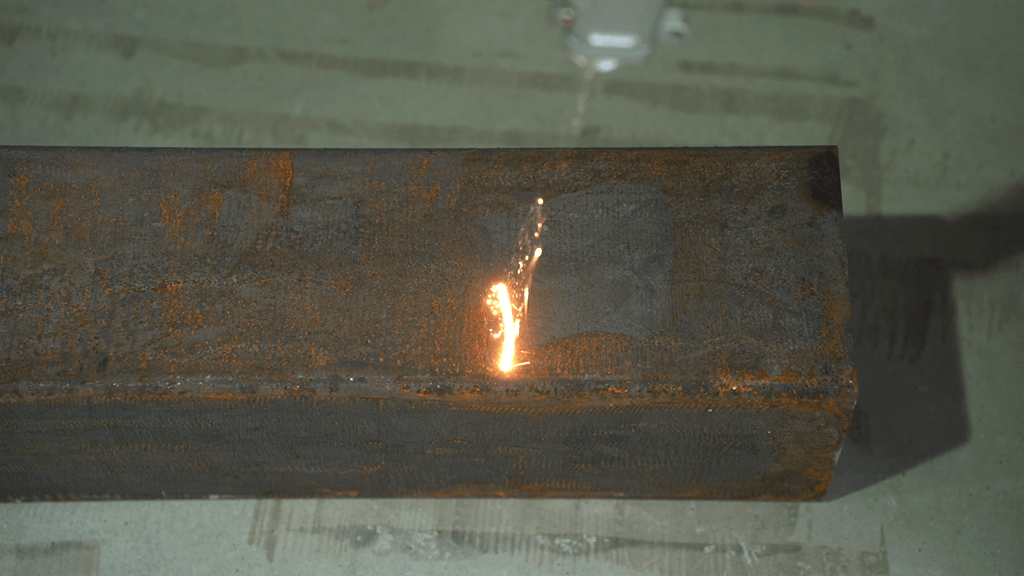
7.2 4-in-1 Handheld Processing Head
Equipped with the 4-in-1 handheld laser head, the CW Series supports four auxiliary functions when operated under proper mode switching and safety protocols:
- Laser Welding: Supports autogenous or wire-fed welding across butt, fillet, lap, and corner joints.
- Metal Cutting: Handles thin-sheet trimming and auxiliary cutting tasks (cutting thickness capacity requires application-specific validation).
- Pre-Weld Surface Cleaning: Removes oil, oxide layers, and light rust along the seam prior to welding to minimize porosity.
- Post-Weld Seam Cleaning: Cleans heat tint and surface residue immediately after welding, reducing downstream polishing or pickling workload.
(Note: The 4-in-1 capability is designed to maximize equipment utilization in high-mix shops. Each mode requires dedicated parameter presets and strict laser safety controls, and is not intended to replace heavy-duty standalone cutting or industrial cleaning systems.)
7.3 Baison Laser Manufacturing Scale & Global Service Network
Investing in industrial welding equipment requires confidence in the manufacturer’s long-term engineering and after-sales infrastructure:
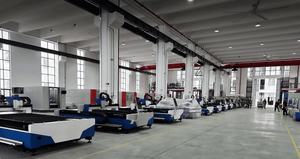
- 20 Years of Laser R&D and Manufacturing Expertise: Backed by two decades in laser cutting, welding, and automation, Baison Laser operates a ~12,000 m² primary assembly plant and a ~8,000 m² secondary assembly facility in Foshan, equipped with large-scale precision gantry machining centers and rigorous factory acceptance testing (machine performance and acceptance are governed by official configuration specs, factory inspection logs, and verified test results).
- Global Service Coverage Across 60+ Countries: As of August 2026, Baison Laser supports customers in over 60 countries and regions through 200+ global distributor service outlets and 150+ dedicated service engineers, providing operator training, process consulting, troubleshooting, and local spare-parts fulfillment.
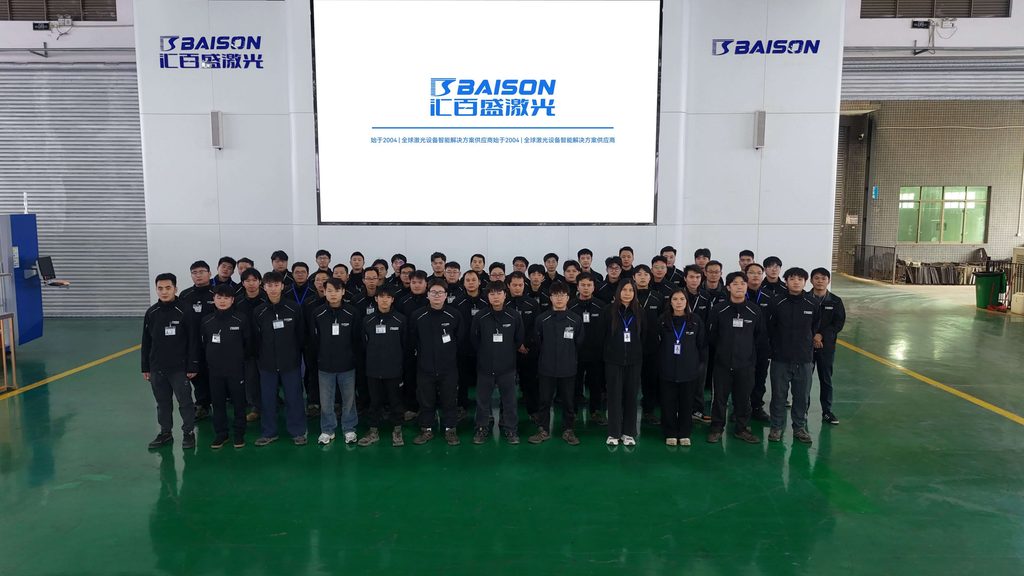
Want to see how our regional engineers and spare-parts hubs minimize unplanned downtime? Take a closer look inside Baison Laser’s global support network.
Summary: A Three-Step Framework to Select Your Welding Process
- Start with Part Geometry & Fit-Up: If your upstream tolerances are tight and thin-sheet cosmetics/grinding labor are key cost drivers, benchmark handheld laser welding first. For intricate precision joints, rely on TIG. For thick structural plate and heavy filler requirements, stay with MIG/MAG.
- Calculate Floor-to-Floor Cycle Time: Combine fixturing, arc/laser-on time, grinding, and rework hours to verify a real drop in cost per finished part.
- Validate on Real Shop-Floor Parts: Complete sample trials and destructive/cross-section testing using your standard production materials before committing to capital equipment.
Get a Custom Welding Process & Sample Test Assessment from Baison Laser
Still weighing whether handheld laser welding will outperform your current TIG or MIG/MAG setup on your actual shop floor? Send your part specifications to the Baison Laser Application Engineering Team (attach part photos or basic drawings if available):
- Material Grade & Thickness Range (e.g., 1.5mm 304 stainless steel, 2.0mm carbon steel)
- Joint Geometry & Typical Fit-Up Tolerance (butt, fillet, lap joints, plus normal cutting/bending gap variations)
- Current Welding Process & Primary Bottleneck (e.g., thin-sheet warping, excessive grinding hours, shortage of skilled TIG welders)
Our engineers will review your parts and send back a tailored recommendation covering CW Series wattage selection, wire-feeding setup, and a free sample test plan—so you know your exact cycle-time savings before making a purchasing decision.
Explore Baison Laser Handheld Welding Solutions: www.baisonlaser.com
FAQ: Handheld Laser Welder vs. TIG & MIG
1. Is a handheld laser welder better than TIG and MIG?
Each process has clear engineering boundaries—no single method is best for every job. For thin-to-medium sheet metal with controlled fit-up where travel speed and clean seams matter most, handheld laser welding typically delivers higher overall efficiency. For complex, high-precision joints requiring fine puddle control, TIG remains superior. For heavy structural plate and wide-gap, high-fill welds, MIG/MAG is still more economical and reliable.
2. Is handheld laser welding suitable for sheet metal fabrication?
Yes—especially for stainless and carbon steel enclosures, commercial kitchen equipment, metal furniture, and architectural doors/windows. Its core advantage is a small heat-affected zone that prevents thin-sheet warping and slashes post-weld grinding time, provided upstream cutting and bending tolerances keep joint gaps within an acceptable range.
3. Can a handheld laser welder use filler wire?
Yes. Handheld laser welders can run autogenously (without filler) or paired with an automatic wire feeder. Adding filler wire improves bead reinforcement and bridges minor joint gaps, though wire feed speed, laser power, and travel speed must be properly matched—filler wire cannot compensate for excessively wide structural gaps.
4. How thick can a 3000W handheld laser welder weld?
Maximum weldable thickness is never determined by wattage alone. It depends on material thermal conductivity (carbon steel, stainless steel, and aluminum behave very differently), joint design, bevel preparation, wire-feed configuration, and your required penetration/strength standards. Always verify thickness capacity through sample trials on your specific material.
5. Can a handheld laser welder completely replace TIG and MIG?
No. Most modern sheet metal fabricators run a hybrid welding floor: deploying handheld laser welders on well-fitted, cosmetic thin-sheet assemblies to maximize throughput, keeping TIG for intricate precision repairs and specialty alloys, and relying on MIG/MAG for heavy structural frames and thick-plate fabrication.