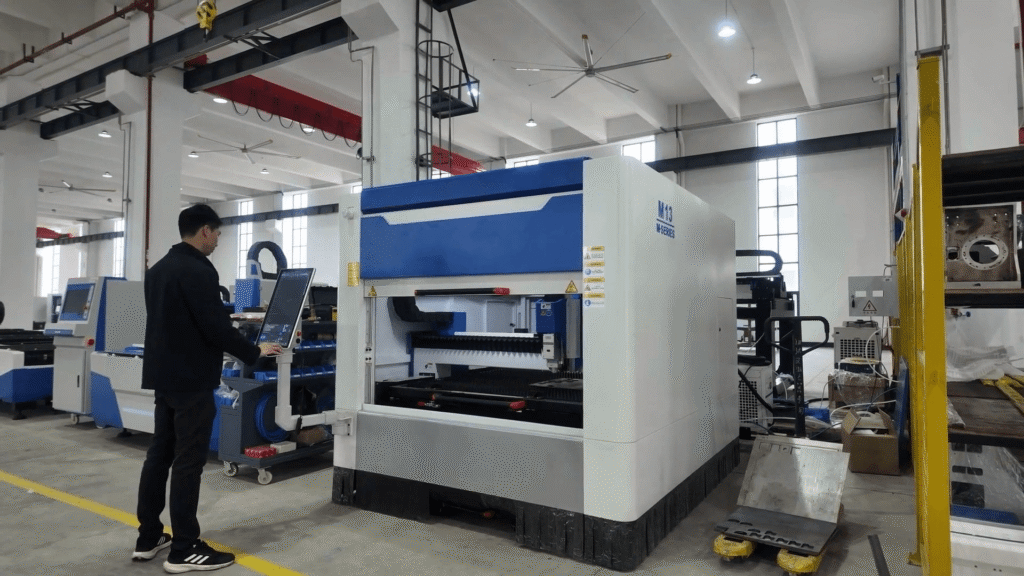
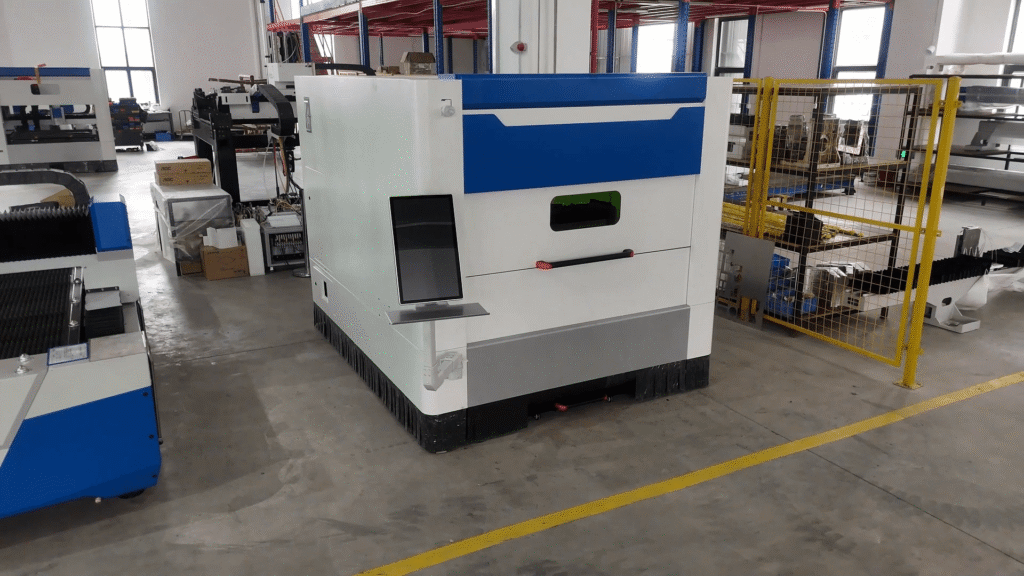
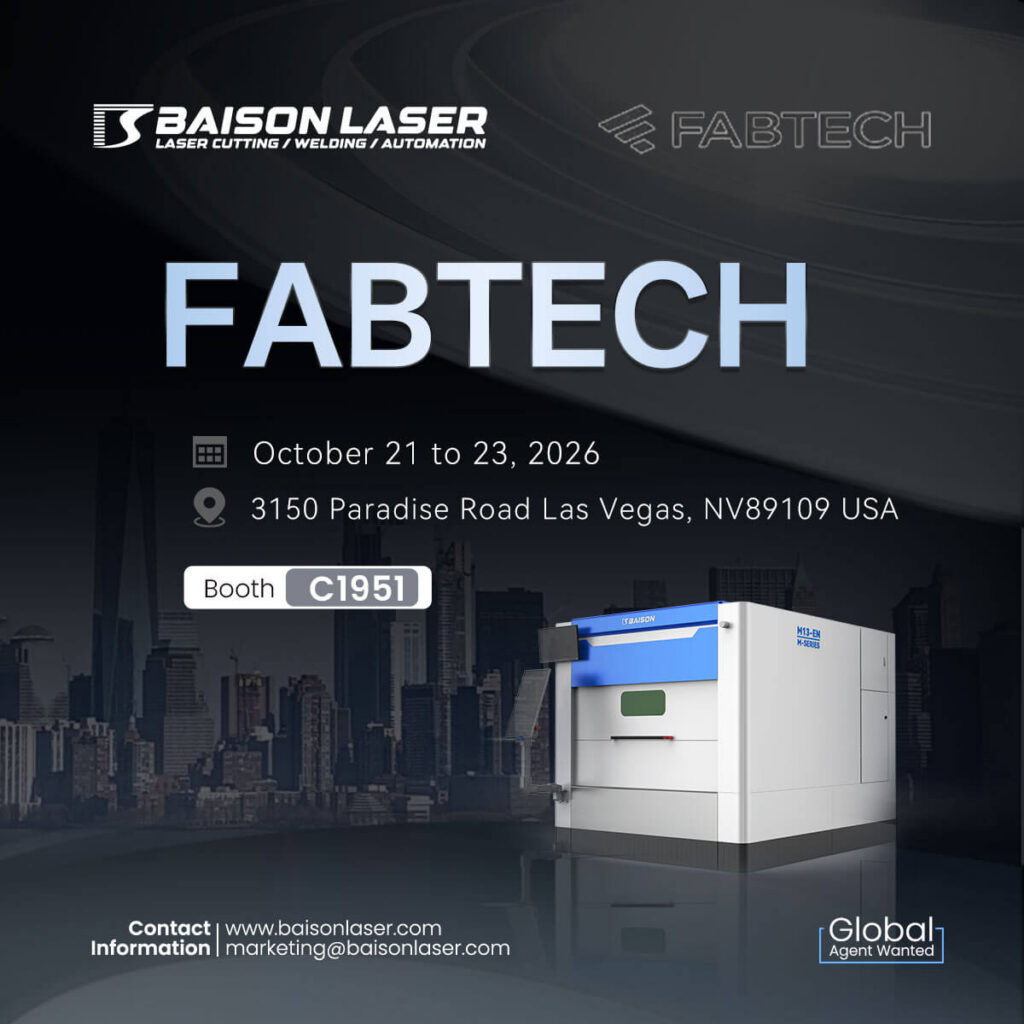
FABTECH 2026 takes place from October 21–25. Visit Baison Laser at Booth C1951 to see the live demonstration of the M13 Full-Enclosure Single-Table Compact Fiber Laser Cutting Machine, featuring power options from 1500W to 12000W and a 1300 × 1300mm working area.
Tailored for North American small sheet metal shops, sign-making businesses, and vocational training labs, this article breaks down the essential evaluation criteria for compact enclosed lasers. Attendees are encouraged to bring technical drawings and metal samples for free live test cuts and one-on-one solution consultations with our applications engineering team.
The North American sheet metal processing market is experiencing a clear structural shift. While large-scale factories can easily house massive 3015 shuttle-table systems, countless small-to-medium job shops, sign makers, and vocational training centers face severe floor space constraints while simultaneously needing to comply with local shop safety regulations.
Many buyers find themselves caught in a dilemma: open-type laser systems are budget-friendly, but laser radiation and fume hazards create severe compliance headaches; large shuttle-table machines offer high performance, but both their footprint and price tag break the budget. Walking the trade show floor, browsing endless spec sheets, and still wondering which machine actually fits your real-world workflow? You are not alone.
At FABTECH 2026, Baison Laser is showcasing the M13 Full-Enclosure Single-Table Machine. Instead of a standard promotional pitch, let’s look at this from a buyer’s perspective. We’ve built a complete evaluation framework for compact enclosed fiber laser cutters so you can bring this checklist straight to the booth and put our machinery to the test.
If you are still weighing different power capacities for your shop’s specific workload, you can also check our detailed analysis on 6kW vs 12kW Fiber Laser Cutter: Which Power Range Fits Your Shop in 2026? to avoid over-investing.
Choosing a Compact Enclosed Laser: 4 Overlooked Core Evaluation Metrics
Most buyers’ first instinct is to compare laser power. However, for compact mm working-area systems, power is only part of the equation. The following four factors directly dictate your long-term shop operating costs.
1. Loading Practicality: Does the Table Structure Match Your Shop’s Crane Setup?
On the market, similar enclosed machines generally split into two designs: fixed internal tables and manual pull-out semi-sliding tables.
- With a fixed table, sheets must be pushed inward through a narrow enclosure door. If your shop lacks a forklift, manual loading is exhausting and hazardous.
- A pull-out table, by contrast, lets the entire platform slide completely outside the machine cabin. You can load heavy sheets externally before rolling them right back into the cutting zone. This allows ordinary personnel to handle medium-to-thick plates with ease—ideal for compact job shops lacking heavy overhead cranes or forklifts.
Q: What are the practical advantages of a pull-out table compared to a fixed table in a compact enclosed laser cutter?
A: A pull-out table extends the entire cutting bed outside the machine housing, allowing operators to load sheets externally without pushing materials through a restrictive enclosure door. This significantly reduces loading labor intensity, making it ideal for small-to-medium sheet metal shops lacking heavy-duty forklifts or overhead cranes.
Worried about whether your current setup meets local safety inspections? Read our guide on Is Your Open Laser Cutter Costing You Fines? EuroBlech 2026 Compliance & ROI Guide to see why enclosed designs are becoming mandatory for small shops.
2. Differentiating Between Ultimate Cutting Thickness and Stable Mass-Production Thickness
Almost every manufacturer datasheet lists the maximum cutting thickness. However, you must distinguish between two sets of data:
- Ultimate Prototyping Thickness: The machine can cut through this thickness, but with heavy burrs and slow speeds. It is strictly suitable for occasional prototyping.
- Stable Batch-Production Thickness: The range for continuous, long-term production with stable cut quality and minimal secondary deburring.
When talking to vendors or viewing live demos, always ask for the stable batch-production thickness chart rather than relying solely on the ultimate cutting limit, or you risk buying equipment that fails daily production demands. Take the M13 6000W model as an example: while its ultimate carbon steel (oxygen) cutting limit is 25mm, the recommended stable batch production thickness is 12mm. Material rust, paint layers, and protective window cleanliness will all impact real-world results.
👉 Are you currently struggling with outsourcing delays or high cutting scrap rates? Click here to book a consultation with our senior application engineers before visiting Booth C1951 to review your material specifications.
3. Bed Manufacturing Process: The Foundation of Long-Term Precision Retention
Small machinery still requires rigorous bed-processing standards. Budget machines often use hasty welds with basic surface grinding before assembly. After months of vibrations, residual stress releases, leading to severe precision drift.
A qualified machine requires an exhaustive workflow: frame welding → vibration aging → high-temperature annealing → sandblasting with primer → rough machining → secondary static aging → precision machining → final topcoat and assembly. These multiple stress-relief steps neutralize internal welding stresses to guarantee long-term repeat positioning accuracy. For instance, the M13 achieves an X/Y-axis repeat positioning accuracy of ±0.03mm.
4. Global Delivery Methods: Fully Pre-Assembled vs. On-Site Assembly
When importing equipment, always confirm its factory delivery state:
- Fully Pre-Assembled & Containerized Shipping: Assembled and aligned inside the factory. Customers only need to hook up power and gas on-site, ensuring a remarkably short commissioning window.
- Knocked-Down (SKD) Shipping: Shipped as loose components requiring local assembly and optical alignment, demanding high-level engineering skills on-site and severely delaying your production timeline.
The M13 series arrives fully pre-assembled and shipped inside standard containers, drastically minimizing overseas installation friction.
Real-World Shop Floor Scenario
A 22-person family-owned sheet metal and sign shop in Northeastern Ohio primarily handled metal signage, small electrical enclosure parts, and sporadic agricultural machinery components. Their available shop floor space for a new machine was restricted to just 38m².
Previously, all components were outsourced. Standard lead times averaged 3 to 7 days, and rush orders required a painful 40% expedited surcharge. During peak seasons, highly profitable orders had to be turned down purely due to delivery bottlenecks.
They evaluated multiple laser cutters: large shuttle tables exceeded their spatial limits, while open-type lasers triggered local shop safety reviews and demanded expensive secondary dust-collection retrofits. Their daily processing focused mostly on 1mm to 4mm carbon steel and stainless steel, with occasional aluminum, requiring no oversized bed.
They ultimately invested in the M13 6000W Full-Enclosure Pull-Out Platform Model. Thanks to the pull-out design, no heavy forklift was needed; two workers easily handled sheet loading. The fully enclosed cabin isolated laser radiation, and adding the optional dust-collection unit met local plant safety regulations effortlessly.
The machine dropped right into place, needing zero heavy infrastructure remodeling—just power and gas hookups. Post-installation, the shop brought the vast majority of cutting in-house, turned rush orders into same-day deliveries, slashed outsourcing costs, and optimized an idle corner of their facility. With the built-in process database, existing operators mastered production after brief training.
Note: This case study reflects a specific operational context. Local electricity rates, raw material costs, and order structures will cause return-on-investment (ROI) timeframes to vary.
🔍 Want to know your exact ROI timeline based on your current outsourcing volume? Bring your monthly part drawings to Booth C1951 for an on-the-spot financial and cutting efficiency audit.
M13 Core Hardware & Power Configuration Selection Guide
The M13 features a fixed working area of 1300 × 1300mm, an exterior footprint of 3470 × 2100 × 2040mm, a maximum table load of 280kg, a max X/Y positioning speed of 100m/min, an acceleration of 1G, a manual semi-sliding pull-out platform, and a fully enclosed safety cabin. Four power tiers cater to different application needs:
| Power Tier | Target Business Scenarios | Key Material Processing Reference |
| 1500W | Signage, advertising, thin sheet metal, vocational training | Carbon steel 1-12mm, Stainless steel under 5mm (thin sheets) |
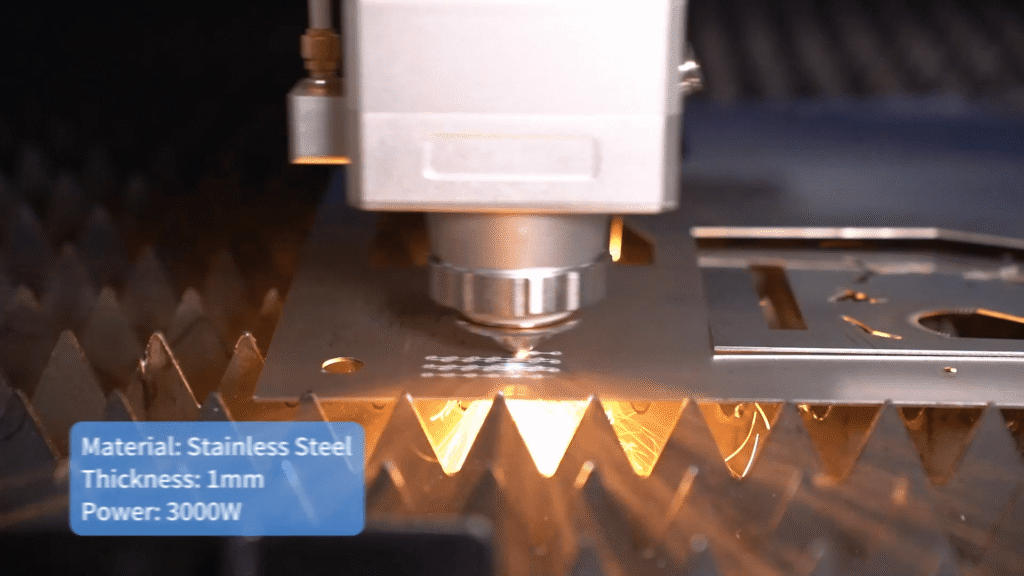
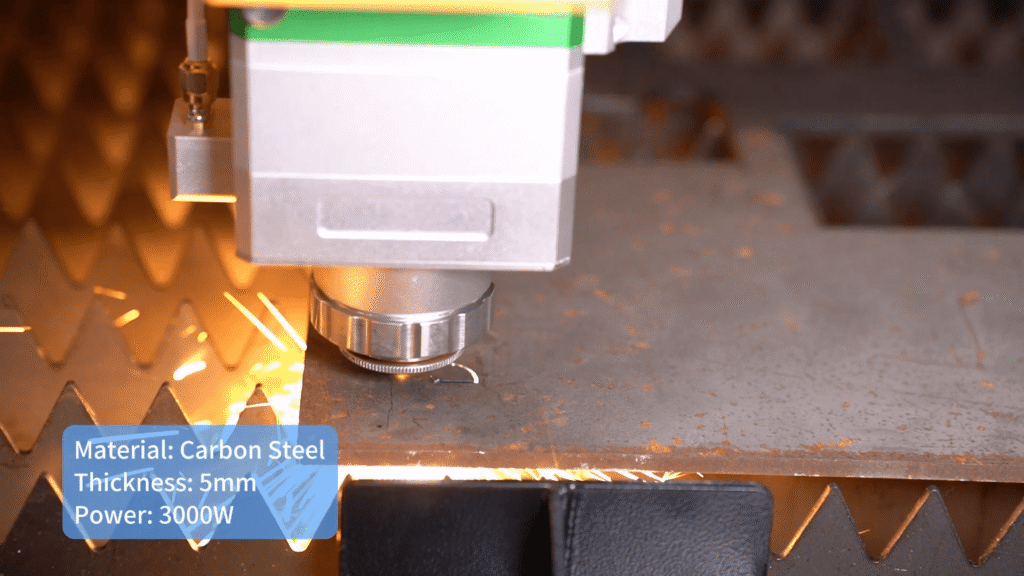
| 3000W | Small-to-medium batch sheet metal, signs + light medium plates | Carbon steel 1-20mm, Stainless steel 1-8mm |
| 6000W | Versatile small job shops, multi-material mixing (carbon steel, stainless, aluminum, brass) | Carbon steel 1-20mm, Stainless steel 1-16mm, Aluminum 1-14mm, Brass 1-8mm |
| 12000W | Small-batch production requiring heavier plate processing | Carbon steel 1-30mm, Stainless steel 1-30mm, Aluminum alloy 1-25mm, Brass 1-14mm |
The laser source uses a Raycus fiber source with a design lifespan exceeding 100,000 hours and an electro-optical conversion efficiency of 30%-40%. Cutting heads, servos, gearboxes, and control systems utilize mature industrial components. The machine ships with a full parameter library, supporting AutoCAD imports, multi-stage piercing, auto-edge finding, and leapfrog flying cutting.
Running Cost Tip: Power consumption, consumables, and gas costs (air/oxygen/nitrogen) vary drastically depending on the gas used. Be sure to ask our engineers at the booth for a customized hourly running-cost calculation sheet for your chosen power tier.
5 Things You Can Accomplish at FABTECH 2026 Booth C1951
FABTECH 2026: October 21–25, Baison Laser Booth C1951. If you are evaluating compact enclosed fiber laser cutters, don’t just stare at the machine’s outer shell—make sure to complete these 5 steps:
- Watch the live dynamic cutting demonstration of the M13 to evaluate cut-edge quality across different materials firsthand.
- Bring your actual CAD drawings or physical metal samples for free on-site test cutting, giving you real cut samples rather than brochure photos.
- Use our checklist on-site, test-drive the pull-out table mechanism, and question our engineers on bed stress-relieving procedures and containerized pre-assembly delivery.
- Obtain comparative tables for ultimate versus stable batch thickness across power tiers, alongside hourly running cost projections for air, oxygen, and nitrogen setups.
- Consult one-on-one with application engineers about your specific shop conditions—floor space, power availability, target materials, and batch sizes—to receive tailored configuration recommendations.
Friendly Reminder: Trade floor traffic is heavy. If you want an uninterrupted, deep-dive technical consultation, we strongly recommend booking your meeting slot online in advance.
7 Crucial Questions to Ask Before You Buy (Ask Vendors Directly at the Booth)
- What are the stable batch-production thicknesses for this machine, rather than just the ultimate cut-through limit?
- Is the working table a fixed platform or a pull-out sliding platform? What lifting equipment is required for loading?
- What exact steps are included in the bed stress-relieving process, and what is the specified repeat positioning accuracy?
- Does the machine ship fully pre-assembled in a container, or will it require complex on-site mechanical assembly and optical alignment?
- What is the scope of the machine warranty, and which components are classified as consumables? What is your SLA for after-sales support (remote response time and on-site dispatch conditions)?
- Does the control system feature a built-in material process library, and what does operator training entail (duration and curriculum)?
- What are the electrical requirements, and can the system natively adapt to local industrial voltages in your target market?
To ensure you don’t fall into hidden traps during your procurement journey, make sure to read 7 Costly Mistakes Sheet Metal Shops Make When Buying Fiber Lasers (2026 Buyer’s Guide) before signing any deals.
Frequently Asked Questions (FAQ for Overseas Clients)
Q1: The M13 table is 1300 × 1300mm. Under what circumstances should I not buy this machine?
A: The M13 is engineered for small-to-medium batch production where parts fit within a 1300mm envelope. If the vast majority of your workpieces exceed 1300mm and require heavy, round-the-clock continuous production, you should prioritize a large-format shuttle-table system instead. The M13 is not meant to serve as a heavy high-capacity production anchor—unless your shop bottleneck is specifically floor space and part variety. Want to know if your specific part mix fits this sweet spot? Talk to our engineers at Booth C1951 with your part sizes to find out.
Q2: Will frequent pushing and pulling of the semi-sliding table degrade cutting accuracy over time?
A: The pull-out mechanism rides on high-precision linear guide rails. Once sheet loading is complete, the table is mechanically locked into place, meaning the platform position is entirely stationary during cutting operations. The sliding motion is exclusively for loading and has zero negative impact on machine positioning or cutting precision.
Q3: For overseas exports, how is complete operator training handled?
A: We provide two comprehensive training formats: buyers can send technical staff to our domestic manufacturing facility for a 2 to 5-day preparatory training course, or our engineers can travel directly to your facility post-delivery to conduct no less than 7 days of on-site hands-on training covering machine operation, CAD editing, process tuning, routine maintenance, and basic troubleshooting.
Q4: How is smoke and dust managed on a fully enclosed model, and is an extra dust extractor mandatory?
A: The enclosed cabin naturally contains the vast majority of sparks and smoke, but it cannot purify ambient air on its own. We strongly recommend pairing the unit with an optional dust collection system to capture fumes centrally and comply with North American workplace environmental standards. Skipping the dust collector forces your shop to rely on general plant ventilation, increasing compliance risks.
Q5: Once the machine is operational, what parts are high-frequency consumables that require advance stocking?
A: During fiber laser cutting operations, nozzles, protective windows, and ceramic rings are high-frequency consumables that degrade depending on operational hours and sheet surface conditions. We recommend maintaining a safety stock of these components to guarantee uninterrupted production. Curious about the exact burn rate and replacement intervals for your specific material run? Grab our detailed consumable lifespan reference guide at the exhibition booth.
Final Thoughts
Many visitors walking the FABTECH floor get distracted by flashy sample displays while ignoring their own rigid shop floor constraints: available workspace, electrical feeds, operator skill levels, and material thickness structures. No matter how dazzling a machine looks on paper, if it fails to match your real factory floor conditions, it won’t generate profit.
If you are hunting for a fully enclosed fiber laser cutting machine built for tight spaces, visit us at FABTECH 2026, October 21–25, Booth C1951 at Baison Laser. Bring your blueprints and samples, test the M13’s cutting performance live, and secure a tailored machinery solution that aligns with your business goals.
Explore M13 Specifications: Baison M13 Laser Cutter Overview