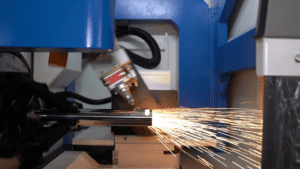
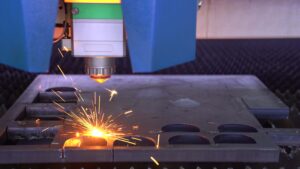
If you run a 20-to-80-person sheet metal fabrication shop, your smartest move for 2026 isn’t buying a massive, multi-kilowatt production line—it’s seeing how five compact, high-efficiency machines perform in a tight footprint. From the Baison MN3 small fiber laser cutter that brings in-house thin-sheet processing to a 10㎡ corner, to the Baison CW15 4-in-1 handheld laser welder that offsets skilled labor shortages, these tools are built for high-mix, low-volume manufacturing.
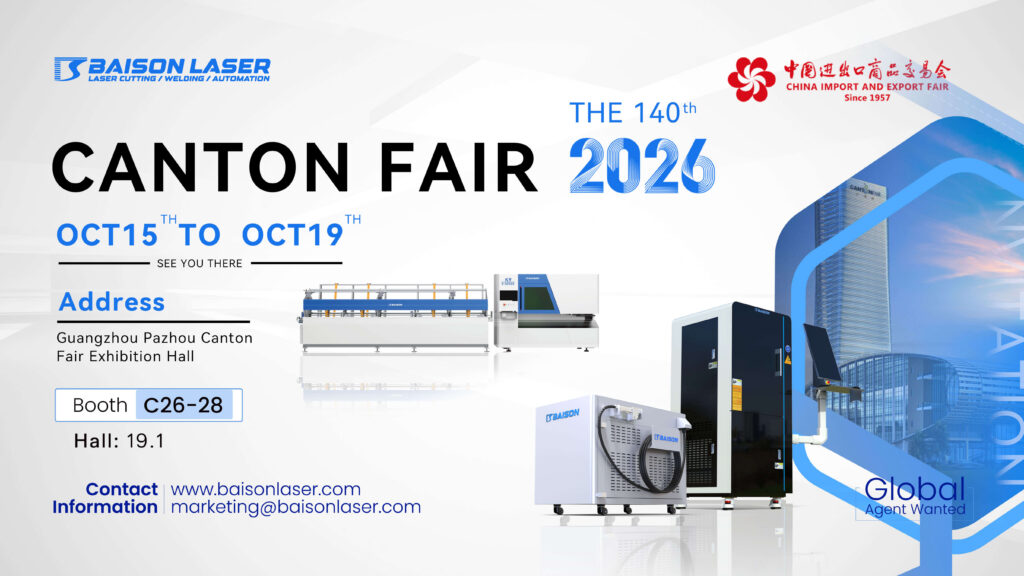
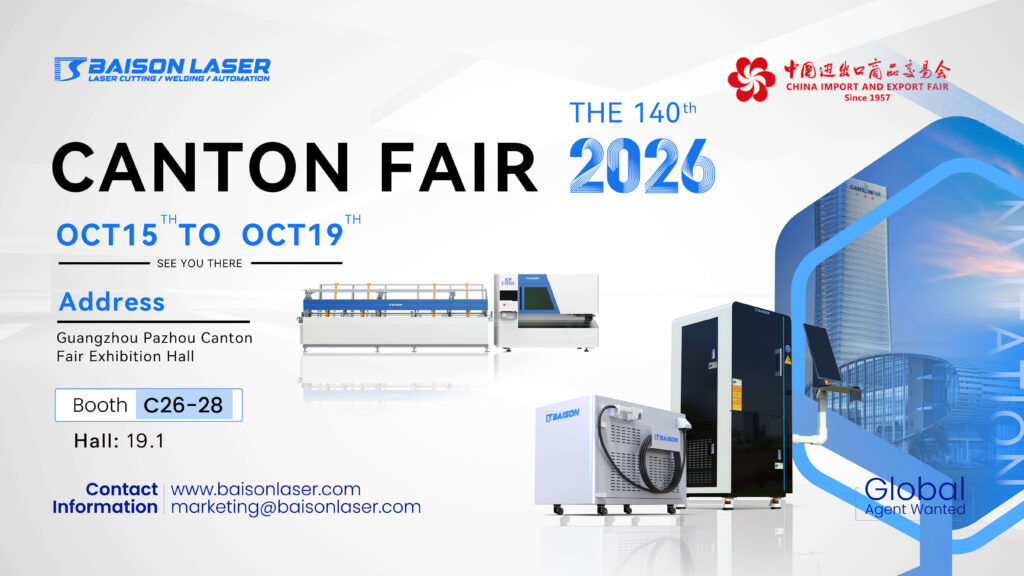
Join us at the 140th Canton Fair, Hall 19.1, Booths C26-28 (October 15–19, 2026) to see live demos, or send your CAD drawings ahead of time for a custom pre-show test cut.
Your shop floor corner might be smaller than 10 square meters. Yet over the past three years, the variety of your incoming orders has doubled while batch sizes have been cut in half.
You are not alone in feeling this squeeze. High-mix, low-volume production with compressed lead times has become the baseline norm for global sheet metal fabrication. The traditional model of relying on a single, oversized machine to grind out massive bulk orders is rapidly losing steam across emerging industrial markets in Southeast Asia, the Middle East, and Latin America. What you need isn’t a bigger footprint—it’s ultimate agility, rapid changeovers, and compact versatility.
The daily friction points are real: subcontracting costs are creeping up while delivery schedules slip out of your control; skilled manual welders are increasingly hard to recruit and retain; and your shop floor is already so packed that adding another heavy machine leaves nowhere to stand.
This guide skips the empty spec sheets. Instead, it answers one practical question: Which specific operational headaches can these five compact machines eliminate from your business?
Replaces manual grinding, sandblasting, and chemical baths.
This table isn’t designed to push you into buying everything at once. It’s here to help you pinpoint where your shop floor is bleeding the most time and money.
Planning to visit Canton Fair 2026? Book a live demo at Hall 19.1, Booths C26-28 — or send your drawing for a pre-show test cut. Experience zero sales pressure, and see firsthand if these machines fit your production workflow. [Request Your Custom Test Cut & VIP Pass Here]
Baison MN3: Maximizing a 10㎡ Corner for In-House Sheet Cutting
The pain of outsourcing sheet metal isn’t just the unit price—it’s the waiting game. Send a DXF file today, get parts back the day after tomorrow, and pay rush fees if a client changes their mind. Over a single month, those subcontracting bills add up to more than the monthly payment on a compact in-house machine.
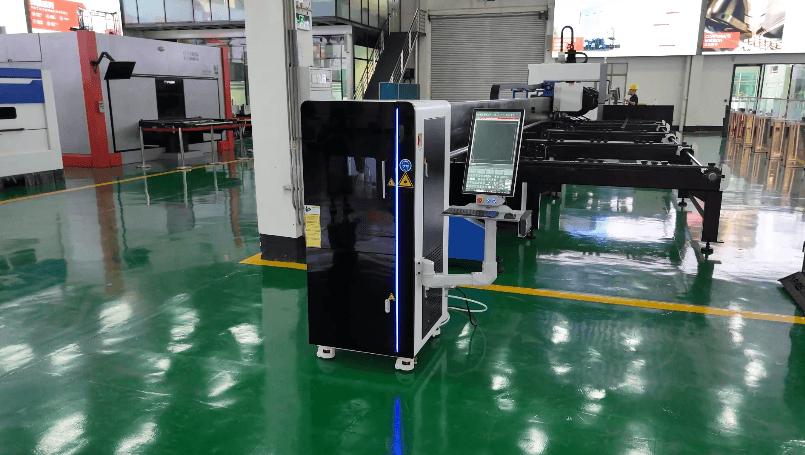
The Baison MN3 Small Fiber Laser Cutter is engineered around a straightforward concept: cram industrial-grade fiber laser cutting performance into the smallest viable footprint. Featuring a 300×300mm working area, it perfectly matches the dimensions required for intricate small components, decorative grilles, enclosure accessories, and architectural hardware.
Its integrated structure requires no special pit excavation or heavy foundation work. With full enclosure safety shielding and an industrial-grade water-cooling system built-in, it delivers clean, stable cuts right out of the box.
Real-World Case Studies
Istanbul Electrical Enclosure Manufacturer (Turkey): This shop previously relied on an aging, open-frame laser cutter. Between equipment wear and local environmental compliance crackdowns on shop dust and stray radiation, production was constantly interrupted. Integrating a Baison high-power compact fiber setup instantly reclaimed nearly 15 square meters of shop space while enclosing emissions to meet strict CE standards. The owner noted that rush orders previously turned away can now be completed same-day thanks to instant material profile switching on the touchscreen.
São Paulo Signage & Architectural Metal Studio (Brazil): Operating with manual plasma cutters and outsourced laser services, this family-owned shop lost huge margins to subcontracting delays and secondary deburring work. Integrating the Baison MN3 Small Fiber Laser Cutter allowed them to process stainless steel and aluminum lettering in-house with zero burrs, doubling their responsiveness to local commercial clients.
What this means for your shop: If you have an idle 10–15㎡ corner, the Baison MN3 breaks your dependency on external machine shops for high-margin small batches. While its compact bed isn’t built for full-size structural sheets, it will effortlessly handle roughly 80% of your small-part manufacturing volume.
If you are still mapping out a macro-level budget for your facility upgrade, we recommend reviewing this comprehensive Fiber Laser Cutting Machine Buying Guide 2026: Specs, Cost & ROI, which breaks down mainstream market configurations, total operational costs, and realistic ROI timeframes.
Baison K9: Eliminating Jaw Changes in Small-Diameter Tube Cutting
If you manufacture tubular furniture, safety railings, or fitness equipment, you already know the worst part of small-tube laser cutting: changeover downtime. Traditional tube cutters require completely swapping out clamping jaws every time you switch pipe diameters. Custom jaws cost money, take time to ship, and tie up your operators with wrench work.
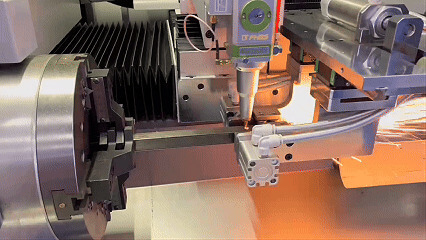
The Baison K9 Single-Chuck Small Tube Laser Cutte solves this with a streamlined single-chuck design capable of accommodating 90% of small-to-medium industrial tubing profiles. There is no need to machine or swap specialized jaws; operators simply loosen and adjust the clamping range on the fly. It handles round tubes from 15mm to 85mm and square tubes from 15×15mm to 60×60mm, boasting a maximum acceleration of 1.5G. Roller-assisted clamping keeps material stable during high-speed rotation, preventing whip effects.
Real-World Case Study
Middle Eastern Structural Steel & Crane Fabricator: Previously plagued by heavy material whip and manual loading hazards when processing long structural tubes, this enterprise deployed Baison’s advanced tube-cutting automation. The automated loading rack and multi-point pneumatic support eliminated manual handling injuries, transforming a dangerous multi-person job into a safe, single-operator monitoring task while guaranteeing flawless perpendicular end-faces.
What this means for your shop: When you process dozens of varying tube diameters a day, cumulative jaw-change downtime easily outlasts your actual cutting time. The Baison K9 lets you take on complex, mixed-batch tubing orders without waiting two days for custom tooling to arrive.
Beyond compact small-diameter solutions, if you are looking to benchmark how heavy-duty or large-diameter tubing systems compare in performance, you can dive into this detailed Heavy Duty Laser Pipe Cutter Selection Guide: Master Power, Diameter & ROI for an in-depth look at power ratings and chuck-matching logic.
Baison CW15: Bridging the Skilled Welder Gap with 4-in-1 Handheld Laser Power
This machine boasts the most straightforward ROI calculation in the entire metal fabrication lineup.
Consider these baseline manufacturing metrics: compared to traditional Gas Tungsten Arc Welding (TIG), handheld laser welding slashes electrical energy consumption by 80% to 90% and reduces overall processing costs by roughly 30%. Processing speed ratios run around 1:5—a seam that takes 5 minutes via TIG takes roughly 1 minute with a laser. Labor-wise, a certified TIG welder commands top dollar and is exceptionally difficult to hire, whereas a general operator can be trained on a laser unit within hours.
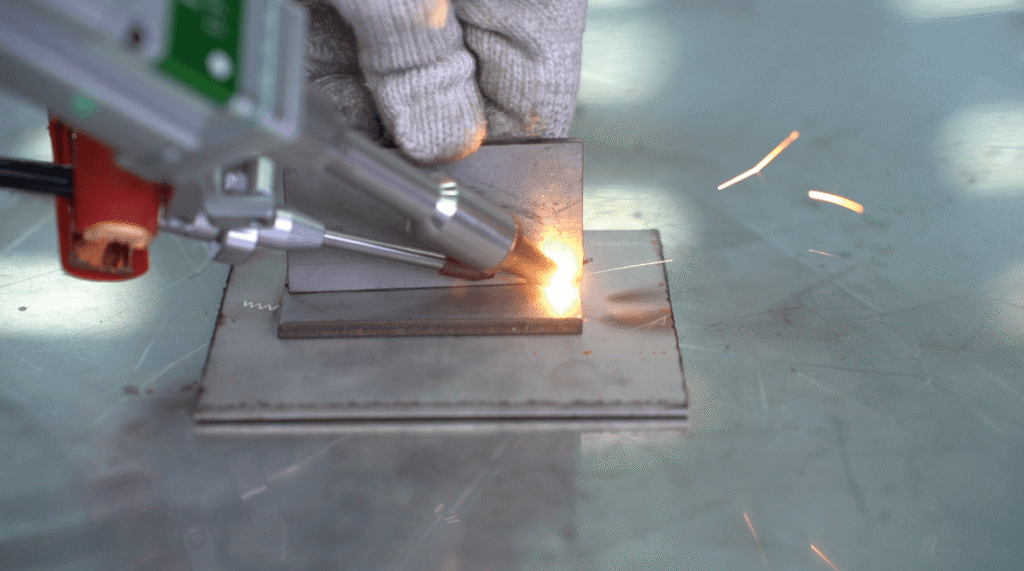
The Baison CW15 Water-Cooled Handheld Laser Welder combines four essential functions into a single mobile unit: welding, cutting, weld seam cleaning, and post-weld cleaning. Operating at 3000W, it achieves full penetration on up to 6mm stainless steel, carbon steel, and 5mm aluminum. The gun weighs a mere 0.65 kg, features a crystal-clear touchscreen interface, and connects via a flexible 10-meter armor cable for onsite work on large fabrications. (Note: Depending on your facility’s power layout, the CW15 is available in single-phase 220V or three-phase 380V configurations).
Real-World Case Studies
Stuttgart High-End Commercial Kitchenware Manufacturer (Germany): Faced with chronic TIG welder shortages and local wages exceeding $1,500/month for skilled labor, this plant integrated the Baison CW15. General assembly workers mastered the tool in a single afternoon, pushing welding speeds to 5x traditional TIG rates. Because post-weld grinding and pickling were eliminated, the equipment completely paid for itself within four months.
Foshan Export Metal Furniture Enterprise (China): Producing minimalist stainless steel furniture frames for Western export markets, this factory suffered from heavy spatter and distortion under manual TIG methods. Implementing the Baison CW15 minimized heat-affected zones to near-zero, eliminated burn-through on thin-gauge tubes, and cut post-processing labor costs by over 30%.
The Math: If two skilled TIG welders cost you a combined monthly payroll equivalent to $1,600, replacing part of their workload with one Baison CW15 operated by a general worker ($400/month) saves you $1,200 every single month. That translates to full equipment payback in 6 to 12 months.
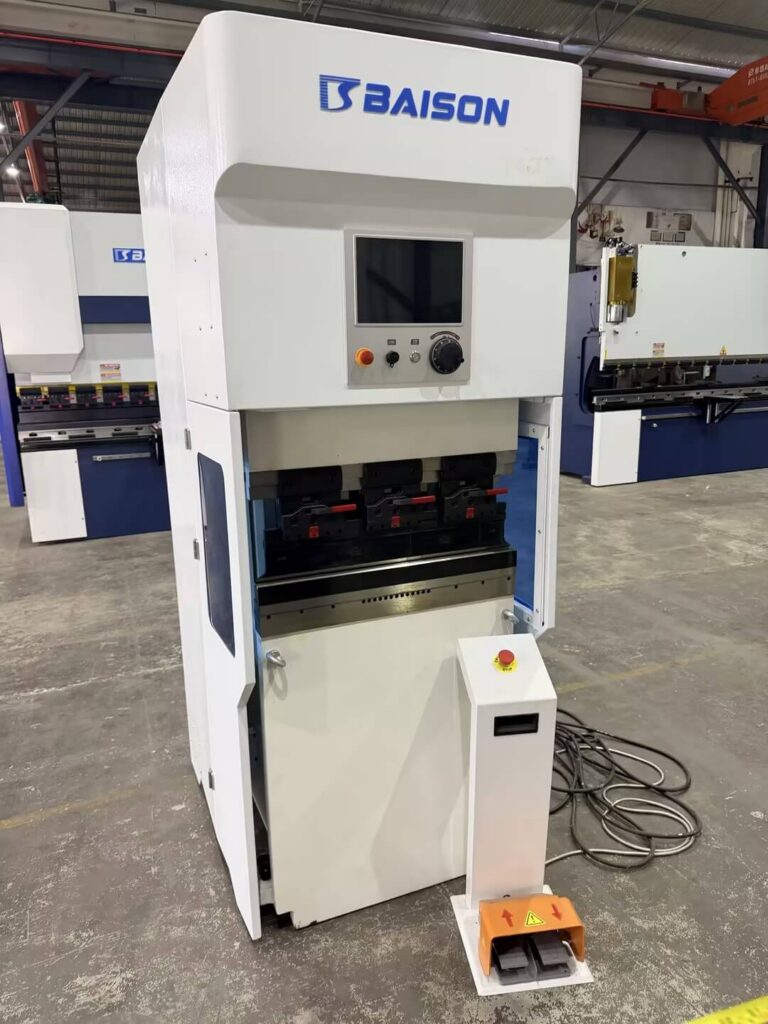
Baison JSS12-07: Ditching Hydraulic Oil for Precision All-Electric Bending
Hydraulic press brakes come with persistent operational headaches: oil degradation, messy hydraulic leaks, and precision drift as oil temperatures fluctuate through a shift. All-electric servo press brakes eliminate hydraulic fluid entirely, relying on direct servo-motor-driven ball screws. The energy-saving principle is akin to an inverter air conditioner—drawing power dynamically only when work is actively performed.
The Baison JSS12-07 All-Electric Servo Mini Press Brake delivers a 700mm bending length across 6 axes (Y1/Y2/X/R/Z1/Z2) with a 12-ton nominal capacity. Powered by a high-end CNC controller running on an industrial Linux and EtherCAT bus architecture via a 15.6-inch touchscreen, its absolute encoder backgauge offers a repeat positioning accuracy of ±0.01 to 0.02 mm. Power it on, and it’s ready to work instantly—no homing routines required, and zero risk of tool collision after a sudden power outage.
What this means for your shop: If your workload centers on precision parts under 700mm in length, the Baison JSS12-07 eliminates routine hydraulic maintenance, oil heater warm-up times, and thermal drift anxieties entirely.
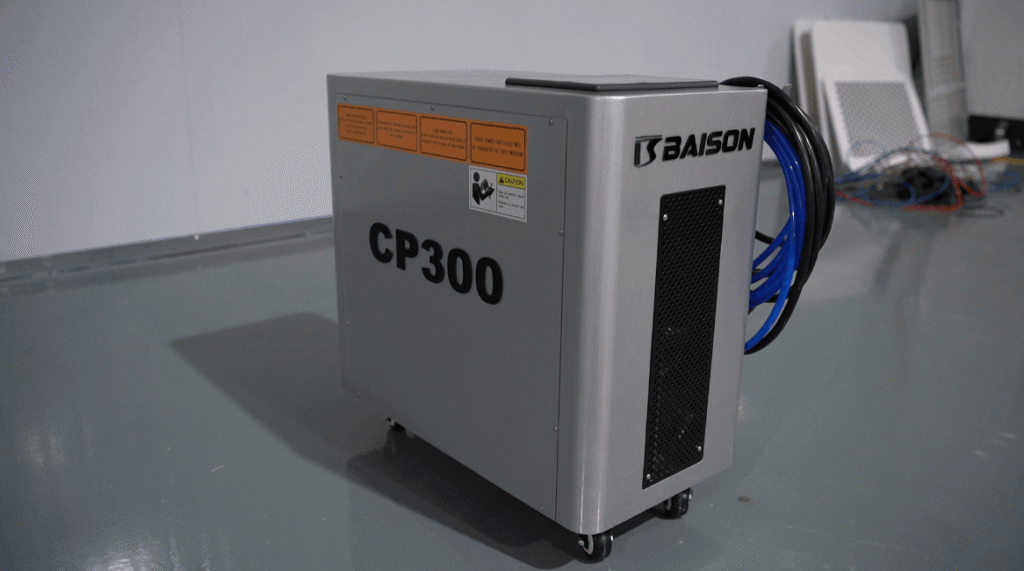
Baison CP300: Air-Cooled Laser Cleaning as a Chemical-Free Alternative
Laser cleaning relies on high-frequency, high-energy laser pulses directed at the substrate. Contaminants, oxides, and paint layers instantly absorb the energy, vaporize, or detach cleanly without altering the underlying metal matrix.
The Baison CP300 is an ultra-portable, air-cooled pulse cleaning system engineered for maximum mobility. Weighing just 23 kg with dimensions of 504×285×393mm, it delivers a cleaning efficiency of ≤ 3 m²/h (depending on material condition) with a scan width up to 130mm. It features 8 distinct cleaning patterns (line, ellipse, rectangle, wave, grid, spiral, circle, and figure-8) managed via a 7-inch touchscreen with biometric fingerprint login. Dual red-light focusing and real-time thermal monitoring safeguard the unit against overheating.
Real-World Case Studies
Munich Heavy Steel Structure Prefabricator (Germany): Prior to applying heavy-duty anti-corrosion coatings, this plant relied on chemical washes and hazardous manual grinding to strip mill scale. Chemical disposal costs and dust hazards created constant friction with environmental inspectors. Deploying two Baison CP300 units entirely eliminated chemical baths, cut toxic waste processing fees to zero, and drastically improved weld prep cleanliness.
US Electric Vehicle Charging Equipment Plant: Located in the American “Rust Belt,” this manufacturer repeatedly missed high-value contracts because surface oxidation caused porosity and micro-cracking in aluminum enclosure welds. Integrating the Baison CP300 into pre-weld preparation boosted structural weld pass rates from under 85% to nearly 100%.
Q: How do Chinese laser systems compare against European brands?
A: In thin-sheet cutting and mid-power welding, the performance gap in core laser sources has closed—brands like Raycus and Max Photonics now dominate global mid-power market shares. The true differentiator lies in software ecosystem maturity and local service response times. Baison Laser provides rapid response frameworks and maintains over 60 global service hubs. Machines like the Baison M3 feature aerospace-grade extruded aluminum gantries and independent industrial climate-controlled electrical cabinets, matching high-end European durability standards.
Q: What is the learning curve for operators who have never used laser equipment?
A: Very short. The Baison CW15 features built-in process libraries that allow general operators to produce clean welds after brief onboarding; the Baison MN3 utilizes an intuitive smart OS that removes the need for complex CAM programming; and the Baison JSS12-07 utilizes visual, graphical touchscreen programming. Comprehensive commissioning training is included with every delivery.
Q: Can I rely on after-sales support if my shop is located in Southeast Asia, the Middle East, or Latin America?
A: Yes. Baison operates 200+ global service points supported by over 150 dedicated field service engineers. All standard machines include a 1-year comprehensive hardware warranty, complimentary software upgrades during the warranty period, and lifetime technical consultation.
Q: How are shipping, crating, and container logistics handled for international buyers?
A: Compact machines like the Baison MN3 feature an all-in-one footprint under 1 square meter and fit easily into standard shipping containers. Larger systems like the Baison M3 series (approx. 10.36㎡ overall footprint) are engineered for modular or standard 20-foot container transit, significantly cutting down on-site assembly and optical alignment headaches. Reach out to our regional sales engineering team to calculate exact door-to-door logistics tailored to your destination port.
Meet Us Live: Canton Fair 2026 (October 15–19)
If you are mapping out your equipment investments for late 2026 or 2027, you can evaluate all five of these machines under one roof: The 140th Canton Fair, October 15–19, 2026 | Guangzhou, China | Hall 19.1, Booths C26–28.
Marking the 70th anniversary of the Canton Fair, this milestone edition brings together global industrial buyers from over 200 countries. For small-to-medium shop owners across emerging markets, flying into Guangzhou offers a firsthand look that no online brochure can match.
At our booth, you can:
Bring your shop drawings to discuss custom sample cutting or welding paths with our application engineers.
Witness how the Baison MN3 operates inside a compact <1㎡ footprint.
Pick up the 0.65 kg gun of the Baison CW15 to feel the ergonomic balance of handheld laser welding.
Can’t make it to Guangzhou this October? Don’t let distance slow your factory upgrade. Send us your CAD files or tube specifications today, and our engineers will run a complimentary pre-show test cut, complete with video documentation and a detailed cost-benefit breakdown. [Click Here to Submit Your Drawing for a Free Virtual Test Cut]
About Baison Laser
Founded in 2004 and headquartered in Foshan, Guangdong, Baison Laser operates nearly 100,000 square meters of modern manufacturing facilities. Backed by over 300 technological patents and 65 dedicated R&D engineers, Baison delivers comprehensive industrial solutions spanning sheet cutting, tube processing, robotic automation, welding, cleaning, and bending across power tiers from 1,500W to 120,000W.
Our guiding philosophy remains unchanged: Take industrial-grade performance, make it compact, keep the operating barrier low, and shorten your path to ROI.
See you in Guangzhou! October 15–19, 2026 | Hall 19.1, Booths C26–28.
Get a Fiber Laser System Quote!
Share The Post Now:
Hey there, I’m Sam!
I’m the founder of Baison. We have been helping manufacturing industries increase their productivity and capacity with our advanced fiber laser systems for over 20 years.
Have questions? Reach out to us, and we will provide you with a perfect solution.
In today’s global heavy industry, large-scale steel structure bridge construction, and heavy-truck manufacturing, traditional sawing, flame cutting, and plasma cutting have long fallen short. They
For metal fabrication shops and sheet metal fabricators, purchasing a fiber laser cutting machine is often one of the largest capital expenditures (CapEx) of the
When Upgrading Fiber Lasers, Power Choice Defines Profitability When expanding or upgrading production capacity, deciding between a 6kW and a 12kW fiber laser cutter is