We will discuss everything in detail to equip you with the correct information for selecting the ideal nozzle for your fiber laser cutting machine. Let’s get right into it!
What Is a Nozzle in Laser Cutting?
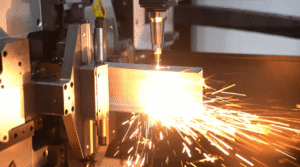
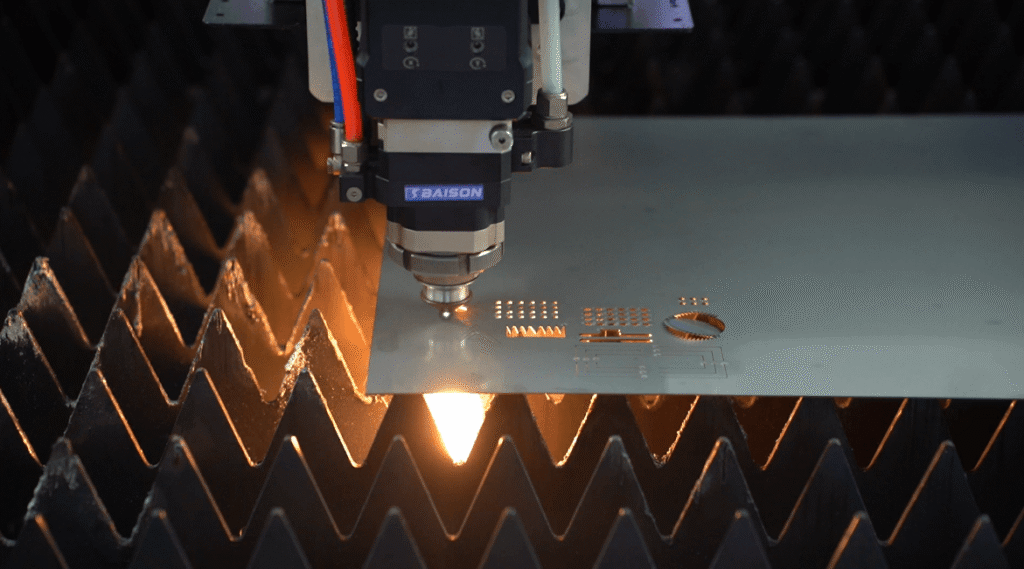
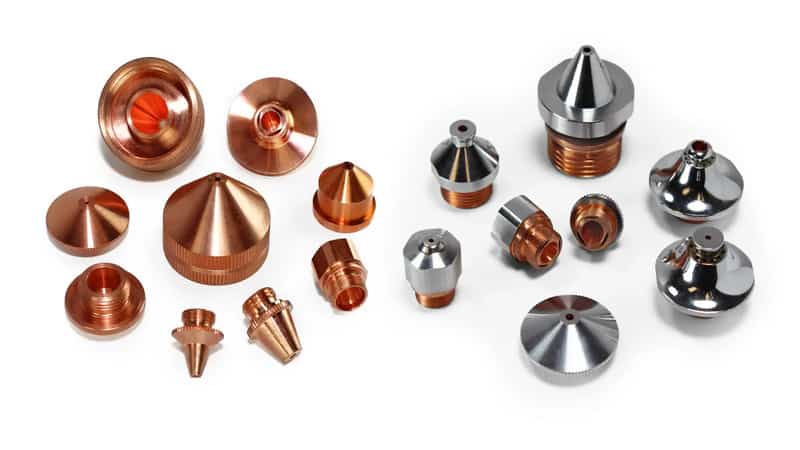
Nozzles play a crucial role in laser cutting, directing the gas flow onto the desired cutting surface. This helps keep all unwanted vaporized or molten material away, ensuring a refined and clean cut. The most common types of nozzles are made from either copper or ceramic, but we can also find other materials for the component.
These nozzles are designed to withstand the high gas pressure and temperature involved in the cutting process. On top of it, manufacturers offer them in a range of different sizes and types to optimize the cutting process.
Hence, any business using a fiber laser cutting machine must work with a suitable nozzle for the workpiece. But for that, we must first understand all the functions a nozzle plays in the cutting process.
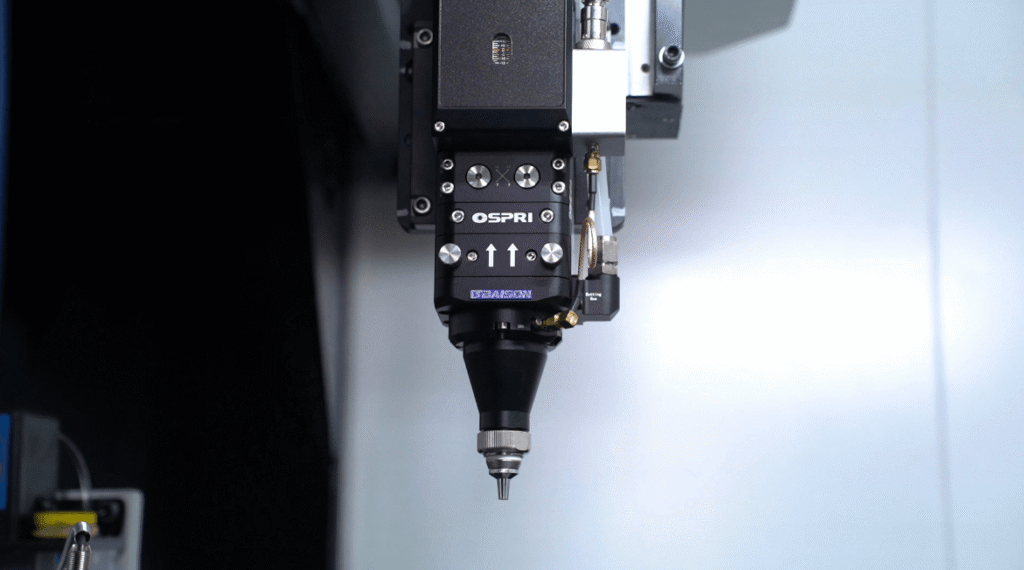
Traditional claims that fiber laser nozzles are made of “copper or ceramic” completely confuse the physical structure of the assembly. Baison’s experts point out that the nozzle itself must be precision-machined from 100% pure copper (like T2) or high-grade chromium-zirconium copper to withstand continuous 10kW+ reflected heat and ensure stable signal transmission.
The “ceramic” actually refers to the laser head ceramic body located above the nozzle, which acts as an insulator. In practice, the copper nozzle locks tightly onto the ceramic body to feed capacitive signals back to height control systems like CypCut, enabling micron-level follow-up height sensing and precise automatic edge-seeking. Using low-quality aftermarket nozzles with impurities causes frequent signal drift. This leads to minor defects like incomplete cuts and heavy dross, or major failures where automatic edge-seeking malfunctions and triggers catastrophic head crashes.
What Are the Functions of the Nozzle in Laser Cutting?
Even though a laser nozzle plays various roles in the process, we will only focus on the four main areas. These include:
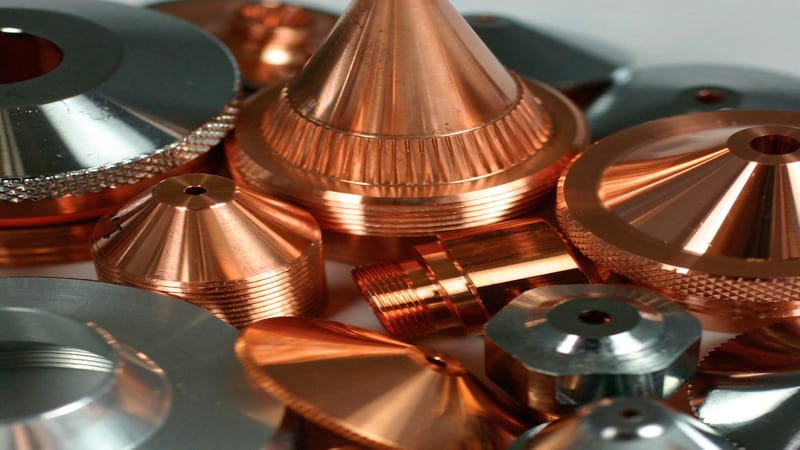
- Laser Beam Alignment: the nozzle is where the fiber laser beam comes out. Hence, it helps align the laser beam in the right direction onto the workpiece material, producing clean and precise cuts.
- Flow Control: just like fiber laser beam alignment, the nozzle handles the flow control of the gas. It ensures the gas flows in the right amount and direction to remove any vaporized or molten material from getting in the way. You can also control the flow rate to adjust it for maximum optimization when working with different thicknesses and types of materials.
- Cooling: laser cutting generates intense heat. The nozzle provides a cooling mechanism that helps prolong the cutting head life and prevents overheating damage.
- Debris Removal: The flow rate and the type of gas passing through the nozzle help remove vaporized and molten materials from getting in the way of the fiber laser beam. This significantly helps prevent clogging of the cutting head. Most advanced nozzles come equipped with adjustment settings for optimal debris removal.
What Are the Different Types of Nozzles?
| Nozzle Type | Design Mechanics | Baison Application & Assist Gas | SME Field Advantages | Technical Constraints |
| Single Nozzle | Single-hole straight-through structure with unobstructed airflow, delivering a high-pressure, linear supersonic jet | Adapted for 10kW+ high-speed models like SH3-H; exclusively for high-pressure Nitrogen (N2) or air cutting of stainless steel and aluminum. | Provides powerful shear force to instantly expel molten metal, ensuring a non-oxidized, dross-free cut edge on highly reflective materials. | Extremely high gas consumption; completely unsuitable for low-pressure Oxygen cutting of carbon steel, which causes severe burning. |
| Double Nozzl | Built-in double-layer sleeve structure with central Oxygen flow and an outer annular shielding gas layer. | Exclusively used for low-pressure Oxygen (O2) reaction cutting of medium-to-thick carbon steel plates. | Precisely controls flow velocity at the burn center and edges via dual-layer restriction, suppressing piercing blowouts and widening the oxidation reaction zone. | Complex geometry; during high-power piercing spatters, the inner micro-holes are highly prone to slag accumulation, causing beam/gas deviation. |
| High-Speed Low-Turbulence Nozzle | Features a specialized streamlined taper and thickened pure copper walls for anti-collision, smoothing the jet edge at the exit. | Standard on 10kW to 30kW high-power auto-focus cutting heads for continuous, high-yield heavy plate processing. | Suppresses localized turbulence and eddy currents even under extreme gas pressures, keeping the jet highly coherent to minimize surface roughness | Demands exceptionally strict micron-level height sensing and capacitive edge-seeking accuracy from the CNC follow-up system (e.g., CypCut). |
Advantages and Disadvantages of Different Types of Nozzles
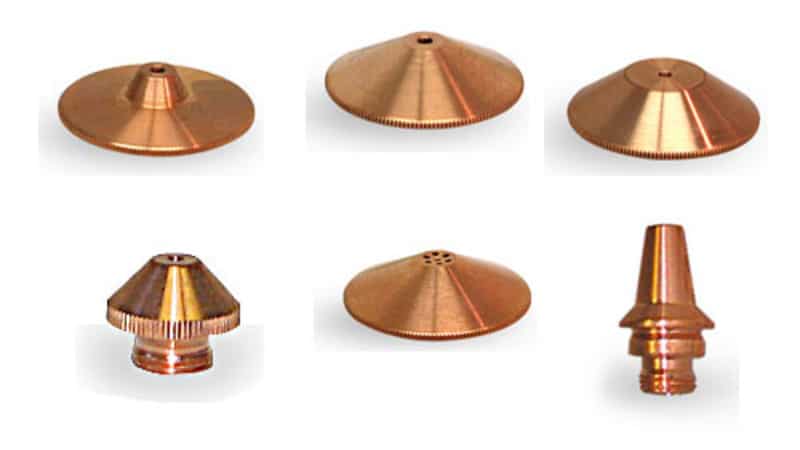
In this table, we will discuss the advantages and disadvantages of different types of nozzles to help you choose the right one for your cutting needs.
| Nozzle Type | Advantages | Disadvantages |
| Straight Nozzle | Stable gas flow, versatile, and easy to use | Limited precision and control over the cut. |
| Convergent Nozzle | High precision and control over the cut, narrow kerf width, and high cutting speed. | Limited versatility and reduced cutting depth. |
| Divergent Nozzle | High cutting speed and deeper cutting depth, suitable for thick materials. | Reduced precision and control over the cut. |
| Venturi Nozzle | Effective debris removal, improved cutting quality and reduced risk of clogs. | Limited cutting speed and reduced precision. |
| Flat Fan Nozzle | Ideal for cutting long, straight lines or flat surfaces. | Limited versatility and reduced precision for cutting complex shapes. |
| Hollow Cone Nozzle | Suitable for cutting circular or curved shapes, with good precision and control over the cut. | Limited versatility for cutting flat surfaces or irregular shapes. |
| Full Cone Nozzle | Suitable for cutting high-quality edge finishes on delicate or brittle materials. | Limited versatility for cutting thick or hard materials. |
What Are the Common Issues of Nozzle?
As someone who readily works around nozzles, you must be aware of the common issues that you can face:
- Clogging: Clogging happens when excess debris builds up around the nozzle orifice. This dramatically diminishes production capacity and cutting quality, while increasing cleaning downtime and reducing laser power.
- Corrosion:Nozzles also get corroded based on the materials they are made from. This significantly affects nozzle life and cut quality, adding to frequent replacement costs.
- Operating Conditions: You must adhere to the manufacturer’s recommended optimal operating conditions—including temperature, flow rate, and gas pressure—to avoid failures, downtimes, and damages.
- Wear and Tear: Nozzles suffer regular wear and tear. Prolonged use can wear them out completely, which will degrade cutting quality and impact the overall productivity of the laser cutting machine.
- Improper Sizing: Make sure you are using the right size of nozzle for your laser system, laser head, and cutting material. Failing to do so leads to higher operating costs, decreased nozzle lifespan, and poor cutting quality.
- Improper Maintenance: Regularly maintain and de-clog the nozzle before cutting; otherwise, you will face frequent downtimes and premature replacement costs.
In practice, fiber laser nozzle clogging and wear are not normal wear and tear, but a direct reflection of a shop’s tuning precision. Baison’s experts note that molten slag back-spatter during high-power piercing is the root cause of frequent nozzle clogging and blackening. This must be resolved by increasing the progressive gas pressure of multi-stage piercing in systems like CypCut, or by using anti-spatter agents.
More severe nozzle deformation or cracking usually stems from cutting head collisions with warped sheets, or “head crashes” caused by uncalibrated capacitive sensors. Once scratches cause even a micron-level deviation in nozzle roundness, the assist gas suffers from deviation and turbulence, directly causing defects like incomplete cuts, beam deviation, or heavy dross. Mastering these shop-floor techniques—from piercing anti-spatter parameters to precise capacitive anti-collision adjustments—is key for manufacturers to maximize yield and reduce costs in the 10kW+ era.
What Should Be Considered When Choosing a Laser-Cutting Nozzle?
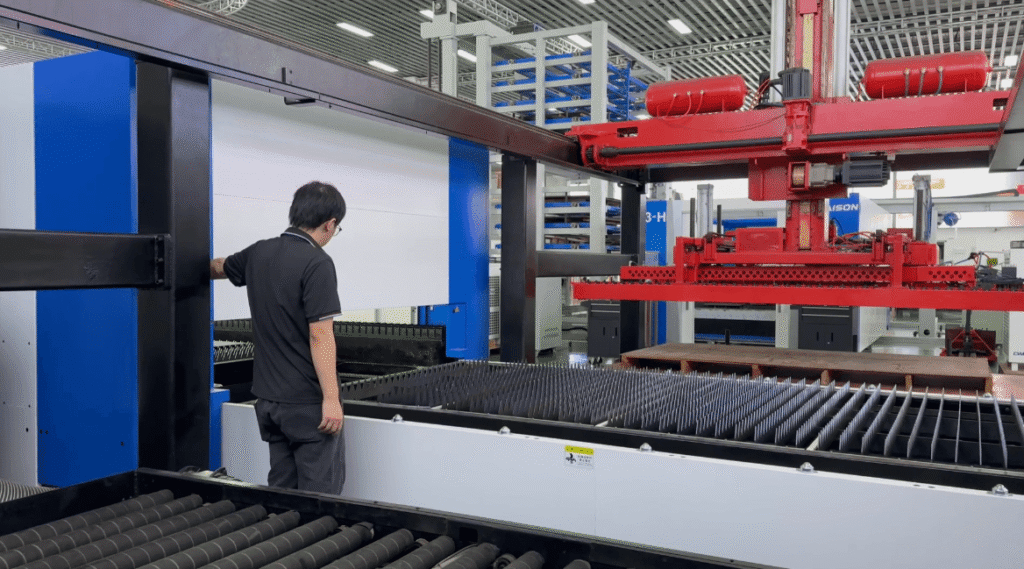
Purchasing a nozzle is a crucial decision for a business that frequently uses a laser-cutting machine. But what should you consider when looking out for one? Here are the key factors to keep in mind:
Kerf Width
Kerf width, or the width of the cut in simpler terms, is determined by the nozzle shape and size. You must get the right kerf width for your cutting material to ensure precision cutting.
Nozzle Shape
Not all shapes of nozzles can cut through every material. Hence, it would help if you got the right shape for the specific type and thickness of the material in question.
Cutting Speed
Different types of nozzles offer varying cutting speed and laser power. If you want fully optimized cutting speed, ensure you are working with the correct nozzle type.
Nozzle Material
This is important because not all nozzle materials are suitable for cutting through different kinds of cutting material. Therefore, you must look at the compatible materials list before deciding.
Cost
You must invest in a nozzle for all the right reasons. This includes knowing the cutting speed, precision, laser power, and benefits your business requires. Getting a nozzle that doesn’t offer suitable features is not a good investment.
Auxiliary Gas Flow Rate
Consider the auxiliary gas flow rate specifications for the nozzle as they directly impact cutting speed and cutting quality.
When considering how a fiber laser nozzle affects kerf width and airflow behavior, processing quality is truly driven by highly quantified diameter selection and tip geometry. Baison’s lab data shows that nozzle diameter directly controls gas jet taper and velocity: for stainless steel thin sheets under 3mm, a small 1.0mm to 1.5mm single-layer nozzle is typically chosen to maintain high-pressure, high-speed flushing; for 20mm thick carbon steel heavy plate cutting, a large double-layer nozzle over 3.0mm must be used, leveraging low-pressure, high-flow Oxygen to maintain thorough combustion within the deep kerf.
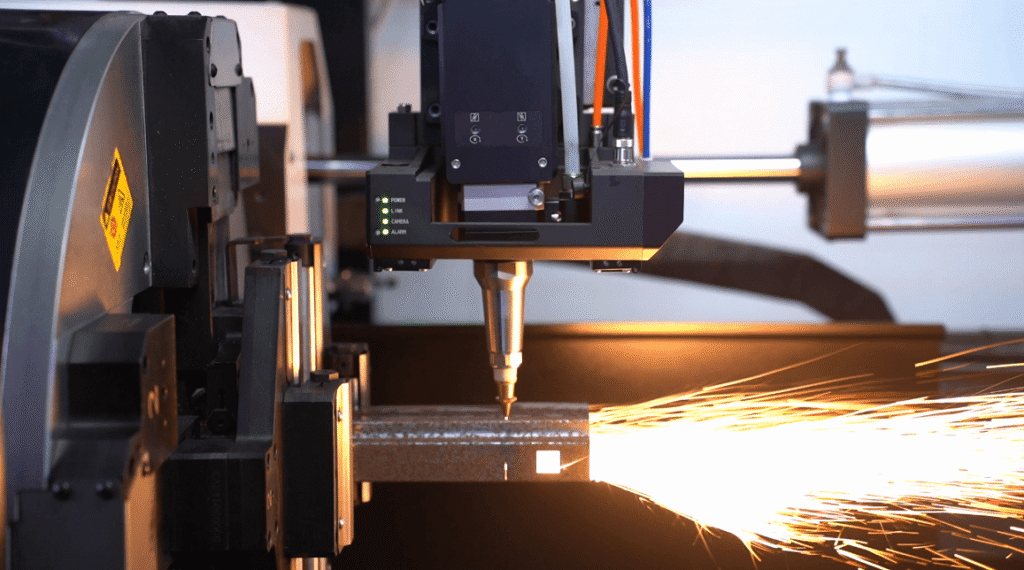
Meanwhile, tip geometry plays a critical role in processing stability. For instance, the pointed or large-radius copper nozzles standard on Baison’s 10kW+ high-speed machines (like the SH3-H) feature streamlined anti-collision optimization and alter the scattering path of reflected light from highly reflective materials like brass and aluminum. For end-users seeking dross-free, high-surface-finish cuts, mastering the precise matching matrix between nozzle diameter and sheet thickness at micron-level standoff distances is the ultimate key to eliminating blind tuning and achieving standardized, high-yield production.
FAQS
1. Which industries use Baison fiber laser nozzles?
Stainless steel kitchenware, electrical enclosures, automotive sheet metal, and aerospace components: these applications maximize yield on 10kW+ machines.
2. Is customization supported for special metallic materials?
Yes. We offer 1.0mm–5.0mm single/double-layer nozzles for titanium and brass. Airflow and parameters for special steel require shop-floor tuning—click for customized solutions.
3. What is the most common mistake when buying nozzles?
Buying impure copper or confusing “copper nozzles” with “ceramic bodies” is a critical mistake. Impure copper causes signal drift, heavy dross, or catastrophic head crashes under 10kW+ heat.
4. Why switch nozzle structures for carbon vs. stainless steel?
Stainless steel needs a single-layer nozzle with high-pressure N2 for dross-free cuts. Carbon steel requires a double-layer nozzle to regulate O2 and prevent overburning.
5. How to stop nozzle clogging from piercing slag back-spatter?
Increase progressive gas pressure via CypCut multi-stage piercing and apply specialized anti-spatter agents.
Conclusion
Working around a laser-cutting machine is not everyone’s cup of tea. There are certain factors that one must consider for optimal machine operations. The nozzle is just one of these vital aspects that you must get right for precision cutting and high productivity.
Consider everything, including the cutting material and its thickness, and then match them with the nozzle specifications. Once done, you will know the right nozzle for your business needs to maximize laser cutting performance.
At Baison, we understand the struggle to maximize laser cutting performance. It is only possible to achieve with perfect knowledge. Therefore, our experts offer customized laser cutting solutions providing a free consultation to ensure you get the right machine and parts for your business needs. Contact us today!