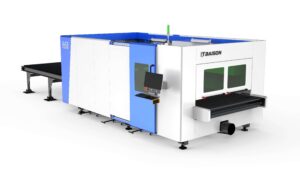
Choosing between a sheet metal laser cutter and a tube laser cutter boils down to your core production layout and profit drivers. If over 80% of your shop’s workload involves flat sheets, electrical cabinets, enclosures, or structural panels, a dedicated sheet laser with an automated shuttle table is your best bet to maximize throughput and slash part costs.
However, if your orders demand high-precision profile cutting for round tubes, square tubing, rectangular channels, or I-beams, a specialized tube laser is irreplaceable for speed, clamping accuracy, and waste reduction. For growing shops with mixed, budget-constrained demands, mapping out your precise operational logistics and financial models before signing off is critical.
The Real Workshop Conflict: Is “Part-Time” Tube Cutting on a Sheet Laser Saving Money or Bleeding Profits?
Job shops across North America and Europe frequently run into this exact dilemma:
A mid-sized fabrication facility lands a lucrative, mixed contract comprising 5,000 sheet metal enclosure parts alongside 1,200 structural square tubes and channels. To bypass purchasing a separate machine, the workshop manager decides to mount a retrofit rotary axis fixture onto their high-power flat sheet laser—essentially making a makeshift “sheet-and-tube combo.”
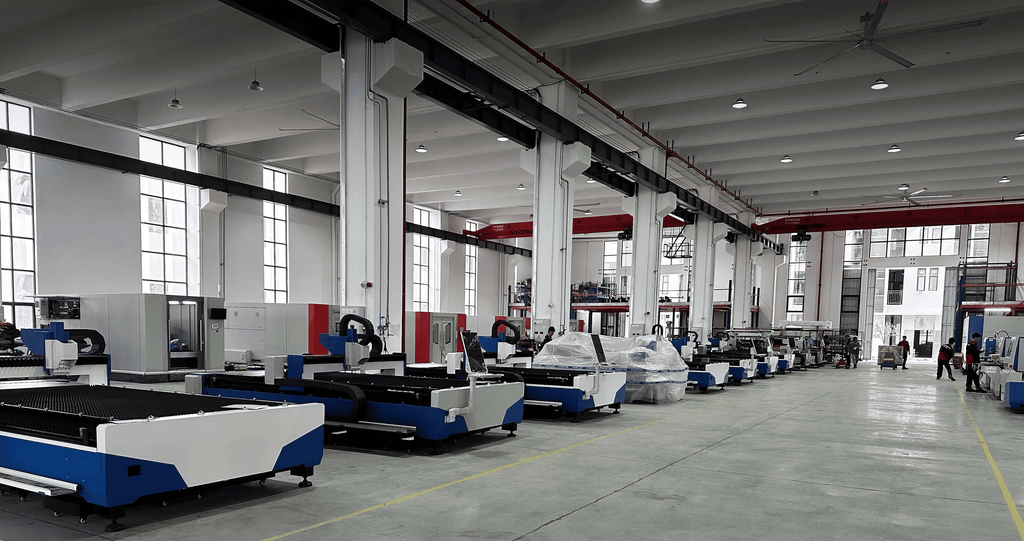
The operational bottlenecks surface almost immediately:
- Severe Setup and Calibration Downtime: Every single time the operator switches from cutting sheets to processing tubes, they have to manually remove safety enclosures, mount the rotary chuck, and recalibrate alignment. A single changeover easily eats up over 40 minutes, keeping the primary laser sitting idle.
- Long-Tube Sagging, Deformation, and Crash Alarms: The makeshift rotary fixture lacks proper multi-point clamping or dynamic body support. As 6-meter-long tubes spin, gravity causes them to sag, triggering frequent anti-collision alarms on the cutting head and blowing out kerf precision tolerances.
- Escalating Scrap and Waste Rates: Without an automated multi-chuck transfer system, the tail end of every single tube leaves a 300mm+ unmachinable stub. This flaw alone drives up raw material waste by 8%.
While the shop barely scrapes by to fulfill the order, the combination of machine downtime, labor-heavy tuning, and scrap loss drives the actual project profit margin down by nearly 20%.
In the 2026 global market—where high precision, tight delivery windows, and razor-thin margins dictate survival—relying on makeshift “all-in-one” workarounds slowly bleeds your bottom line dry. Understanding the core mechanical, control, and commercial differences between dedicated sheet and tube lasers is the foundation of a high-efficiency shop.
The Core Technical Physics: 4 Fundamental Differences Between Sheet and Tube Processing
Why can’t an elite flat sheet laser cutter handle high-end tube fabrication seamlessly? The answer lies in four fundamental dimensions: mechanical dynamics, motion axis control, clamping deformation compensation, and material utilization.
- Motion Control: 3-Axis Flat Cartesian vs. Multi-Axis Spatial Rotation
- Dedicated Sheet Laser: Operates via X/Y/Z 3-axis linkage. It prioritizes high X/Y synthesis acceleration (typically 1.5G to 2.0G) to guarantee maximum contour tracking speeds and sharp corner fidelity.
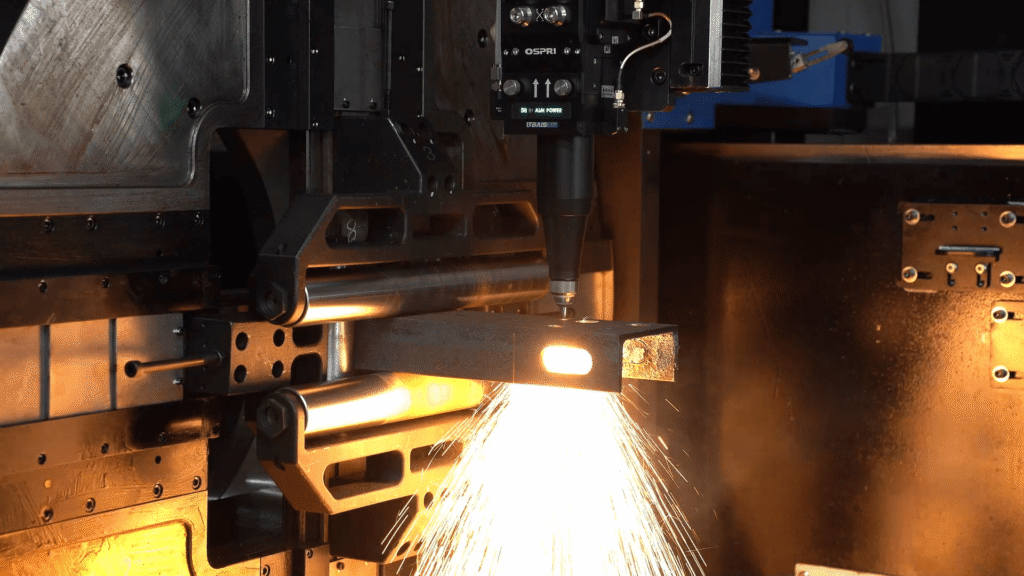
- Dedicated Tube Laser: Demands complex multi-axis spatial coordination. Beyond basic X/Y/Z positioning, it requires a C-axis for tube rotation and a B-axis for specialized bevel cutting. When processing complex square-tube bevels or 3D intersecting profiles, the cutting head must synchronize instantly with tube rotation while dynamically adjusting focal lengths and assist gas pressure.
- Support & Clamping Dynamics: Static Flat Grid vs. Dynamic Multi-Point Pneumatic Clamping
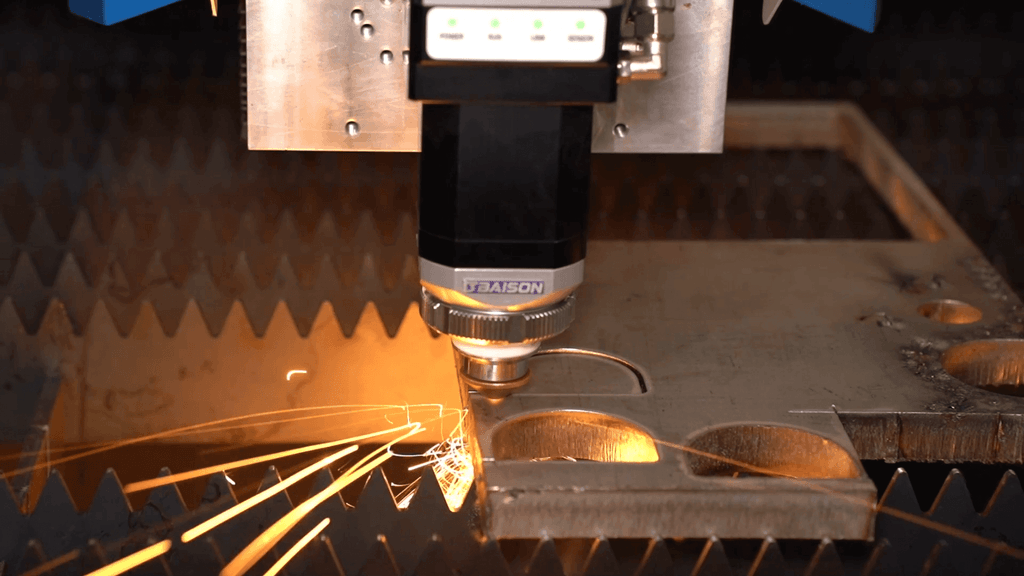
- Dedicated Sheet Laser: Sheets lay flat across a supportive slat grid, distributing weight evenly with zero rotational centrifugal torque.
- Dedicated Tube Laser: Heavy structural shapes and irregular profiles rotating at high speeds generate massive centrifugal forces and torque. Professional tube cutters feature pneumatic or hydraulic chucks that automatically modulate clamping pressure according to wall thickness—preventing high-speed slippage while avoiding wall collapse on thin materials.
- Deformation Compensation & Anti-Sagging Architecture
- Dedicated Sheet Laser: Requires zero material deflection compensation.
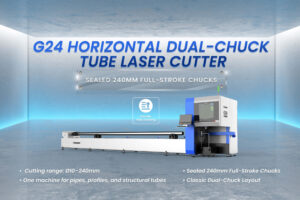
- Dedicated Tube Laser: Long 6m to 12m stock naturally exhibits bows, twists, and structural camber. Premium heavy-duty solutions—such as the Baison G24 Heavy Profile Tube Laser Cutter—utilize servo-following intermediate supports and intelligent centering algorithms to track physical tube curves in real-time, dynamically correcting coordinates to ensure flawless hole alignment.
- Scrap Control and Nesting Efficiency
- Dedicated Sheet Laser: Relies on 2D nesting software to jigsaw parts together, pushing sheet utilization to 85%–92% with clean, recyclable perimeter skeletons.
- Dedicated Tube Laser: Tubing is linear stock; scrap concentrates at the clamping ends. Traditional dual-chuck models waste 200mm to 300mm per bar, whereas advanced 3-chuck or 4-chuck transfer systems—such as the Baison V36E Free-Founding Triple-Chuck Tube Laser—use chuck handoffs to shrink drop tails down to 30mm–50mm, generating massive raw material savings over annual production cycles.
Deep Dive Comparison: Sheet Laser Cutter vs. Dedicated Tube Laser Cutter
| Comparison Dimension | Dedicated Sheet Laser Cutter | Dedicated Tube Laser Cutter |
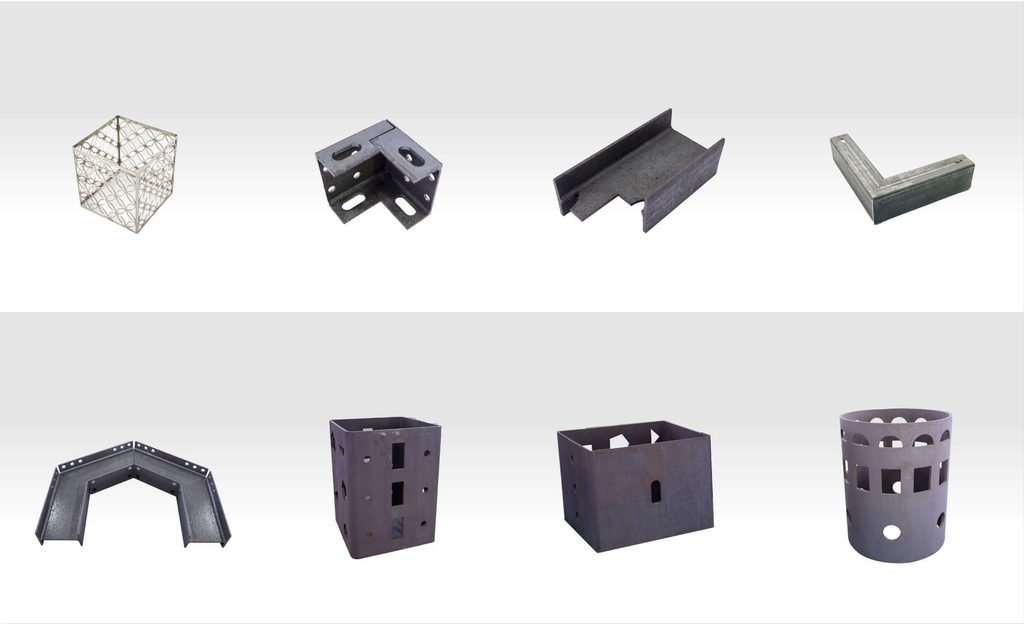
| Primary Workpiece Materials | Carbon steel, stainless steel, aluminum, brass, and other flat sheet stock | Round, square, rectangular, oval, D-shape tubes, channels, I-beams, and angles |
| Common Spec Formats | 3015 (3m×1.5m), 4020 (4m×2m), 6025 (6m×2.5m), etc. | Tube diameters from Φ10mm to Φ500mm+; lengths of 6m / 9m / 12m; weight handling up to 300kg+ |
| Auxiliary Loading Mechanism | Automated dual shuttle exchange tables, compatible with vacuum sheet loaders | Bundle/chain automatic loaders paired with rear-feeding track systems |
| Core Motion Architecture | Dual-drive gantry with rack-and-pinion or linear motor transmission | Dual/Triple/Quad-chuck pneumatic rotation mechanisms + servo-following support cradles |
| Comprehensive Processing Speed | Flat cutting speeds up to 80–120 m/min; shuttle table swaps in 10–15 seconds | Intersecting profiles, hole-punching, and miter cuts formed in one pass, replacing sawing, drilling, and punching |
| Tail Scrap Control | Nesting optimization software maximizes sheet layout, consolidating skeleton scrap | Dual chucks: 150–300mm waste; Triple/Quad chucks: <50mm drop waste |
| Representative Models | • Baison CT3A Enclosed Shuttle Laser Cutter • Baison EC3 Fiber Laser Cutter | • Baison V36E Triple-Chuck Tube Laser • Baison K12 Small Tube Laser Cutter • Baison G24 Heavy Profile Tube Laser |
Commercial Insights & Expert Recommendations
- Sheet Production Lines: If your plant processes over 10 tons of sheet metal daily, an enclosed dual-exchange-table machine (such as the Baison CT3A) is an absolute baseline requirement for safety and scale. The 10–15 second swap cycle keeps the cutting head active over 95% of the shift, eliminating material-handling downtime.
- Tube Production Lines: For operations heavy on structural framing or fitness gear, a dedicated tube laser compresses traditional multi-step workflows—sawing → drilling → milling slots → manual deburring—into a single high-speed laser routine, slashing total processing hours by 60% to 80%.
Scenario Decision Matrix: Which Configuration Fits Your Operation?
Evaluating your shop against your exact order mix, material profiles, output volume, and budget yields the following structural roadmap:
| Factory / Job Order Scenario | Primary Business & Part Characteristics | First-Choice Equipment Solution | Alternative / Transitional Option | Purchasing Decision Logic & ROI Drivers |
| Scenario A: General Job Shop | 80% flat sheet metal parts, electrical cabinets, enclosures; occasional tube handle requirements | Dedicated Enclosed Shuttle Sheet Laser (Ref: Baison CT3A / Baison EC3) | Outsource tube parts or purchase pre-cut tubing | Secure core 80% output throughput first; tilt capital toward laser wattage and dynamic motion performance for the fastest payback. |
| Scenario B: Metal Furniture & Light Structures | Table frames, gym apparatus, retail displays, medical beds; small-diameter (≤Φ120mm) thin-wall tubing | Lightweight High-Speed Tube Cutter (Ref: Baison K12 Tube Laser) | Standard dual-chuck tube laser | Small tubes rely heavily on C-axis RPM and auto-loading; low footprint and low capital entry make it ideal for mass-volume light tubing. |
| Scenario C: Heavy Construction & Framing | Steel structural buildings, heavy machinery, safety guards; large diameters (≥Φ210mm) & heavy shapes (≥200kg/pc) | Heavy-Duty Anti-Sag Tube Cutter (Ref: Baison G24 / Baison V36) | Plasma cutters, heavy custom single-purpose rigs | Focus on load capacity and deflection compensation; ensures structural joint accuracy and eliminates post-grinding labor. |
| Scenario D: High-Value Precision Tubing | Titanium alloys, heavy stainless seamless tubing; high raw material cost, strict tail-scrap and schedule controls | Triple-Chuck Short-Tail Tube Laser (Ref: Baison V36E) | Standard dual-chuck tube cutter | Interlocking chuck handoffs compress tail drop; valuable material savings alone cover major equipment maintenance budgets. |
| Scenario E: Startup / Mixed-Order Shop | Tight budget, mixed sheet-and-tube demand, modest overall volume, diverse client requests | High-Value Sheet Laser + Outsourced Tubing (Ref: Baison EC3) | Makeshift sheet/tube combo (beware changeover losses) | Direct capital to your highest-utilization asset; scale into a standalone tube laser once tube volume expands to prevent compromising both sides. |
Crucial Caveat: Makeshift sheet-and-tube combo setups are not entirely useless—they suit niche shops where sheet and tube orders split a strict 50/50 ratio, monthly tube volume stays under 5 tons, and strict tolerances are unnecessary. However, the moment your tube business scales, the hidden operational costs compound rapidly.
Want to know which machine configuration yields the absolute highest return for your specific product mix? Contact Baison’s industrial application engineers today for a customized ROI simulation and technical assessment!
Financial & ROI Ledger: Breaking Down Operating Costs and Payback Timelines
⚠️ Disclaimer: Figures below reflect standard metrics under overseas double-shift full-load operational conditions. Actual electricity tariffs, assist-gas market prices, labor rates, and payback windows vary based on geographic region, order saturation, and material grades. This serves as an operational model, not a financial guarantee.
Purchasing a fiber laser system counts as a major Capital Expenditure (CapEx) that simultaneously optimizes your long-term Operational Expenditures (OpEx). The following breakdown models a typical overseas facility operating a 6kW enclosed sheet laser and a 3kW dedicated tube laser.
1. Operating Cost (OpEx) Structure
- A. Power Consumption
- 6kW Sheet System (Laser source, chiller, dust collector, drives): Total composite draw runs 35–45 kW/h; at an overseas industrial rate of $0.15 USD/kWh, hourly power costs average $5.25–$6.75 USD.
- 3kW Tube System (Chuck drives, support cradles, chiller): Total composite draw runs 20–28 kW/h; hourly power costs average $3.00–$4.20 USD.
- B. Assist Gas Consumption (Carbon & Stainless Steel Profiles)
- Air Cutting: Powered by high-pressure screw compressors and air-drying filters; primary costs stem from compressor electricity (~$1.50–$2.50 USD/h), making it the ultimate high-ROI solution for thin sheets and thin tubes.
- Nitrogen Cutting: Required for oxidation-free, mirror-finish stainless cuts, driving higher consumption at $8.00–$15.00 USD/h depending on material thickness and working pressure.
- Oxygen Cutting: Used for reactive thick carbon steel separation; gas consumption remains low at $2.00–$3.50 USD/h.
- C. Consumables & Annual Maintenance Fiber laser sources feature zero internal optical lens degradation; routine consumable budgets center strictly on protective windows, nozzles, and ceramic rings. Annual consumable budgets per machine average $800–$1,500 USD.
2. ROI Payback Period Modeling
Baseline Conditions: Double-shift production running 400 effective cutting hours per month.
- Labor Savings via Efficiency: A dedicated tube laser consolidates multiple conventional steps, dropping per-part processing hours by 70%. A traditional 4-person crew shrinks to just 1 operator and 1 handler, saving $100,000–$150,000 USD annually in direct payroll.
- Raw Material Savings: Taking the Baison V36E Triple-Chuck Model processing 50 tons of stainless tubing monthly at $2,500 USD/ton as an example, reducing tail drop waste from 250mm down to 50mm boosts material utilization by roughly 3.5%, trimming monthly material bills by ~$4,375 USD (saving over $50,000 USD annually).
⚠️ Reality Check: Under high-demand, double-shift factory schedules, most overseas facilities recoup their capital investment within 8 to 14 months; single-shift environments or inconsistent order pipelines will naturally stretch out the payback window.
2026 Buyer’s Antidote: 4 Common Traps and Verification Checklists
When negotiating with overseas machine suppliers, looking past raw laser wattage numbers and initial invoice quotes requires verifying these critical operational checkpoints:
- ❌ Trap 1: Chasing High Wattage While Ignoring Chuck & Dynamic Machine Rigidity
When cutting tubing—especially thin-gauge small diameters—the real production bottleneck isn’t laser power; it’s C-axis chuck RPM speeds and rotational acceleration. Underpowered chuck kinematics leave a 12kW source performing effectively like a 3kW machine on small tubes.
- ❌ Trap 2: Ignoring Maritime Container Dimensions and Facility Door Clearance
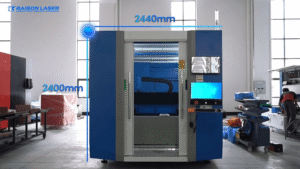
- Enclosed sheet systems feature large structural housings; verify that the frame fits into a standard 40HQ Flat Rack container and that your factory entry doors clear the dimensions. Specific engineered models (such as the Baison EL13A Freight-Optimized Laser Cutter) feature specialized structural engineering designed to slash cross-ocean shipping freight costs by up to 35%.
- Tube systems: 9m/12m long machine beds demand strict foundation floor flatness; always request certified civil engineering foundation schematics from the manufacturer prior to delivery.
- ❌ Trap 3: Overlooking Software Ecosystems and 3D CAD Parsing Capacity
Tube programming software must seamlessly parse 3D file formats like STEP, IGS, and SLDPRT. Substandard software chokes and errors out on complex intersecting profiles, forcing operators to manually redraw paths and destroying shop floor output.
- ❌ Trap 4: Disregarding Global After-Sales Support and Spare Parts Infrastructure
A single day of unexpected machine downtime costs thousands in lost revenue. Confirm that your supplier maintains active global capabilities: remote diagnostics, regional spare parts warehouses, and localized field engineering support networks (explore the Baison Global Support Network).
Frequently Asked Questions (FAQ)
Q1: As a startup job shop with limited capital, should I prioritize a sheet laser or a tube laser?
It depends entirely on your highest-yield order pipeline. If over 70% of your business involves flat panels, invest in a cost-effective sheet laser (such as the Baison EC3 Series) to secure steady cash flow first. If structural tubing dominates your order book with tight delivery windows, a dedicated tube laser locks down a high-margin market edge.
Q2: Can adding a rotary axis (makeshift sheet/tube combo) to a sheet laser genuinely replace a dedicated tube cutter?
It works for minor, low-tolerance prototyping runs; it fails entirely in production volumes. Makeshift chuck modules lack robust clamping force, feed capacity, and the dynamic stiffness required to handle long-tube sag and drop waste. Once monthly tube processing surpasses 5 tons, a dedicated tube cutter’s composite yield vastly outperforms combo rigs.
Q3: What are the most dangerous configuration traps buyers fall into when purchasing a fiber laser system?
Buyers frequently fall victim to “wattage obsession” or a blind “all-in-one” mindset. Neglecting chuck dynamics on tube lines or ignoring shipping/doorway facility constraints on sheet lines generates heavy post-purchase expenses. Match your setup strictly against daily output metrics, part geometries, and physical shop floor space.
Q4: How fast can a buyer expect full ROI recovery on an industrial fiber laser cutter?
Across global markets under stable single- or double-shift production, most factories break even within 8 to 14 months, provided order saturation remains steady. Financial returns stem from low consumable upkeep, accelerated cutting speeds, and the elimination of manual grinding and legacy mechanical fabrication steps.
Q5: How does Baison Laser handle overseas factory installation, commissioning, and technical service?
Baison fields an extensive global response ecosystem encompassing local field engineers, real-time remote diagnostics, and structured maintenance check-ups. All export machinery ships equipped with bilingual English software interfaces and comprehensive technical documentation to guarantee rapid commissioning. Review full service frameworks via the Baison Global Support Network Overview.
Secure Your Free Expert Selection & ROI Assessment
Selecting the right sheet and tube laser configuration dictates your facility’s production throughput, scrap metrics, and long-term operating margins.
If you are uncertain whether a sheet laser or a dedicated tube machine best fits your order profile and shop constraints, reach out to Baison’s engineering team today to claim your complimentary job-shop evaluation and customized ROI simulation report!