When it comes to choosing the right materials for laser cutting technology, there are a few things you need to keep in mind. The thickness limit is one of them. In this blog post, we’ll take a look at the thickness limit for different materials and what that means for your project. Stay tuned!
Basics of Laser Cutting
Laser cutting is a cutting-edge machining technology gaining popularity for its cutting ability of materials through laser, thus creating a different cutting environment. It allows welders to cut metals of maximum thickness accurately. Increasing laser technology makes it possible to develop high-power CNC metal sheet machines.
Proper laser cutting depends on different factors, such as:
- Material & quality of cutting machine
- Laser type
- The maximum thickness
- The cutting environment
- Cutting speed
Understanding these factors is critical for proper laser cutting.
The Maximum Cutting Thickness of Laser for Different Materials
The cutting thickness of the laser for different materials is shown in the table. Maximum laser cutting thickness depends on material and laser type.
| Power / Material | 3000W | 6000W | 12000W | 20000W |
| Carbon Steel (Quality/Limit) | 16 / 20 mm | 22 / 25 mm | 35 / 40 mm | 45 / 50 mm |
| Stainless Steel (Quality/Limit) | 8 / 10 mm | 16 / 20 mm | 30 / 35 mm | 40 / 45 mm |
| Aluminum Plate (Quality / Limits) | 8 / 10 mm | 14 / 16 mm | 25 / 30 mm | 35 / 40 mm |
| Copper Plate (Quality/Limit) | 4 / 6 mm | 8 / 10 mm | 14 / 16 mm | 18 / 20 mm |
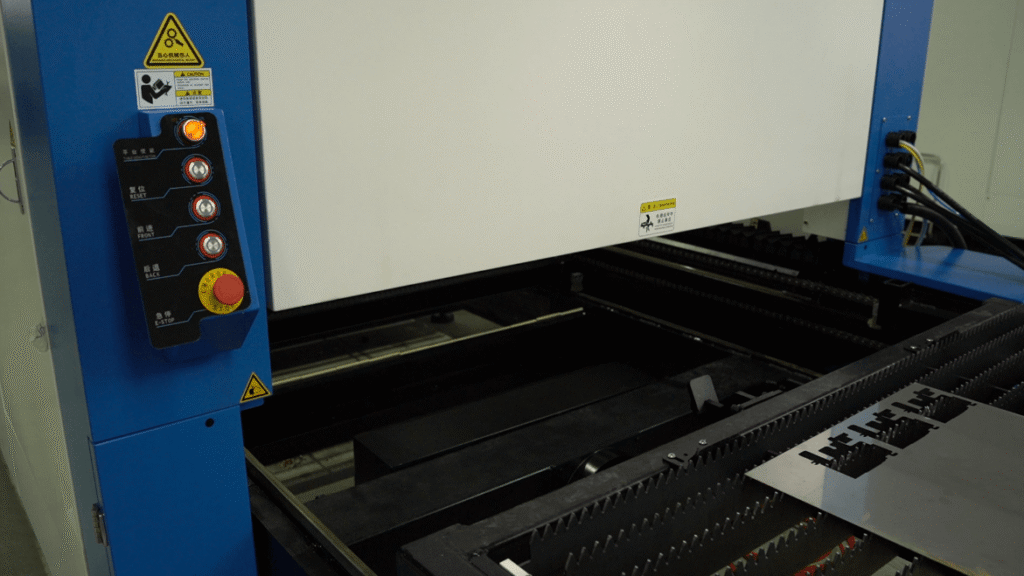
In the selection of industrial-grade thick-plate cutting machines, Baison has established a comprehensive processing matrix covering mainstream power levels ranging from 3,000W, 6,000W, and 12,000W, up to 20,000W.
Through extensive real-world testing in factory workshop environments, equipment in the 3,000W class has demonstrated the capability to reliably cut through 20mm carbon steel and 16mm stainless steel; furthermore, when power output is elevated to the multi-kilowatt level, the specialized positive-pressure oxygen piercing process for ultra-thick carbon steel effectively eliminates issues such as piercing blowouts and edge collapse.
Benefiting from the deep integration between the CypCut control system and custom-engineered, high-overload hardware, Baison equipment maintains a mirror-smooth cut cross-section even when processing challenging thick aluminum and copper plates. By delivering robust, real-world performance data that far exceeds the limitations of traditional processing methods, these machines successfully meet the rigorous demands of modern manufacturing for the high-efficiency mass production of thick-plate components.
Working on Laser Cutting Machines
Laser machines can cut various materials, such as carbon steel, stainless steel, aluminum plate, copper plate, and metal sheet. This cutting also includes metals with high accuracy and maximum thickness. These machines use different lasers to cut materials of varying thicknesses but show similar fabrication processes.
Laser cutting machines produce a consistent, intense light to cut even thicker materials accurately that can adjust according to the requirement.
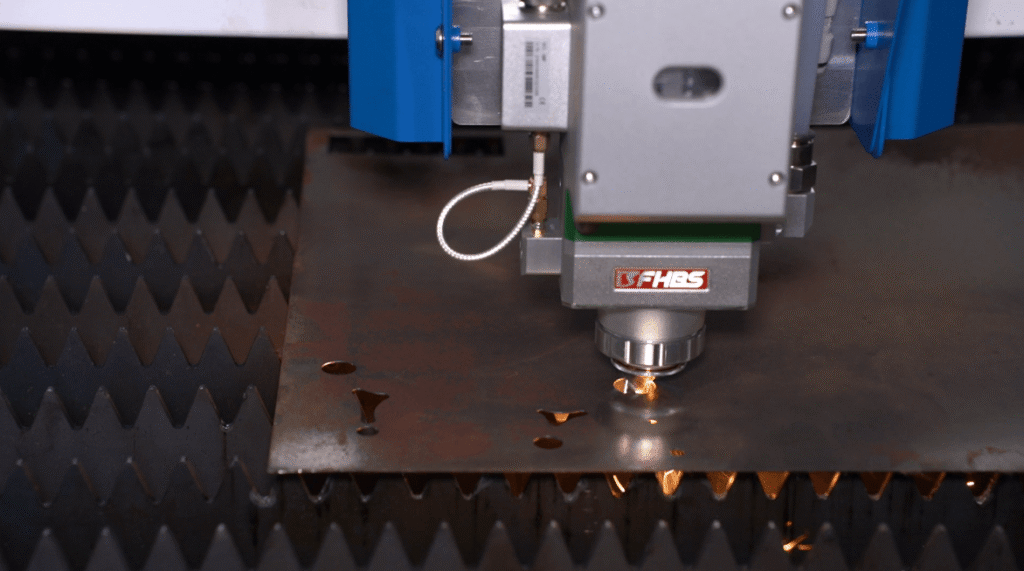
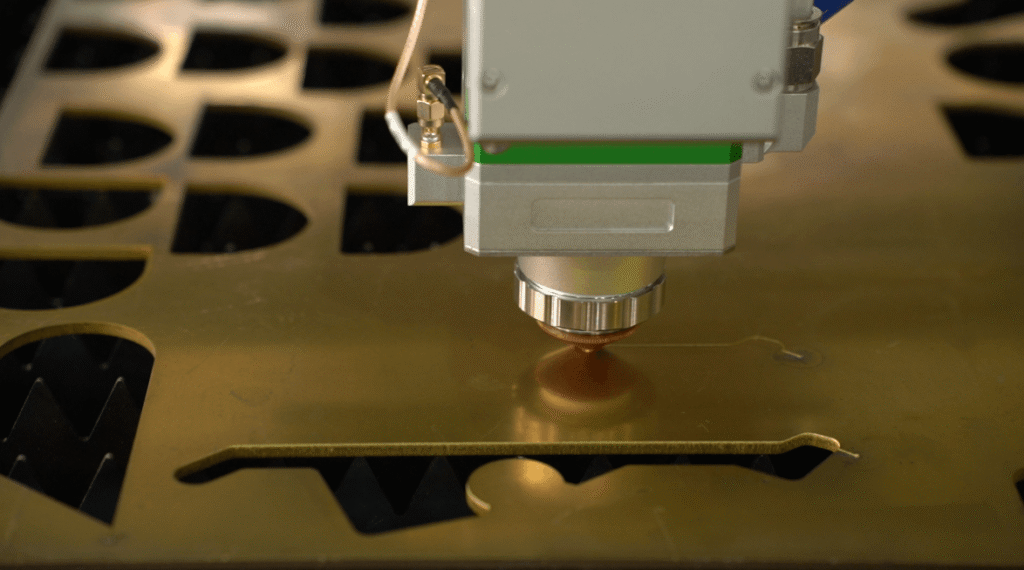
Laser machines work by focusing and redirecting the light to a targeted material. The light becomes much hotter once it is concentrated, and this heating results in the cutting of material.
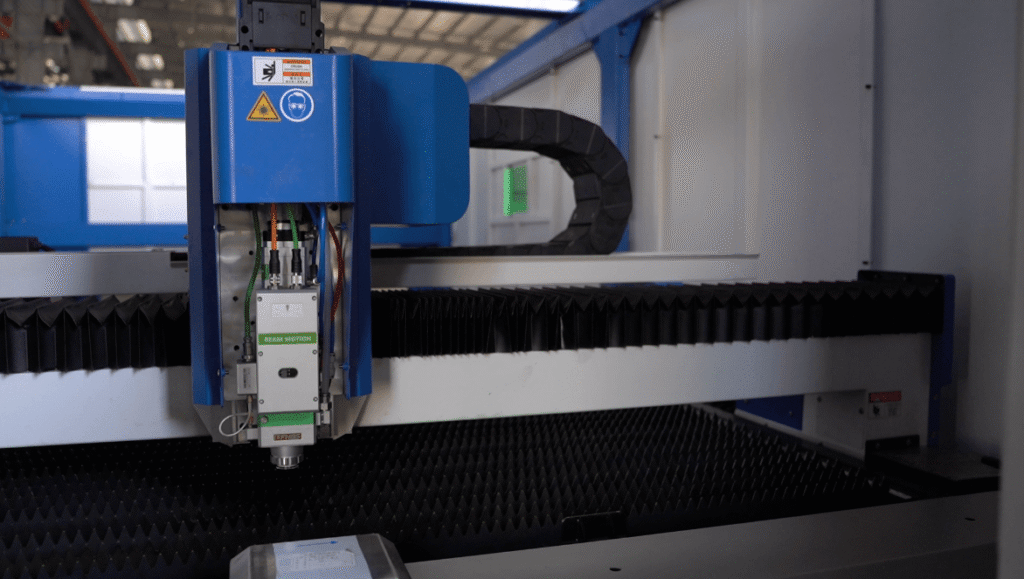
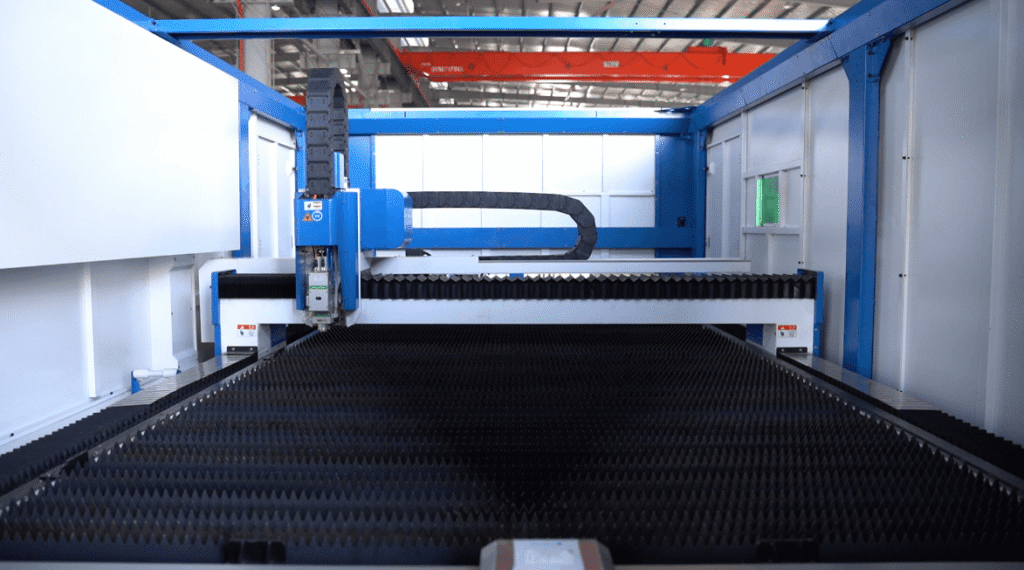
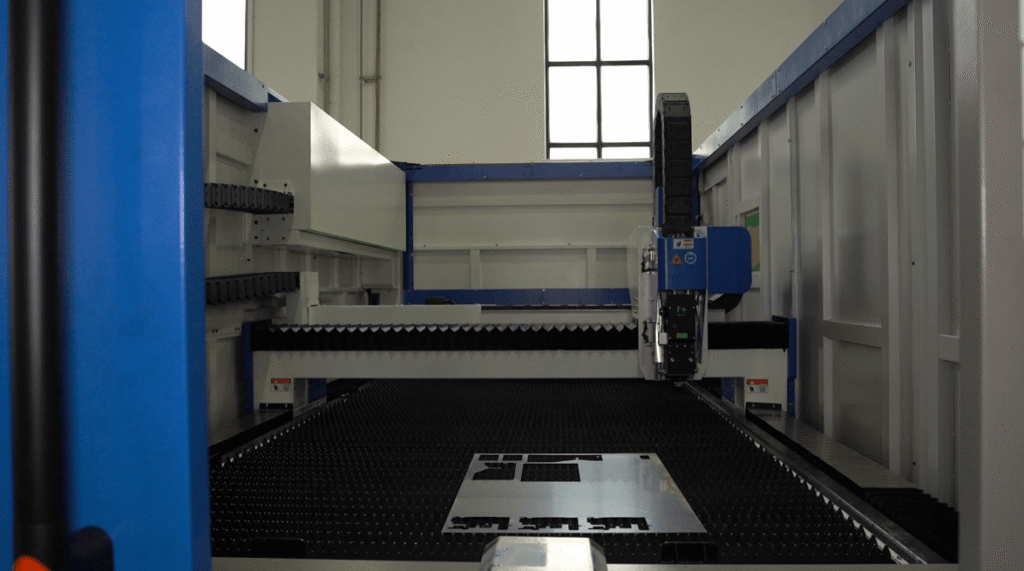
Moreover, a gantry system mounts the laser during laser cutting, allowing movement of the laser on the XY axis. Thus, it can cut materials with maximum thickness at varying angles and curves with higher accuracy.
Types of Laser Cutting Machines
Laser cutters are classified into different types, and each laser machine possesses its laser cutting maximum thickness limit. These two machines include a CO2 laser cutting machine and a fiber laser cutting machine.
1. CO2 Laser Cutting Machines
CO2 laser cutting machine is the most frequently used for cutting laser. It is highly cost-effective but is being replaced by a fast fiber laser cutting system with modern machine parts.
This laser cutting machine is composed of a vacuum-sealed, long gas-filled tube. CO2 is usually prioritized for this purpose. The CO2 is mixed with the nitrogen gas. When the electrical connection is provided to the tube, it produces an intense light by exciting the gas molecules.
The light bounces to the series of mirrors and is redirected to the focusing lens through the mirrors. As a result, the light is concentrated by focusing the lens on a hot point. It leads to cutting materials of varying thicknesses based on thermal separation and the maximum thickness of materials.
CO2 cutting machine is used for sheet metal fabrication. The cutting machine produces smooth edges cut of metals with a maximum thickness of even more than 25″. The laser of the CO2 cutting machine can only cut to a specific cutting ability.
In the realm of industrial mass production involving thick-plate materials, Baison has long since transcended the limitations of obsolete CO2 technology, fully shifting its focus to championing ultra-high-power fiber laser cutting machines—specifically the 12,000W and 20,000W models. Real-world workshop testing has demonstrated that, when cutting thick carbon steel and stainless steel, Baison’s fiber laser equipment exhibits a vastly superior cutting thickness capacity and achieves cutting speeds several times faster than those of traditional CO2 cutters.
Furthermore, its optical path operates with zero loss, thereby completely eliminating issues such as edge rounding and thermal deformation. By integrating Baison’s flagship MAP-series gas mixing system with the CypCut control system from Bochu, these multi-kilowatt fiber laser machines—bolstered by precision high-pressure gas path calibration—not only drastically reduce gas consumption costs but also ensure that the cut surfaces of ultra-thick metal plates are mirror-smooth.
With this formidable mass-production capability, characterized by micrometer-level positioning precision, Baison has successfully overcome the long-standing bottlenecks associated with thick-plate processing.
2. Fiber Laser Cutting Machines
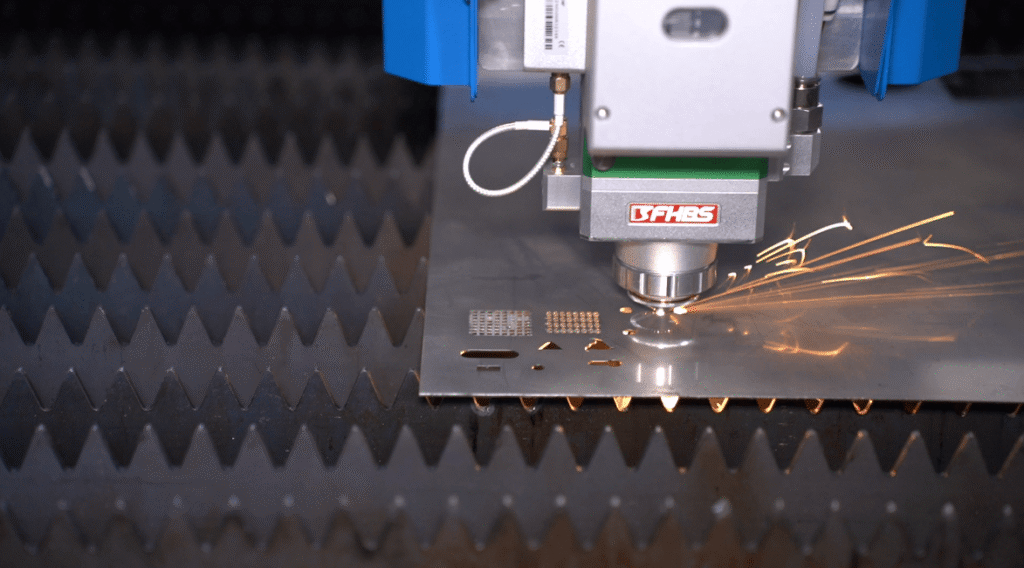
The actual application process of the fiber laser cutting machine is similar to the fiber optics light. The cutting ability of this fiber laser cutting machine is much higher than other cutting machines. It includes a tube coating of various types of glass with varying reflective properties, and the laser beam enters through the glass tube in the fiber machine.
This fiber laser machine contains a few moving parts that might require adjustment and replacement and often need little maintenance. A fiber laser cutting machine is much larger and more expensive than a CO2 laser cutting machine.Click here to learn the difference between fiber laser and CO2 laser technology.
The laser diameter of the cutting machine is also reduced due to the nature of fiber optics. Consequently, the fiber cutting machine helps achieve a level of detail.
A fiber laser machine can efficiently cut the metal materials such as:
- Carbon steel
- Stainless steel
- Carbon steel plate
- Aluminum foil
- Aluminum plate
- A copper plate with the higher cutting power of a fiber laser.
The previously mentioned materials may vary in thickness. These machines’ actual cutting capacity or power is much higher than CO2 laser cutters.
With its robust industrial-grade configuration, the Baison 10,000-watt-class thick-plate cutting machine has completely resolved every pain point associated with thick-plate processing. The machine comes standard with a high-strength aviation-grade aluminum beam and a modular, fire-resistant brick-protected bed; even during prolonged, continuous cutting of metal plates tens of millimeters thick, it maintains unwavering stability without ever deforming.
Real-world factory test data demonstrates that this equipment not only elevates kerf taper and perpendicularity to unprecedented levels but also drives a dramatic plunge in per-meter processing costs (specifically electricity and gas consumption), allowing users to bid a final farewell to the rough, rippled surfaces characteristic of traditional cutting methods.
Once you witness firsthand the exceptional perpendicularity and slag-free, mirror-finish cut edges produced by Baison, you will truly grasp the magnitude of this generational leap in efficiency and quality—a silent yet powerful asset that enables modern large-scale manufacturing facilities to stand out amidst fierce market competition.
3. Power Laser Cutting Machines
Power laser machines are high-performing machines that cut materials with maximum thickness through lasers. They have cutting machines with different cutting capacities for other materials according to the thickness of different materials.
Proper handling of laser machines can precisely cut the maximum thickness of different materials, creating a friendly cutting environment. Power laser machines commonly cut various materials with bright surface cutting.
These laser machines do not use the same laser. The machine cut copper plates, aluminum plates, stainless steel plates, carbon steel, stainless steel, and other materials with varying or the same thickness.
Materials for Laser Cutting
The cutting of different materials can be performed through the powerful fiber lasers of the fiber laser cutting machine. Modern fiber lasers can even cut materials up to 2″. Generally speaking, the cutting of 1″ steel and 1.5″ aluminum and stainless steel can be completed through an 8KW fiber laser.
The diversity of the material is used for cutting. It is commonly used to laser cut metals such as aluminum plates, stainless steel, mild steel, carbon steel, and thick steel. It can even efficiently cut carbon steel plates and copper plates. The previously mentioned different metal materials may have their thickness limit values.
1. Aluminum
Aluminum is much lighter than steel and is known for its flexibility. Therefore aluminum plate plate is widely used for precise laser cutting without being problematic. The aluminum plate maximum thickness is 2MM for a 500 W fiber laser cutting machine.
2. Stainless Steel
Traces of chromium are added to the steel to form stainless steel. Stainless steel is corrosion-resistant and a good choice for cutting. Stainless steel is resistant to corrosion and rusting. The stainless steel maximum thickness is 3mm for a 500 W fiber laser cutting machine.A comprehensive guide to laser cutting stainless steel is here.
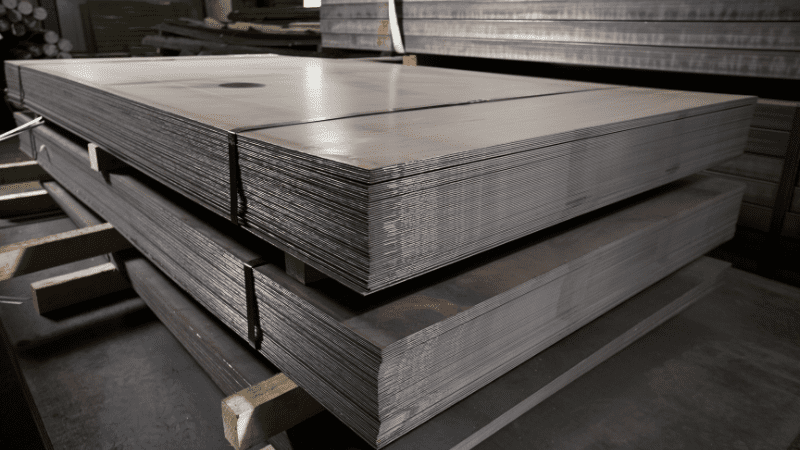
Baison’s medium-to-thick plate laser cutting machines primarily feature high-power configurations ranging from 3000W to 6000W, engineered specifically for the high-volume industrial mass production of 20mm carbon steel and 16mm stainless steel.
The equipment comes standard with the CypCut control system, custom high-overload servo motors, and high-rigidity reducers from Techmag; further aided by precision-tuned high-pressure gas circuitry, it completely eliminates issues such as edge collapse and thermal deformation.
The resulting cut cross-sections are mirror-smooth—easily passing rigorous, micron-level quality inspections using a micrometer—making this a formidable mass-production tool that far surpasses the processing limits of traditional low-power machinery.
3. Mild Steel
Mild steel is frequently prioritized for cutting because of its lower power of carbon concentration than carbon steel. Low carbon content makes cutting easier.
4. Carbon Steel
A mixture of carbon and iron forms steel. Carbon steel has a relatively large amount of carbon and is very malleable. The laser can cut carbon steel and provides a perfect cutting surface.
5. Other Steel Alloys
They can be used for cutting lasers, and the alloy steel is strengthened by bonding it with other elements.
6. Non-metallic Materials
Besides metal sheets, cutting is also applied to non-metallic materials such as ceramics, plastics, wood, etc. However, their strength is much lower than metals.
Main Determinating Factors for Maximum Laser Cutting Thickness
A laser can not cut through a material as thick material at one wattage. Some factors are generally considered to determine the laser’s maximum cutting thickness and capacity. These factors include:
- Material strength
- Laser cutting speed
- Cost
- Laser power
The laser uses different wattages to cut the materials with varying cutting thicknesses. Similarly, a small laser cannot cut different materials with similar thicknesses.
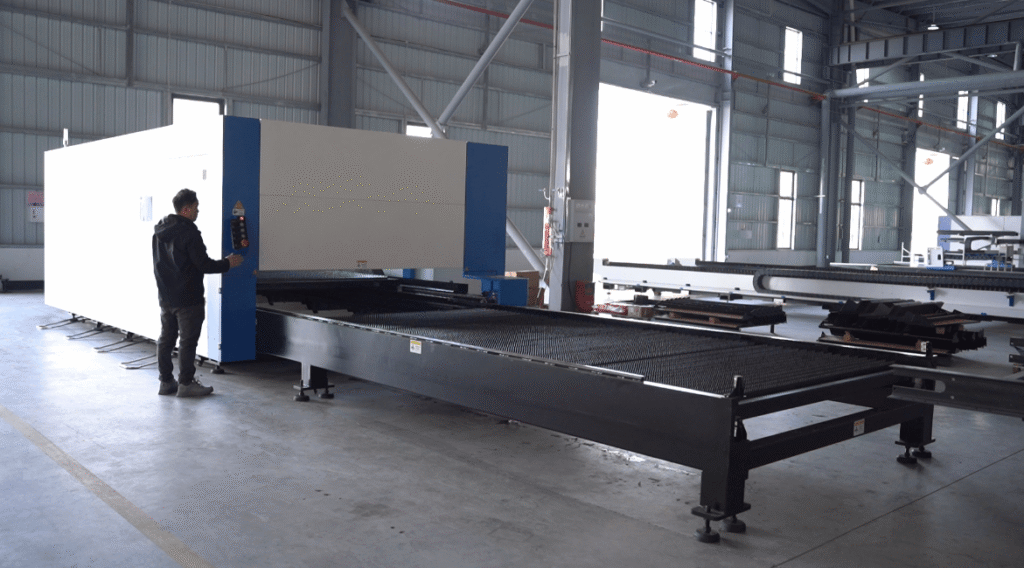
When pushing the limits of thick-plate processing—specifically in determining the maximum achievable cutting thickness—the critical factor lies in the precise fine-tuning of parameters and expert calibration techniques, rather than the mere aggregation of raw power.
Through the integration of the CypCut system by Bochu, Baison achieves a meticulous synchronization of power and cutting speed. When processing 20mm carbon steel, the system employs a positive-pressure oxygen strategy featuring layer-by-layer progressive control and seamless gas pressure switching, thereby completely eliminating issues such as piercing failures and dross accumulation.
For 16mm stainless steel and aluminum plates, the equipment utilizes a high-pressure air solution in conjunction with the MAP series gas mixing system to dynamically adjust the nitrogen-to-oxygen ratio; this not only flawlessly prevents edge collapse but also renders the cut surfaces of ultra-thick plates as smooth and reflective as a mirror.
It is precisely this level of rigorous, technical fine-tuning—specifically regarding gas flow paths and focal positioning—that serves as the key for manufacturing facilities to successfully overcome the bottlenecks inherent in thick-plate processing.
I. Material Strength
The proper cutting of the laser dramatically depends on the strength of the cutting material. It can cut both thicker and thinner metal materials with varying strengths. The material strength of different metal alloys depends on the ratio of the elements present in the element. The previously mentioned material also varies in its strengths.
II. Cutting Speed
The cutting speed of the laser is also affected by the thickness of different materials or cutting surfaces. The higher the laser power, the faster the cutting speed. You can quickly cut material with greater thickness using a high-wattage laser.
Cutting speed is also affected by the use of auxiliary gas. Auxiliary gas with high pressure is compulsory to produce smoother edges and bright surfaces. During the laser cutting of stainless steel, O2, and N2 are used as assist gas. imilarly, laser cutting of carbon steel uses O2 as a cutting gas.
During extensive batch testing involving 20mm carbon steel and 16mm stainless steel, Baison focused its core technical expertise—specifically regarding the cutting of thick plates—squarely on the fine-tuning of gas purity and flow fields.
For the batch cutting of stainless steel and aluminum, the system features an integrated high-pressure air compressor solution capable of directly replacing traditionally expensive nitrogen gas; this allows factories to drastically reduce gas-related operating costs while maintaining high cutting efficiency.
When cutting thick carbon steel, the equipment employs a specialized dual-layer nozzle system to execute a progressive, layer-by-layer control of positive-pressure oxygen flow; through precise and stable pressure switching, this mechanism completely eliminates the persistent challenges associated with piercing blowouts.
Furthermore, Baison offers an optional MAP-series gas mixing system that enables the dynamic adjustment of nitrogen-to-oxygen ratios, coupled with advanced nozzle cooling technology. This level of sophisticated control over the gas flow field not only perfectly eliminates edge collapse but also ensures that the cut cross-sections of ultra-thick plates are as smooth and flawless as a mirror—serving as the decisive tool that empowers factories to overcome the most demanding bottlenecks in thick-plate processing.
FAQ
Q:Which heavy-plate processing industries are suitable for Baisheng fiber laser machines?
A:They are ideal for heavy machinery, structural components, shipbuilding, and high-end sheet metal. Multi-kilowatt power ensures stable, mass production of ultra-thick carbon and stainless steel.
Q:Do Baisheng machines support process customization for specialized metals?
A:Yes. Integrating custom hardware with CypCut overcomes bottlenecks for reflective metals like aluminum and copper. Parameter fine-tuning is available.
Q:What are the common mistakes made when selecting a medium-to-thick plate cutting machine? A:Assuming raw power guarantees a superior cut is a misconception. A mirror-smooth finish depends on gas path calibration, focal fine-tuning, and parameter control, not just higher wattage.
Q:What are the ROI advantages of Baisheng fiber laser equipment compared to older-generation CO2 cutting machines?
A:Fiber lasers deliver faster speeds with zero optical loss. Combined with a MAP gas mixing system, they drastically reduce gas costs and boost profit margins per meter
Q:How are technical pain points—such as dross accumulation and piercing blowouts—systematically resolved when cutting thick plates?
A:We use a progressive positive-pressure oxygen strategy for clean piercing, and mixed-gas technology during cutting to control the gas flow and eliminate edge collapse.
Conclusion
Understanding the thickness limitations of laser cutting for various materials is crucial for achieving optimal results in manufacturing and design projects. Each material has its unique properties that influence how deeply a laser can cut.
By being informed about these limits, you can ensure precision, efficiency, and the overall quality of your final product. Always ensure to match your project requirements with the capabilities of your chosen laser cutter.
Maximize Your Laser Cutting Potential with Baison Laser!
Looking for a laser cutter tailored to your material needs? At Baison Laser, we offer cutting-edge technology suitable for various materials. Don’t compromise on your project’s precision. Contact us now for expert advice and competitive quotes!