In 2026, the cost of a fiber laser cutting machine typically falls into these ranges based on power and configuration:
- Entry-Level (1kW – 3kW): $15,000 – $40,000 USD (Ideal for thin sheets & startups)
- Industrial Standard (6kW – 12kW): $50,000 – $90,000 USD (The Baison Sweet Spot for production)
- High-Power Heavy Duty (12kW – 30kW+): $100,000 – $350,000+ USD (For thick plate processing)
Note: Prices vary by brand, exchange rates, and shipping costs.
Detailed Breakdown: Fiber Laser Cutting Machine Cost by Power
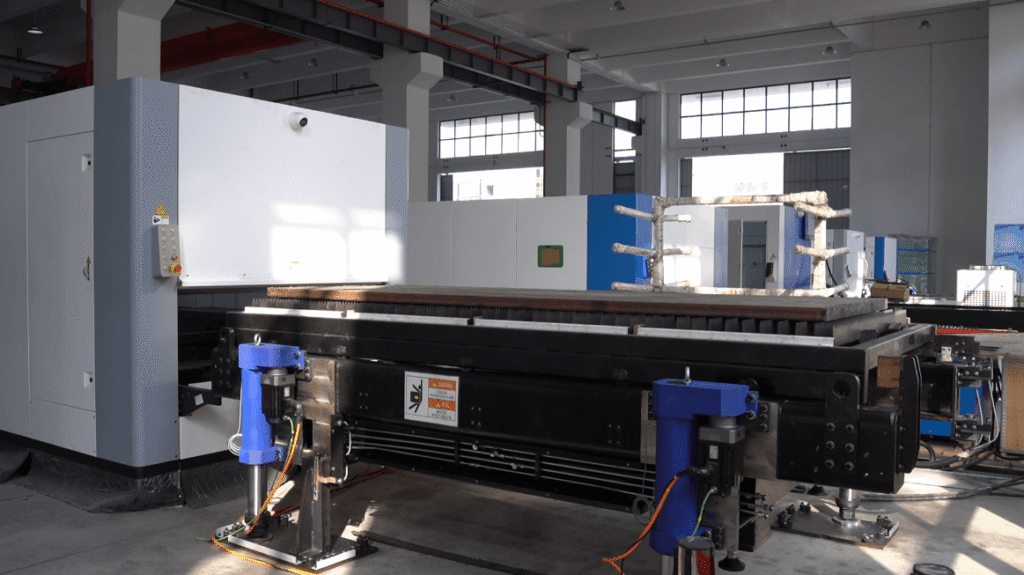
In 2026, forget the middleman markup. Baison delivers high-power fiber laser cutters at transparent, factory-direct FOB prices to maximize your ROI.
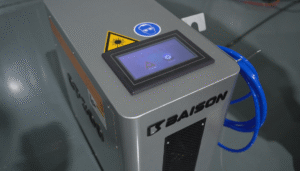
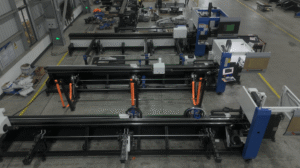
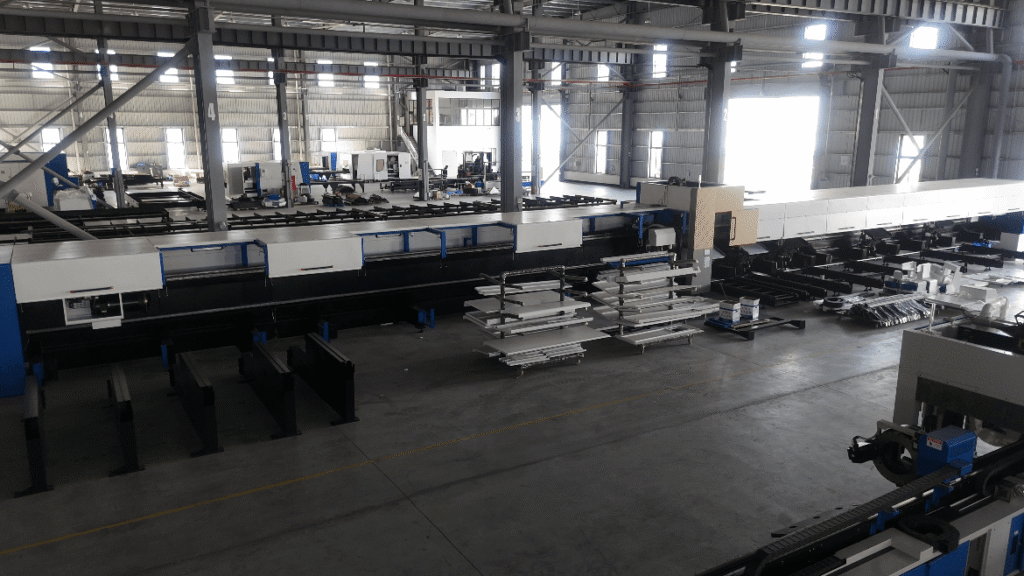
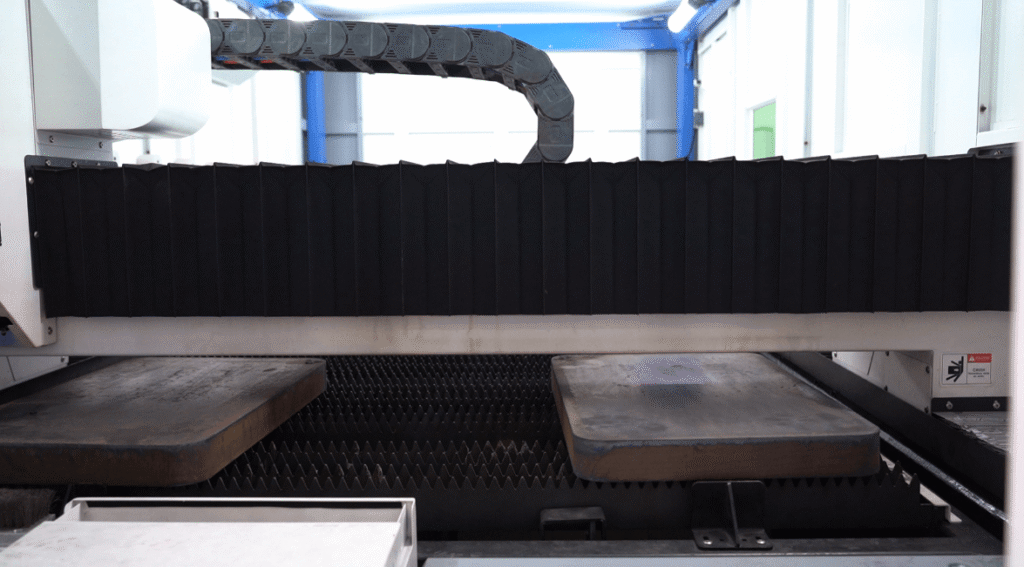
Our heavy-duty machines deliver flawlessly clean, burr-free cuts—handling up to 50mm carbon steel and 30mm stainless steel with smooth, premium finishes. Engineered for 24/7 industrial performance, Baison features a thermal-protected bed with replaceable firebricks, a patented aviation aluminum gantry, and a fully sealed, high-precision chuck system to ensure long-term accuracy and high resale value.
Stop guessing your budget. Contact our sales team today for the latest Product Spec Sheet and lock in your factory-direct quote.
>> Don’t guess. Get an exact quote for your specific configuration here.
Today metal laser cutters are not limited to large industrial complexes, and many small to medium-sized businesses have adopted these machines into their workflow. Their versatility and ease of use have allowed them to gain widespread adoption.
How much does a laser cutter cost, and what type of machine best suits your production needs? This article explains the costs associated with laser cutters and gives a detailed price breakdown from small businesses to large industrial operations.
Types of Laser Cutting Machines
Laser-cutting machines come in several varieties based on size, power, application, and cost. However, the biggest differentiating factor between laser cutting machines is the type of laser used for the cutting process. There are 4 major types of lasers used in modern metal laser cutting machines.
- CO2 Lasers
- Nd: YAG Lasers
- Fiber Lasers
- Diode Lasers
Figure out what type of laser is best for cutting metal.
I. CO2 Laser Cutting Machines
CO2 (Carbon Dioxide) laser cutting machines consist of a glass tube filled with a gas mixture. A high-voltage current flows through the glass tube, exciting the gas molecules. The excited molecules radiate low-energy photons, amplified by reflectors at the edge of a glass tube. Photons repeatedly bounce across the reflectors until a powerful laser beam is formed.
The gas mixture of the CO2 laser cutter consists of several elements, including helium, hydrogen, carbon dioxide, nitrogen, oxygen, and xenon, with CO2 making up the bulk of the gas mixture.
II. ND: YAG Laser Cutting Machines
ND:YAG stands for neodymium-doped yttrium aluminum garnet. It is a complex crystal specially designed to act as a laser medium. The neodymium crystal is excited by an external source, usually a high-wattage lamp. Then similar to CO2 lasers, it is amplified using surrounding reflectors until a desired intensity is achieved.
The power output of an Nd:YAG laser cutter is primarily determined by the size of the neodymium crystal rod used as the gain medium. ND: YAG lasers are less common in industrial cutting operations and are primarily limited to skin care work.
III. Fiber Laser Cutting Machines
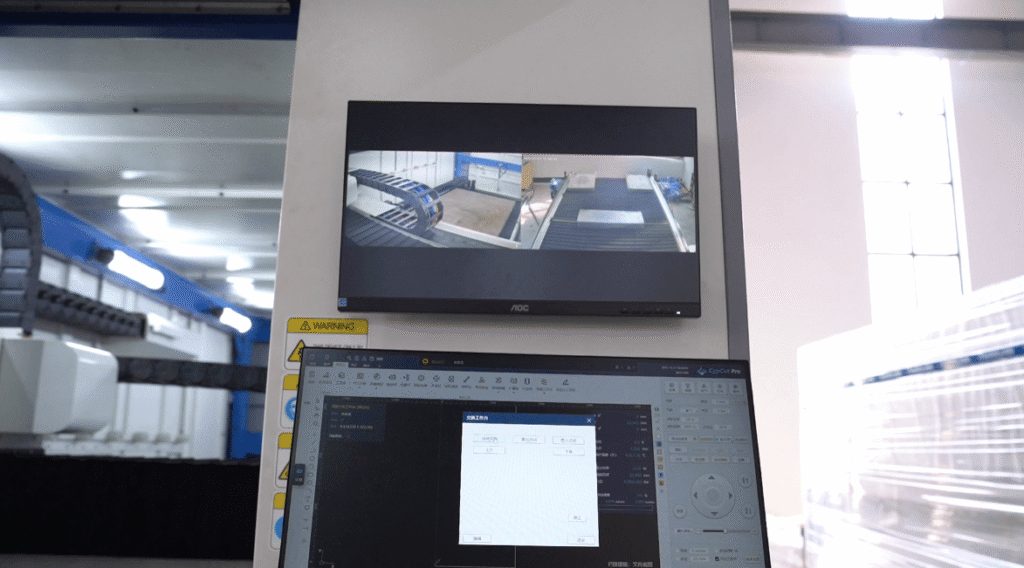
A fiber laser cutting machine is an industrial laser cutting equipment that uses a high-powered fiber laser to cut through various materials with high precision and accuracy. Fiber cutting machines suit thin, mild, and thick metal sheets and tubes. They are specifically good for cutting stainless steel and non-ferrous materials. With 500W plus laser power, they can cut through very thick materials.
You may want to know the difference between fiber laser and CO2 laser technology.
IV. Diode Laser Cutting Machines
Diode lasers are solid-state lasers using semiconductor material as a laser gain medium. They work and operate similarly to fiber and neodymium options and share many design elements.
A typical diode laser cutter is much smaller and often used by hobbyists for marking, engraving, and occasionally cutting soft materials like plywood and acrylics. Such laser cutters are not intended for heavy use and typically use cheaper optical lenses, resulting in lower cutting precision.
You can also click on this article to learn about the differences between fiber laser and diode laser.
In 2026, fiber lasers dominate metal fabrication, making legacy CO2 and Nd:YAG systems obsolete.
When cutting 10mm carbon steel, Baison’s high-power fiber laser cutters drastically reduce hourly power, gas, and lens replacement costs compared to old CO2 models, saving fabricators thousands annually. Powered by our dust-sealed intelligent torch, patented aviation aluminum gantry, and high-precision chucks, Baison systems prevent frequent lens burning and easily achieve dross-free, bright finishes on 50mm thick plates and 30mm stainless steel.
This ultra-low operational energy consumption is what drives your true, long-term ROI.
Which Laser Cutting Machine Is Best for Your Needs?
The biggest deciding factor is material compatibility. You should choose a laser-cutting machine based on your specific material-cutting needs. Not all laser cutting systems support plastic or wood cutting, but they are still nice-to-have features.
CO2 laser cutter systems are designed to cut metal and non-metal options and are only incompatible with reflective metal surfaces like brass or copper. Neodymium laser cutters work best on metals and are compatible with some non-metal materials like ceramics and glass.
A standard fiber laser cutting machine is primarily aimed at metal cutting, but can also be used for laser engraving and marking plastics, rubbers, leather, etc.
Next, you must consider the long-term power cost of laser-cutting machines. Gas-powered laser cutters are generally larger, bulkier, and less efficient than solid-state metal laser cutter systems. On average, the energy efficiency of CO2 laser-cutting machines ranges between 5% to 20%.
Solid-state laser cutters like neodymium and fiber laser machines are considerably more energy efficient, typically ranging between 20% to 35%. If you’re worried about the power consumption costs of your laser cutting machines, it is strongly recommended that you pick an energy-efficient model.
Shockingly diode-based laser cutter systems are the most efficient, going all the way up to 65% energy efficiency for 12-15W lasers. However, it should be noted that these systems are typically sold as laser engravers with minor cutting capabilities.
It is important to note that even the best diode laser cutter on the market is not designed to cut sheet metal. You may be able to force it to cut through very thin sheets of metal (under 0.04 in.) at a slow cutting speed, but even then, the results would be disappointing.
Use the detailed comparison table below to narrow down the most suitable laser metal cutter option for your needs.
| Laser Technology | CO2 | Fiber | Nd: YAG | Diode |
| Energy Efficiency | Lowest | Medium | Medium | Highest |
| Pricing | Low | High | High | Very Low |
| Life Span | Short | Very Long | Long | Medium |
| Precision | Low | Very High | High | Medium |
| Power Output | Medium to High | Very High | Medium | Very Low |
| Material Compatibility | Metals & Non-Metals | Mostly Metals | Mostly Metals | Non-Metals |
| Versatility | Medium | High | Low | Low |
| Applications | Metal Cutting, Metal Engraving, Non-Metal Cutting | Metal Cutting, Metal Engraving, Non-Metal Engraving, Metal Marking, Metal Cleaning | Metal Cutting, Ceramic Cutting, Medical Use | Wood Cutting, Wood Engraving, Thin Material Cutting |
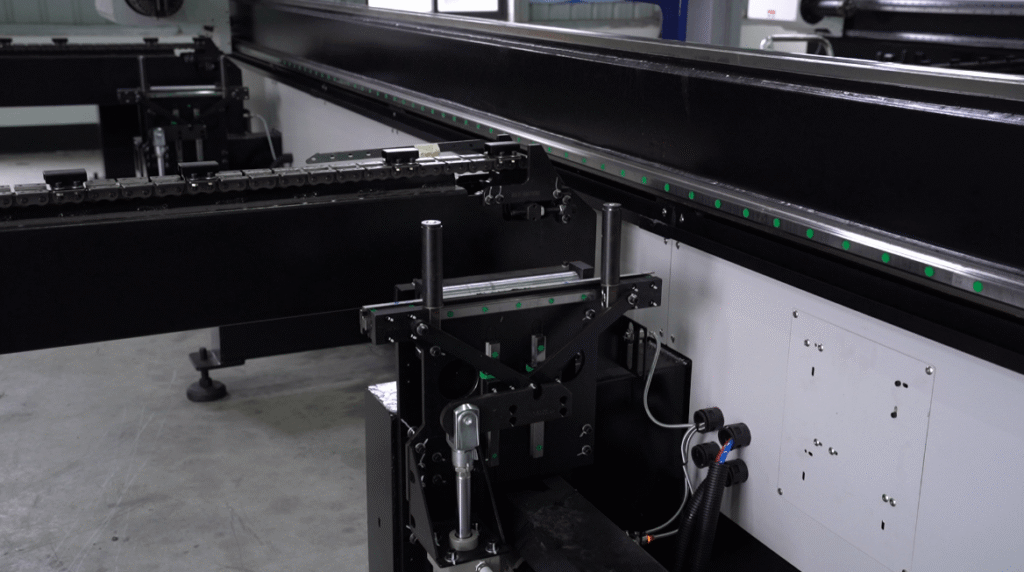
Average Cost of Metal Laser Cutting Machines
A metal laser cutter can cost as little as a few hundred dollars for small hobbyist machines and go upwards of a million for industrial-grade laser machines. However, their automation and multi-axis motion are huge cost contributors for those extremely expensive machines.
All prices listed below are in USD and are subject to change after publishing this article. But overall, these numbers should give customers all the necessary information for making a good purchasing decision.
- The cheapest laser cutter is a diode-based machine at <$500. Don’t be taken in by the attractive pricing. These models are designed for plywood engraving and cutting and not for metalwork industries.
- Going up, you can find a beginner-friendly hobbyist CO2 metal laser cutter between $2,000-$3,000.
- Entry-level fiber metal laser cutting machines cost $15,000. These machines are equipped with a low-power laser and will struggle when cutting metal plates (>6mm).
- At $30K-$100K you are slowly moving toward professional factory equipment. A CO2-powered laser cutter, generally speaking, will be under $50k, while a fiber laser cutting machine costs upwards of that $50K mark.
- Going above $200K, you will find specialized fiber laser machines for large-scale productions or robotic arm-assisted fiber lasers for detailed custom production.
CO2 VS. Fiber Lasers
Knowing to choose whether CO2 or fiber laser technology is important. Fiber lasers are a newer technology with several key benefits, like the compact size and higher precision.A standard $15-20k Fiber laser will have a lifespan of over 30,000 hours. Contrarily, a $2,500 CO2 model will only last around 2,000 hours before you need to change the laser tube.
For small business owners looking for an affordable laser cutter, a CO2-powered machine would be a decent option.
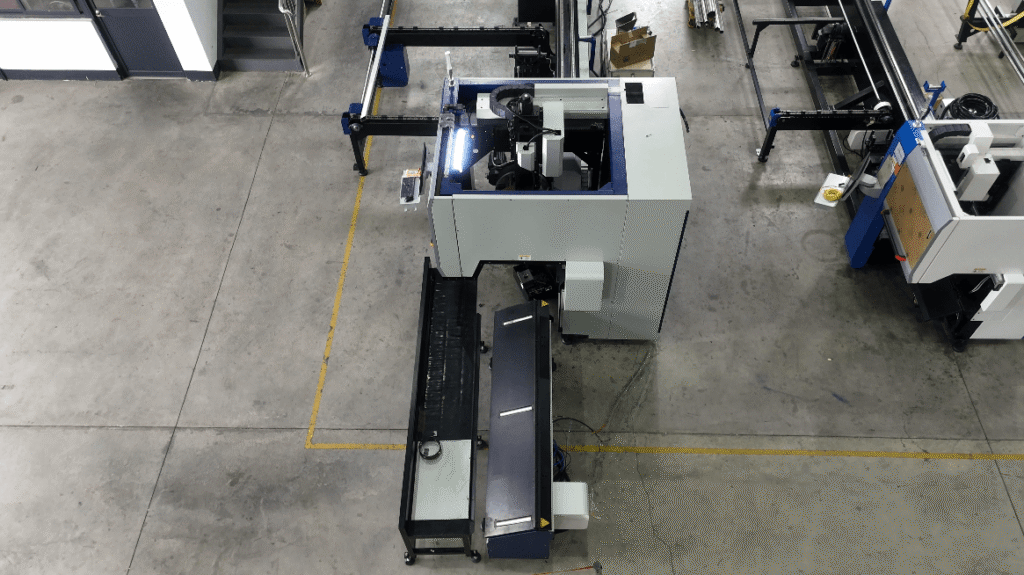
Small Machine VS. Industrial Options
A smaller metal laser cutting machine (<$50K) is designed to run occasionally for no more than a few hours a day. Such laser machines typically last a couple of years before serious maintenance is required.
Industrial laser machines (>$100K) are meant for large factories that run the machines all day without a break. The increased cost here is mostly due to the better reliability and construction of the machine that enables its extensive use.
Customized Pricing Options
All major brands offer custom quotes for their laser-cutting machines. The price for these machines will vary based on the number of units, shipping location, and additional parts requested by the buyer. You will be able to get a significant discount based on your needs.
Factors that Affect the Price of Laser Cutting Machines
Laser cutters are complex machines that can be configured and tuned to a specific production style. Following is a short list of factors that impact machine costs most.
1. Type of Laser
The importance of a good laser source in your metal laser cutter should not be underestimated. A fiber laser cutting machine is approximately ten times more expensive than a CO2 one. But it is also more energy efficient and has a higher laser power configuration in a smaller size.
2. Power Output of Laser
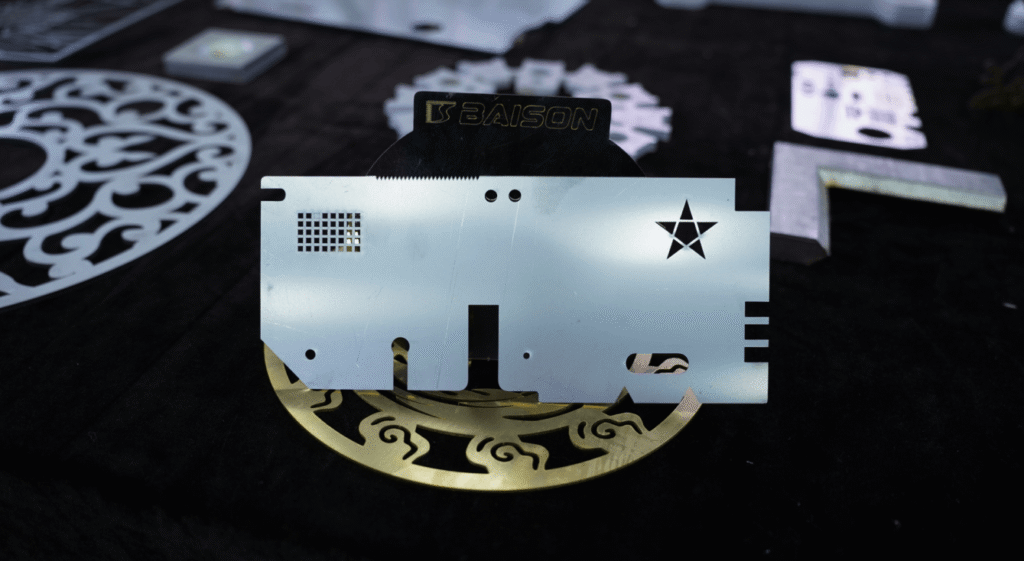
As you increase the power output (wattage), Lasers become increasingly difficult to manufacture. Hence, you will see an exponential increase in price as you move from low-power laser cutters to higher ones.
Laser engravers start at the lower power option, around 1-5W. For sheet metal fabrication, you need at least 50W, irrespective of the laser source. You will need to move to kilowatt lasers to cut different materials like thick stainless steel.
3. The precision of Laser
The precision of a laser is measured as spot diameter. A smaller laser spot will lead to precise cuts and higher cutting speeds.CO2 lasers have a spot diameter of 0.01 in. (~250 microns), while fiber lasers can go as low as 0.001 in. (~25 microns). Higher precision lasers require robust and expensive optical components.
Forget abstract focal spot stats—true cost efficiency is driven by positioning and repeatability accuracy, which dictate your yield rate.
Baison’s heavy-duty machine beds undergo rigorous high-temperature annealing to eliminate internal stress, ensuring zero deformation under years of high-intensity operation. To lock in precision, our QC engineers use professional laser interferometers for point-by-point accuracy compensation before delivery. Paired with premium servo motors, a patented aviation aluminum gantry, and a high-precision chuck system, Baison completely eliminates the precision collapse that plagues low-end assembled machines due to bed deformation and wear.
This top-tier build quality ensures long-term accuracy and a high resale value, giving B2B decision-makers the ultimate leverage to avoid cheap price traps and secure maximum ROI.
4. Machine Size
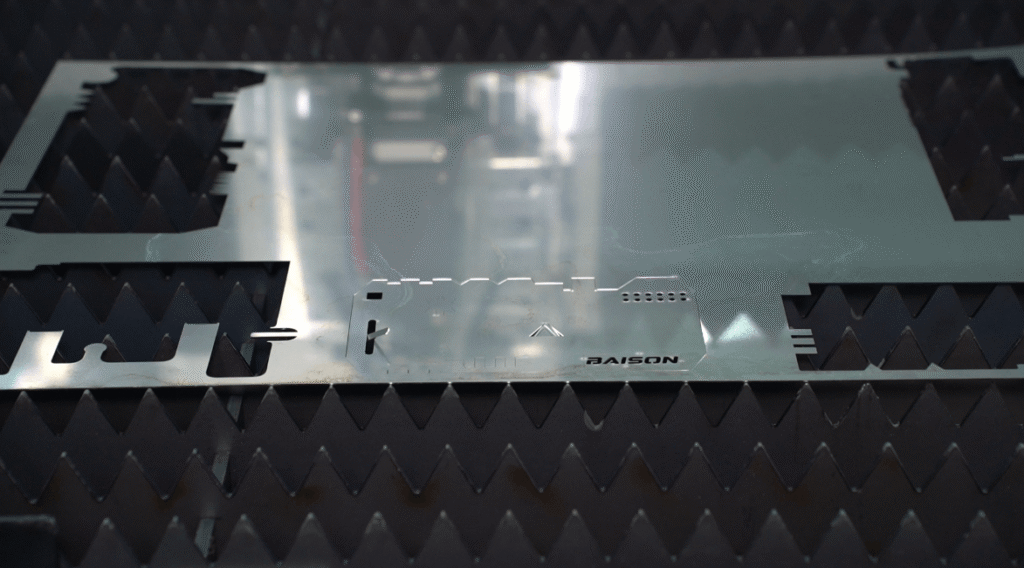
Like all machines, larger ones are more expensive. The size of their work bed limits all laser cutters. You can process large metal sheets and cut more parts with larger beds. Another big cost contributor for larger machines is their shipping costs due to the increased size and weight.
5. After Sale Services
Once you buy a complex machine like a laser cutter, you can run into various operational issues. Your machine could be damaged in shipping or have a defective servo motor. You need a trustworthy and reliable after-sales service to help you get your machine up and running during those critical moments.
It is important to buy from a reputable seller willing to help you even after making a sale. After-sales services can include some of the following options.
- Customer Support for Initial Machine Setup
- Machine Operator Training
- Diagnostic Help
- Sale of Replacement Parts
- etc.
Most manufacturers offer after-sales services for free. However, some might charge you extra.
Benefits of Owning a Metal Laser Cutting Machine
The price of a good laser cutting machine can seem a lot at first glance. And many of you might opt for a metal-cutting service provider instead of buying your own machine.
Although metal cutting services can be a viable option for some, most people should consider buying their own metal laser cutter as it offers significant benefits for their business.
Following are a few key benefits that owners of laser cutting machines enjoy.
- Flexibility
- Versatility
- Lower Production Costs
- Reliability
Having a laser cutter on hand will help run the production process more smoothly. You know the number of laser-cut parts that can be produced daily, and you don’t have to wait for someone else to start production. Additionally, the cost per part is significantly lower than metal cutting services.
Options like a fiber laser machine are small and compact enough to fit easily in your workshop. And the machine cost is low enough that you can get a return on your investment within a year.
Under identical production conditions, upgrading to in-house cutting with the Baison 6000W model delivers a massive drop in monthly operating costs—covering power, gas, and labor—compared to costly outsourcing fees. This has allowed many small-to-medium enterprises to fully recover their machine investment within just one year.
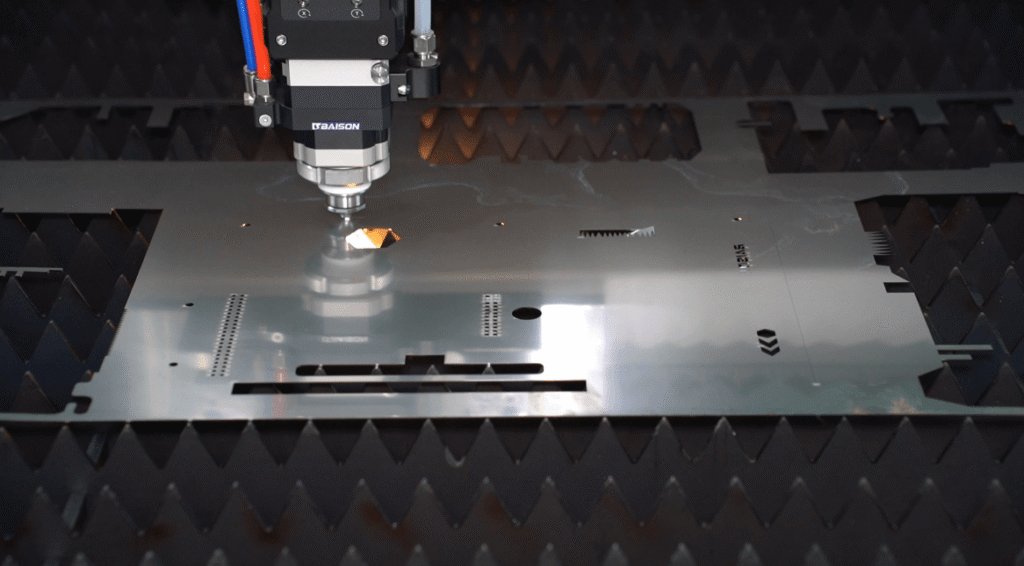
Equipped with high-precision chucks and a patented aviation aluminum gantry, the system ensures 24/7 high-intensity cutting without losing accuracy. It completely eliminates hidden outsourcing headaches like unpredictable lead times and post-process dross grinding.
Transforming your fabrication from a pure expense into a profitable fixed asset, Baison’s intelligent process library delivers one-touch burr-free finishes to lock in higher profit margins for your workshop.
Tips on Buying a Suitable Laser Cutter
After reviewing this entire article, you have all the information required to make a well-informed purchase. However, you can never be too careful, especially if you’re a first-time buyer.
Here are four tips that will help you finalize your purchase.
1 – Choose an Appropriate Machine Size
Laser cutters always need a little extra room in your workshop for peak operation. You need enough room for decent airflow so that the laser system won’t overheat and space for machine accessories.Choose a machine size that fits your workspace and leaves plenty of room to walk around.
2 – Consider Future Operational Costs
Laser cutters can be expensive to run, and small costs will start to add up. The two biggest cost factors are power consumption which leads to excessive energy bills, and maintenance, like replacing the laser tube of a gas laser cutter.
3 – Account for Shipping Costs in Your Budget
Shipping costs can often be greater than the price of the laser cutter. Large and heavy machines cost a lot to ship around the world. This can be mitigated by buying a modest-sized machine from a company with an established global shipping network.
4 – Production Capacity
Production capacity is controlled by the laser’s cutting speed and the machine’s bed size. Cutting speed further decreases when dealing with a thicker piece of metal.Consider your production needs before deciding on a machine.
5 – Post Processing Time
Lasers can generate a lot of heat, especially when cutting thick materials at low speeds. This can cause melted metal beads to form at the edges of the work.
For more tips on choosing a CNC laser cutting machine, check out this article.
Avoiding hidden traps like inflated ocean freight and high manual grinding costs is key to achieving real cost reduction when buying a metal laser cutter.
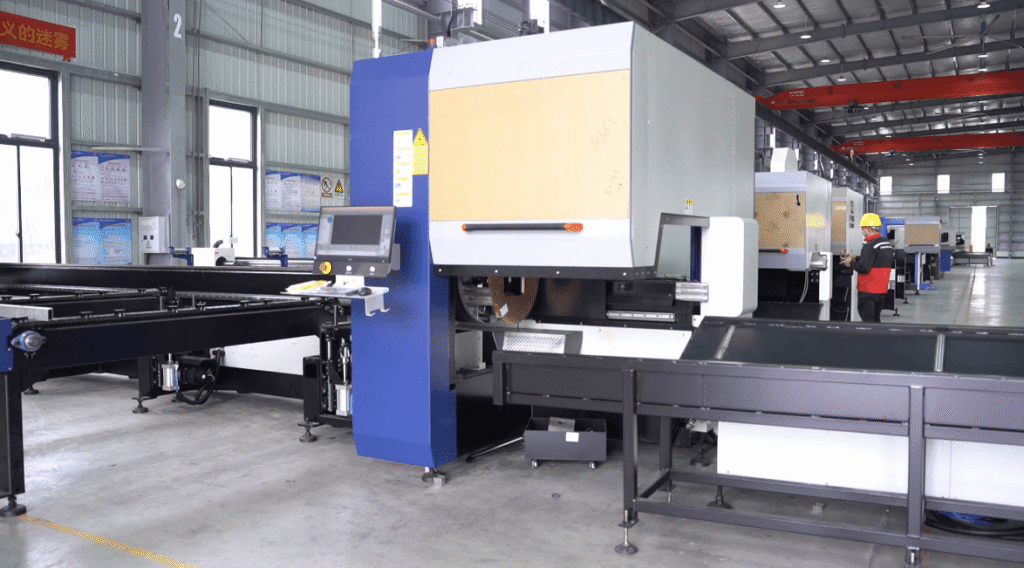
Baison tackles this from the engineering source by optimizing our tube-sheet combo and plate cutting machines with modular breakdown framing. This container-friendly design ensures high volumetric efficiency, directly saving overseas buyers significant international shipping costs.
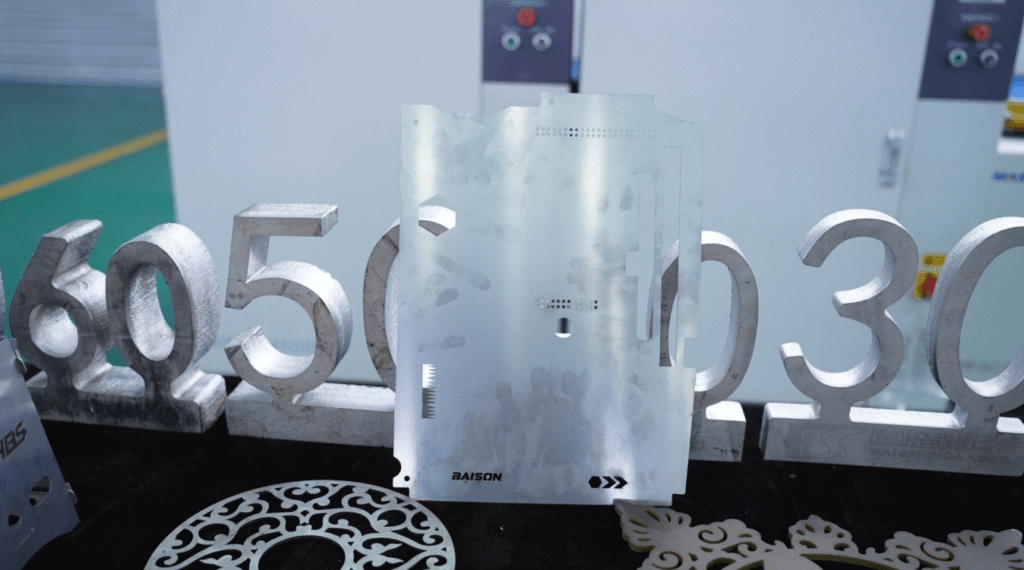
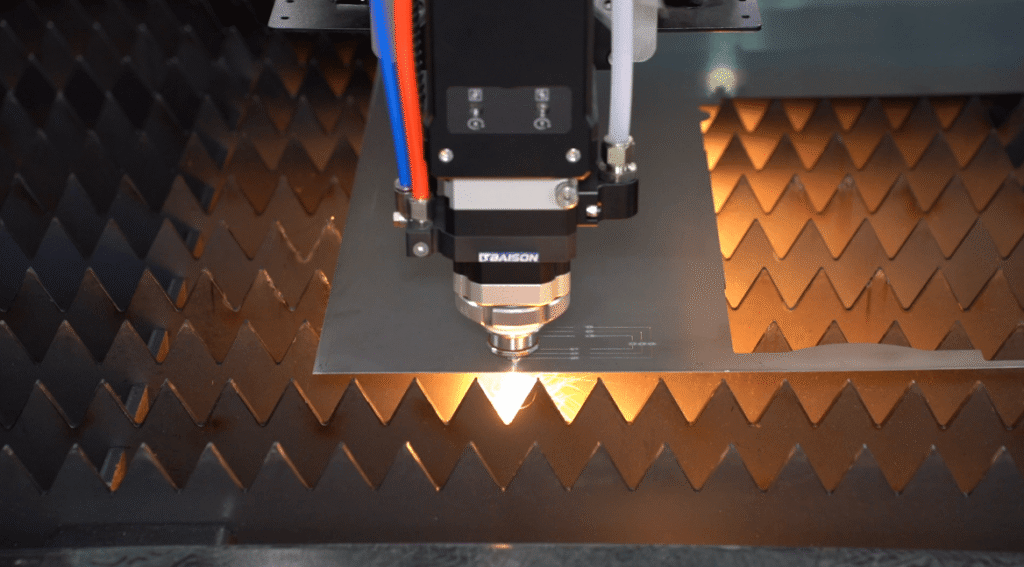
To solve the industry pain point of edge dross and melting beads during low-speed thick plate cutting, Baison’s 10kW+ models utilize high-pressure air cutting technology and specialized nozzles. Paired with Baison’s exclusive process library built into the CypCut system, it delivers one-touch, burr-free bright finishes on 30mm stainless steel and 50mm carbon steel.
This ready-to-use, burr-free surface eliminates shop dependence on costly post-processing time. By combining optimized international logistics with hard-core cutting technology, Baison helps smart decision-makers lock in maximum ROI from day one.
FAQs
Q: What drives the 2026 laser cutter price?
A: Laser power, bed heat treatment, and core transmission components.
Q: Why is Baison priced differently from low-end machines?
A: Baison uses anti-deformation annealed beds and laser interferometer calibration to prevent precision collapse.
Q: How do I get the best laser cutter price?
A: Prices vary by configuration and shipping. Special material parameters require environmental fine-tuning; click for a customized solution to lock in your factory-direct quote.
Conclusion
Laser cutters are versatile metal and non-metal processing machines that are readily available at affordable prices. However, additional features and performance capabilities can cost quite a bit.Your ideal production capacity, material choice, and power draw targets will greatly influence the final price of your laser cutter.
You can often contact sellers directly and ask for necessary additional information.
Get Your Own Laser Cutting Machine Today!
Baison is an experienced manufacturer of laser cutting machines, operating globally. Our laser metal processing systems are designed to cater to all types of industries.Baison’s diverse catalog encompasses powerful and efficient fiber and CO2 laser options.
Additional services include application evaluation before purchase and a robust customer training program to help you get started. Take your business to new heights and contact us today!