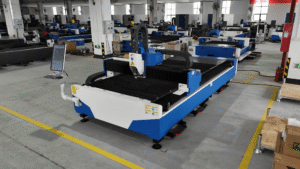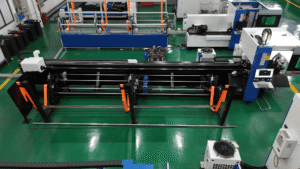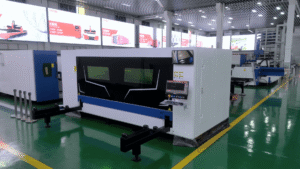
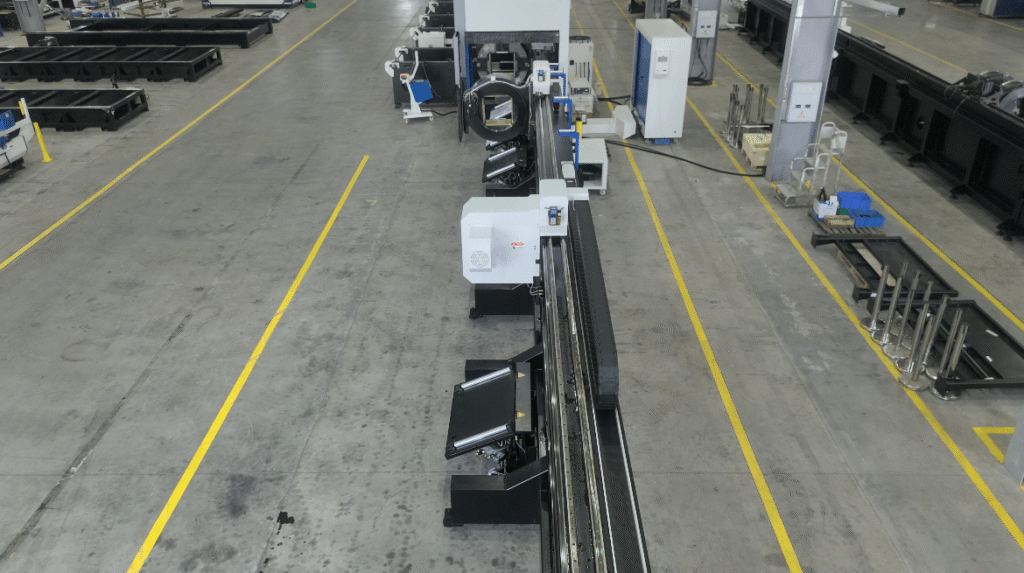
The manufacturing world has amazing tools to increase productivity and decrease operational costs.Tube laser cutting machines some of the best tools a business can purchase. However, buying such heavy equipment is a big and daunting investment. Understanding the key cost factors associated with metal tube cutters can help make the process much easier.
This article discusses the basic operation of tube laser cutting machines and breaks down all their cost factors.
Average Cost of a Metal Tube Laser Cutting Machine
A tube laser cutting machine is available at nearly every price point. Entry-level models are recommended for small businesses looking to increase their production capacity.
Entry Level Models
Entry-level tube laser-cutting machines are cost-effective tools that generally sell for $20,000 to $40,000. These low-cost models can handle small to medium-sized metal tubes and move in three axes of motion.
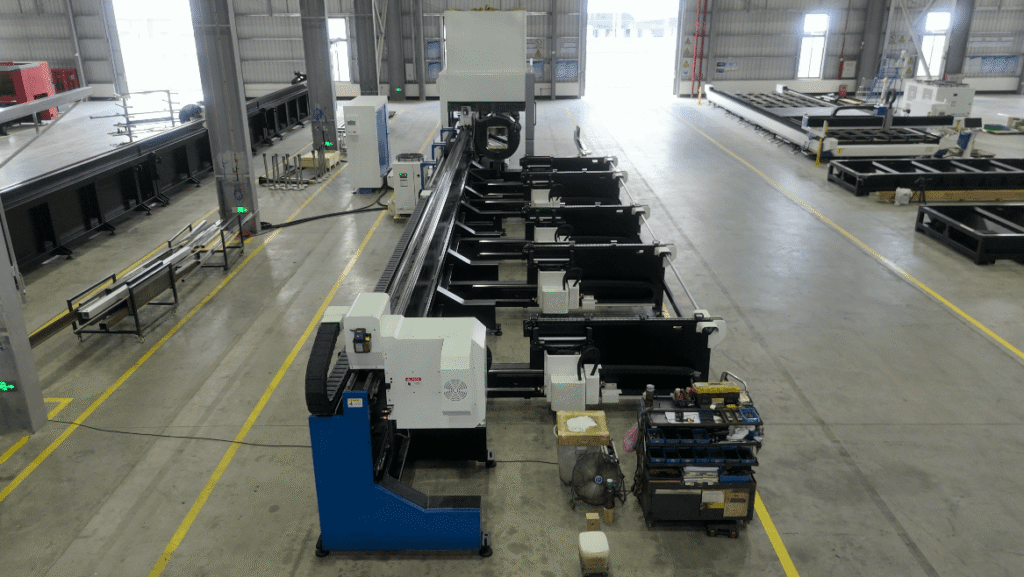
Despite their limitations, most entry-level CO2 and fiber laser cutting machines can cut through various materials and tube shapes.
- Square Tubes
- Round Pipes
- U-Channels
- Angle Steel (L-Bar)
- Structural Steel (I-Beam, T-Bar, etc.)
- Special Shaped Tubes (Rectangular, Rounded Square, etc.)
For a complete list of laser cutting materials, check our extensive guide to material choices.
Traditional CO2 cutters are obsolete due to outdated technology, and the $20k-$30k low-end assembled machines on the market often come with high energy consumption and low precision. Baison rejects piecemeal assembly, breaking the low-end stalemate with true industrial-grade configurations:
- Uncompromising Core Specs: Equipped standard with our self-developed, fully enclosed precision square-hole chuck to keep out dust and debris, completely eliminating the pains of exposed gears jamming and wearing out early; paired with German standard DIN6 ground gear reducers for stronger torque and long-term stability.
- Extreme Precision & High Efficiency: Chuck speeds reach up to 140 r/min with X/Y axis positioning accuracy strictly controlled within ±0.03mm;equipped standard with a servo follow-up support system to eliminate tube whipping and sagging during high-speed rotation, ensuring processing tolerances far outperform competitors.
- Smart Maintenance & Lower Costs: Equipped standard with an independent climate-controlled electrical cabinet and a smart automatic lubrication system, drastically reducing core component failure rates and manual maintenance costs.
- Ultra-High ROI & Fast Payback: Benefit from high electro-optical conversion efficiency, automated smart loading, and≥90mm ultra-short tailing control. This heavily saves material and labor, helping you fully recover your investment within months to build a core competitive edge.
Mid-Range Models
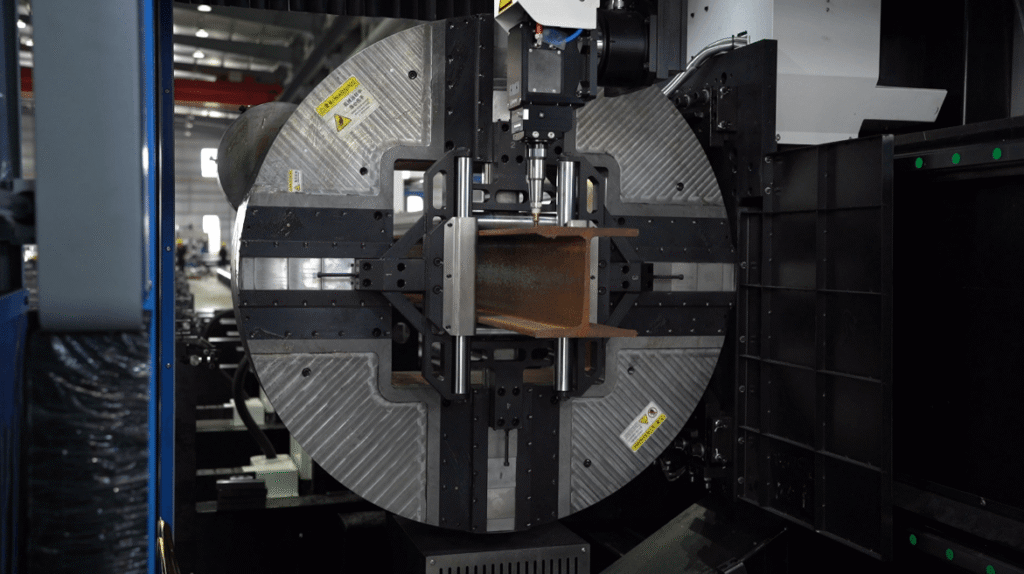
Moving up to industrial equipment. A mid-range tube laser cutting machine costs between $50,000 and $100,000. These models have a larger machine bed (metal tube handling area) and have four degrees of freedom. 4-DOF machines have a laser head that can move in two axes of motion compared to standard models.
For $50,000, you can expect a high-efficiency fiber laser, improved cutting accuracy, and compatibility with larger tubes (pipe diameter up to 12 inches).
Heavy Duty Models
Finally, we move on to specialized heavy-duty machines. A specialized tube laser cutting machine can cost anywhere between $100,000 and $500,000. These machines represent the peak of metal tube laser cutting. They can easily handle metal tubes a hundred feet long and over two feet in diameter.
Heavy-duty laser cutters can be configured with a massive 8kW fiber laser for greater material compatibility and depth penetration.Expensive fiber laser cutter models also come with high-quality servo motors that improve cutting precision and accuracy.
To get a quick return on investment for a tube laser cutting machine, you must understand its configurations.
Baison rejects the low-price traps of low-end assembled machines, offering precise customization for different working conditions: entry-level models (approx. $16k-$25k) focus on high cost-performance and rapid payback, equipped standard with our self-developed, fully enclosed precision square-hole chuck and German DIN6 reducers, achieving a positioning accuracy of ±0.03mm to target the hardware furniture and guardrail industries; mid-range 3-chuck models (approx. $30k-$53k) focus on “true zero-tailing” and heavy-duty loading, equipped standard with independent climate control and smart lubrication, making them the material-saving champions for fitness equipment and automotive parts manufacturers; heavy-duty 10kW+ beveling models (from $76k) are purpose-built for steel structures and construction machinery to achieve integrated, large-angle bevel cutting on large diameters and ultra-thick walls.
Choose Baison and use hardcore industrial configurations to fully recover your investment costs within months!
Cost Breakdown of a Laser Cutting Machine
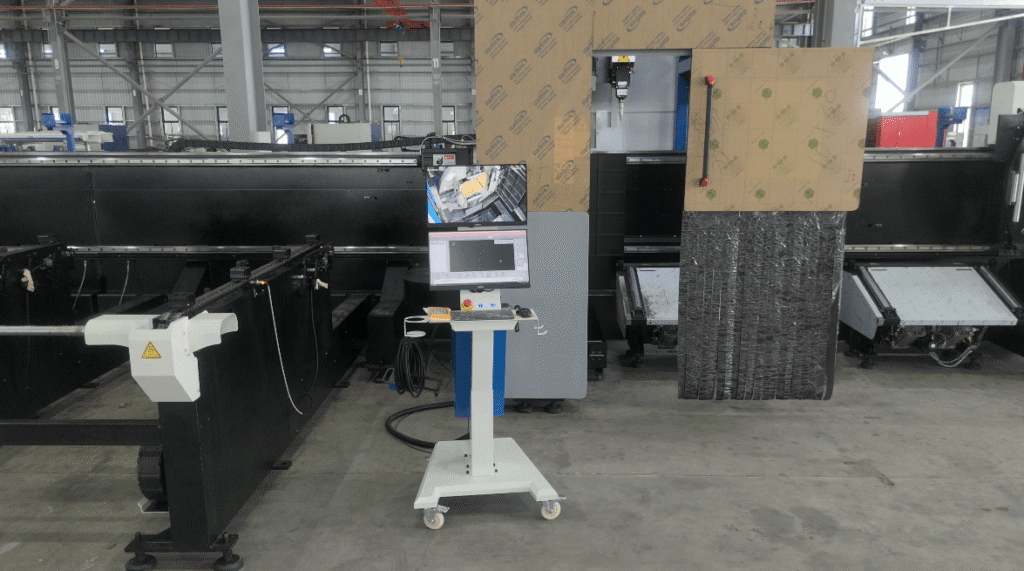
Various factors add to the overall cost of a laser tube cutting machine. Understanding the origin of these costs will help businesses prepare to perform a more accurate cost analysis and keep them from going over budget.
1. Initial Investment and Purchase Price
The initial investment in a tube laser cutting machine includes the purchase price, ranging from $50,000 to $100,000, and accessory costs for specialized applications. The purchase price is affected by the machine’s configuration, CO2 or fiber laser options, and material handling capabilities.
Laser Type
The initial investment cost of a CO2-powered laser cutting machine is lower than that of a fiber laser machine. However, a fiber laser system has a much longer life span, ten times longer than a CO2 source. So, over time, the maintenance costs of CO2 lasers will negate the initial cost savings.
Another reason fiber lasers are more expensive is their smaller spot diameter, which results in higher cutting precision.
Laser Power
High-power laser beams require a robust power supply and a comprehensive cooling solution. As a general rule, the increased laser power will mean an increased machine price.
- A CO2 tube laser cutting machine generally has an upper limit of 2000-3000W. Higher-wattage CO2 lasers lack precision and are generally used for processing raw metal billets
- Fiber laser options range from 1000W to 6000W, with some industrial machines offering over 10,000W of laser power. For new buyers, 6000W is more than enough. It can cut through all materials, including carbon steel, stainless steel, aluminum, and various alloys.
Machine Size
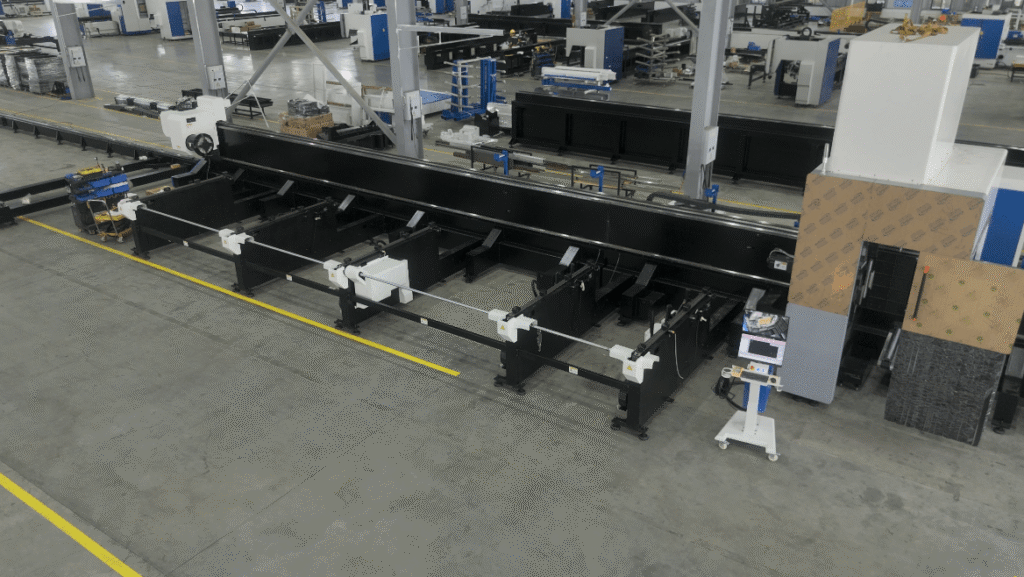
Cutting and processing larger metal tubes will require an equally large tube laser cutting machine. Larger machines cost a lot more as they use more materials in their construction and come with expensive motors that can withstand heavy loads.
If your business occasionally deals with massive metal tubes (over 50ft. long and with an outer diameter of 1 ft.), investing in a larger machine is a good idea.
2. Multi-Axis Laser Cutter
Laser cutters with more than three axes of motion (degree of freedom) are more versatile, efficient, and faster. As discussed above, a multi-axis tube laser cutting machine can be a real game changer, allowing for more complex cuts while maintaining high cutting speed.
Multi-axis machines also come with a hefty price tag. The initial cost is much greater than standard models. However, higher production capabilities & cutting versatility help reduce the ROI (return on investment) period.
Buying a multi-axis tube laser cutting machine is not about paying for the gimmick of “complex processing,” but about calculating two real financial returns: material savings and labor savings. Baison’s multi-axis heavy-duty models reject vague concepts: our 5-axis/7-axis three-chuck zero-tailing models use intelligent pulling via three-chuck pulling handover to squeeze the traditional 30-50cm tailing waste down to “true zero tailing,” carving out tens of centimeters of extra profit from every single tube.
For a large-scale factory, this single feature can save tons or even dozens of tons of steel costs per year, completely offsetting the equipment price difference!
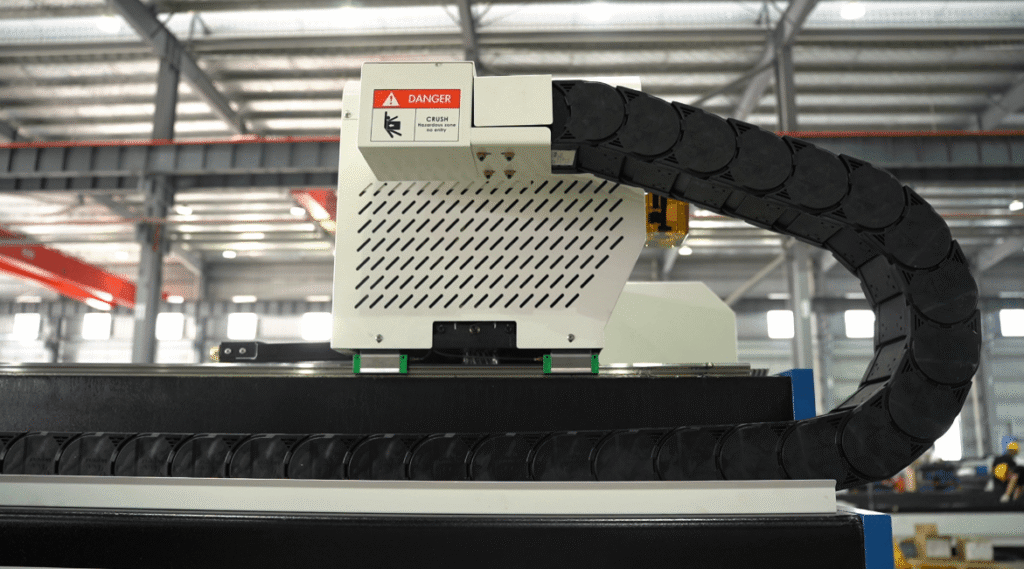
And our bevel tube cutting machine comes standard with a large-angle 3D oscillating laser head, completing cutting, hole-punching, and 45° one-step bevel processing all in one go. This means workpieces are ready for direct assembly and welding right off the machine, completely eliminating the labor costs and time previously required for secondary manual processing with milling and beveling machines. Spending more upfront yields maximum material utilization and a multi-fold reduction in production steps—this is what a true high-ROI investment looks like!
3. Shipping Installation and Costs
Shipping and installation are some of the biggest cost factors in buying a tube laser cutting machine. Manufacturing and construction machinery weigh a lot and require heavy-duty crates for enclosure and large commercial vehicles for transport.
Shipping Costs
While local shipping is lower than international shipping, many businesses are not near an industrial hub. Global trade routes deal in such high-volume shipping practices that sending a heavy tube laser cutting machine overseas is relatively affordable. Businesses should always check the shipping costs before making a purchase decision.
Customs and Tariffs
Another element of international shipping is the customs and tariffs levied on companies. Even a locally produced tube laser cutting machine will be subject to tariffs if it uses components from an overseas company.
Installation Costs
An often overlooked factor is the installation cost. Safely moving and installing a heavy metal tube laser cutting machine is tough. Contractors with years of experience and professional know-how play a vital role in correctly installing your new machine.
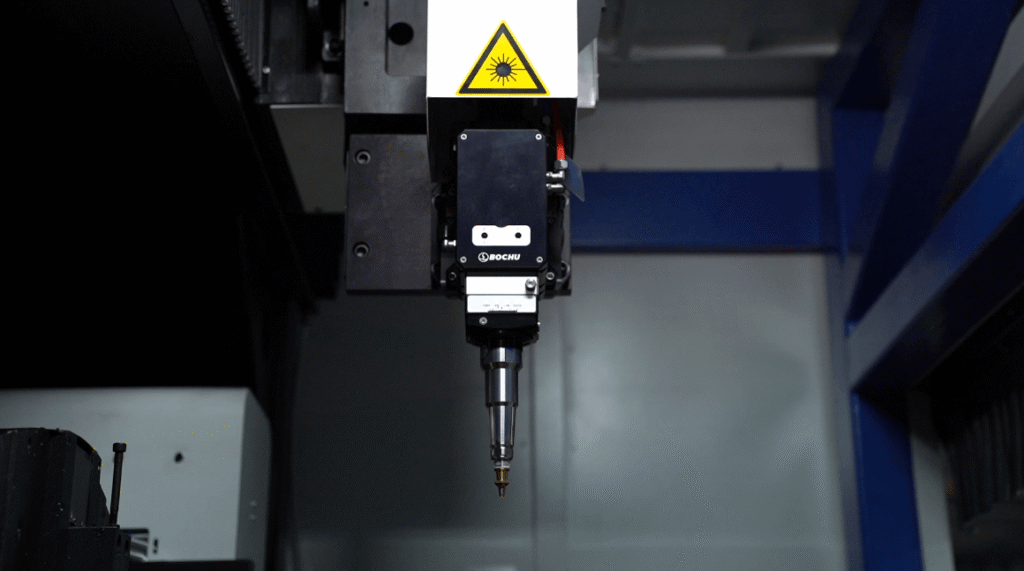
4. Operating and Maintenance Costs
Metal tube laser cutting machines are powerful tools that require regular care and upkeep.
- A laser cutting machine will significantly impact your operating costs throughout its life. Laser power is directly related to electricity. Thus, higher-wattage models will have higher operating costs.
- Maintenance costs include regular servicing and replacing parts, such as laser tubes and cutting heads, which can add up over time.
For transnational procurement, buyers dread shipping damage and after-sales service vacuums most. As a global delivery powerhouse, Baison eliminates your cross-border anxieties with absolute certainty:
- Factory-Grade Secure Packaging: Employs heavy-duty, fumigation-free wooden cases combined with multi-layer vacuum rust-proof packaging. The ultra-long machine body is strictly reinforced for Full Container Load (FCL) sea freight to withstand salt spray and turbulence, ensuring the equipment lands in pristine condition.
- Localized High-Efficiency After-Sales: Established local service centers and agent networks across overseas markets like Europe, America, and Southeast Asia. Senior engineers provide on-site installation, requiring only 3–5 days to complete commissioning and staff training to get your production up and running fast.
- First-Hand Freight Optimization: Relying on long-term partnerships with top international freight forwarders, we provide lower shipping rates and one-stop customs clearance solutions to minimize hidden logistical costs.
5. Hidden Costs
Hidden costs generally refer to the extra cost factors that don’t appear on an invoice. Deploying a fiber laser cutting machine in your factory brings the following hidden costs.
- A tube laser cutting machine takes up a lot of floor space, which is one of the few things that is difficult to attain. You can install 2-3 smaller machines or a single large metal tube laser cutting machine.
- Training time doesn’t show up in a payroll, but it is still a cost factor when buying new equipment.
Used and Refurbished Tube Laser Cutting Machine Options
Used industrial hardware is always a choice to consider. When larger businesses upgrade their fleet of metal tube laser cutting machines, they often sell their older units for a fraction of their retail price. However, great care must be taken when buying any pre-owned machinery.
The quality and condition of the products can vary significantly. Buyers should always check for telltale signs of deterioration, such as rust, loose parts, or missing accessories.
Furthermore, refurbishment usually just means basic cleaning, re-calibration, and replacing the most obvious worn parts. Currently, no universal refurbishment standard or official certification exists for industrial manufacturing equipment. Because of this, a “refurbished” laser tube cutting machine might still require serious maintenance and unexpected expenditures shortly after purchase.
Benefits & Drawbacks of Used Laser Tube Cutters
| Benefits | Drawbacks |
| Pay a Fraction of the Machine’s Sticker Price | Uncertainty of Machine Quality |
| Reduce Your Carbon Footprint by Reusing Old Hardware | Lack of Warranty Support |
| Save on Shipping Costs by Buying from a Local Reseller | Heavy Maintenance Required After Purchase |
How Tube Laser Cutting Machines Work?
Understanding the basic working principles of laser tube cutting machines will help newcomers better understand the operational and maintenance costs.
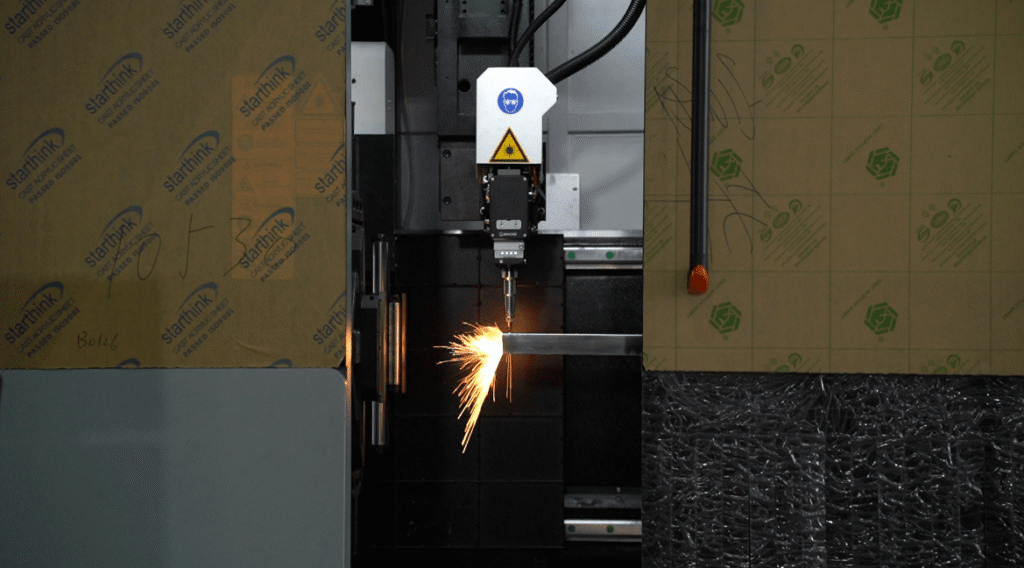
Components of Tube Laser Cutting Machine
A tube laser cutting machine is a complex manufacturing tool composed of several independently moving parts that work together.
Following are the Key Components of Tube Laser Cutters:
1. Laser Sources
Laser tube cutters can be equipped with one of two laser sources- fiber laser or gas (CO2) laser. Fiber lasers are more expensive but energy efficient and reliable. By comparison, CO2 lasers are low-cost, high-power. But less precise and less energy efficient.
2. Laser Head
The laser beam is routed to a CNC (computer numerically controlled) head that accurately moves the laser along a desired path. The laser head also determines the laser’s spot diameter and the machine’s cutting tolerance.
3. Laser Head Robot Arm
Industrial laser tube cutters have five degrees of freedom (DOF). The clamping chuck manages two axes of motion, and the robot arm manages three axes. The robot arm moves the laser head up-down, front-back, and rotation around the tube.
Most commercial laser tube cutters don’t come with a robot arm.
4. Clamping Chuck
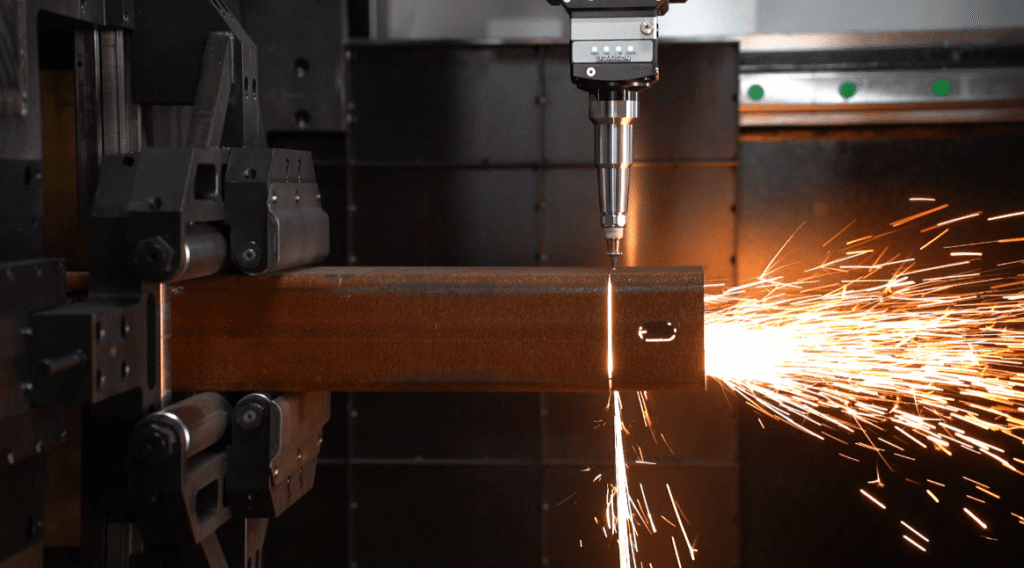
The clamping chuck holds the metal tube in place while the laser runs and rotates it around its cross-section as needed. Chuck size determines the maximum diameter of the tube which is supported by the laser tube cutting machine.
5. Feeding Chuck
A secondary chuck is situated at the back end of the laser tube cutting machine (opposite the fiber laser cutting head). The feeding chuck supports the weight of the metal tube and is responsible for the tube’s forward motion.
6. CNC System
Computers help keep the various parts of a laser cutting machine in alignment with one another. Cutting dimensions are fed into the CNC system, which decodes the instructions for the various motors inside the machine.
7. Motors
A tube laser cutting machine will employ several different motors to control the motion of the laser head, clamping chuck, and feeding chuck. The two most common motors in a metal tube laser cutting machine are servo and stepper motors.
A servo motor is generally more reliable, while a stepper motor is more cost-effective.
Tube Laser Cutting Process
All tube laser cutters operate on the following basic steps.
- The metal tube is mounted onto the tube laser machine by passing it through the feeding and clamping chuck.
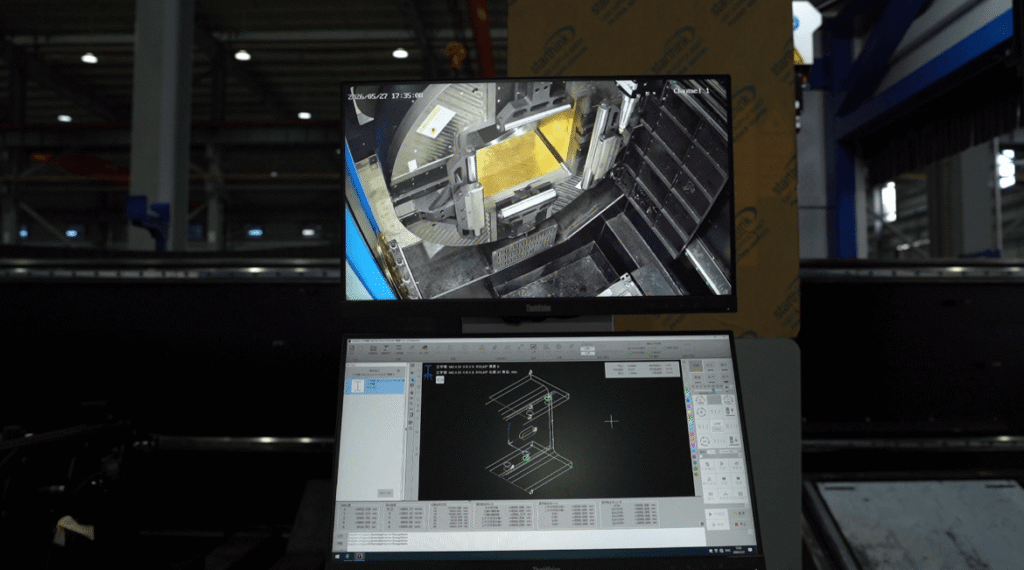
- The cutting parameters, including laser power, cutting speed, and tube dimensions, are entered through a computer interface (laptop or manual input).
- The laser source outputs a laser beam based on operator instructions.
- The CNC system moves the fiber laser cutting head over the tube surface to make precise cuts.
- After a design is cut, the feeding chuck moves the tube forward so the process can continue without interruption.
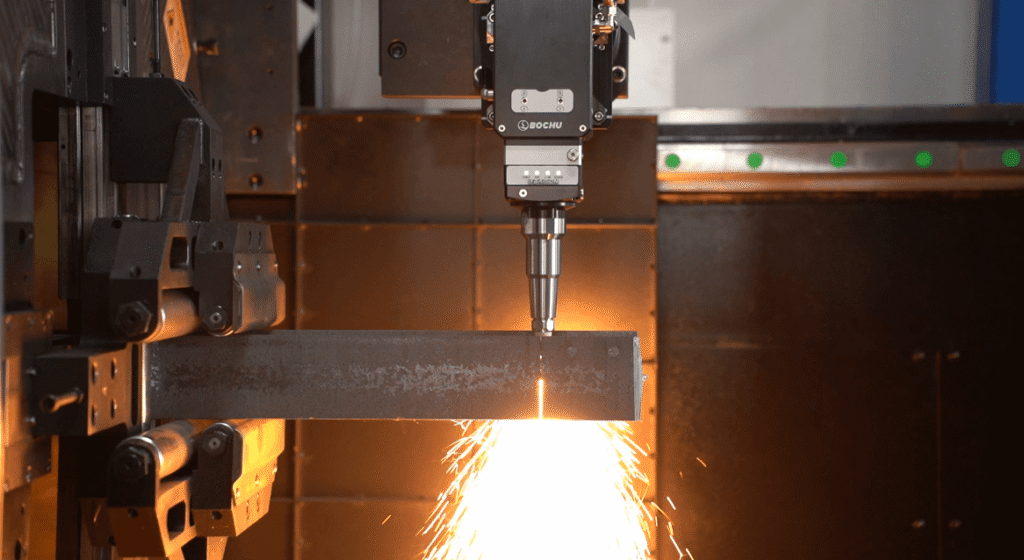
The core components of the equipment all feature configurations from world-class brands, coming standard with German standard DIN6 ground gear reducers, a self-developed fully enclosed precision square-hole chuck, and a smart CNC system to strictly control core processing tolerances within ±0.03mm.
Its standard cutting workflow is fully controlled by the smart CNC system, achieving seamless, integrated processing from automated smart loading, precise alternating clamping by front and rear chucks, high-speed X/Y/Z axis servo-driven tracking cutting by the laser head, and servo follow-up support adjustment, all the way to automatic unloading of finished parts. For various materials such as carbon steel, stainless steel, and aluminum alloy, the CNC system features a built-in proprietary processing parameter database that intelligently adjusts laser power, gas pressure, and cutting speed based on tube wall thickness. Combined with an ultra-short tailing control of ≥90mm,this drives material and maintenance costs to the absolute minimum, helping you fully recover your investment costs within months.
FAQS
Q1: Tube laser cutter price?
Entry-level: $16k–$25k; Mid-range 3-chuck: $30k–$53k; 10kW+ heavy bevel: $76k+.
Q2: Why avoid cheap assembled machines?
High wear and no guarantee. Baison features German reducers and self-developed chucks for zero-failure operation and rapid payback within months.
Q3: Savings with high-end multi-axis/3-chuck models?
True “zero-tailing” eliminates 30cm waste. Annual steel savings directly offset the equipment price gap.
Q4: Are overseas shipping and installation included?
No. But Baison offers direct low-cost freight and local teams for 3–5 day on-site setup and training.
Q5: How to choose by budget?
Hardware → Entry-level; Fitness equipment → 3-chuck; Steel structures →Bevel model. (Note: Special steel parameters vary by environment; click for a custom quote.)
Conclusion
Laser power is a revolutionary new tool in the modern manufacturing landscape. Recently, it has become a valuable asset in metal tube cutting. Today, you can get a laser tube cutting machine for as little as $20,000, with used models costing even less. Before buying a laser tube cutting machine, buyers should familiarize themselves with the system’s basic components and key cost factors. Understanding the cost breakdown will help you optimize the laser cutter according to your needs.
Save Time & Money with Baison Laser Systems!
Baison is a leader and innovator in the fiber laser industry. Our years of experience and dedication to quality have enabled us to manufacture the best fiber laser tube cutting machines. Baison metal tube cutters are built to last a lifetime.
We offer our new customers Free Application Evaluation and Customer Training to help them get a head start on the competition. The best way to save money is to buy equipment from a reputable brand that has your best interest at heart.
Start saving with Baison. Contact us Now!