As you delve into this exciting world of carbon fiber processing, one tool stands out as a game-changer: the “Laser Cutter.” Having the ability to cut and engrave with unparalleled accuracy, a laser cutter is a must-have for any serious carbon fiber enthusiast or professional manufacturer.
However, with hundreds of laser cutters to choose from, the process can get hectic. In this guide, we feature a list of laser-cutting machines and explore key factors that will help you choose the best laser cutter for your carbon fiber projects.
What is a Carbon Fiber Laser Cutter?
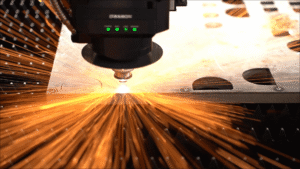
Laser-cutting machines utilize a powerful laser beam focused at a tiny point (laser spot) to input large amounts of heat into the workpiece in a fraction of a second. The heat selectively melts the carbon fiber materials, producing a clean and accurate cut edge.
Carbon fiber’s strength depends on the orientation of the carbon strands (fibers). These strands can be pulled and stretched to extreme limits, but they will fail spectacularly under pressure.
Hence carbon fiber sheets, despite their impressive strength, can be easily cut using several tools. However, modern laser cutting machines have proven themselves the superior method to cut carbon fibers.
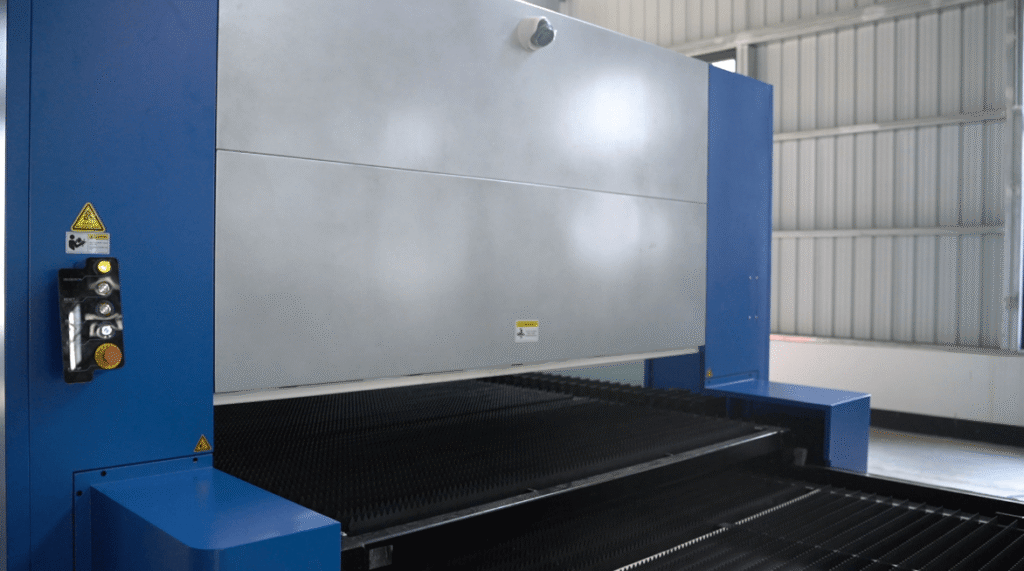
6 Huge Benefits of Carbon Fiber Laser Cutters
Laser cutters offer several key benefits over other manufacturing tools. Especially with the improvements in fiber lasers, it has become one of the most versatile tools.
1 – No Dust Particles
Hands down, one of the biggest benefits of using a fiber laser cutting machine to cut carbon fiber sheets is the lack of dust particles. Carbon fibre dust is very harmful and requires exceptional care on the part of the workers.
Small carbon dust particles will irritate your skin, and inhaling it will cause severe damage to your lungs. Laser cutters selectively melt the carbon fiber sheet and seal the edges.
2 – Easy to Cut Thicker Materials
YYou can massively increase the strength of carbon fiber by increasing the number of carbon fiber layers in a single sheet.
The added strength comes at the direct cost of thickness, and cutting thicker materials can be a major challenge for traditional tools with a spinning cutting head.
Lasers can easily cut thicker sheets by slowing down their cutting speed. A slow-moving laser cutter head will deposit more energy into the sheet and penetrate even deeper.
3 – No Harmful Fumes
Considering that lasers melt the carbon fiber sheets, you might assume that it would produce harmful fumes. However, that is not the case, and laser cutters are quite safe.
A standard laser cutting machine has a laser spot diameter of 0.005 inches (~120 μm). With such a small contact point, the laser cutter isn’t depositing enough energy into the sheet to generate harmful fumes.
Studies have shown that high-wattage fiber lasers can cut through carbon fiber in nano-seconds.
Cutting thicker materials could lead to fume generation, but luckily, all laser cutters come with some airflow/ventilation device.
In industrial carbon fiber laser cutting applications, when processing high-hardness and highly abrasive carbon fiber reinforced polymers (CFRP), Baison leverages its robust industrial manufacturing experience to achieve efficient resin vaporization and carbon fiber sublimation through the highly focused energy of high beam quality and high pulse frequencies.
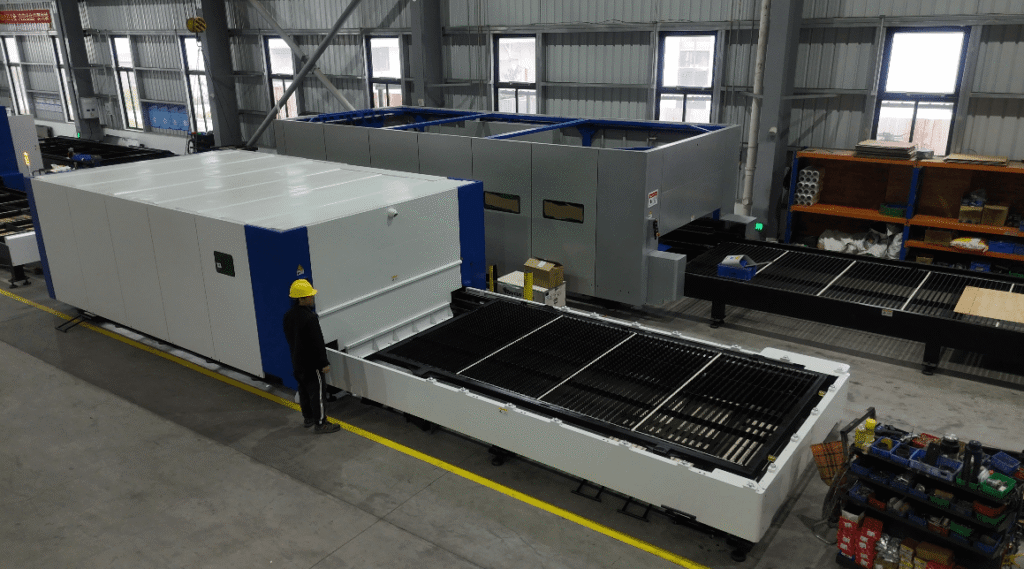
Engineered for the large-scale mass production of high-value-added sectors—such as UAV wings and frames, racing car modification components, and medical CT tabletops—Baison’s high-power machine beds come standard with a one-piece molded aviation aluminum gantry featuring four reinforcement ribs. This structural setup, combined with a German-standard DIN 6 high-precision integrated output shaft reducer, delivers exceptional torsional rigidity to drive hardcore cutting feed rates.
To thoroughly eliminate the toxic smoke and odorous VOCs generated by resin matrix vaporization, Baison’s fully enclosed models (such as the M and BSH series) debunk false “smoke-free” myths. Instead, they feature a left-and-right dual-direction, high-flow follow-up segmented extraction system and a 200mm ultra-large rear exhaust port, paired with a standard secondary gas filtration system and an isolated, dust-proof, climate-controlled electrical cabinet to guarantee absolute safety during high-intensity operations.
For 3K woven plates or unidirectional prepreg sheets ranging from 1mm to 5mm across various resin matrices, the Baison Process Laboratory rejects superficial sales pitches and now offers free sample testing and trial cutting. Our application specialists utilize professional instruments to customize a detailed parameter recommendation chart—covering assist gas types, pulse frequencies, and power adjustments—using hardcore empirical data to demonstrate true industrial-grade processing capabilities.
4 – Quick and Fast Cuts
Fiber laser cutting machines are particularly amazing at making quick and fast cuts. Carbon fiber sheets are softer than most metal plates. Thus, it enables laser cutters to move at higher speeds, over 100mm/s, resulting in considerably faster cuts.
Traditional cutting tools are restricted to either quick cuts or precise cuts.
5 – Accurate and Precise Cuts
Laser cutting machines are CNC controlled and will always be more accurate than any manual cutting tools. Tolerance for laser cutters ranges between 0.0005 to 0.007 inches (15 μm to 170 μm).
You rest assured knowing that your sheets will be cut to the exact dimensions.
Additionally, the CNC controls allow fiber laser cutting machines to repeatedly perform the same cuts with the same exceptional accuracy.
Laser-cutting carbon fiber sheets is strongly recommended for large-volume commercial productions, where consistency is paramount.
When evaluating the efficiency advantages of carbon fiber laser cutting, the rumor that “carbon fiber is softer than metal so it cuts faster” completely contradicts basic material science. Carbon fiber reinforced polymers (CFRP) are renowned for their ultra-high hardness and severe abrasiveness, which causes drastic wear and tear on traditional mechanical cutting tools during machining.
The fundamental reason Baison fiber laser cutting machines achieve high-efficiency, high-speed cutting lies in their superior high beam quality and high pulse frequencies. This allows for an intense energy focus that instantly vaporizes the resin matrix and sublimates carbon fibers directly.
Targeting the most common 2mm and 3mm carbon fiber plates in industrial mass production, the Baison 3000W model utilizes professional control systems like CypCut to finely tune the feed rate. This delivers a hardcore cutting speed curve while ensuring completely delamination-free and burr-free edges.
To provide savvy industrial clients with transparent proof of real manufacturing capability, the Baison Process Department has disclosed actual parameter interface screenshots and live dynamic cutting speed data straight from the control software, using hardcore R&D-frontline data to thoroughly debunk superficial marketing hype.
6 – Efficient Cutting Process
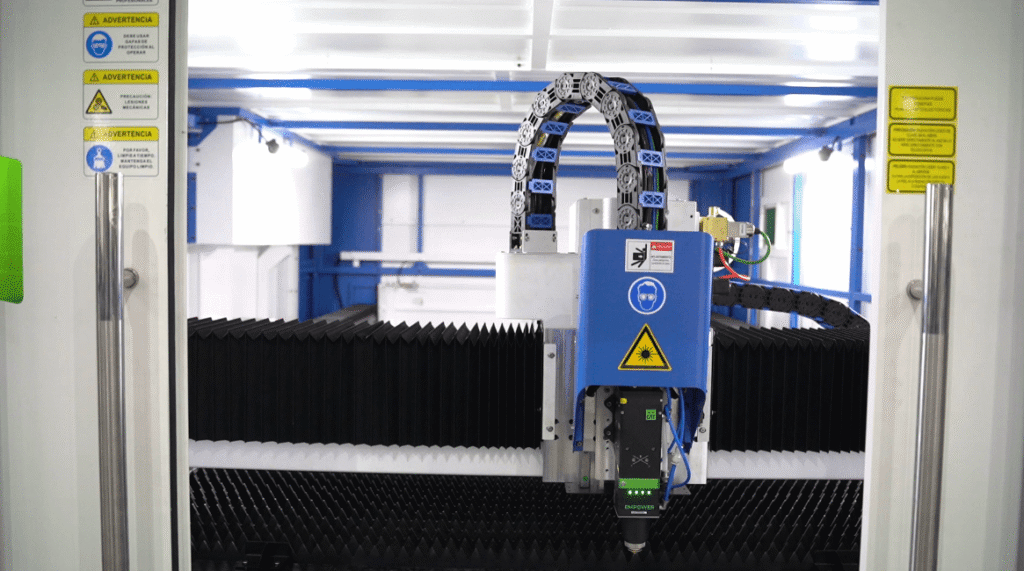
Laser cutting is both a time and energy-efficient process. It uses less energy than traditional DC motor-based cutters and requires less preparation time.
Traditionally, cutting demands that the carbon fiber sheet be clamped down, since the force from the cutting head will displace the workpiece at even the lowest speeds.
Laser-cutting machines don’t have this restriction. Less time spent clamping and locking down the workpiece will lead to a much more efficient cutting process.
Carbon Fiber Laser Cutter Comparison: Avoiding Industrial Pitfalls
Currently, market options for carbon fiber laser cutting equipment are booming, but for B2B manufacturing enterprises pursuing high value-added, large-scale mass production, it is vital to clearly identify the technological chasms behind these machines. Hobbyist desktop low-power CO2 lasers like the Flux Beamo (30W) and Glowforge Plus may have extremely low costs, but due to severely limited power, they are completely incapable of handling high-strength, high-hardness structural carbon fiber reinforced polymers (CFRP).
Because they cannot achieve high energy focus, these hobbyist models cause severe heat-affected zone (HAZ) scorching and delamination defects during processing. Furthermore, their weak exhaust attachments are entirely inadequate for handling the toxic VOC smoke generated by resin matrix vaporization, making them mere gadgets for makers and entirely antithetical to industrial mass production.
Stepping into the threshold of fiber laser cutting, entry-level industrial models such as the OMTech FC-105C (1.5kW) do offer basic fiber beams, but when facing high-hardness carbon fiber plates, their feed rates and high-frequency pulse powers often shrink significantly.
These machines frequently sacrifice critical machine bed rigidity and servo drive performance, leading to wider positional tolerances during high-intensity mass production and cutting efficiency that is less than half that of high-end industrial models. In the high-end multi-functional sector, some brands like
Allwinmac attempt to introduce a wide power range from 500W to 6000W to brute-force cut various materials. However, without the support of a high-rigidity gantry and the fine-tuned parameters from a dedicated process laboratory, blind high power easily leads to excessive resin carbonization along the edges when processing 3K woven plates.
In sharp contrast, Baison’s medium-to-high power carbon fiber laser cutting machines (1000W-4000W) precisely unlock high-volume production efficiencies for lucrative fields like UAV frames, lightweight racing car modifications, and medical CT bed plates.
Baison’s high-power machine beds come standard with a one-piece molded aviation aluminum gantry featuring four reinforcement ribs, deeply integrated with a German-standard DIN 6 high-precision integrated output shaft reducer.
This setup drives hardcore feed rates with absolute torsional rigidity, completely eliminating machine body displacement under high-speed feeding. Its core advantage lies in the perfect focus of high beam quality and high pulse frequencies, combined with fine-tuned calibration via professional systems like CypCut, ensuring that common plate specifications from 1mm to 5mm retain burr-free and delamination-free cross-sections during high-speed cutting.
Combined with a fully enclosed safety housing and an integrated left-and-right dual-direction, high-flow follow-up segmented extraction system, Baison provides high-end manufacturing enterprises with a closed-loop production solution that balances environmental compliance with a high return on investment (ROI).
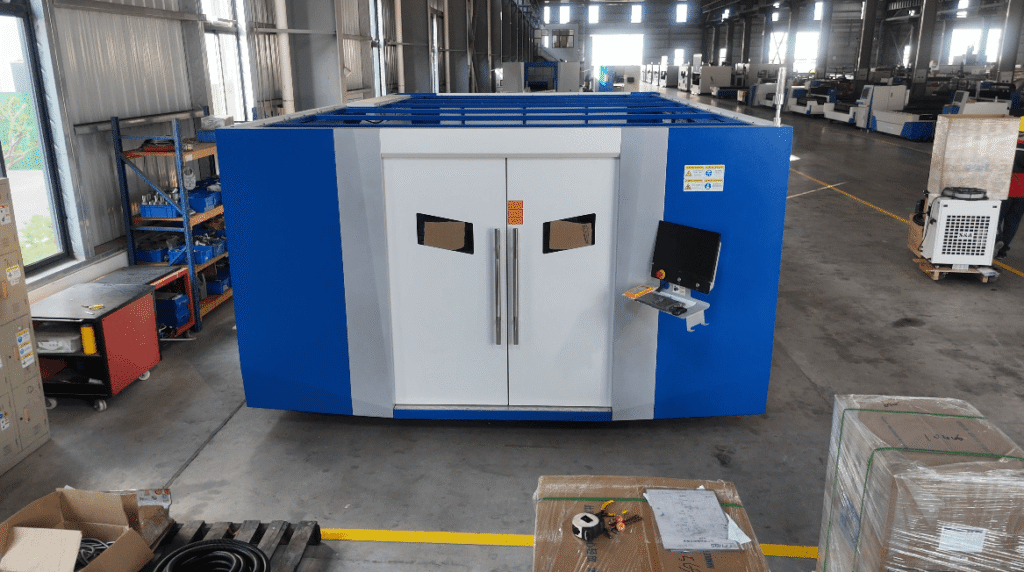
4 Factors to Consider When Buying a Carbon Fiber Laser Cutter
Choosing a carbon fiber laser cutting machine should not be a huge challenge. After all, you can cut through most carbon fiber sheets with a small rotary tool.
But getting the best bang for your buck can be a little tricky. Some important factors will help you get the best laser cutter for your carbon fiber projects.
1. Power and Performance
Laser power shouldn’t be the biggest deciding factor when buying a laser-cutting machine for carbon fiber sheets. Carbon fiber is strongest when in tension along the carbon strands.
Cutting a carbon fiber sheet takes less effort than most metal sheets. As a general rule of thumb, a 500-1000W laser will be more than enough for most situations.
Cutting speed is actually a more important metric, a slow laser head will result in excess and unwanted melting around the cut edges.
2. Precision and Accuracy
Always look at the spot diameter size of a laser cutter and its positional accuracy. Accuracy and precision are direct indicators of machine quality.
Manufacturers have to take special considerations and put in extra effort to maintain high accuracy in a laser cutter. And if a manufacturer is putting in this much effort, you know you are getting a quality laser cutter..
3. Carbon Fiber Specifications
Consider your carbon fiber specifications before finalizing a laser-cutting machine. Carbon fiber sheets’ strength varies significantly based on the material properties of the reinforcement matrix.
Not all carbon fiber sheets are the same. If you’re unsure about the exact specifications, the smart decision would be to get a higher-tier laser-cutting machine.
When assessing the practical feasibility of carbon fiber laser cutting, simply telling clients to “buy the most expensive model” offers zero expert value. This is because 3K woven plates and unidirectional prepreg sheets possess fundamental differences in laser absorption rates and thermal conductivity, dictated by their unique resin matrices and material thicknesses.
The Baison Process Laboratory rejects superficial, sales-driven gimmicks. For various material specifications such as 1mm, 3mm, and 5mm plates, we have fully opened up our expert-level free sample testing and trial cutting workflow.
Our technical specialists utilize professional laboratory instruments to conduct authentic material trials, performing meticulous parameter fine-tuning across assist gases (e.g., high-purity nitrogen or dry air), pulse frequencies, and power adjustments.
Ultimately, we deliver a tailor-made Carbon Fiber Laser Cutting Parameter Recommendation Chart that maps out exact material thicknesses against cutting speeds. By providing hardcore empirical data pulled directly from frontline R&D control software, we empower you to precisely lock in the equipment configuration that yields the highest efficiency for large-scale mass production.
4. Ease of Use
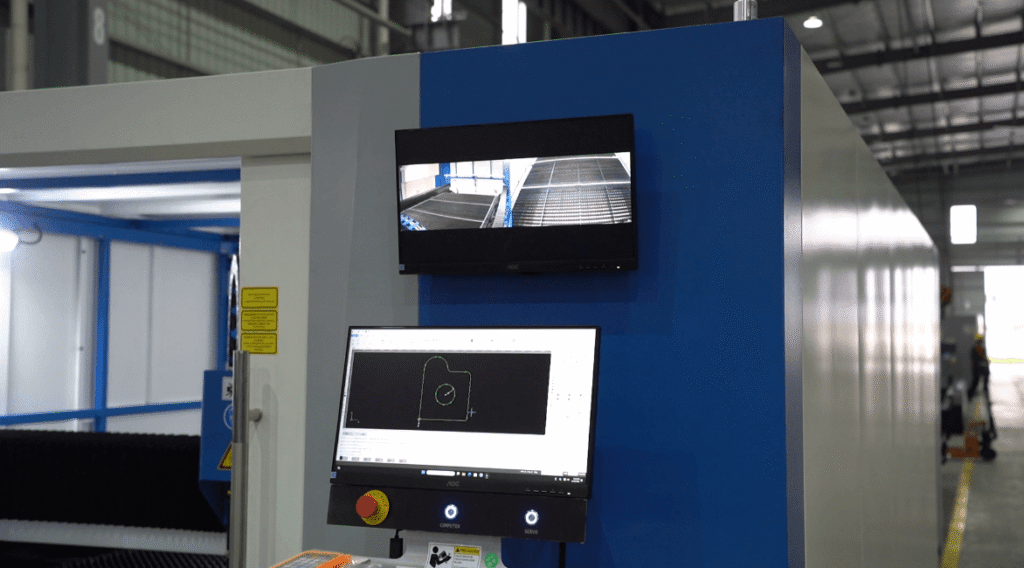
Ease of use should be one of the biggest factors when choosing a laser-cutting machine. You don’t want the operators struggling with the control center before every project.
Get a machine that has simple and intuitive controls. At the very least, business owners should get the manufacturer to offer a training session for their employees.
How Carbon Fiber Laser Cutters Are Used in Manufacturing?
Laser cutters have revolutionized the carbon fiber industry. Before the ease of laser cutters, carbon fiber was mostly limited to specialized industries like aerospace.
Nowadays, you can get precision-cut fiber laser sheets thanks to the convenience of laser-cutting machines,
1. Cutting and Engraving Carbon Fiber
Laser-cutting machines have enabled finer and more refined cuts to carbon fiber sheets. This ease of use has allowed several start-ups to offer unique, one-of-a-kind, laser-cut carbon fiber solutions like carbon fiber phones, PC cases, custom furniture, and more.
2. Creating Unique Designs and Patterns
Carbon fiber isn’t very customizable; even the slightest miss shaping can compromise the strength and integrity of the sheet.
Laser-cutting machines can carefully cut designs and patterns into carbon fiber without risking delamination and warping.
Delamination from laser cutting is rare but not entirely impossible. Researchers are trying to detect delamination in carbon fiber composites through acoustic emissions.
When evaluating the practical application of carbon fiber laser cutting, multi-kilowatt industrial-grade fiber laser equipment is by no means intended for processing phone cases or novelty trinkets; instead, it is deeply anchored in high-value-added industrial mass production.
Baison’s 1000W to 4000W medium-to-high power laser cutting machines are already widely deployed in the precision manufacturing of UAV wings and frames, lightweight racing car modification components, medical CT bed plates, and high-end sports equipment carbon fiber wheelsets.
In response to industrial clients’ demands for large-batch processing and strict delamination-free cross-sections, Baison completely discards empty academic theories that are detached from actual shop-floor realities.
We directly validate our manufacturing prowess through a gallery of genuine finished product photos—including multi-hole UAV carbon fiber center plates and structurally complex automotive carbon fiber parts—all explicitly stamped with “Baison Laser: Industrial-Grade Carbon Fiber Finished Product Display”.
Using hardcore, on-site field data and intricate product details, we reveal how high-energy-density machining truly drives the efficiency transformation of high-end manufacturing.
FAQs
1. Which high-value-added industries benefit most from carbon fiber laser cutting?
Mass production of UAV wings and frames, lightweight racing car modifications, medical CT bed plates, and high-end sports equipment.
2. Does Baison support customization for carbon fiber laser cutters?
Yes. Fully enclosed safety housings, follow-up segmented extraction systems, and specific power configurations are completely customizable on demand.
3. What are the common mistakes when purchasing a carbon fiber laser cutter?
Blindly believing “smoke-free” myths or being pushed to “buy the most expensive model.” You must demand a fully enclosed safety housing and authentic laboratory trial data.
4. How does laser cutting achieve delamination-free and scorch-free carbon fiber edges?
Via high beam quality and high pulse frequencies that deliver an intense energy focus, instantly vaporizing the resin matrix and sublimating carbon fibers directly.
5. How can I get accurate carbon fiber laser cutting speed and power parameters?
The Baison Process Laboratory offers free sample testing and trial cutting, delivering a parameter recommendation chart straight from frontline R&D control software.
Conclusion
Carbon fiber is only strong in certain orientations and, thus, is fairly easy to cut and shape with proper planning. You don’t need a powerful laser cutter to process carbon fiber sheets. However, a high-powered laser beam will be more useful for large-volume productions.
Choosing the right laser cutter for your carbon fiber projects is all about examining your needs and selecting an easy-to-use machine with a reasonable set of features.
Baison Offers the Best Laser Machines for Carbon Fiber!
For those of you looking to take your business to new heights, take a look at the diverse and exceptional product catalog of Baison Laser.
We are a premier manufacturer and supplier of fiber laser solutions and offer the state of the art laser cutting machines. Our goal is to provide the best products with the best customer service.
Take advantage of our FREE application evaluation and Contact us Now!