Elevator manufacturing relies on two distinct metal fabrication workflows: flat sheet metal processing (for doors, cabin walls, and control panels) and tube and structural profile processing (for frames, guide rail brackets, support structures, and load-bearing connectors).
While flat sheet parts are standard territory for flatbed fiber lasers, structural components—such as round tubes, square tubes, C-channels, I-beams, H-beams, and angle steel—present entirely different production bottlenecks.
Key Takeaways
- Match the machine to the material form: Flat sheet metal and structural profiles require separate laser cutting setups; evaluate equipment based on specific cross-sections rather than general capacity.
- Consolidate secondary operations: Integrating cutting, hole punching, and bevel/contour beveling into a single tube laser workflow eliminates repetitive clamping, manual deburring, and inter-station transfers.
- Look beyond maximum diameter: Asymmetric profiles (channels, angles, beams) require specialized chuck clamping and dedicated nesting software—standard round-tube specs do not guarantee structural steel compatibility.
- Prioritize dynamic support for long profiles: Processing long, heavy sections requires synchronized feeding and servo follow-up supports to prevent material sag and maintain hole-positioning accuracy.
Bottlenecks in Traditional Elevator Profile Processing
In conventional elevator fabrication shops, structural profiles are typically processed using band saws, plasma cutters, and standalone drilling or punching machines. For fabricators handling high-mix, low-volume elevator orders, this fragmented approach creates four recurring issues:
High Labor and Material-Handling Costs: Moving heavy beams and tubes across sawing, drilling, and milling stations requires repeated manual loading, alignment, and reclamping. Every transfer adds non-productive setup time and increases shop-floor coordination overhead.
Cumulative Tolerance Errors and Rework: When cutting, hole-making, and end-notching occur on separate machines, cumulative positioning errors frequently arise. If bolt holes or joint notches fail to align during assembly, welders must spend extra hours grinding, shimming, or reworking parts.
For load-bearing elevator frames that require weld-ready joints, learn how laser bevel cutting for structural steel reduces secondary machining and manual grinding.
Material Sag in Long-Profile Cutting: Elevator guide supports and structural frames often require long sections. Without proper physical support during feeding and rotation, a profile’s own weight can cause deflection or vibration, compromising the precision of continuous hole patterns and joint contours.
Slow Changeovers Across Specifications: Different elevator models demand varying steel cross-sections and wall thicknesses. Relying on dedicated mechanical fixtures for each profile size slows down batch changeovers and consumes valuable floor space.
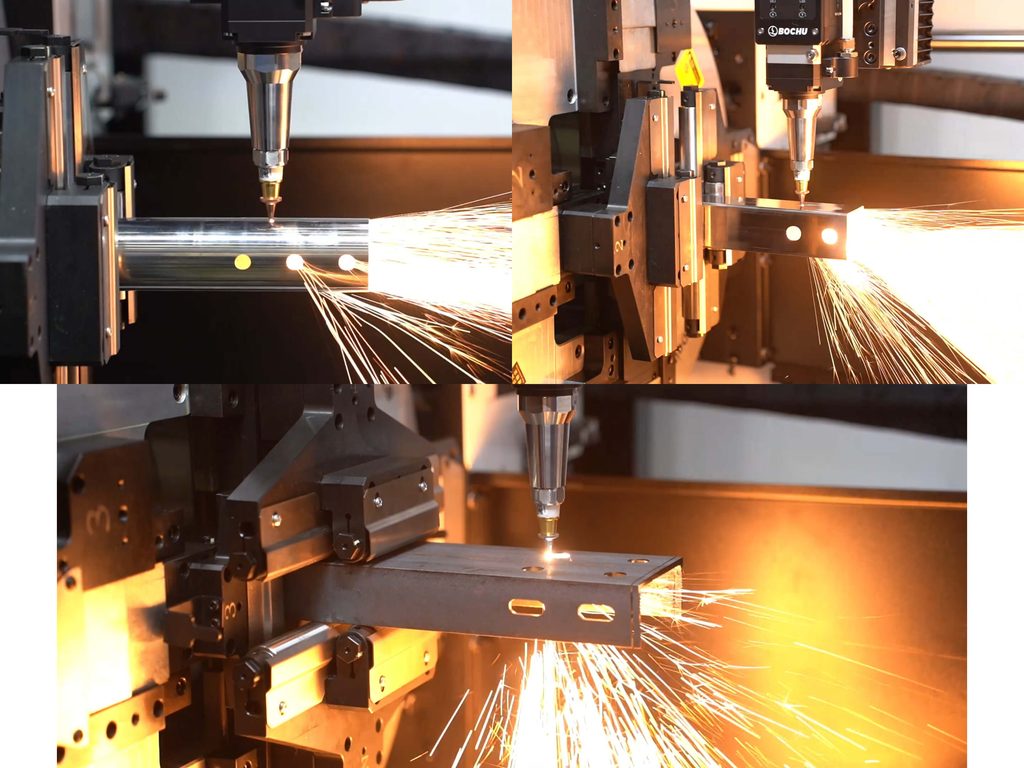
The Role of Tube Laser Cutting: A tube laser cutting machine consolidates cutting-to-length, contour profiling, slotting, and hole cutting into a single automated clamping cycle. While final suitability depends on part geometry and wall thickness, this consolidation directly targets the labor and tolerance bottlenecks of multi-step fabrication.
What to Evaluate When Selecting a Tube Laser for Structural Steel
Laser power and cutting speed are baseline metrics, but they do not determine whether a machine can reliably process elevator structural components. Engineering and procurement teams should focus on three operational criteria:
Cross-Section Compatibility and Chuck Mechanics
Round and square tubes have symmetrical geometries, whereas C-channels, I-beams, H-beams, and unequal angles feature asymmetric centers of gravity and irregular clamping surfaces. A machine’s rated maximum tube diameter does not automatically mean it can clamp a structural beam of similar outer dimensions.
When auditing equipment, verify:
- Clamping adaptability: Can the chucks securely grip asymmetric webs and flanges without deforming the material?
- Software capabilities: Does the control system include dedicated nesting and toolpath software for open profiles (channels, angles, and H-beams) to avoid head collisions?
- Non-standard sections: Do custom elevator profiles require specialized chuck jaws or process trials?
Support Systems for Long and Heavy Profiles
As profile length and linear weight increase, chuck clamping alone cannot prevent mid-span sagging. Evaluate how the machine manages the entire material path:
- Infeed alignment: How smoothly do heavy sections enter the rear chuck?
- Active mid-process support: Does the bed feature adjustable or servo-driven follow-up supports that adapt to changing cross-section profiles during rotation?
- Unloading stability: How are finished, heavy structural parts supported and discharged after cut-off to prevent part drop damage?
If your elevator projects involve oversized, ultra-heavy structural beams beyond mid-size capacities, consult our heavy-duty laser pipe cutter selection guide to match power and chuck load limits.
Material Handling and Shop-Floor Integration
Cycle time is not just laser-on time—it includes raw material staging, loading, unloading, and part sorting.
- High-volume, standardized batches benefit significantly from automated bundle or chain-roller loaders to minimize manual crane usage.
- High-mix, small-batch production requires evaluating changeover speed. If material sizes change every few parts, manual or semi-automatic loading may offer greater operational flexibility than rigid full-automation lines.
To weigh the upfront investment against labor savings for your specific batch sizes, see our breakdown on whether a tube laser automatic loader is worth the extra cost.
Not sure if your structural profiles fit a mid-size tube laser? Send us your cross-section dimensions and maximum part weights—our application engineers will verify chuck compatibility and recommend the right support configuration within 24 hours. [Request a Free Material Feasibility Check ]
How the Baison G24C Addresses Tube and Structural Profile Workflows
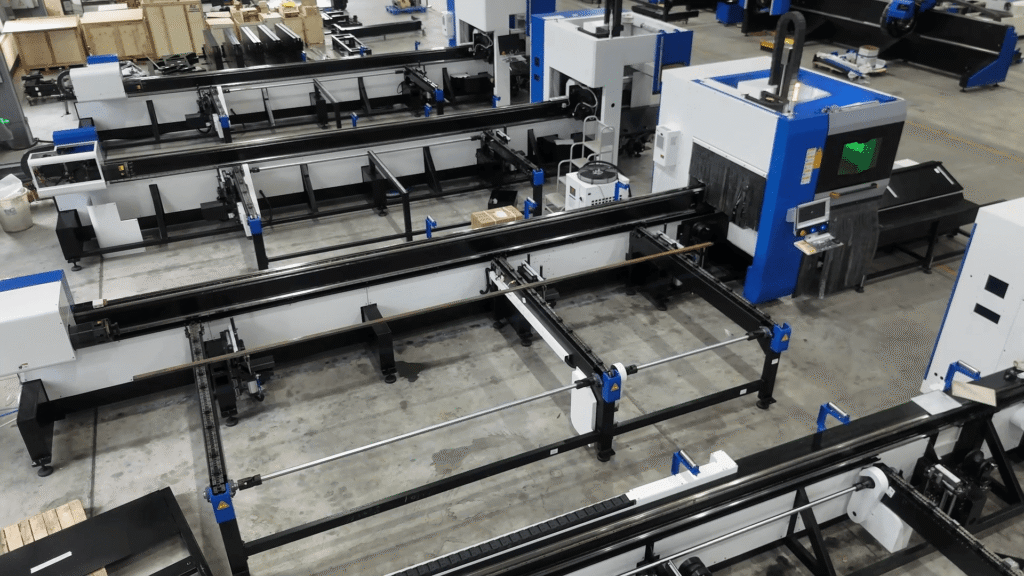
The Baison G24C is a side-mounted dual-chuck mid-size tube laser cutting machine engineered specifically for multi-profile tube and structural steel processing.
Broad Structural Profile Coverage
The G24C standard clamping system accommodates a wide range of geometries used in elevator frame and bracket manufacturing:
- Standard Tubes: Round and square/rectangular tubes.
- Structural Steel: I-beams, H-beams, C-channels, equal angle steel, and unequal angle steel.
Engineering Note: Because open structural profiles have distinct cutting kinematics compared to closed tubes, processing I-beams, H-beams, and complex cross-sections requires dedicated structural nesting software and pre-production drawing verification.
Side-Mounted Dual-Chuck Design
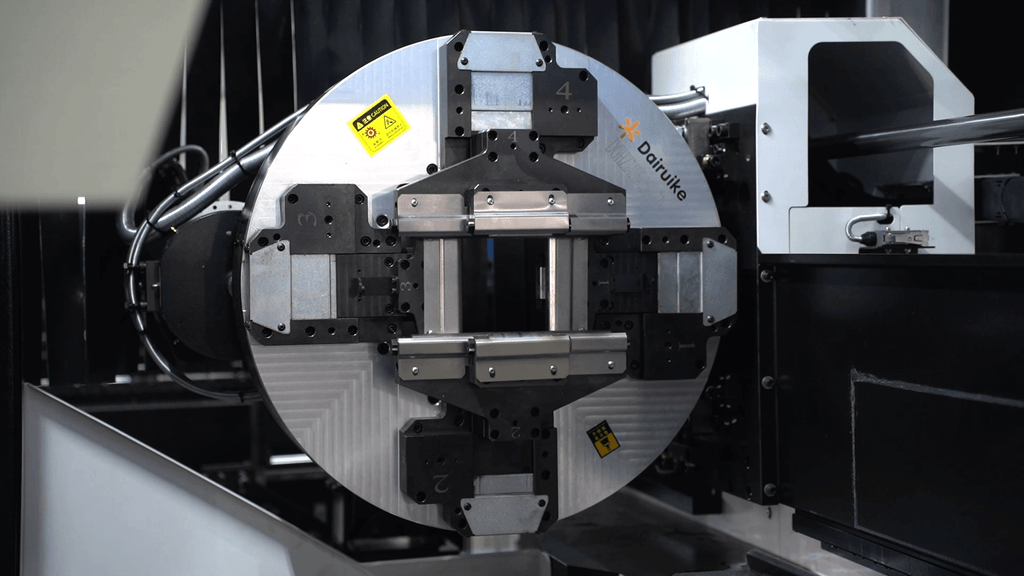
The G24C utilizes a side-mounted dual-chuck architecture designed to handle the varied weight distributions and clamping points of structural steel. Positioning the chucks on the side provides an open mechanical layout that facilitates smoother material loading, facilitates lateral unloading, and maintains stable rotational control across different profile shapes.
For a closer look at its structural stability and full technical capabilities across industrial applications, explore why global pipe processing plants are turning to Baison G24C laser tube cutting machines.
Configurable Automation: Auto-Loading and Servo Follow-Up Support
Depending on batch sizes and floor layout, fabricators can configure the G24C with optional material-handling modules:
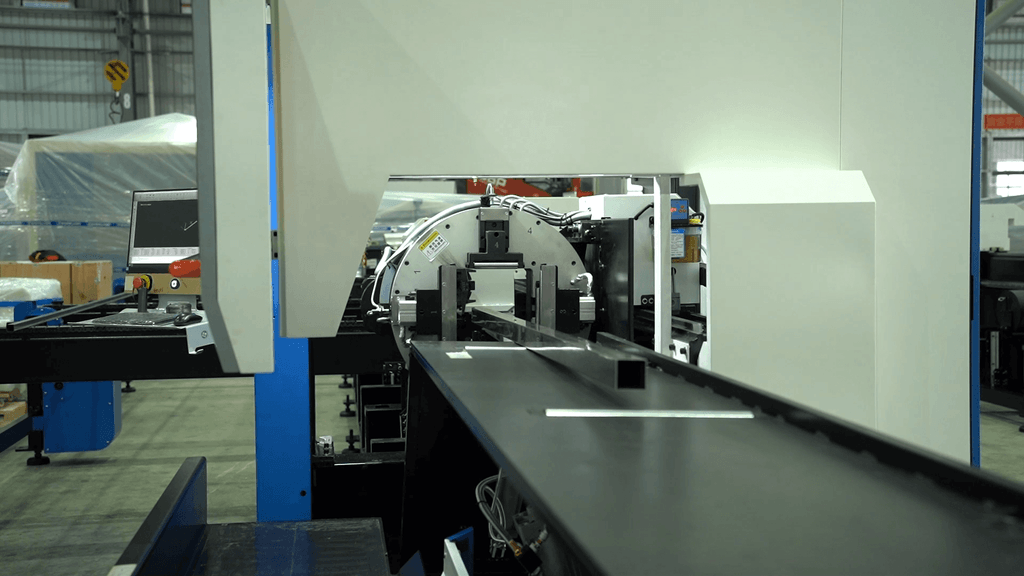
- Chain-Roller Automatic Loader: Streamlines raw material feeding and reduces repetitive manual handling for continuous production runs.
- Servo Follow-Up Unloading Support: Provides dynamic vertical support during cutting and part discharge, helping maintain stability and cut accuracy when processing long or heavy profiles.
Evaluating the Baison G24C for your elevator fabrication line? Share a sample DXF/STEP drawing of your frame brackets or guide supports to get a custom cutting cycle-time estimate and physical sample trial plan. [Get a G24C Application & Quote Proposal ]
A 4-Step Verification Process Before Purchasing
Spec sheets provide a baseline filter, but structural steel fabrication requires practical validation. Before finalizing an equipment investment, follow this four-step audit:
- Compile a Complete Material Matrix: List every profile type (tubes, channels, beams, angles), cross-sectional dimensions, wall thicknesses, cut lengths, and single-piece weights used in your elevator models.
- Submit Representative Part Drawings: Provide CAD files of your most complex structural parts—specifically those with dense hole patterns, angled end-cuts, or interlocking weld joints—to verify nesting software compatibility and cutting paths.
- Map Shop-Floor Logistics: Measure available floor space and verify how raw stock will be staged, how finished parts will be unloaded, and how the laser cell will feed downstream welding and assembly stations.
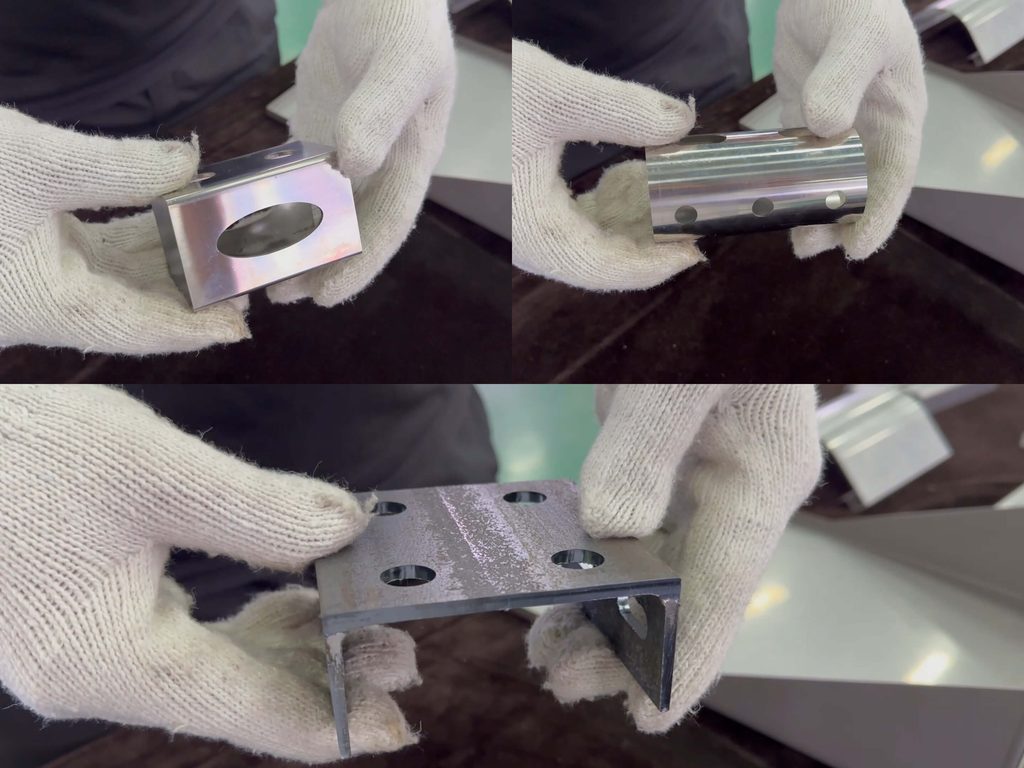
- Run Physical Sample Trials: Conduct test cuts using your actual production materials. Inspect chuck grip stability, hole-to-edge tolerances, bevel/cut-edge quality, and fit-up accuracy during trial assembly.
Understanding what determines tube laser cutting quality will help your engineering team set clear acceptance benchmarks during these sample trials.
FAQs
1. Can one laser cutter process both elevator cabin panels and structural frames?
No. Elevator doors and cabin wall panels require a flatbed sheet metal laser cutter, whereas structural frames, brackets, and support beams require a tube and profile laser cutting machine equipped with rotary chucks.
2. Which elevator structural profiles can be processed on a tube laser?
Depending on chuck capacity and software configuration, tube lasers can process round tubes, square tubes, C-channels, I-beams, H-beams, and angle steel. Non-standard or asymmetrical sections should always be verified using engineering drawings.
3. What materials does the Baison G24C support?
The Baison G24C is built to process round tubes, square tubes, I-beams, H-beams, C-channels, and equal/unequal angle steel. Exact dimensional limits depend on the specific chuck configuration and material weight.
4. Are automatic loading and servo follow-up supports always necessary?
Not necessarily. Long, heavy profiles and high-volume batches benefit substantially from chain-roller loaders and servo follow-up supports. However, shops running frequent small-batch changeovers across mixed sizes should weigh automation ROI against manual loading flexibility.
5. How do I confirm if the G24C fits my specific elevator parts?
Prepare your material specification list (cross-sections, lengths, and unit weights) alongside representative 3D/2D part drawings. Submitting these for a technical feasibility review and physical sample cutting is the most reliable way to confirm clamping stability and assembly fit.
Moving Forward with Your Profile Processing Evaluation
In elevator manufacturing, the true cost of structural steel fabrication lies in secondary operations—repeated clamping, inter-station transfers, manual grinding, and assembly rework. Selecting a tube laser cutting system requires aligning chuck mechanics, structural nesting software, and long-material support with your actual part geometries.
Ready to streamline your elevator profile fabrication? Stop losing hours to manual layout, multi-machine transfers, and weld-prep grinding. Submit your material specification list (profile types, dimensions, lengths) and representative part drawings to the Baison Laser engineering team today.
We will provide a tailored G24C configuration recommendation, cycle-time analysis, and transparent equipment quote. Submit Your Drawings for a Custom Quote