The Overlooked Hidden Bottlenecks in Modern Metal Surface Treatment
For decades, industrial surface preparation has relied on traditional processes: abrasive sandblasting, chemical pickling, and heavy pneumatic wire brushing. Although these technologies were historically widely used for cleaning metal prior to welding or coating, they are exposing increasingly severe hidden costs that modern factory managers can no longer ignore. Sandblasting embeds tiny abrasive particles into the micro-pores of the metal substrate, which easily triggers catastrophic bonding layer failures under high-stress operating conditions. Meanwhile, chemical pickling generates a large amount of hazardous liquid waste, facing hefty compliance fines under the stringent environmental frameworks of Europe and America.
As global engineering standards continue to tighten and skilled workers become scarce, tier-one manufacturers are accelerating their transition to non-contact photonic cleaning. Baison Laser, as a global industrial laser solutions leader with a 100,000-square-meter smart manufacturing base, has specially developed the CP300 handheld pulsed laser cleaning system to address the aforementioned industry pain points. By combining advanced laser-material interaction physics with a rugged, portable air-cooled architecture, the CP300 achieves high-precision surface treatment without compromising the structural integrity of the metal.
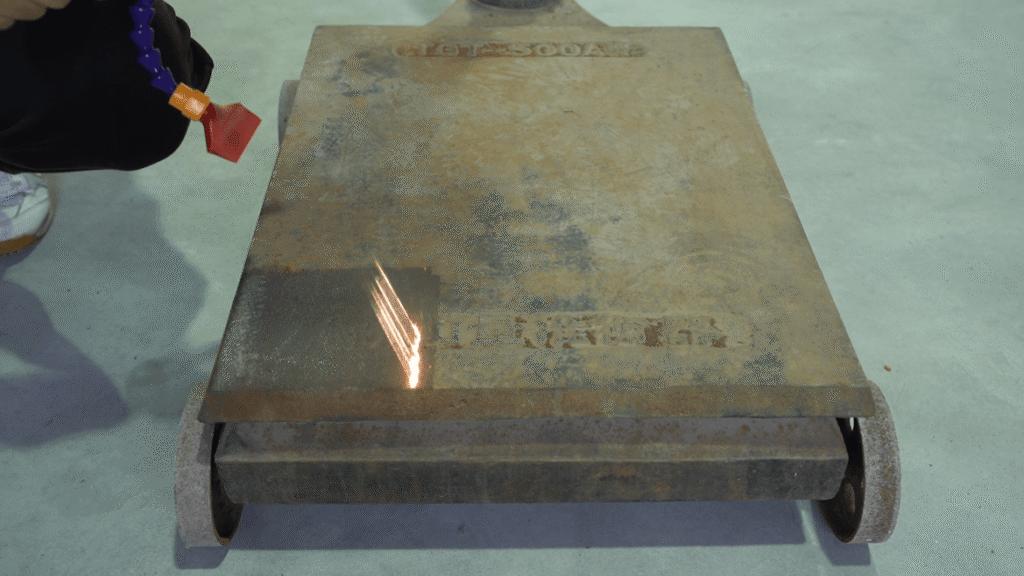
Engineering Precision vs. Legacy Methods: What Plant Managers Need to Know
Evaluating a transition from traditional grit blasting to handheld fiber laser cleaning requires looking closely at how energy interacts with metal surfaces. Traditional methods rely on kinetic force or chemical erosion, which are inherently difficult to control uniformly across complex geometric surfaces and curved welds.
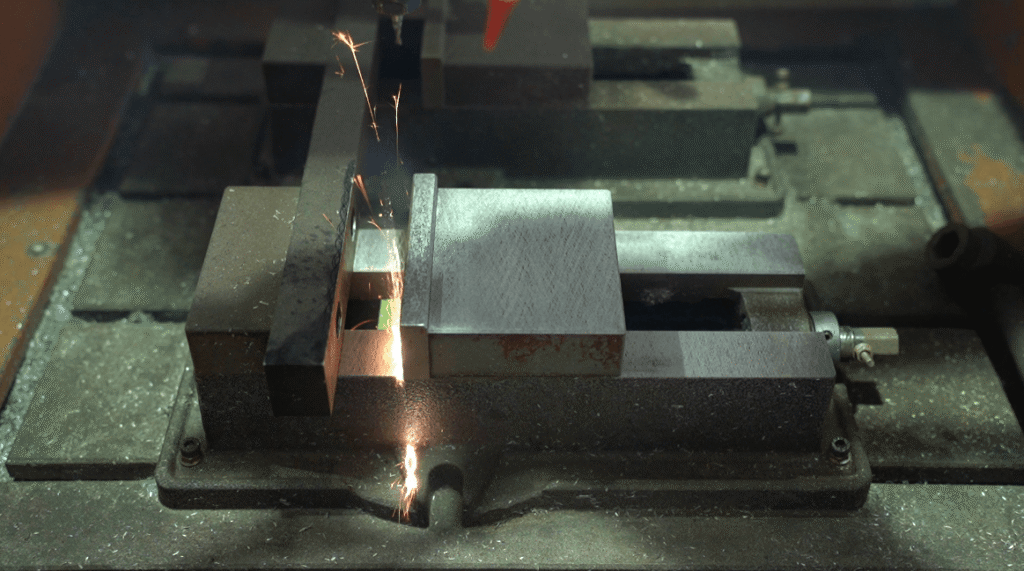
The Baison CP300 utilizes high-energy single-mode laser pulses (1030–1090 nm wavelength) that selectively vaporize surface contaminants—such as heavy mill scale, rust, stubborn oil films, and resin residues—while leaving the underlying base metal completely undamaged. With an engineered substrate thickness loss tolerance strictly controlled below 0.0005 mm (roughly 1/140th of a human hair width), the system ensures metallurgical stability.
Furthermore, the CP300 eliminates consumable logistics entirely. Traditional blasting operations require continuous resupply of garnet, aluminum oxide, or steel shot, alongside costly disposal of contaminated spent media. The CP300 operates with zero chemical agents, zero water usage, and zero abrasives. An integrated high-efficiency fume extraction system captures particulate matter at source with ≥ 99% collection efficiency, aligning operations cleanly with international environmental mandates such as ISO 14001 and local air quality guidelines.
Technical Specifications & Performance Architecture
The engineering parameters defining the Baison CP300 system’s field performance are structured below:
| Core Parameter | Baison CP300 Specifications & Operational Metrics |
| Laser Source & Power | 300 W High-Energy Pulse Fiber Laser (Upgradeable to 500 W) |
| Cooling Technology | Advanced Intelligent Air Cooling (Zero chillers, zero freezing risk in cold climates) |
| Chassis Dimensions | 580 × 360 × 570 mm (Compact trolley-case portable design) |
| System Weight | 35 kg total weight (Ultralight cleaning gun head ≤ 800 g) |
| Scan Speed & Width | Scan speed < 50,000 mm²/s; Max cleaning width up to 130 mm @ F245 |
| Cleaning Pattern Modes | 8 Built-in Geometric Modes (Linear, solid ellipse, solid rectangle, wave, grid, spiral, flower, figure-8) |
| Electrical Requirements | Single-phase AC 220V ± 5%, Total Power Consumption 3250 W |
In-Depth Market Competitor Comparison: Why Baison CP300 Stands Out?
In the current global handheld laser cleaning equipment market, equipment performance varies significantly. When evaluating options, many factory managers tend to focus solely on the initial purchase price while overlooking the massive differences in multi-shift continuous operation, harsh environment adaptability, and long-term maintenance costs.
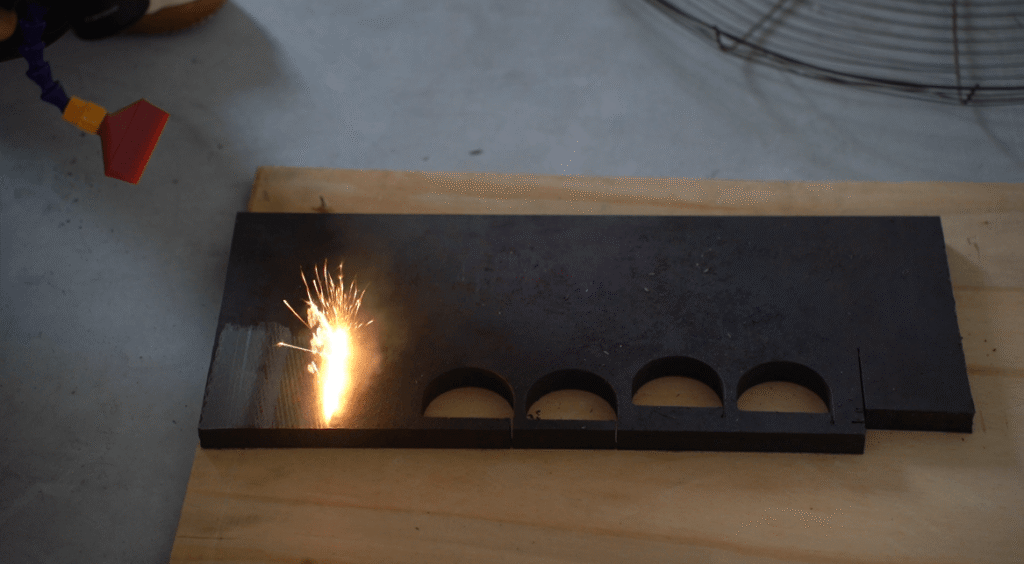
Through a multi-dimensional horizontal comparison with mainstream similar laser cleaning machines on the market, the core competitive advantages of the Baison CP300 are mainly reflected in the following four key areas:
First, in terms of heat dissipation architecture and environmental adaptability, the vast majority of medium-to-high power laser cleaning machines on the market still rely on bulky external water-chiller units. Water-cooling systems not only increase the overall size and weight of the equipment, but also bring fatal hidden dangers such as coolant leakage, pipeline aging and clogging, and freezing and cracking in outdoor environments or unheated warehouses during severe winters. In contrast, the Baison CP300 adopts an exclusively developed intelligent air-cooled architecture, completely eliminating external water pipes and pumps. This not only reduces the equipment weight to a portable trolley-case level of 35 kilograms, but also ensures absolute stable operation in a wide temperature range of -10°C to 40°C, significantly enhancing flexibility for outdoor construction and multi-station transfers.
Second, regarding optical energy distribution and substrate protection precision, many conventional laser cleaning machines adopt simple single-axis or fixed galvanometer scanning modes, making energy prone to attenuation or overheating peaks at the edges of the cleaning trajectory, which easily causes local substrate ablation or incomplete rust removal. Meanwhile, the CP300 is built-in with up to 8 professional geometric scanning modes (including optimized spiral, figure-eight, and composite matrix patterns). Combined with high-precision single-mode fiber output, it achieves absolute uniform distribution of laser energy across the cleaning width. Certified by authoritative testing institutions, its thickness loss on the underlying base material when removing stubborn scale is strictly controlled within 0.0005 millimeters, truly fulfilling the rigorous industrial standard of “removing contaminants only without damaging the substrate“.
Furthermore, concerning operating efficiency and operational fatigue control, many older or low-cost laser cleaning gun heads on the market often weigh over 1.5 to 2 kilograms, making operators highly susceptible to wrist strain and neck pain during continuous high-intensity operations, leading to a sharp drop in work efficiency. Starting from ergonomics, the Baison CP300 lightweightes the cleaning gun head to under 800 grams and optimizes the flexibility and balance point of the fiber optic hose, allowing operators to move as flexibly as holding a pen and significantly reducing fatigue during long-shift operations.
Finally, from the perspective of Total Cost of Ownership (TCO) and intelligence level, standard market models often lack a comprehensive parameter database, requiring novices to go through a long and tedious debugging process with stubbornly high scrap rates. Due to poor component compatibility, they also suffer from high failure rates and frequent subsequent maintenance and optical lens wear. In contrast, the CP300 comes pre-installed with an intelligent process parameter library covering 15 languages, supporting one-click invocation of optimal cleaning solutions and enabling newcomer training to be completed in just 10 minutes. Relying on zero consumables, high stability, and ultra-long service life, the CP300 saves enterprises several times the price difference in comprehensive operational expenses over its entire lifecycle.
In-Depth Engineering Analysis: Decoding the Core Technical Advantages of CP300
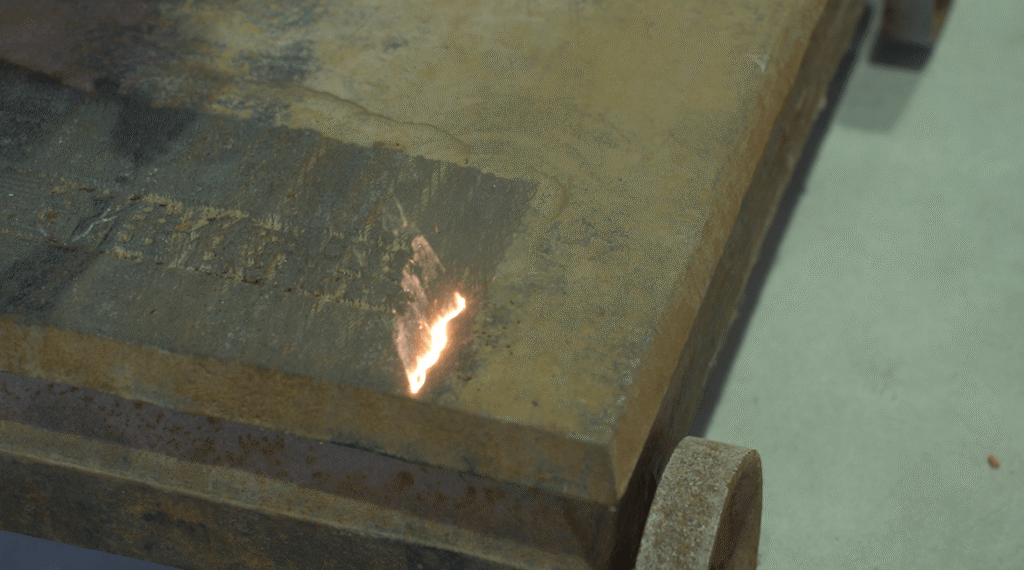
To fully understand how the CP300 reshapes workshop economic benefits, it is necessary to deeply analyze the direct impact of its core technical specifications on actual operations:
- Air-Cooled High Reliability vs. Water-Cooling Unit Complexity: Traditional high-power industrial lasers typically rely on external water chillers. In multi-shift manufacturing environments or unheated winter warehouses, water-cooling systems carry risks of coolant leakage, pipeline aging, and freezing. Baison’s proprietary smart air-cooled architecture completely eliminates external pipelines, maintaining a stable operating temperature within an ambient range of -10°C to 40°C while keeping operating noise below 65 decibels.
- Ergonomic Lightweighting and Operator Fatigue Relief: Handheld fatigue is the main bottleneck in manual surface treatment. With a cleaning gun head weighing less than 800 grams, operators can maintain stable scanning motions across long shifts without causing wrist or repetitive strain injuries. The 35-kilogram trolley-case style enclosure makes transfers between different workstations and production lines effortless.
- Ultimate Versatility via Multi-Mode Scanning: Surfaces in aerospace, automotive, and heavy manufacturing are rarely flat or uniform. The CP300 integrates 8 different programmable scanning modes—ranging from linear scanning for heavy scale removal to spiral and figure-eight patterns for fine contour cleaning. This flexibility ensures optimal energy distribution, prevents local overheating, and guarantees a uniform surface roughness (Ra ≤ 0.8 micrometers), making it ideal for subsequent structural adhesive bonding or powder coating.
Global Practical Application Cases and Return on Investment (ROI) Validation
The true test of industrial technology lies in its performance on active production lines. Below are two representative application cases highlighting measurable financial and operational returns:
Case Study 1: Munich, Germany — Heavy Steel Structure Prefabrication
- Customer Background: A well-known heavy steel structure prefabrication enterprise in Munich, specializing in heavy steel frames for Western European commercial buildings. Prior to anti-corrosion coating, they historically relied on pneumatic wire brushing and chemical degreasing.
- Operational Challenges: Slow cleaning speeds caused severe project delivery delays. Furthermore, stringent EU environmental laws imposed high processing tariffs on chemical waste, and operators faced health hazards from airborne steel chips.
- CP300 Integration and ROI: The plant deployed two Baison CP300 systems. Utilizing pre-programmed linear scanning modes (up to 50,000 square millimeters per second), operators rapidly stripped mill scale down to bare bright metal without thermal deformation. Surface treatment speed increased by 350%, annual chemical treatment expenditures were cut by over 25,000 Euros, and the total capital investment was fully recovered within 4.5 months.
Case Study 2: Detroit, Michigan, USA — Automotive Tier-1 Brake Component Manufacturing
- Customer Background: A Detroit automotive tier-1 supplier producing high-performance drum and disc brake assemblies for commercial vehicle fleets. Strong adhesion between the friction material and the metal backing plate requires an absolutely clean surface free of any residual oil and oxides.
- Operational Challenges: Traditional abrasive sandblasting frequently embedded tiny abrasive particles into surface micro-pores, easily triggering catastrophic delamination under high-temperature braking stress and driving up scrap rates.
- CP300 Integration and ROI: The manufacturer integrated the CP300 directly into automated component pre-treatment lines. Non-contact, thermal-stress-free laser cleaning removed contaminants while maintaining a precise microscopic roughness (Ra ≤ 0.8 micrometers). First-pass component yield surged from 91.5% to 99.8%, saving over $35,000 annually in abrasive consumption and drastically reducing quality claims.
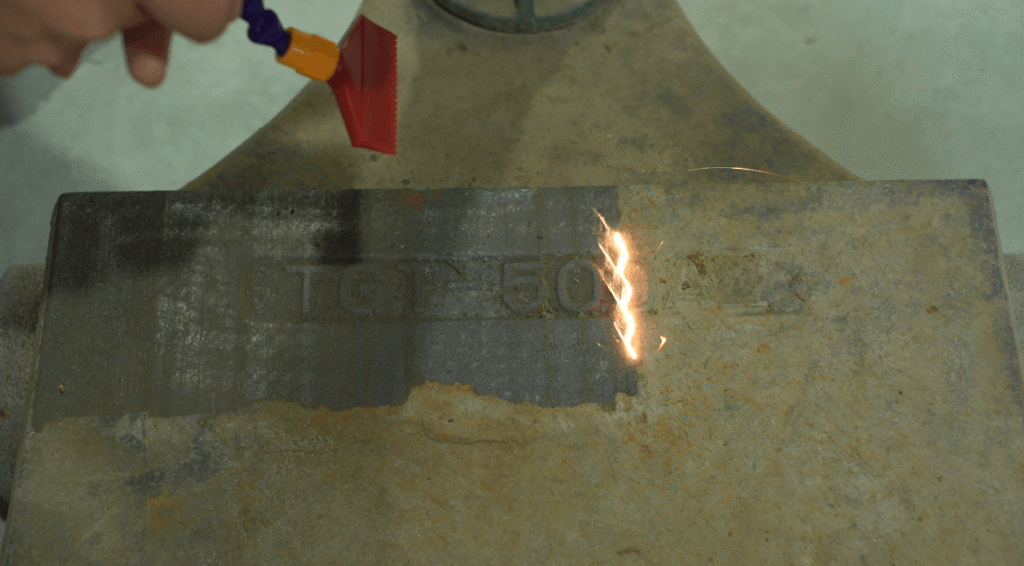
Empowering Global Sustainable Manufacturing
From heavy steel structure manufacturing in Europe to high-precision automotive component production in North America, the Baison CP300 has established a new benchmark for industrial surface treatment. By eliminating abrasive particles, hazardous chemical waste, and thermal substrate damage, the system solves the three long-standing challenges in the manufacturing sector: environmental compliance, operational safety, and strict cost control. Capable of achieving a rapid capital return (under 5 months) and boosting first-pass yield to a near-perfect 99.8%, the CP300 is an indispensable strategic asset for forward-thinking manufacturing enterprises.
FAQs
Q1: What materials and contaminants can the CP300 handle efficiently?
A1: The CP300 is specifically designed for metals (carbon steel, stainless steel, aluminum, copper, titanium), ceramics, and certain engineering plastics. It efficiently removes heavy rust, mill scale, paint layers (1,000–1,500 micrometers), oil films, resin residues, and welding discoloration without damaging the underlying substrate (substrate loss ≤ 0.0005 millimeters).
Q2: What is the learning curve for operators using the CP300 system?
A2: It is almost negligible. The system features an intuitive touch interface and comes pre-installed with an optimized parameter library supporting 15 international languages. Novice operators with zero laser operation experience can independently and proficiently operate the system after 10 to 15 minutes of guided training.
Q3: What are the advantages of the air-cooled CP300 compared to traditional water-cooled systems?
A3: The CP300 adopts an advanced intelligent air-cooled architecture with automatic fan regulation (keeping operating noise ≤ 65 decibels). Unlike water-chiller units, it operates reliably in harsh thermal environments ranging from -10°C to 40°C, completely eliminating the risk of winter freezing, coolant leakage, and pipeline maintenance.
Q4: What are the consumable components and daily maintenance costs like?
A4: Fundamentally, the CP300 is a zero-consumable system requiring no chemical reagents or sandblasting abrasives. Daily maintenance is limited to periodically inspecting protective lenses (typically replaced every 3 to 5 weeks depending on the duty cycle), keeping annual maintenance expenses below $70.
Conclusion
The Baison CP300 handheld pulsed laser cleaning system represents a definitive transformation in industrial surface engineering. By replacing obsolete, high-pollution abrasive methods with precision photonic technology, the CP300 empowers global manufacturers to eliminate environmental compliance liabilities, drastically cut operating expenses, and achieve rapid capital return. Investing in Baison laser technology is not merely an equipment upgrade, but a strategic imperative to maintain competitiveness in global manufacturing.