In core global industrial manufacturing and sheet metal processing hubs such as North America, Western Europe, and Eastern Europe, modern workshop managers are jointly facing an unprecedented and severe challenge: the severe shortage of skilled welders and the continuous soaring of labor costs. Whether it is an automotive parts supplier in Detroit or a stainless steel cookware manufacturer in Stuttgart, the hourly wages of senior Tungsten Inert Gas (TIG) and Metal Inert Gas (MIG) technicians are rising rapidly, and they often even face the embarrassing situation of “being unable to hire people despite having money”.
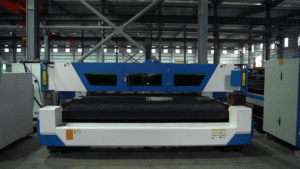
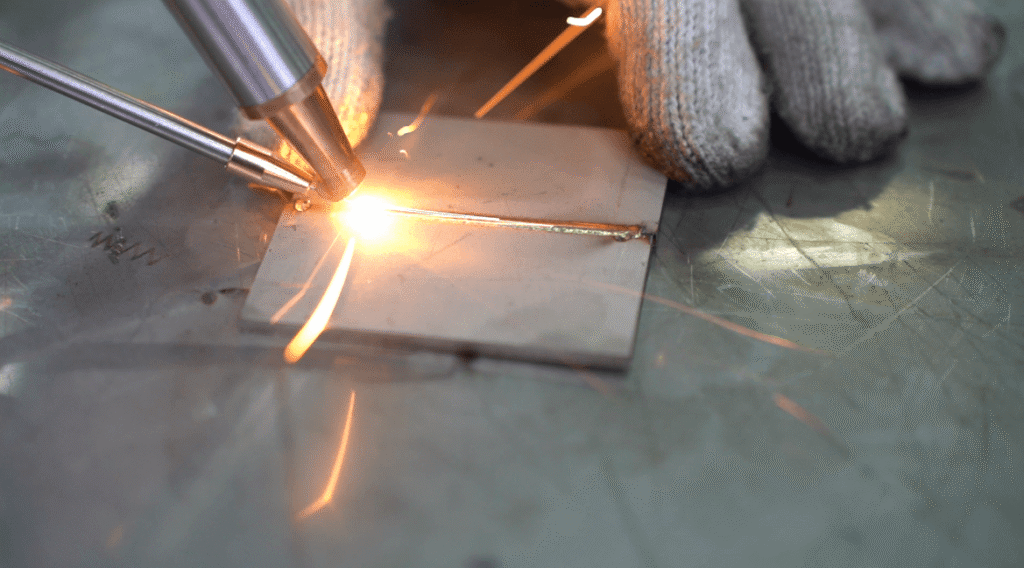
In response to this global pain point, Baison Laser has heavily launched the CW series four-in-one handheld laser welding, cutting, and cleaning all-in-one machine. It perfectly integrates four core functions—handheld laser welding, laser cutting, continuous welding, and weld seam cleaning—into one. With disruptive technical performance and an extremely user-friendly operation threshold, it leads the global metal manufacturing industry into a brand-new era of high efficiency, intelligence, and low cost.
Traditional Processes vs. Baison CW Series: A Dimensional Reduction Strike
In the international industrial product procurement market, overseas buyers heavily value the actual comprehensive performance, energy efficiency ratio, and long-term return on investment (ROI) of equipment. To thoroughly clarify why the Baison CW series can quickly sweep through global workshops, we need to conduct an all-round in-depth analysis and benchmarking between traditional TIG welding and the Baison CW laser series.
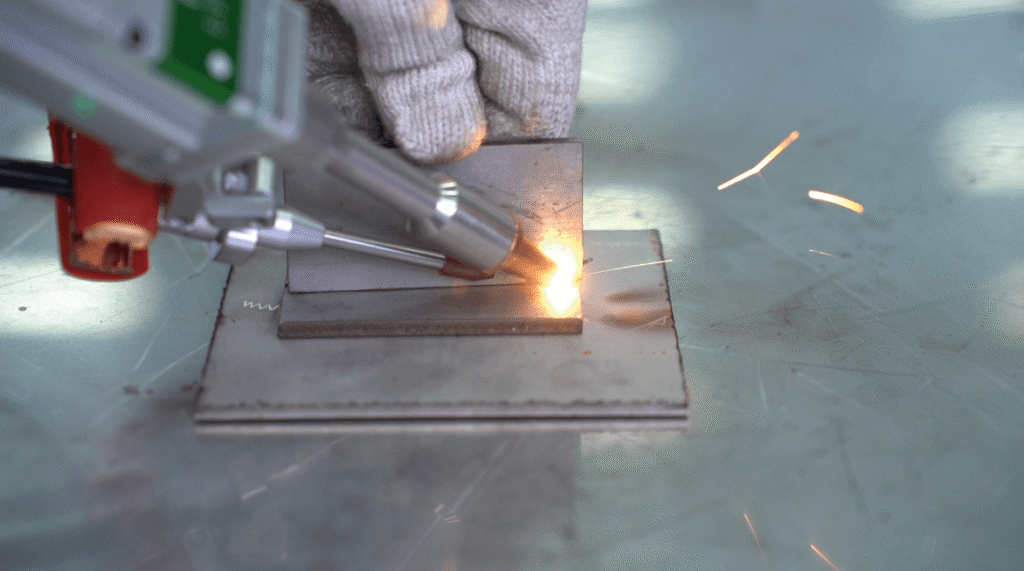
Traditional vs. Baison CW: A Superior Advantage
| Comparison Dimension | Traditional TIG Welding DOCX | Baison CW Series Laser Machine DOCX |
| Heat Input & Workpiece Deformation | Extremely high heat input, wide heat-affected zone, and workpieces are very prone to warping and severe deformation after welding. | Highly concentrated energy, extremely small heat-affected zone, thermal deformation is almost zero, ensuring high precision. |
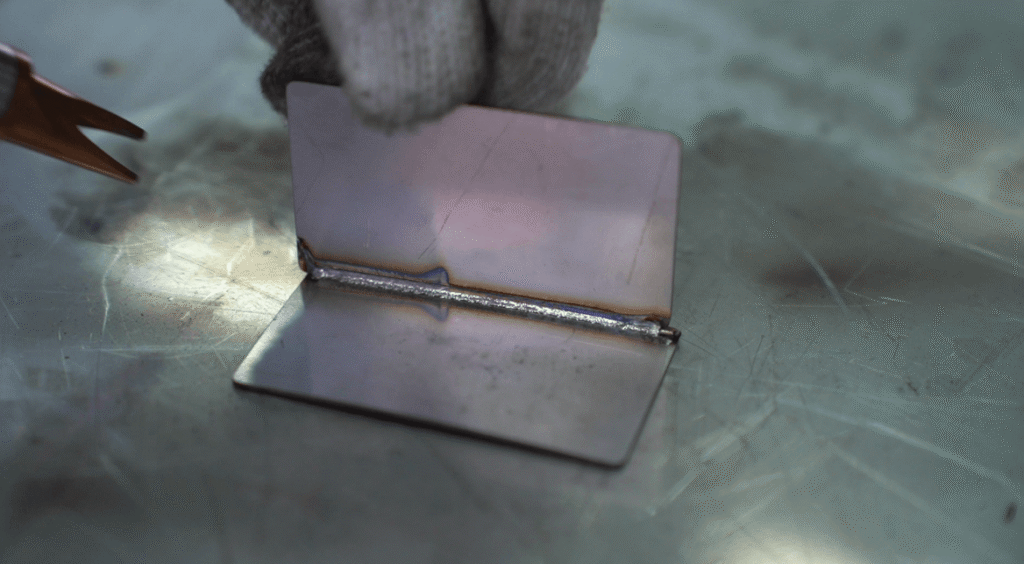
| Weld Appearance & Post-Processing | Welds are obviously rough, heavy spatters, and must rely on heavy manual grinding and pickling. | Welds are smooth, delicate, and aesthetic, achieving true grind-free operation, saving time and effort. |
| Sheet Processing & Burn-Through Rate | Easily burn through sheets under 1mm, with extremely high technical requirements for welders. | Energy is precisely controllable, sheet processing is effortless, and the yield rate stably stays above 99%. |
| Labor Threshold & Workforce | Heavily relies on specialized technicians with years of experience, difficult to recruit and long training cycle. | Ordinary workers can operate proficiently after simple on-the-job training, completely bidding farewell to labor shortages. |
| Wages & Comprehensive Labor Cost | Professional welder salaries remain high, causing heavy long-term financial burdens. | General operators can handle the job, with overall comprehensive labor costs significantly reduced by over 60%. |
| Consumables & Daily Energy Consumption | High-frequency consumption of tungsten electrodes and shielding gases, with relatively low energy conversion efficiency. | No core electrode consumables like tungsten, high photoelectric conversion rate, saving 80%-90% electricity, and comprehensive costs drop by 30%. |
Financial-Grade ROI and In-Depth Benefit Breakdown
From a financial investment perspective, purchasing industrial-grade equipment requires looking beyond the initial acquisition cost to evaluate its comprehensive lifecycle output benefits. The Baison CW series boosts welding processing speed to over 5 times that of traditional processes, meaning output achieves exponential growth within the same working hours.
More crucially, because the equipment completely eliminates heavy post-welding auxiliary processes such as grinding, trimming, and chemical pickling, it directly removes redundant post-processing stations in the workshop.
Combined with ultra-low power consumption and an electrode-free consumable design, overseas factories fully switching to the Baison CW series can typically recover their entire equipment investment cost in just 3 to 6 months entirely through savings on high labor wages, electricity bills, and consumable expenses. This immediate financial return on investment (ROI) is the core driving force behind frequent repeat purchases by experienced overseas buyers.
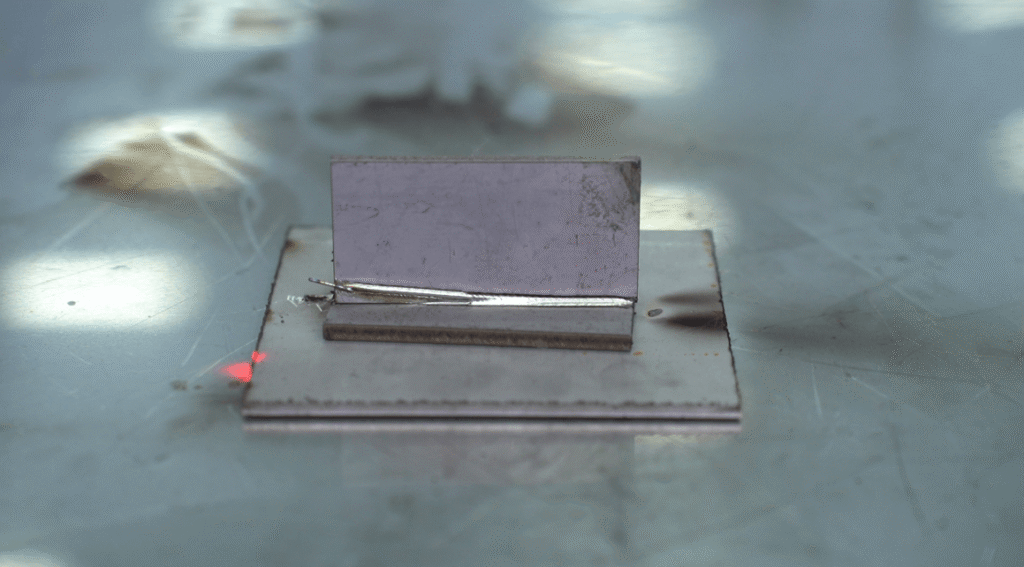
Exceptional market performance stems from the ultimate pursuit of core technology. The Baison CW series makes no compromises in configuration, coming fully equipped with a new generation of digital drive systems and the independently developed Super-Strong SUP28T four-in-one handheld gun head, ensuring high beam quality while achieving extremely high optical stability and long-service-life performance.
The handheld end adopts an ergonomic, streamlined, and lightweight design, with the gun body weighing only 0.75 kg. Even during prolonged, high-intensity continuous operations, the wrist and arm fatigue of operators can be minimized. In addition, the operating system has a built-in multi-language switching function (perfectly covering global mainstream languages such as English, Spanish, German, and French), which, when paired with an intuitive touch UI interface and rich built-in process parameter packages, allows ordinary workers anywhere in the world to master all functions proficiently within a few hours. This truly achieves the “foolproof” and inclusive nature of high-tech industrial equipment.
Real-World Case Studies
Actions speak louder than words; the vast majority of professional overseas buyers trust actual combat performance in real-world scenarios. We placed the Baison CW series into two representative overseas industrial manufacturing sites to see what kind of results it delivered.
Case Studies: Stuttgart Cookware Plant Efficiency
A well-known high-end stainless steel kitchen equipment and commercial catering appliance manufacturer located in Stuttgart, Germany, has always maintained near-carping Germanic standards for product appearance and details. Previously, its workshop widely adopted traditional TIG welding to splice food-grade 304 stainless steel plates with thicknesses ranging from 1.2mm to 2.0mm. Due to the large heat input range of TIG welding, minor thermal warpage was visible to the naked eye on the cabinet countertops after every weld. This required experienced master craftsmen to spend extended periods on hammering, mechanical sanding belt grinding, and chemical pickling passivation treatments, with the entire post-processing procedure taking up nearly 60% of total working hours.
After introducing a Baison CW20 (2000W) four-in-one machine, the workshop landscape underwent earth-shaking changes. Because laser energy is highly concentrated, the deformation rate at the stainless steel joints was almost suppressed to zero. The welds exhibited delicate, smooth fish-scale patterns or straight, clean lines, directly eliminating heavy grinding and pickling steps. During a review, the factory production director excitedly stated: “In the past, producing a set of custom stainless steel commercial workbenches required 3 high-paid senior welders to busy themselves for an entire afternoon; now, it only requires 1 ordinary operator using the Baison CW20 to complete everything with guaranteed quality within 45 minutes. Comprehensive labor costs were directly cut by 70%, overall productivity achieved a 300% surge, and product delivery lead times were cut in half.”
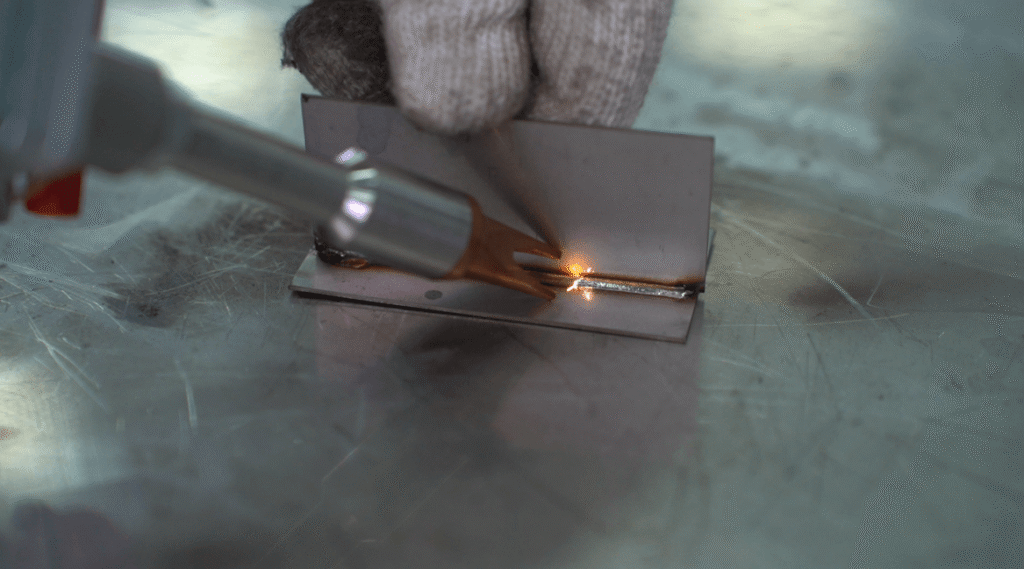
A manufacturing enterprise across the ocean in North America specializing in heavy construction machinery enclosures and body parts faced completely different process challenges. They had to process large amounts of carbon steel sheets and galvanized components daily. Traditional gas-shielded welding previously used suffered from severe weld spatter, heavy cleaning workloads, high consumption costs for welding wire and shielding gas, and often smoggy workshop environments.
The enterprise purchased multiple Baison CW30 (3000W) high-power units at once, equipped with automatic wire feeders. The surging power of 3000W easily achieved high-speed deep-penetration welding of carbon steel up to 6mm thick. Even more amazing to them was the built-in weld seam cleaning function of the equipment: before welding, the cleaning mode could quickly remove oil, rust, and oxide layers from sheet edges to ensure zero-porosity welding; after welding, switching to the cleaning gear with a light brush instantly removed minor oxides around the weld, leaving the surface bright as new. The customer wrote in an evaluation report after six months of equipment operation: “Baison’s 7×24-hour industrial-grade continuous and stable operation capability far exceeded expectations. The electrode-free consumable design and extremely low defect rate allowed our entire production line to recover its entire purchase cost in just 4 months, making it our ultimate killer app to cope with North America’s labor shortage.”
For overseas buyers separated by oceans, equipment after-sales service guarantees and technical support capabilities are often the deciding factor in finalizing an order. As a globally renowned intelligent laser equipment comprehensive solution provider, Baison Laser not only strives for excellence in hardware manufacturing but has also built a globalized, rapidly responsive localized and remote service support network.
FAQs
Which industries is the CW series suitable for?
Widely applied in multiple metal processing fields including sheet metal processing, stainless steel cookware, steel structures, construction machinery, automotive parts manufacturing, and elevator manufacturing.
Does the CW series support customization?
Yes. We provide one-stop customization services ranging from power configurations (1500W-3000W), operating voltages, to multi-language systems and automated integration.
What are common mistakes when choosing the CW series?
Common mistakes include failing to match the correct power range according to sheet thickness, neglecting precise adjustment of shielding gas flow, and failing to regularly clean or replace protective lenses.
Does operating this machine require professional welders?
No. The equipment system features a simple interface with built-in process parameter packages, allowing general workers to start operating proficiently after simple training.
How can I obtain processing parameters for my specific materials?
Process parameters for some special steels need fine-tuning based on the environment. Click to get a customized solution, and our engineers will provide you with exclusive sample testing.
Conclusion
In the increasingly fierce global manufacturing competition, workshop production efficiency is directly equated with cost control capability. Are you still anxious about the high labor costs, workpiece deformation, and cumbersome post-processing of traditional welding? Still hesitating over which power range of laser equipment can most perfectly match your current production capacity demands and workshop budget?
Take action immediately and send us your metal material types, plate thickness specifications, and specific production capacity pain points. Baison Laser’s senior engineering expert team will be ready to tailor the most cost-effective smart laser application solutions and detailed Return on Investment (ROI) analysis reports for you, helping your enterprise seize the initiative in the global industrial wave and win the future!