Global automotive manufacturing is rapidly pivoting toward lightweight, electric, and high-safety architectures. OEMs are imposing stringent quality standards on Tier 1 and Tier 2 suppliers. Structural chassis components, door impact beams, exhaust systems, and seat frames heavily utilize high-strength steel, stainless steel, and aluminum profile tubes to achieve weight-reduction goals.
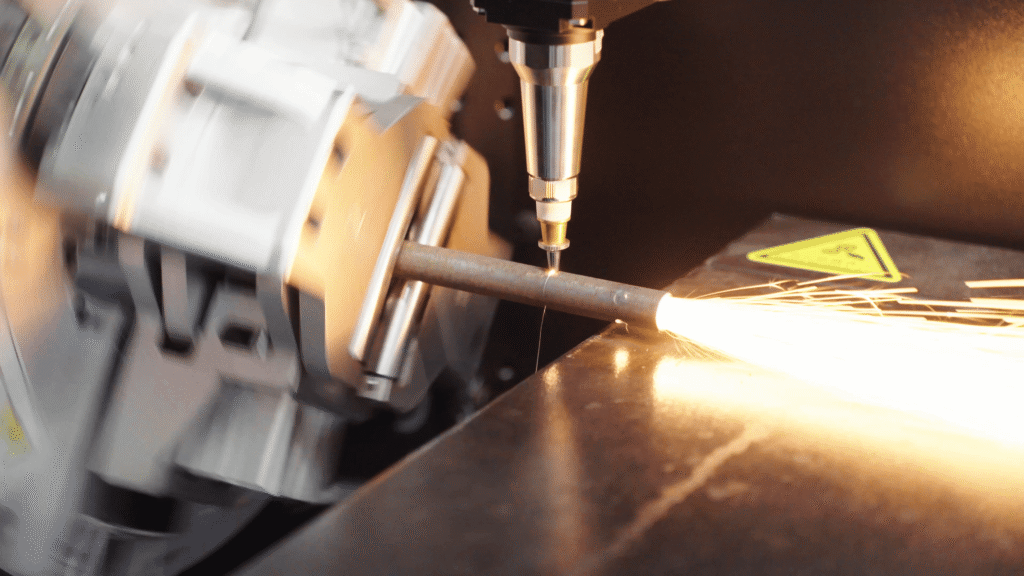
However, high-volume automotive tube fabrication plants face severe profit margin compression:
- Multi-Step Cumulative Error: Conventional workflows rely on fragmented processes—sawing, punching, drilling, and deburring. Repeated manual clamping and transfer create cumulative tolerance stack-ups that ruin downstream robotic welding accuracy.
- Thin-Wall Tube Distortion & Burr: High-speed mechanical cutting causes thin-wall profile tubes to whip, sag, and vibrate. This produces heavy burrs and surface scratches, forcing costly manual secondary grinding.
- Expensive Changeover Downtime: Switching tube specifications takes up to 15 minutes of manual readjustment per batch.
- Severe Scrap Rates: Conventional mechanical saws leave scrap tails exceeding 150 mm per raw tube, wasting tens of thousands of dollars annually.
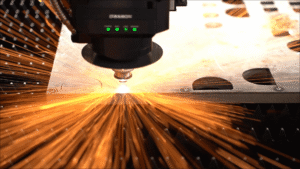
Non-contact thermal laser cutting eliminates mechanical stress, enabling cutting, piercing, slotting, beveling, and complex contouring on a single automated machine.
Automotive Application Benchmarks
| Automotive Component | Tube Type & Specifications | Baison Laser Engineering Precision | Impact on ROI |
| Chassis Subframes & Control Arms | High-strength steel large profiles | Intersecting lines, positioning pinholes, mounting slots | ±0.03 mm repeat positioning accuracy ensures seamless subframe assembly. |
| Door Impact Beams & Bumper Bars | High-strength quenched oval/rectangular tubes | High-power flying cutting with minimal heat-affected zone (HAZ) | Enhances structural crash energy absorption without micro-cracking. |
| Exhaust Systems & Seat Frames | Stainless steel & aluminum thin-wall tubes (10–120 mm) | Oxide-free, zero-burr vertical cut edges | Direct automated TIG/MAG welding without manual polishing; frame weight reduction. |
Baison Laser K12C 5th-Gen Technical Configuration
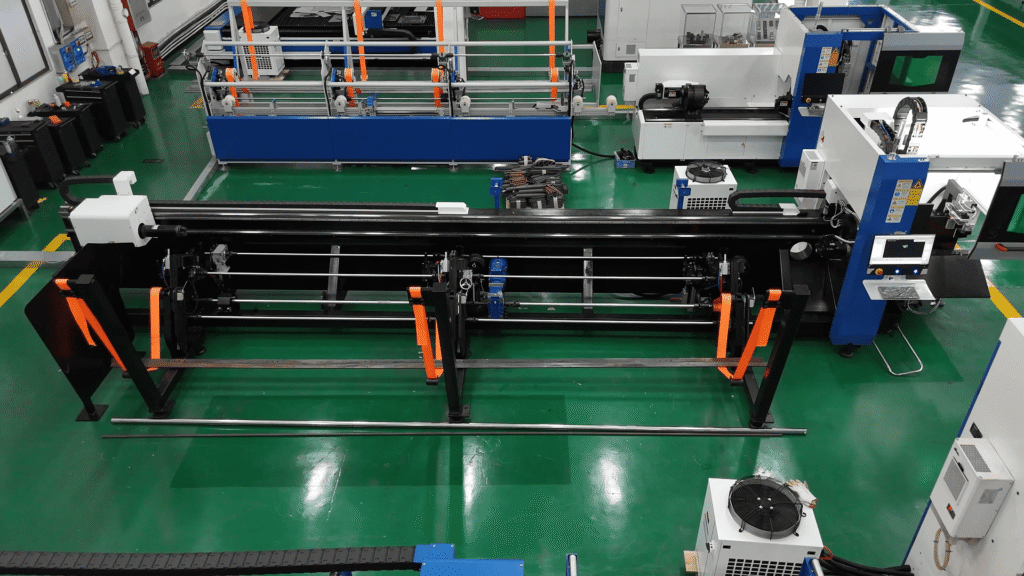
The Baison Laser K12C 5th-Generation High-Speed Small Tube Laser Cutting Machine is purpose-built to solve high-volume automotive manufacturing bottlenecks through hard-target industrial innovations:
1. 3-Point Dynamic Anti-Whip & Anti-Vibration System
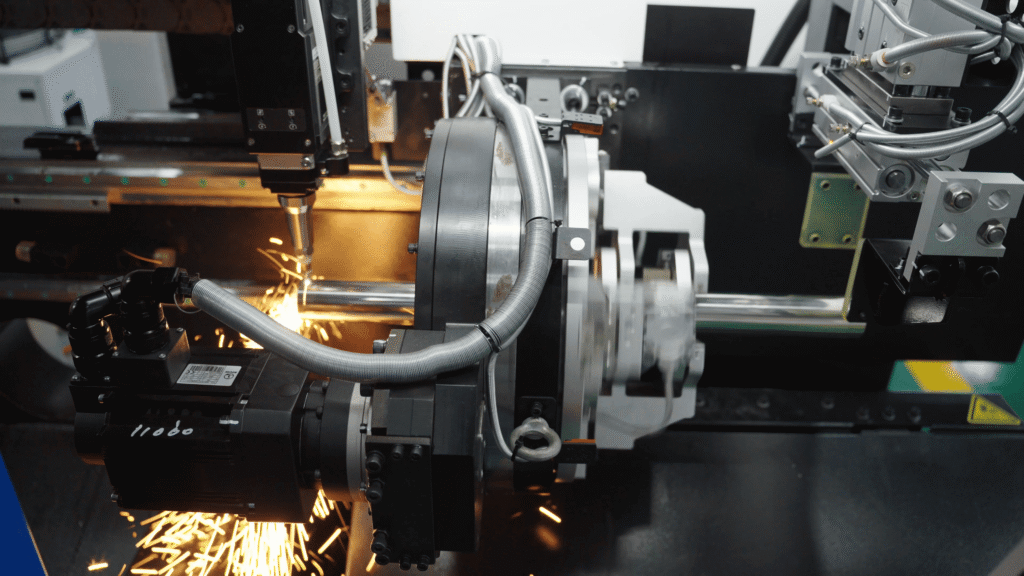
Thin-wall tube rigidity drops severely at high rotational speeds. The K12C integrates a 3-point dynamic restraint system maintaining baseline lock at 180 r/min:
- 3 Sets of Follow-up Clamps: Real-time lateral clamping dynamic matching.
- 3 Sets of Follow-up Supports: Active upward pneumatic lifting to counteract tube self-weight sag.
- 2 Sets of Variable-Diameter Wheels: Active stabilization suppressing radial whipping on small-diameter thin-wall tubes.
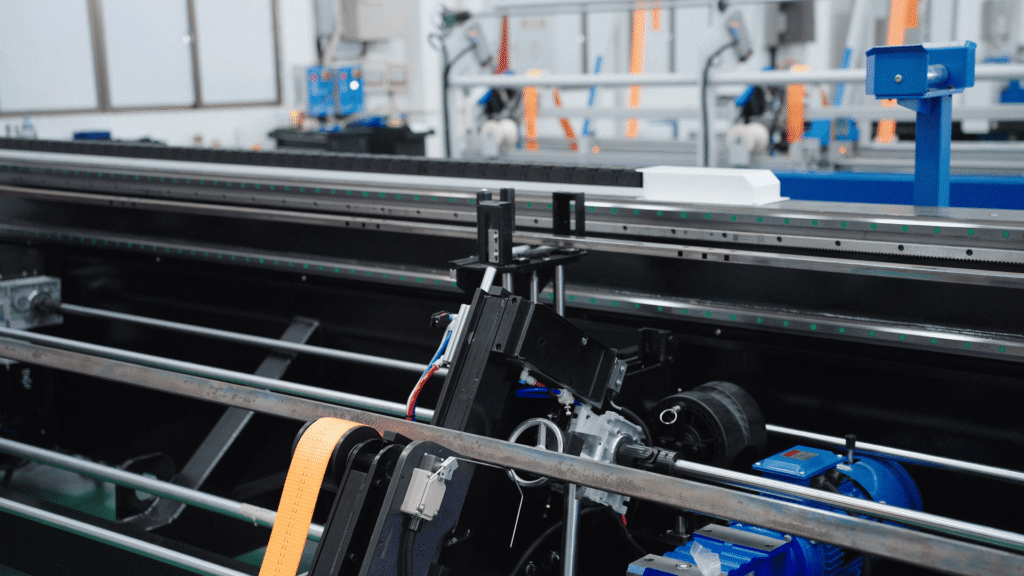
2. 30-Second Single-Operator Changeover
Conventional machines require loosening and retightening dozens of support brackets manually, taking up to 15 minutes. The K12C features a Synchronized Linkage Adjusting Handwheel. Turning one single handwheel synchronously adjusts all support bracket widths in under 30 seconds.
3. 12-Second Automatic Bundle Loading
An optional fully automated loading rack pre-aligns incoming raw tubes while the previous tube is being processed. Automatic clamping cycle time is reduced to 12 seconds, eliminating cutting head idle time.
4. 3-Mode Cutting & Material Optimization
- Single-Chuck Mode: Ultra-fast path motion for short automotive tubes.
- Overstroke Mode: The laser head overstrokes past the chuck, reducing tail scrap to 65 mm while supporting 5#–8# channel/angle steel.
- Zero-Tailing Dual-Chuck Mode (Optional): Achieves near-zero material waste at both tube ends.
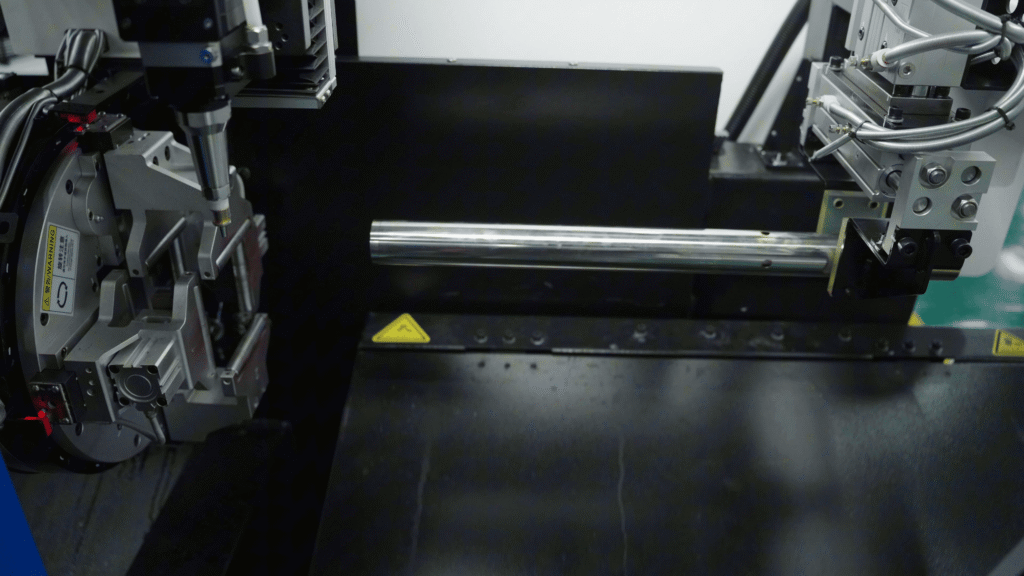
5. Synchronized Follow-Up Tray
Prevents finished thin-wall exhaust pipes and visible trim pieces from dropping into the hopper, protecting surface finish integrity.
Baison K12C Factory Test Data & ROI Benchmark
Test Benchmark Conditions: 1,000 units/day stainless steel automotive tubes (25 mm \times 1,000\ mm length), 8-hour daily shift.
| Comparison Item | Traditional Tube Cutting Equipment | K12C 5th-Gen High-Speed Laser Tube Cutter | Daily Direct Savings / Benefit Improvement |
|---|---|---|---|
| Changeover Time (4 changeovers/day) | 15 mins × 4 = 60 mins | 0.5 mins × 4 = 2 mins | 96% reduction in downtime for product changeover |
| Feeding Idle Time (1000 workpieces) | 20 sec/pc = 5.5 hours | 12 sec/pc = 3.3 hours | 40% reduction in pure waiting time(Additional 2.2 hours available for actual cutting) |
| Remnant Material Waste | 150 mm remnant per tube150 m waste per day (≈70 kg) | 65 mm remnant per tube (with skip-cut mode)65 m waste per day (≈30 kg) | Greatly improved material utilization, 56% less remnant waste |
| Overall Production Benefit | Decentralized processes; high cost for manual grinding & finishing | Multi-function all-in-one machine, near 100% yield | Expected payback on equipment investment within 6–10 months |
Note: Overseas operations combining high labor costs and raw material expenditures experience an overall Cost Per Part reduction of up to 30%.
⚡ Engineering Challenge: Zero Tail Waste on High-Value Alloys
How can your production line achieve true <1 mm ultra-short tailing on specialized high-strength automotive profiles without risking chuck collisions?
Baison Laser’s proprietary Dual-Chuck Synchronized Overstroke Architecture unlocks maximum sheet and tube yield under rigorous Tier 1 audit conditions. [Contact Baison Laser Application Engineers] to run a customized production cost model and request a dynamic video demonstration of our high-speed anti-vibration chucks in action.
Frequently Asked Questions (FAQs)
Q1: Which tube profiles and material grades can the Baison K12C process?
A: The machine handles stainless steel, carbon steel, alloy steel, aluminum alloy, and copper alloys. Supported profiles include round tubes (10–120 mm), square tubes (10×10 to 120×120 mm), rectangular tubes, oval tubes, D-shaped tubes, and 5#–8# channel/angle steel.
Q2: How does Baison’s Zero-Tailing Technology reduce raw material overhead?
A: Standard chuck configurations leave roughly 150 mm of unusable scrap per 6-meter raw tube. By deploying synchronized dual-chuck overstroke logic, tail scrap is compressed down to 0 mm. For a plant processing 100,000 tubes annually, this direct material recovery yields significant annual cost savings.
Q3: Is technical expertise required for operator changeovers during short-run production?
A: No. Equipped with the Synchronized Linkage Handwheel and an intuitive FSCUT CNC System, operators simply adjust a single handwheel to auto-align all loading support widths in under 30 seconds without specialized tooling.
Q4: How do I eliminate high-speed chatter on thin-wall, small-diameter tubes?
A: Chatter occurs due to structural flex during high rotational speeds. Baison K12C addresses this with 3-way constraint tracking—combining side follow-up clamps, bottom follow-up supports, and variable-diameter wheels to lock tube centerlines dynamically up to 180 r/min.[Inquire with Baison Engineers] for full clamp control specs and free sample cutting tests.
Q5: What global service and support infrastructure does Baison Laser offer?
A: Baison provides 24/7 global online engineering response, lifetime technical support, regular remote diagnostics, and guaranteed original spare parts supply for seamless overseas operation.
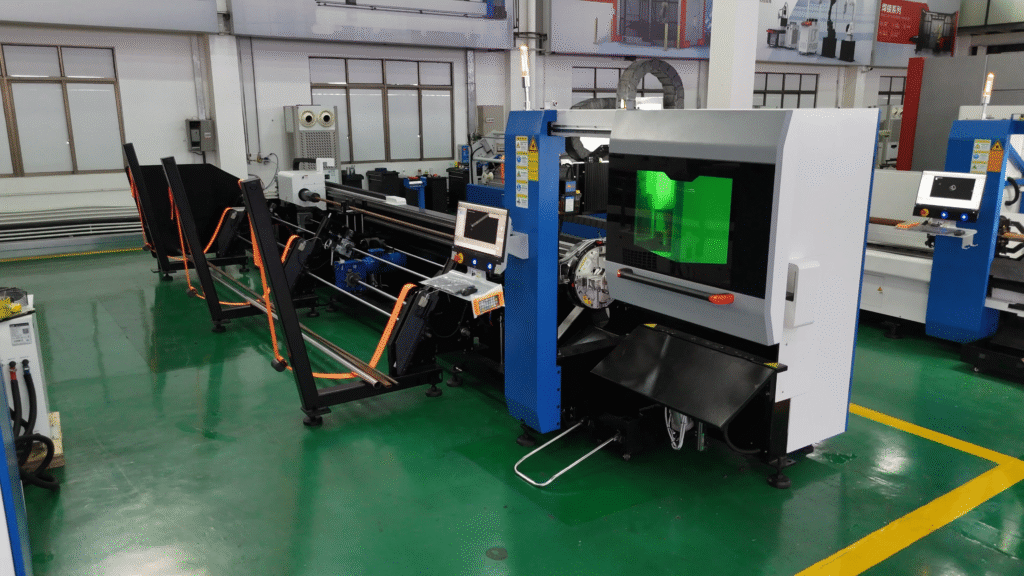
Maximize Your Automotive Tube Production ROI
In modern automotive manufacturing, winning Tier 1 supply contracts requires precision, rapid delivery cycles, and rigorous cost control. Scaling output by adding redundant machinery and manual labor is no longer viable. The Baison Laser K12C High-Speed Small Tube Laser Cutting Machine redefines performance standards through anti-vibration support, 30-second changeovers, 12-second auto-loading, and high-yield tail scrap reduction.
Baison Laser offers comprehensive automotive tube processing solutions—from automated bundle loading to high-speed laser cutting and scratch-free unloading.
[Request a Free Production Line Cost Calculation & Sample Cutting Verification]