TL;DR / Key Takeaways: The Baison Laser K12C is a high-speed tube laser cutting machine designed specifically for small-to-medium tubing (10–120 mm) in fitness equipment, steel shelving, and commercial storage rack manufacturing. Operating at a 180 rpm chuck speed and 1.5G acceleration, the K12C merges sawing, punching, slotting, and deburring into a single automated step. By eliminating expensive stamping dies, tool changes, and tolerance buildup from multiple setups, it drastically cuts scrap rates and lead times for high-mix, low-volume orders.
In commercial gyms and sprawling logistics warehouses across North America and Europe, heavy-duty power racks and retail shelving systems share a critical manufacturing reality: their structural integrity relies on precision-cut, multi-hole perforated tubing and interlocking slots.
Yet, many fitness equipment suppliers and steel storage rack manufacturers remain trapped in an outdated, margin-killing production loop. Their workers operate saws and multiple dedicated stamping presses, forcing raw tubing through a tedious five-step workflow: Sawing ➔ Marking ➔ Stamping ➔ Deburring ➔ Secondary Alignment.
When handling high-strength thin-wall tubing, custom mounting slots, or frequent pitch updates, this fragmented process breaks down:
- Every design tweak requires a costly new stamping die.
- Stamping thin-wall tubing risks micro-fractures that go unnoticed until products crack under load.
- Shipping defective frames overseas leads to expensive return claims, warranty disputes, and damaged customer relationships.
If you are looking to combine multi-step operations, shorten delivery lead times, and eliminate scrap risks, the Baison Laser K12C high-speed tube laser cutter provides the flexible manufacturing alternative your workshop needs.
The Hidden Profit Drain: Why Traditional Stamping Is Failing Rack & Fitness Manufacturers
In light-industrial manufacturing, profitability hinges on two factors: speed of product iteration and assembly consistency. The dense grid of adjustment holes, locking pins, and slot brackets on structural tubing represents the highest risk area for hidden labor costs and quality defects.
Manufacturers relying on traditional mechanical saws and punch presses face four structural bottlenecks:
- Astronomical Tooling Costs & Zero Flexibility: Every unique hole pattern or slot profile requires a custom stamping die. For overseas orders—where batch sizes are shrinking and customization demands are rising—die setup time often exceeds actual production time, tying up valuable capital in tooling inventory.
- Cumulative Tolerance Stack-up: Transferring tubing across multiple manual setups introduces position drift. Dimensional error frequently exceeds ±0.5 mm. Unaligned holes are often discovered only at the welding stage, forcing expensive manual grinding and assembly delays.
- Hidden Structural Micro-Fractures: Thin-wall tubing commonly used in fitness power racks deforms under mechanical stamping pressure. This stress creates invisible micro-cracks that pass visual inspection but fail under dynamic loads at end-user facilities.
- Rising EHS (Environmental Health and Safety) Costs: Stamping lines generate severe acoustic noise and high worker injury risks. Western manufacturing facilities face escalating compliance expenses for noise mitigation, safety enclosures, and liability insurance.
Engineering Breakthrough: How the K12C Delivers One-Pass Laser Machining for Special Profiles
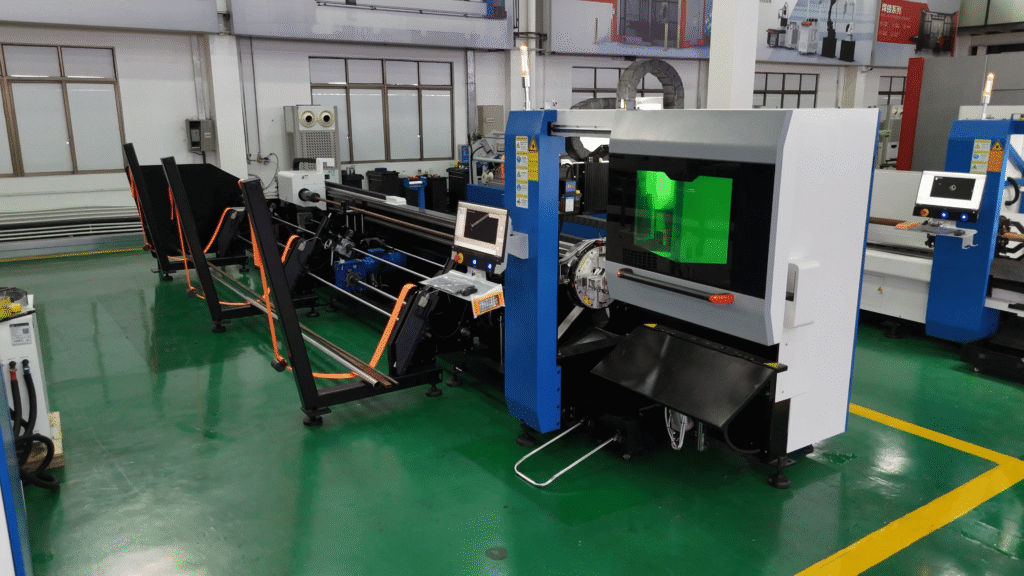
The Baison Laser K12C is engineered specifically for high-frequency hole pattern cutting, slot milling, and anti-vibration stabilization on thin-wall tubes. Every feature solves a real-world shop floor challenge:
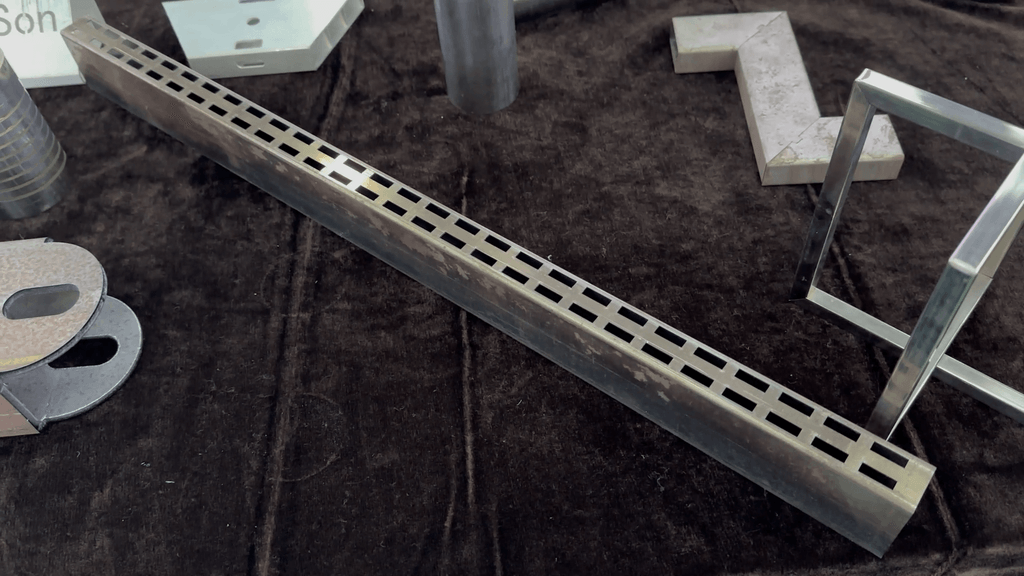
- High-Dynamic Response for Dense Hole Grids: Processing continuous adjustment holes on commercial power rack uprights is notoriously slow. The K12C features a full-stroke precision square-hole chuck handling 10–120 mm square, round, oval, and D-shaped profiles. With a 180 rpm chuck speed and 1.5G acceleration, the machine executes instant start-stop trajectory shifts to maximize hourly throughput.
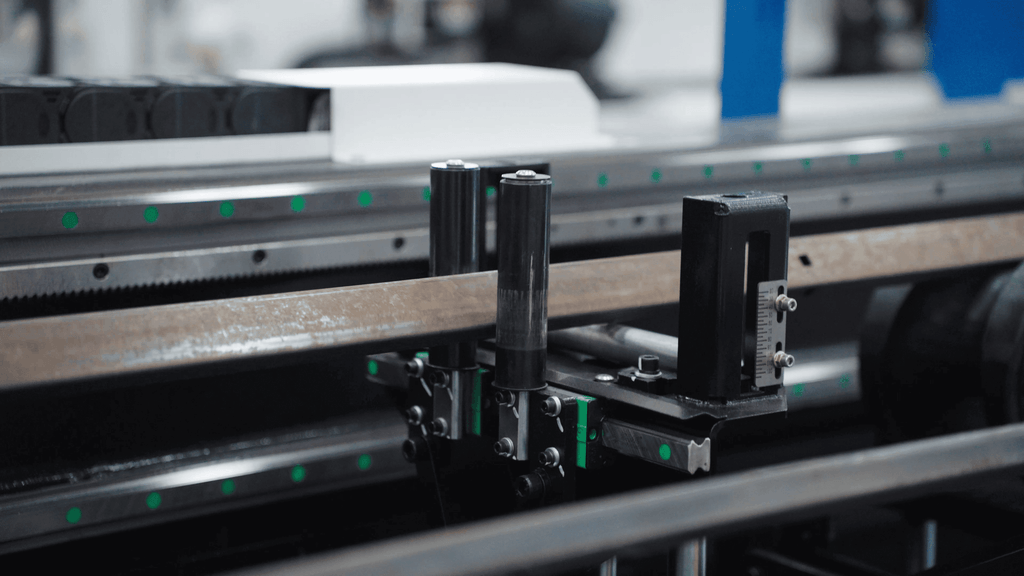
- Multi-Layer Dynamic Support for Thin-Wall Tubes: Fast-rotating thin-wall tubes are prone to whipping and sag. The K12C integrates a multi-layer dynamic stabilization system:
- 2 groups of variable-diameter wheel supports + 3 groups of dynamic clamps: Real-time adaptation to tube outer diameters to eliminate radial whipping.
- 3 groups of dynamic supports + top material support: Continuous length-wise elevation that counteracts gravity sag and secures clamping alignment.
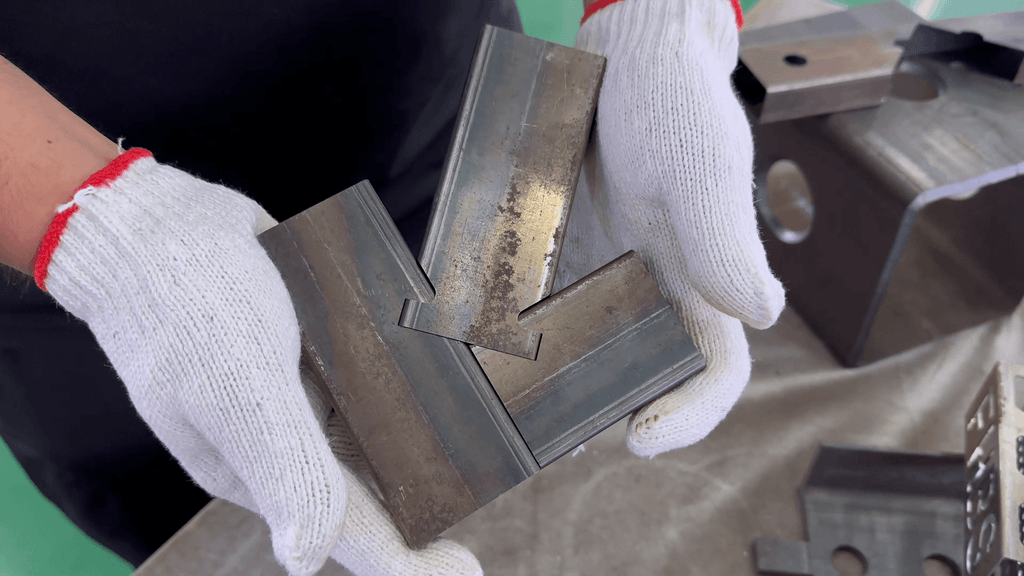
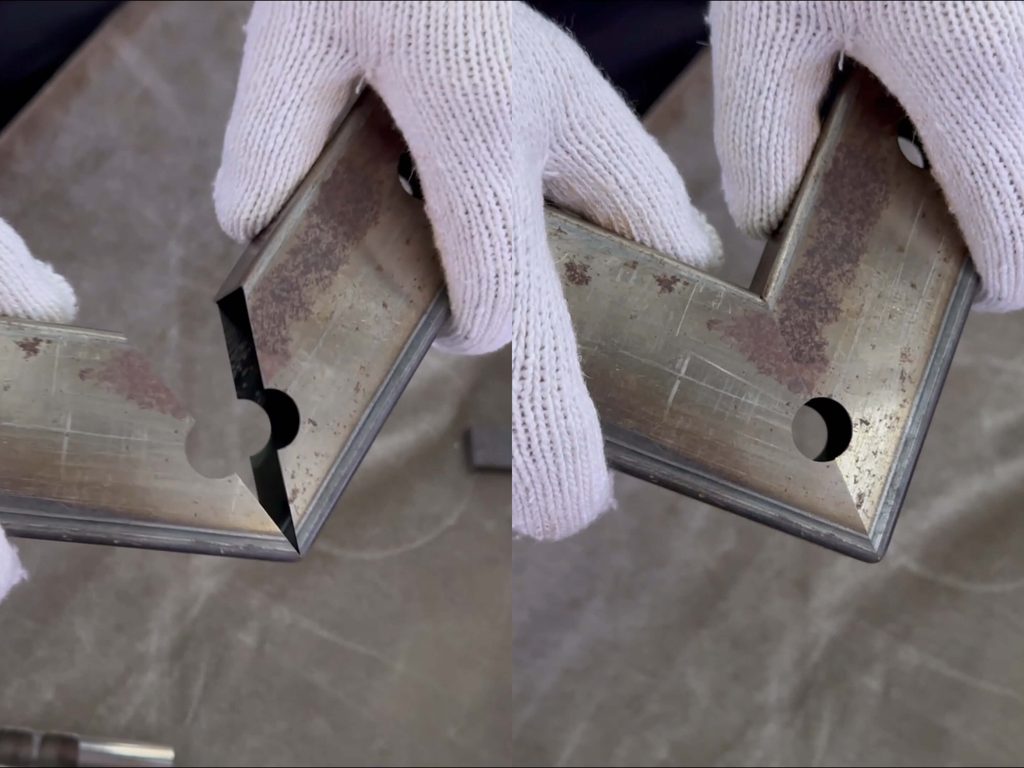
- Burr-Free Slotting & Profile Cutting Ready for Direct Welding: Whether cutting locking slots into rectangular tubes or keyhole slots into D-shaped profiles, imported CAD files are processed in a single automated step. The smooth, burr-free edge quality allows parts to proceed straight to robotic welding without manual grinding.
Technical Comparison: Traditional Punching Lines vs. Baison K12C One-Pass Laser Machining
Note: Figures serve as general industrial benchmarks. Actual performance varies by tube wall thickness, laser power setting, and shift structure.
| Performance Metric | Traditional Line (Saw + Punch + Drill) | Baison Laser K12C One-Pass System |
| Workflow Steps | 5 discrete steps (Saw ➔ Mark ➔ Punch ➔ Slot ➔ Deburr) | 1 single automated pass (Load ➔ Cut/Hole/Slot Complete) |
| Tooling & Die Costs | High capital outlay per hole/slot profile; long lead times | Zero stamping dies required; direct CAD/CAM file import |
| Machining Tolerance | Cumulative positioning error > ±0.5 mm | High-precision CNC control with sub-millimeter repeatable accuracy |
| Labor & Setup Time | High reliance on skilled labor; lengthy die changeovers | Synchronized chuck adjustment; rapid profile switching |
| Defect & Warranty Risk | Stamping stress causes micro-fractures and field returns | No mechanical impact stress; eliminates hidden cracking |
| EHS Compliance | High noise pollution, mechanical hazards, elevated insurance | Enclosed operation; low acoustic footprint and workplace risk |
| Consumable Costs | Ongoing die wear, re-sharpening, and stamping lubricants | Standard optical protective lenses and cutting gases only |
Beyond the Specs: What This Shift Means for Your Bottom Line
Upgrading to the Baison K12C changes your operating paradigm from tooling-dependent stamping to agile, digital-first manufacturing.
Curious how your specific tube profiles compare in cycle time and material utilization?
Because tube wall thickness, material grade, and hole density directly impact your per-part cost, optimized nesting configurations can unlock additional savings.
[Request a Custom Cycle Time Estimate & Material ROI Analysis for Your Drawings]
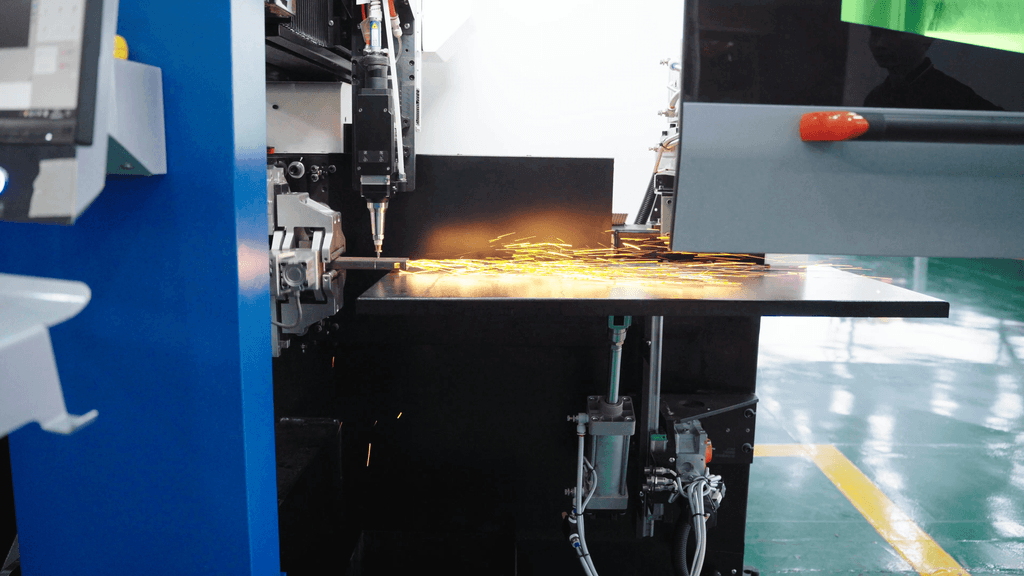
End-to-End Automation: From Smart Loading to Gentle Unloading
To meet the high-volume output demands of modern rack and fitness equipment factories, the K12C offers complete material handling options:
- Automated Infeed Systems: Standard equipped with a semi-automatic chain-roll loader; optional fully automated bundle loader for continuous, unattended production runs.
- Protective Outfeed Solutions: Standard with dynamic support drop tables and 1-meter unloading racks; optional 1.5-meter extended unloading module prevents surface scratching and structural distortion on finished parts.
Frequently Asked Questions (FAQ)
Can the Baison K12C process special profiles like oval, flat-oval, and D-shaped tubes?
Yes. The K12C precision square-hole chuck and specialized CNC system natively support 10–120 mm square, round, oval, and custom extruded steel profiles widely used in commercial power racks , and thin-wall metal furniture fabrication.
How does the K12C control raw material waste and scrap during mass production?
Beyond high-density CAD nesting, the K12C offers optional zero-tailing and over-travel cutting features. The exact raw material savings depend on your tube length and part geometry—our engineering team can evaluate your cutting nest to show how much scrap you can eliminate annually.
How does the machine prevent thin-wall tubes from vibrating or deforming at 180 rpm?
Stability is maintained via 2 variable-diameter wheel support sets, 3 dynamic clamping pairs, and 3 underlying support structures. This multi-point stabilization dynamically offsets rotational centrifugal forces and gravity-induced sagging.
How difficult is machine operation and job switching for international shop floors?
The learning curve is minimal. Spec-change adjustments utilize synchronized manual crank mechanisms, allowing operators to adjust support height without individual recalibration. Training typically requires only a few business days.
What technical support and spare parts availability does Baison provide for overseas factories?
The K12C uses a fully enclosed, dust-proof chuck design to prevent slag intrusion and lower maintenance frequency. Baison Laser provides 24/7 remote diagnostic support, standardized global spare parts dispatch, and local technical assistance through our global support network to guarantee uninterrupted production
When is the K12C not the right choice for a facility?
The K12C is strictly optimized for 10–120 mm light-to-medium wall structural tubing. If your factory primarily cuts heavy structural steel above 120 mm, thick-wall piping, or requires complex 3D beveling for heavy construction, explore our heavy-duty laser pipe cutter selection guide to find the right high-power match for your application.
Upgrade Your Tube Processing Efficiency
As global competition in fitness equipment and logistics shelving tightens, manufacturers can no longer afford the hidden scrap, high die costs, and assembly delays of mechanical stamping.
The Baison Laser K12C high-speed tube laser cutting machine delivers a proven, flexible solution designed to lower your cost-per-part from day one.
Ready to see the data for your own shop floor?
Submit your CAD drawings to the Baison Laser application engineering team today to receive a comprehensive cycle time evaluation, stamping vs. laser cost analysis, and custom ROI calculation.