What Does Fly Cutting Mean?
Fly cutting is an approach to laser cutting that exponentially increases the cutting speed while reducing the cutting time, machine wear, material wastage, and power consumption. This technique works best when a high volume of identical holes, shapes, and cuts are required.
It’s based on the path optimization technique, which instructs the laser head to move in grids of horizontal and vertical lines while simultaneously turning on and off at the respective edges,, cutting multiple holes at a time. This also reduces laser activation time.
In changing directions, the laser head uses a tangential radius instead of sharp turns to reduce the cutting time and wear.
Originally cutting was done by laser heads moving along a single cut path and not moving to another task until the required shape was achieved. But with fly cutting, you can improve the efficiency of the task manifolds and yield higher profits in your business.
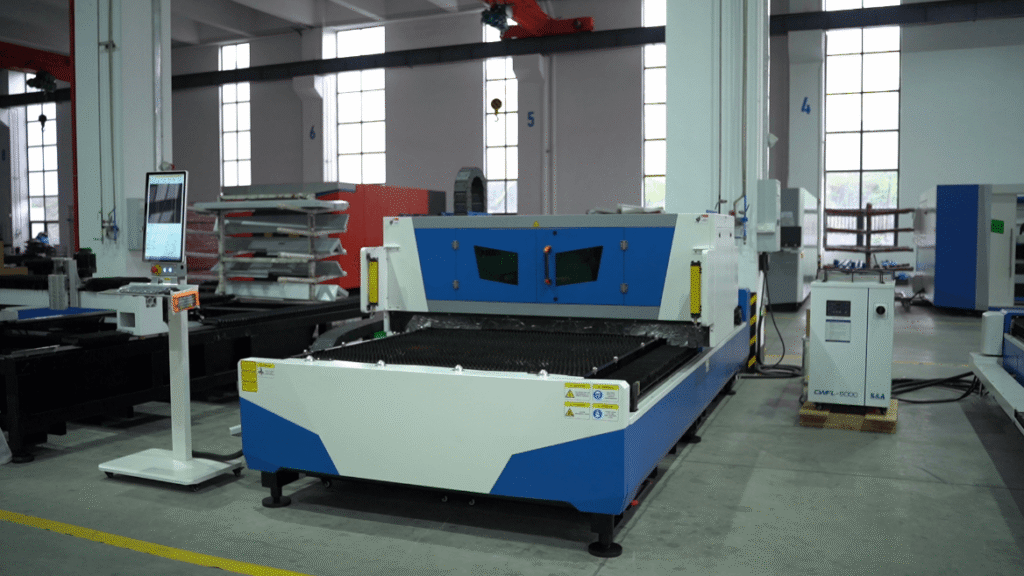
True Laser Fly Cutting is far more than rigid grid array cutting. It happens when the machine tool moves continuously at high speeds in a straight line: the laser head neither decelerates nor lifts, performing instant seamlessly cuts via microsecond (µs) shutter switching controlled by systems like Baison’s CypCut FSCUT.
Unlike traditional cutting with its tedious “pierce-cut-lift-traverse-pierce” pauses, fly cutting completely eliminates the lifting delays caused by frequent mechanical stop-and-starts. Paired with the custom high-performance servo motors and 1.5G acceleration of Baison’s high-speed models like the SH3-H, it pushes processing efficiency to the absolute limit.
According to Baison digital factory test data, this fluid, non-lifting fly cutting mode boosts overall single-sheet cutting speeds during batch processing of dense thin-sheet mesh, slashing actual production cycles by over 50%.
Want to see how a Baison laser machine precisely controls fly-cutting trajectories at a 100m/min traverse speed? Or need a practical efficiency comparison report tailored to your specific sheet hole density? Our engineering team is ready to pull real backend processing waveform data for you.
Different Modes of Laser Cutting
Fiber laser machines are in a different league regarding high-performance cutting of material parts. By using complex algorithms, CAM programs can enhance the cutting process.
It’s all done by the software, so you don’t have to worry about manually configuring the setup. Here are some popular methods of laser cutting.
Common Cutting
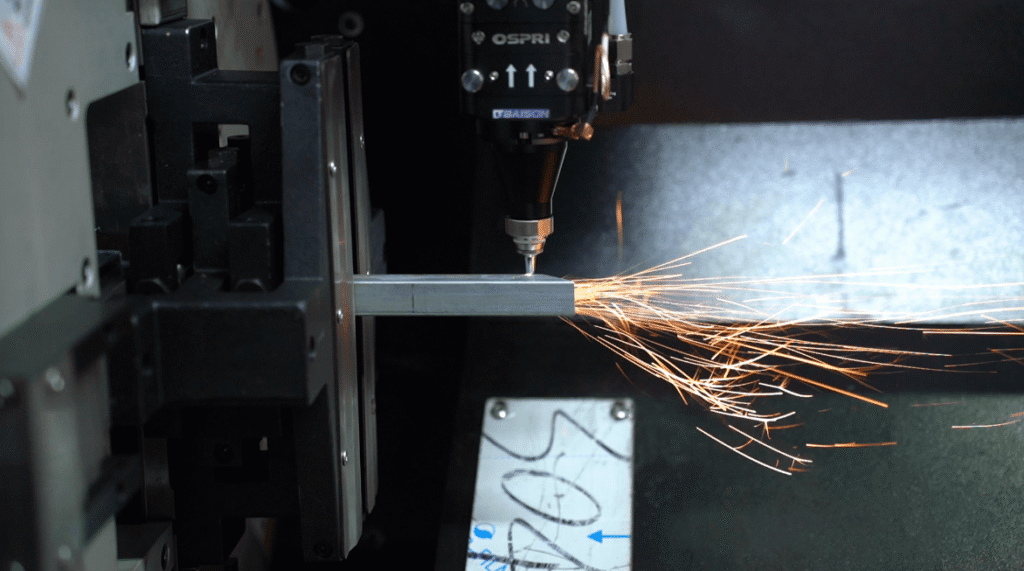
Also known as common line cutting (CLC), it’s a type of approach where laser machines detect common and adjacent edges between multiple shapes. The laser head then starts the process and saves time by achieving multiple cuts.
Fly cutting mode
Fly cutting, also called grid cutting, is perhaps the fastest cutting approach where the laser head divides all the identical shapes into sets of horizontal and vertical lines. The laser turns ON at the cutting edge and turns OFF at empty spaces without moving upwards or changing directions. In short, the whole process is reduced to horizontal cuts and vertical cuts.
All this is done in a fraction of a second, so the cutting time is significantly reduced. This can only be achieved with high-power fiber laser technology and CNC machines. However, this method has some limitations, which are discussed later.
Common Pierce Point
As the name suggests, in this method, the laser beam pierces a single point in the material and starts the cutting process. After cutting the complete shape, the laser head arrives at the same pierced point and starts cutting the next shape from this point. That way, multiple cutting shapes have a single starting point. This allows deeper penetration without wasting energy on piercing every single time. With this, you can optimize the lead-in of the laser beam and reduce overall time.
Normal Cutting
Normal cutting is similar to traditional cutting, which means cutting one shape at a time. This method still holds value when machining complex shapes and thicker material is required.
Advantages of Fly Laser Cutting
Shorter Lead Time
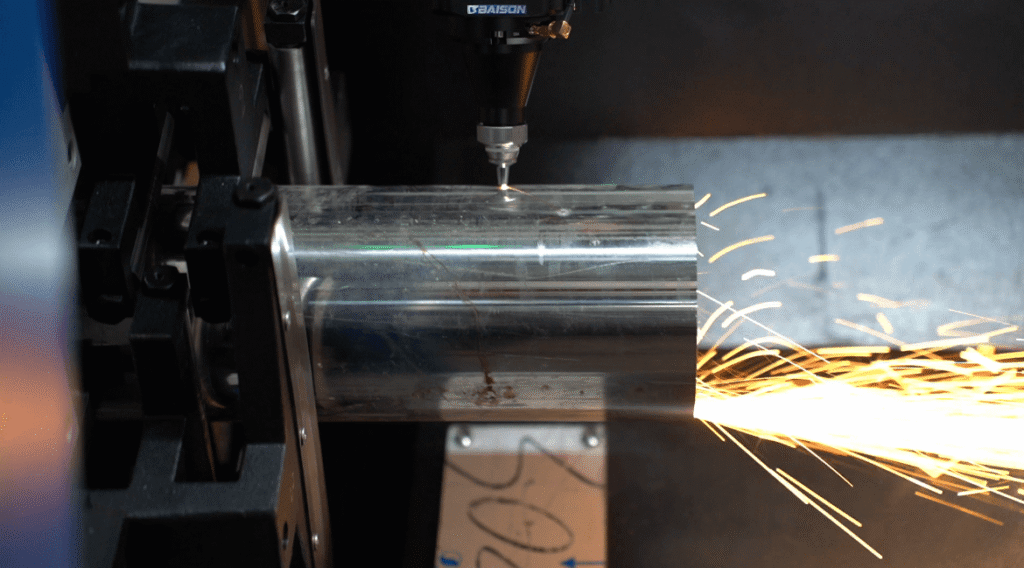
Fly cut exponentially increases the cutting performance. Fly cutting doesn’t increase the cutting speed per se, as it depends on material type, thickness, assist gas, and other factors. But since the software analyses and finds the shortest possible cut paths, the actual speed of the process is increased.
Improved Efficiency
Fly-cutting reduces the lead time and increases overall efficiency. Also, less power is consumed by restricting movements to vertical, horizontal, and diagonal directions.
The rapid switching on and off the machine also introduces some empty movement in the cutting process, but it doesn’t interfere with the cutting performance.
Furthermore, this mode allows the laser head to change directions using arches and segments, which improves the productivity of the process.
Less Slug
Another major benefit of fly cutting is that less slug is generated, leading to lower material wastage. Less slug also means a reduction in kerf at cutting edges. It’s all due to the optimized movement of the laser head.
Longer Machine Life
Since the precisely positioned movement of the laser head is way simpler, there is less wearing of mechanical parts. This lead to lower maintenance and operational cost for the machine. Laser machines are already a big investment on your part; that’s why savings on maintenance will lead to greater benefits for your business.
Greater Profits
Fly-cutting requires very complex logic, and it’s possible that the machine you purchase might not come with a program that can handle such a feature.
These programs are expensive, and many companies tend to avoid purchasing them. That’s a big mistake. Let’s say your annual business revenue is $1 million, and fly-cutting yields only 4% savings which is still a $40k annual profit for your business.
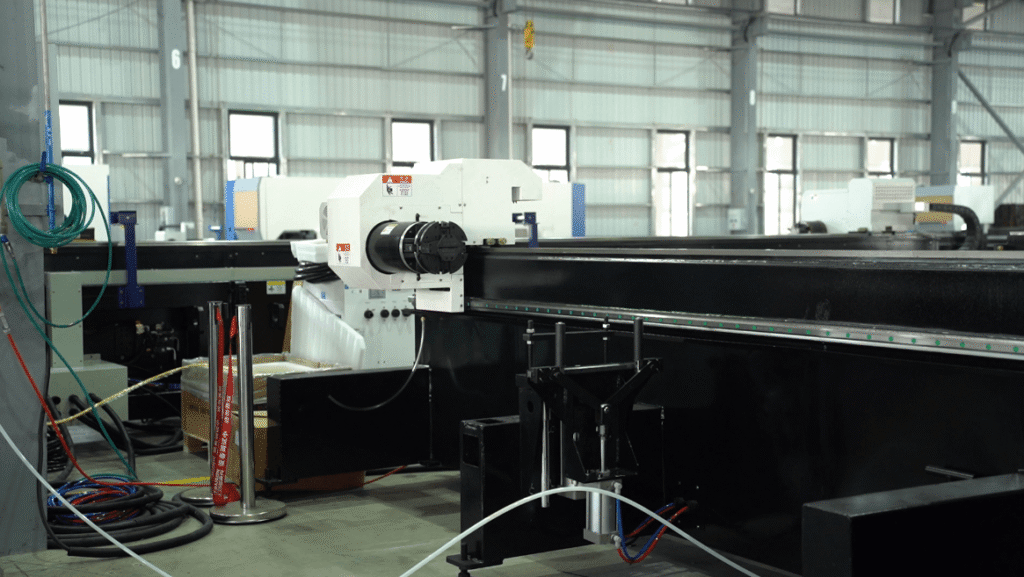
In fiber laser processing, Baison’s Fly Cutting technology directly translates into hardcore profit and efficiency metrics for your workshop:
- Cut Cycle Times by 50%+: Traditional cutting of dense holes requires repetitive “pierce-lift-traverse” actions. Baison machines utilize a 1.5G acceleration to keep the laser head moving at full speed along a straight line without lifting. Processing is completed instantly via microsecond shutter switching, eliminating lifting delays and doubling single-sheet efficiency.
- Slash Component Wear & Consumable Costs: Fly cutting eliminates the mechanical impact of tens of thousands of abrupt stops and starts on motors and guide rails. This smooth motion extends the maintenance cycles of drive components while significantly reducing nozzle overheating and lens damage, building a distinct monthly cost advantage.
- Achieve Micro-Level High-Precision Edges: Powered by 10kW to 40kW ultra-high power, the high-speed, non-lifting path control is exceptionally precise. Cut edges remain burr-free and clean with superior batch consistency.
Calculating your profitability? The Baison team is ready to provide real backend waveform data and efficiency comparison reports to give you a clear, data-driven Return on Investment (ROI) reference.
Limitations of Fly Laser Cutting
Fly cutting is an exceptional feature in modern fiber laser cutting machines, but like all good things, this method also has some limitations. Knowing them will help you make better business decisions.
Material Thickness and Type
The whole approach of fly cutting revolves around the concept that one must achieve maximum cuts in one direction. But this reduces the piercing time needed by laser to achieve a clean cut.
Reflective materials like stainless steel and aluminum resist laser absorption, making fly cutting difficult. Similarly, a material with a thickness of more than 1.5 mm is unsuitable for fly cutting.
If settings are not configured properly, fly cutting will result in poor cutting edges. To counter this, always use fly cutting on thinner materials, usually 1 mm or less. Moreover, reduce the cutting speed so the laser has more time to penetrate.
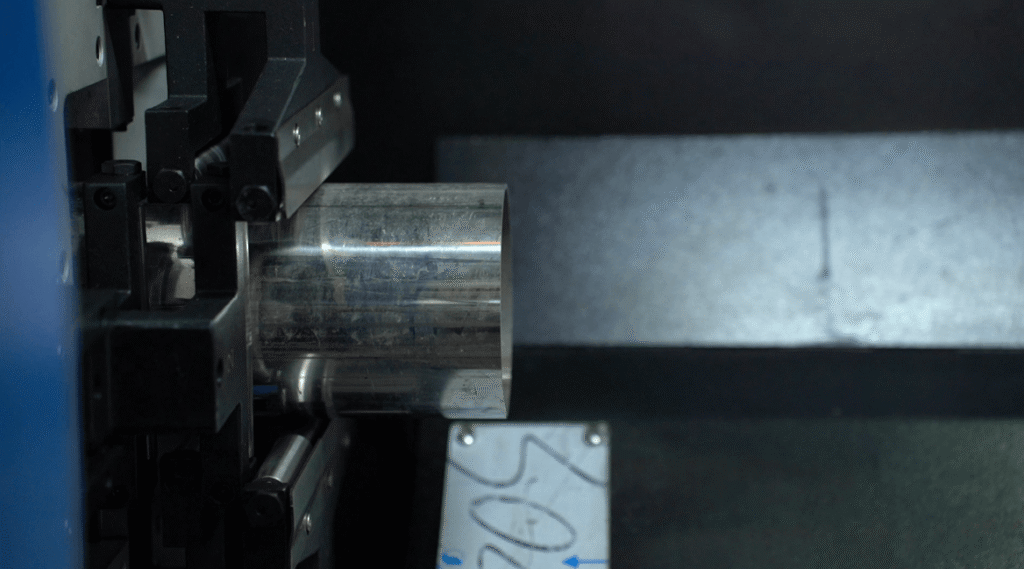
For high-power fiber lasers, the material thickness limit for Fly Cutting has been shattered by 10kW+ technology. Baison’s application center has mastered batch fly cutting on 2mm to 3mm stainless steel and carbon steel sheets, delivering clean, burr-free, high-precision edges by pairing 10kW-40kW power with the microsecond shutter response of the CypCut FSCUT system.
The real limitation lies not in material properties, but in strict sheet flatness requirements. During fly cutting, Baison’s cutting head maintains a high-speed non-lifting traverse at 100m/min. Any warping from internal stress or tilting of small parts poses an extreme risk of laser head collision. Therefore, operators must never run fly cutting on severely uneven or unfastened workpieces.
Evaluating thick sheet or dense mesh fabrication? Baison’s technical team is ready to provide anti-collision follow-up parameters and core fly-cutting waveforms tailored to your material, ensuring the ultimate balance between extreme efficiency and machine safety.
Complex Shapes
The flying cut works best for simpler shapes with sharp edges. This usually includes rectangular holes that are present in the grid. It’s difficult to divide complex shapes into sets of horizontal and vertical cut lines, so it’s not feasible.
Fly laser cutting of complex shapes also cause heat to accumulate at certain edges and affects the material integrity. For complex shapes, it’s best to use other cutting modes for better results.
Risk of Collision
Sometimes improper cutting speed, poor path optimization, and low-pressure flow of assist gas can cause the slug to collide with the laser head. This has serious repercussions. Fly cutting has a serious risk of such collisions. To prevent damage, CAM programs must be capable of performing intelligent path optimization.
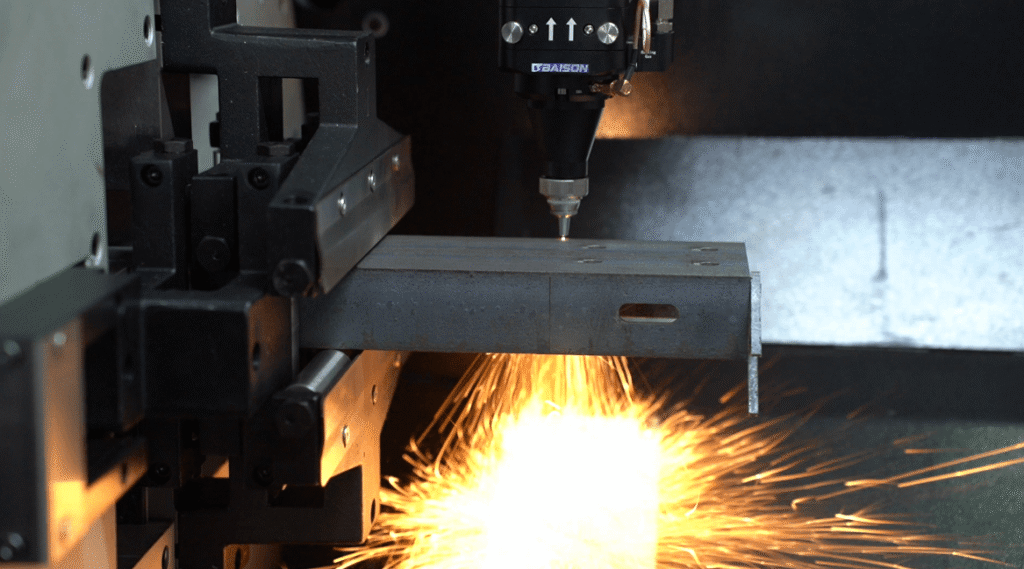
Softwares Used for Fly Laser Cutting
Fly cutting requires complex logic and algorithm, which can be done with high-performance numeric control software. Here are some popular programs available in the market.
Cypcut
CypCut is an all-in-one CAD/CAM software for CNC machines. It can be used to optimize drawings and configure cutting settings. It has a built-in feature for correcting the “dual drive position” error, which increases the precision of the process.
Jet CAM
JetCAM is another option for high-quality laser cutting. It can produce extremely complex G-codes without any error. JetCAM is user-friendly and enables the operator to efficiently generate nesting programs.
Cut Assist v2.0
Cut Assist is an application launched by ANCA Motion. It’s a highly interactive and easy-to-use interface for the machine operator. It can optimize the fly-cutting procedure by configuring laser width, cutting speed, and switching frequency.
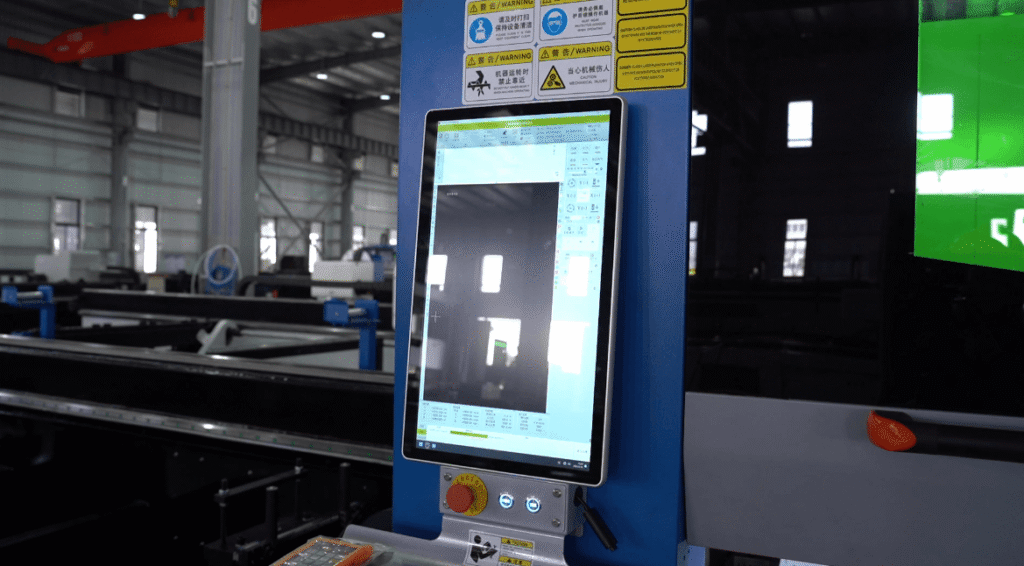
In today’s sheet metal fabrication, CypCut is the absolute mainstream control system. With the CypCut FSCUT bus system on Baison high-speed sheet laser cutters, enabling Fly Cutting is effortless: operators simply select dense patterns in the CAM interface and click “Fly Cutting” to generate an optimized, non-lifting path instantly.
However, stable execution depends on deep software algorithms and precise hardware tuning. Through thousands of thin-sheet tests, Baison’s Digital Application Center recommends keeping the follow-up height strictly between 1.0mm and 1.2mm. This prevents laser head collisions caused by sheet warping while ensuring absolute focus stability during microsecond shutter switching, paired with precise material-specific gas pressure control.
If you are facing bottlenecks like incomplete cuts, heavy dross, or frequent head-scraping when processing mesh or chassis cooling holes, Baison’s technical experts are ready to provide custom CypCut parameter charts and live trajectory demonstrations to unlock your workshop’s full speed.
FAQs
1. Which industries benefit most from fly cutting?
A: Ideal for sheet metal fabrication requiring high-volume, dense, and regular hole patterns, such as chassis ventilation grilles and metal meshes.
2. Does high-power fly cutting support thicker materials?
A: Yes. With 10kW to 40kW ultra-high power, Baison achieves clean, burr-free batch cutting on 2mm to 3mm stainless steel and carbon steel sheets.
3. What is the most common mistake in fly cutting?
A: Running it on uneven or unfastened sheets. Since the laser head moves fast without lifting, any warping or part tilting can easily cause a collision.
4. How can I get the optimal fly cutting parameters?
A: Follow-up height, gas pressure, and speed must match perfectly. Click to contact Baison experts for customized parameters tuned to your materials.
Conclusion
Fiber lasers have distinctive characteristics that yield great results when combined with high-level computation programming. An example of this is “Fly Cutting.”
You can use this option to reduce the lead time and save resources. Be mindful of the limitations discussed above, as they can cause inconvenience. However, fly cutting can be very profitable for any industry with the right implementation.
Baison Laser Provides Best Laser Cutting Solutions in the Industry
Fiber laser machines deliver higher performances and intricate designs in shorter lead times. If you want your business to enjoy similar benefits, we can help you. At Baison Laser, we make premium-quality laser machines for numerous manufacturing industries. These machines are made under the supervision of leading experts in high-tech plants.
Our prices are market competitive, and we provide exceptional after-sales to our esteemed customers. Furthermore, Baison Laser machines are durable and give error-free performances.
Our 24/7 customer service is always there to help if you need assistance. You can also customize the product according to your requirements. So, what are you waiting for? Contact us for a free quote now.