Metal fabricators regularly face costly missteps when purchasing fiber laser equipment. Many workshops over‑invest in excess power, pay a premium for unnecessary features, or overlook ongoing running expenses. The end result: slow ROI, poor cutting consistency, and unplanned production downtime.
This buying guide is built for shop owners, production managers, and process engineers. Skip generic marketing claims and use the reference table below to quickly match machine capability to your real‑world production requirements.
Quick Reference: Material‑Power‑Machine Selection Table
Note: Values below reflect stable mass-production parameters, not lab sample cutting limits. A 1500W unit may theoretically cut 12mm carbon steel, yet cannot sustain clean, burr-free output for continuous batch jobs.
| Material & Thickness | Recommended Power | Auxiliary Gas | Typical Stable Speed | Suggested Machine Type |
| 0.5–3 mm Stainless Steel / Aluminum | 1.5 kW–3 kW | Nitrogen / Compressed Air | 15–35 m/min | Single-table open-type laser cutter |
| 0.5–3 mm Carbon Steel | 1.5 kW–3 kW | Oxygen | 15–35 m/min | Single-table open-type laser cutter |
| 4–12 mm Medium-thickness Steel | 6 kW–12 kW | Oxygen (CS) / Nitrogen (SS) | 4–12 m/min | Fully-enclosed shuttle-table cutter |
| 16–30+ mm Heavy-gauge Steel | 12 kW–30 kW+ | Oxygen | 1.2–5 m/min | Large-format heavy-duty industrial cutter |
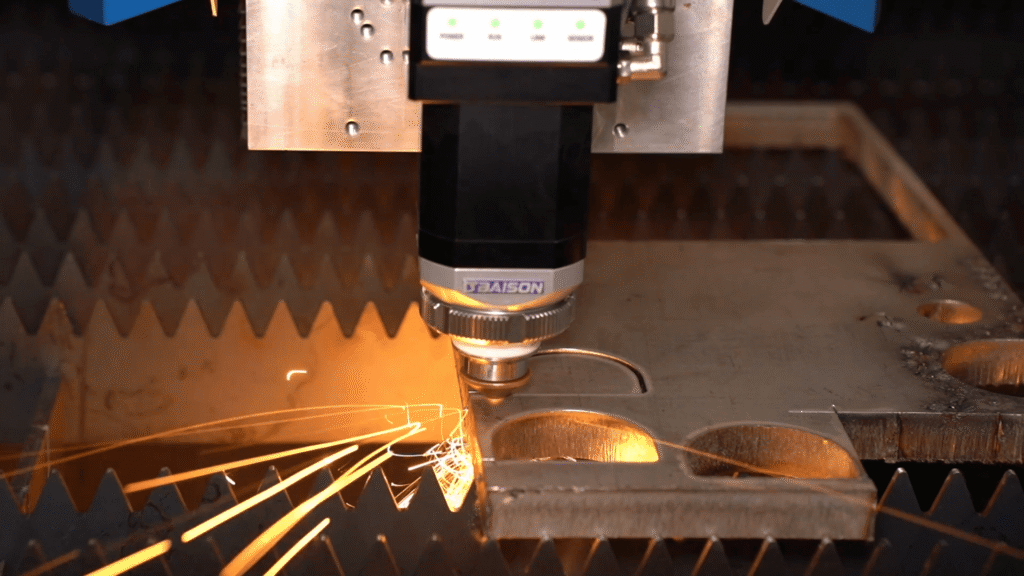
Laser Power Selection: Match Power To Your Actual Production
Power is not everything, yet improper power specification is the #1 buying mistake. Many buyers confuse maximum sample cutting capacity with reliable daily batch processing.
- 1.5 kW–3 kW: Best suited for thin-gauge metal, sign production, and small-batch custom fabrication. Offers low hourly power draw and consumable cost. Not recommended if you regularly process material above 8 mm for mass production.
- 6 kW–12 kW: The workhorse industrial range. Handles medium carbon steel, stainless steel, and reflective metals including aluminum and copper. Balances speed, capability, and total cost of ownership for most mid-size fabricators.
- 12 kW–30 kW+ Heavy power: Built for heavy-steel construction and machinery manufacturing. Delivers high throughput on thick plate, yet brings substantially higher electricity, gas, and component replacement costs. Only invest if thick-plate work represents your core order stream.
If you are still unsure about your specific material mix, check out our detailed guide on determining laser power requirements for metal fabrication.
Machine Type Comparison: Pros, Cons & Who Should Buy Each
Each machine design targets specific output volumes. No single model fits every workshop.
1. Single-Table Open-Type Laser Cutter
- Pros: Lower upfront capital cost, simple operation, minimal maintenance burden.
- Cons: Manual plate loading stops production; open frame generates more fumes and noise.
- Best for: Small-volume shops, custom one-off jobs, limited investment budget.
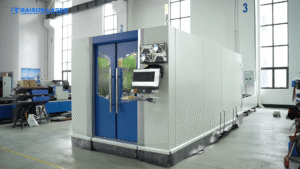
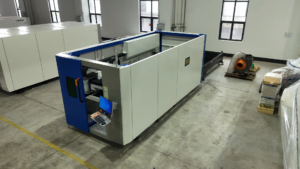
2. Fully-Enclosed Shuttle-Table Laser Cutter
- Pros: Dual-table exchange allows plate loading while cutting continues (10–15s exchange speed). Closed frame improves workplace safety and dust control.
- Cons: Larger footprint, higher purchase price versus single-table variants.
- Best for: Mid-volume workshops aiming to reduce idle machine time.
3. Large-Format Heavy-Duty Laser Cutter
- Pros: Supports oversized sheets and ultra-thick plate, reducing reliance on external subcontract processing.
- Cons: Large floor space requirement, higher installation and foundation requirements.
- Best for: Heavy-structure factories processing large-size metal parts.
4. Dedicated Tube Laser Cutting Machine
- Pros: Optimized for round, square, and profile pipe; eliminates secondary manual processing.
- Cons: Not optimized for flat sheet production.
- Best for: Companies whose core business is structural pipe, handrails, or tubular component manufacturing.
When weighing sheet-only, tube-only, or combination units, read our analysis to understand the differences between sheet laser and tube laser machines.
Critical Hardware Deep-Dive: Configuration Pitfalls Engineers Watch
Many buyers compare only laser power and price. Component quality determines long-term precision, failure frequency, and how much accuracy is retained after years of heavy use.
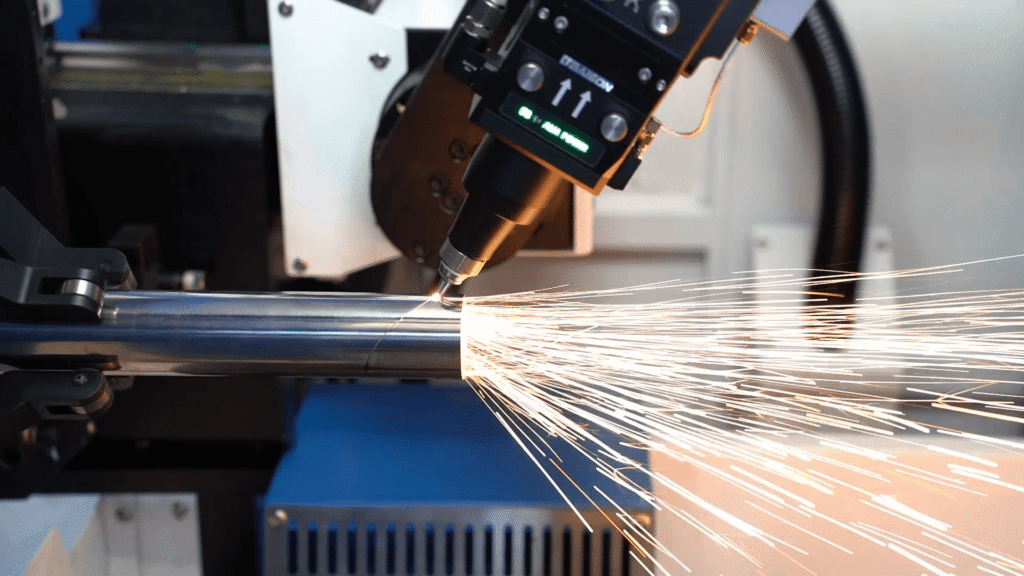
💡 Pro Tip (Counter-Intuitive Buyer’s Insight):
Higher laser power does NOT equal higher precision. Precision is defined by rack-and-pinion tolerance, servo drive response, and bed frame heat treatment. Over-specifying power on a lightweight frame actually decreases cutting precision at high speeds due to frame vibration.
Laser Source (IPG vs. Raycus / MAX)
Raycus, MAX, and IPG are widely adopted mainstream options for industrial fiber lasers.
- IPG: Proven stability on highly reflective materials such as copper and brass, higher unit price.
- Raycus / MAX: Competitive total-cost-of-ownership for carbon steel and stainless-steel dominant jobs. Modern generations include built-in anti-reflection protection to reduce risk of back-reflection damage during aluminum or brass cutting.
- Critical Warning: Do not ignore after-sales parts availability for your selected laser source. Cheap unknown sources often lack accessible spare-part support overseas.
Cutting Head: Auto-Focus vs Manual-Focus
Auto-focus cutting heads adjust stand-off height dynamically during jobs, delivering more consistent edge quality when cutting mixed-thickness nesting programs. Manual-focus heads require operator adjustment; they work fine for single-thickness repetitive jobs but raise defect risk for complex mixed-material nests.
Machine Bed & Welded Frame
A properly annealed heavy welded bed relieves internal stress during manufacturing. Without stress-relief annealing, continuous high-load operation gradually introduces frame deformation. Over multiple years, this leads to drifting positioning accuracy and inconsistent cutting dimensions, even with top-tier laser sources.
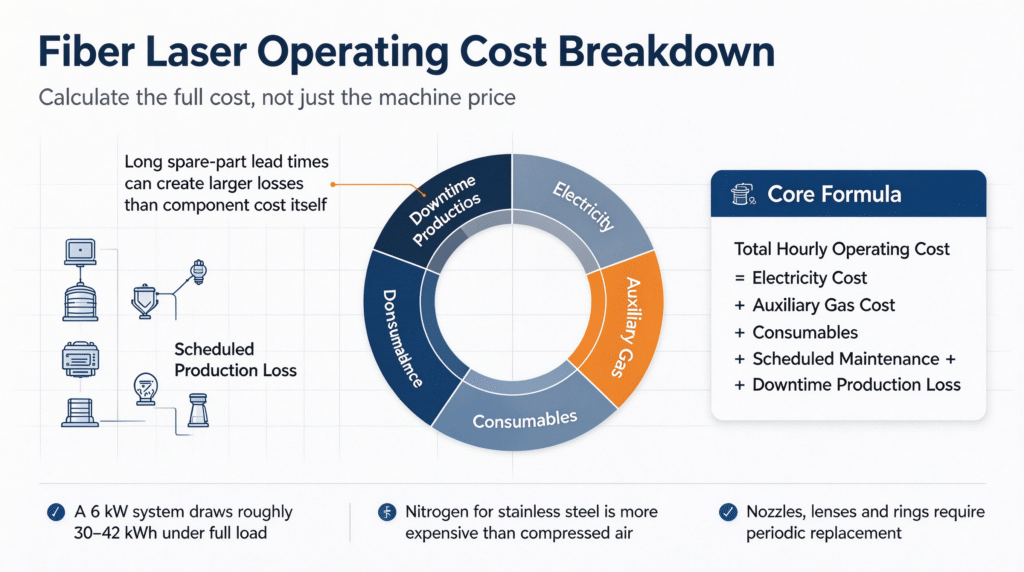
True Operating Cost: Calculate Your Real Hourly Expense
Purchase price represents only initial capital outlay. Running costs accumulate across the machine lifecycle.
🧮 Core Hourly Operating Cost Formula:
Total Hourly Operating Cost = Electricity Cost + Auxiliary Gas Cost + Consumables + Scheduled Maintenance + Downtime Production Loss
Reference Real-World Ranges:
- Electricity: A 6 kW laser system (including chiller, drives, and auxiliary equipment) draws roughly 30–42 kWh under full-load operation.
- Gas: Nitrogen for high-quality stainless-steel cutting creates far higher running cost compared with oxygen for carbon-steel or compressed-air processing. Many fabricators underestimate monthly gas expenditure.
- Consumables: Nozzles, protective lenses, and ceramic rings require periodic scheduled replacement.
- Downtime Loss: Unplanned breakdowns create indirect costs from delayed customer orders—often far exceeding spare-part hardware fees.
If you want to explore complete market price bands for complete laser cutting systems, review our article covering fiber laser cutting machine market pricing for 2026.
Practical ROI Calculation Framework for Your Workshop
Do not rely on vendor-provided ROI claims. Work through these points for your own business:
- Current outsourced cutting subcontract expense per month.
- Labor cost saved by removing secondary grinding and deburring work.
- Expected monthly production hours of the laser.
- Scrap-rate reduction brought by improved cutting quality.
- Annual maintenance and running-cost expenditure.
💡 Pro Tip:
ROI is positive only when total monthly savings outweigh monthly equipment amortisation plus ongoing operating expense. Buying higher-power equipment you cannot fully utilise will extend your payback period significantly.
Most Common Costly Buying Mistakes
- Specifying excessive laser power you will rarely use: capital is locked up with no corresponding production gain.
- Judging machine capability purely by quoted maximum sample cutting thickness without verifying mass-production performance data.
- Overpaying for premium features your job list never requires.
- Neglecting spare-part availability and local after-sales support for your region. Low-price offers become expensive when components have multi-month lead-times.
- Underestimating floor space, power supply, and ventilation requirements for high-power units.
Frequently Asked Questions (FAQ)
Q: Can a 6 kW fiber laser cut 25 mm carbon steel?
A: A 6 kW unit can cut 25 mm carbon steel as a lab sample, but cannot maintain stable, burr-free batch production. For continuous 25 mm carbon-steel processing, 12 kW or higher power is strongly recommended.
Q: How much compressed air pressure is needed for fiber laser cutting?
A: High-pressure air cutting for stainless steel typically requires 1.6–2.5 MPa (16–25 bar) with strict oil-water filtration. Running air cutting below 1.2 MPa will cause severe bottom slag. Oxygen cutting for thick carbon steel runs at much lower pressure, typically around 0.05–0.3 MPa (0.5–3 bar).
Note: This refers to nozzle working pressure, not the inlet supply pressure from your gas tank.
Q: Is an auto-focus cutting head always worth the extra cost?
A: Auto-focus brings clear ROI if you frequently run mixed-thickness nested jobs. If you mostly process single-thickness material in large batches, a high-quality manual-focus head can deliver equal results without extra premium.
Q: What is the biggest hidden cost after machine purchase?
A:Unplanned downtime is frequently overlooked. Long spare-part lead times from overseas suppliers can halt production for weeks, creating far larger losses than spare-part hardware cost itself. Local after-sales support should weigh heavily in vendor selection.
Matching Solutions For Different-Scale Fabricators
After clarifying your material mix, plate thickness range, daily output target, and budget, you can narrow equipment options.
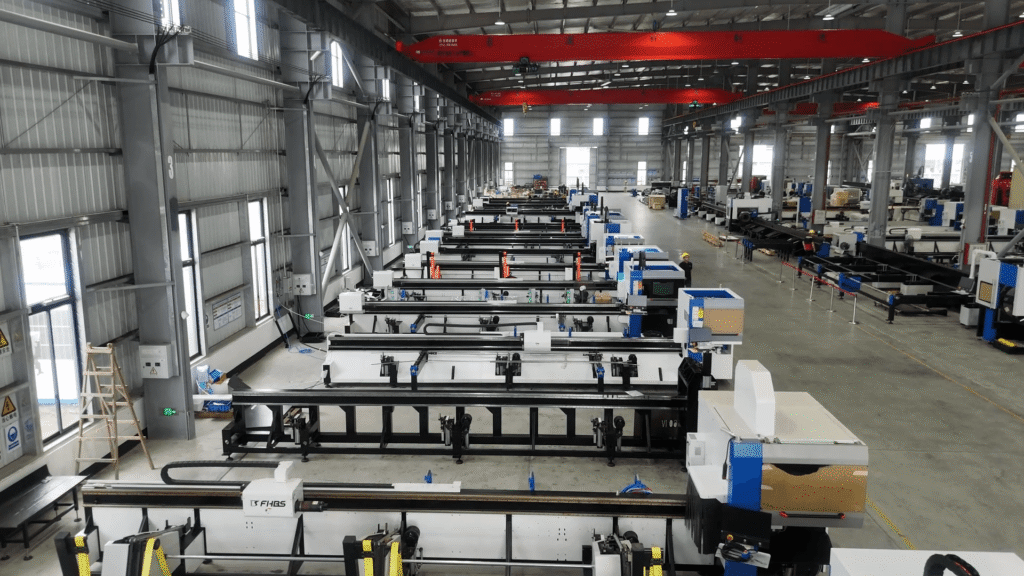
When comparing vendors, look for manufacturers capable of providing real cutting samples matching your exact material set, instead of generic showroom demonstrations. Suppliers like Baison Laser build machine configurations tailored for small custom shops, mid-volume fabricators, and heavy-industry production lines.
Call-to-Action (Conversion Hooks)
📥 Need practical cutting-speed and gas-consumption reference charts for 1.5 kW–30 kW fiber lasers?
👉 Download Free 2026 Laser Cutting Parameter Sheet
Still uncertain whether 6 kW or 12 kW better fits your typical stainless-steel and carbon-steel orders? Submit your material thickness and monthly output profile for a free custom ROI analysis from our laser application engineers.
👉 Speak With Application Engineer
Conclusion
Successful fiber laser procurement is not about buying the most powerful machine available. It means aligning laser power, mechanical configuration, and budget to your real order profile. Avoid marketing-driven feature-creep, calculate both upfront investment and long-term running expense, and verify component specifications before final purchasing decisions.