Home consumption has always emphasized personalization and quality. However, the modern trend also focuses on light luxury, minimalism, and industrial styles. A precise integration of metal elements can create a premium and design-oriented feel in furniture.
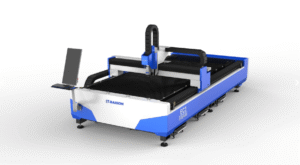
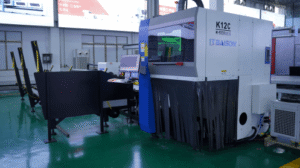
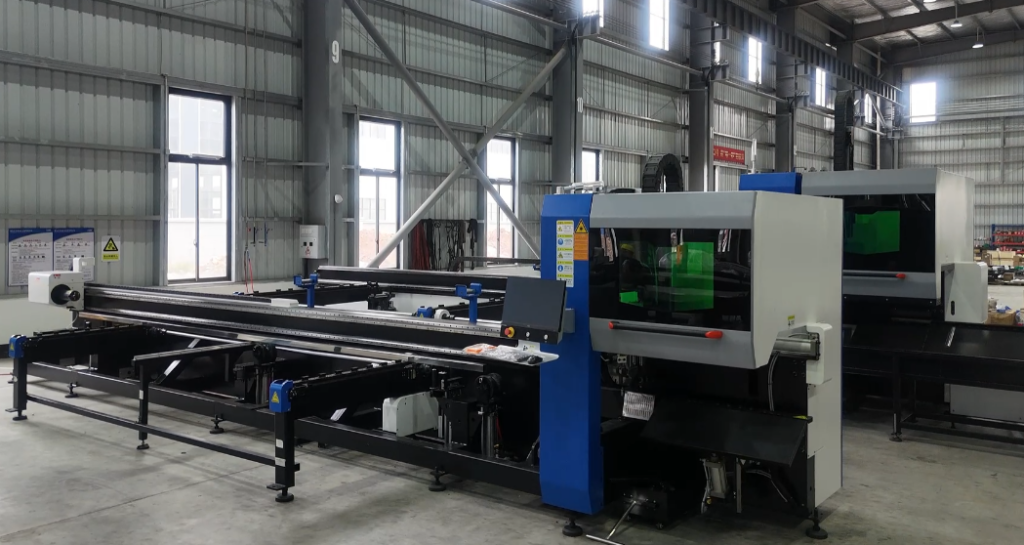
Unfortunately, the industry has to endure several production-related technical challenges. Such issues kept restricting improvements in production efficiency and product quality.Baison Laser, with deep expertise in laser applications, is capable of identifying the pain points. It has launched the K12C, a high-speed, small-tube laser cutting machine, exclusively to upgrade the furniture industry as a one-stop intelligent solution.
Why Choose the K12C Tube Laser Cutting Machine for Furniture Manufacturing?
Delivering personalization, premium quality, and fast turnarounds feels a lot of pressure. The problem worsens with metal-forward styles for light luxury, minimalism, and industrial design. Manufacturers have to address poor workflows, inconsistent precision, thin-wall tube deformation, and rising costs.
Those pain points slow the completion, inflate budgets, and eventually erode brand reputation. The K12C tube laser cutter specifically meets the realities, turning bottlenecks into competitive advantages.
Production Inefficiency Due to Fragmented Process
Traditional tube processing can involve 8 – 9 dispersed steps. Each phase adds waiting time, errors, and overhead. Small-batch, multi-spec orders suffer most because frequent changeovers compound delays.Meanwhile, repeated adjustments increase the risk of errors. Up to 30% – 40% of production time is lost to handling and repositioning in traditional tube processing.
K12C Advantages
- Integrated Multi-Function Processing: Cuts, opens holes, and hollows in a single operation to make it one continuous flow.
- High-Speed Motion and Acceleration: Up to 100 m/min movement with lightning-fast acceleration and chuck speeds designed for rapid cycles.
- Automation-Ready Handling: Semi-automatic loading and follow-up unloading racks support multiple machining at once.
Low Precision + Difficult Welding
Manual, multi-machine workflows accumulate tolerancing errors. It leads to dimensional deviation, poor joints, and burrs. The slow welding inducesfit-up issues andhampers aesthetics on visible frames.Such extra measures, being avoidable, slow down the production and even raise the costs. Not to mention, up to 25% – 30% of welding defects in furniture frames originate from poor tube preparation.
K12C Advantages
- Automatic Centering and Compensation: Repeat positioning accuracy of ±0.03 mm ensures consistent parts across batches.
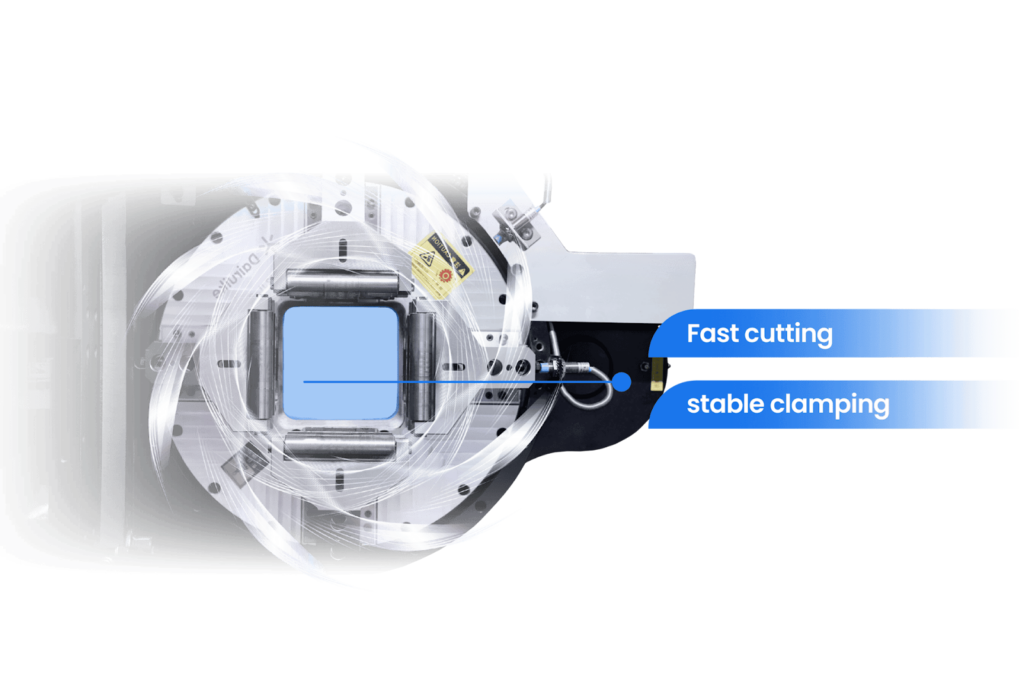
- Stable Clamping Architecture: Dual-row roller clamping prevents tube shake, yielding tight tolerances and smooth kerfs.
- Direct-to-Weld Edges: Burr-free cuts remove secondary finishing, accelerating fabrication and improving weld quality.
Thin-Walled Tube Deformation and Complex Graphic Processing
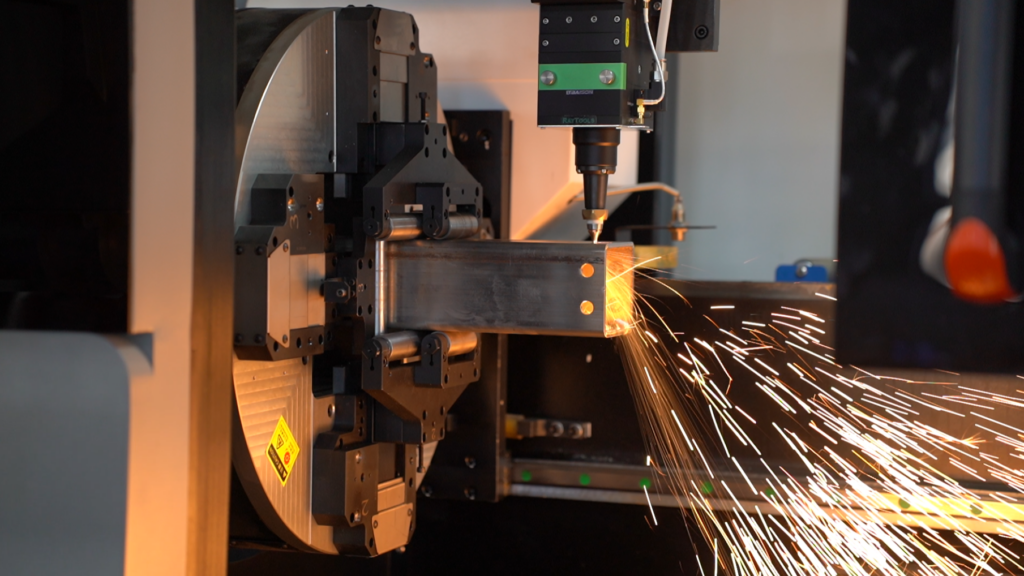
Contact-based methods (sawing, punching, drilling) can bend or dent thin-wall tubes. Long tubes sag under poor rigidity; special shapes (decorative patterns) require costly molds and long lead times.Overall, the difficulty presents a massive setback even for high-end manufacturers. Over 40% of small-batch furniture orders are delayed or canceled due to the inability to handle complex designs.
K12C Advantage
- Non-Contact Laser Cutting: Eliminates mechanical stress and surface scratching, protecting delicate thin-wall profiles.
- Full-Stroke Claw Fixtures: Large clamping range without changing claws supports small-batch, multi-spec runs with rapid changeovers.
- Variable Diameter Wheel Support: Stabilizes long tubes, reduces whipping and sagging, and preserves dimensional accuracy.
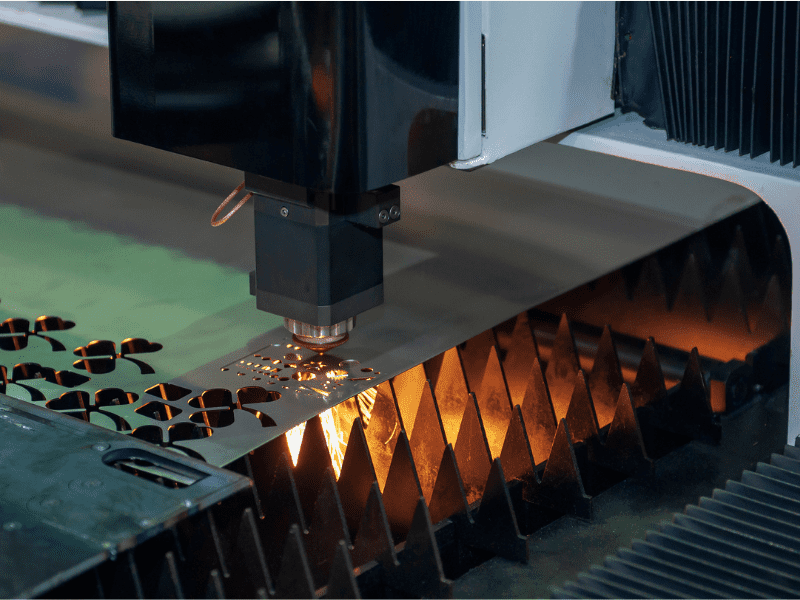
- Intelligent Graphics Processing: One-click callable/modifiable techniques handle complex contours, special shapes, and hollow patterns.
High Raw Material + Labor Costs
Furniture makers face two major cost drivers in traditional tube processing. Conventional cutting leaves long tail materials that also generate significant scrap.Long tail material and scrap inflate the raw material spend. Meanwhile, skilled labor for each process step raises overall operating costs. As wages and metal prices fluctuate, margins become volatile.
K12C Advantages
- Chuck Over-Position Cutting: Minimum tail material down to 65 mm maximizes tube utilization and reduces scrap.
- Intelligent, Easy-to-Learn System: Short training curves broaden the operator pool and lower onboarding costs.
- Multi-Machine Oversight: Batch loading via chain rolling racks and follow-up unloading enables multiple machines to cut labor hours.
Core Intelligent Features of K12C for Furniture Manufacturing
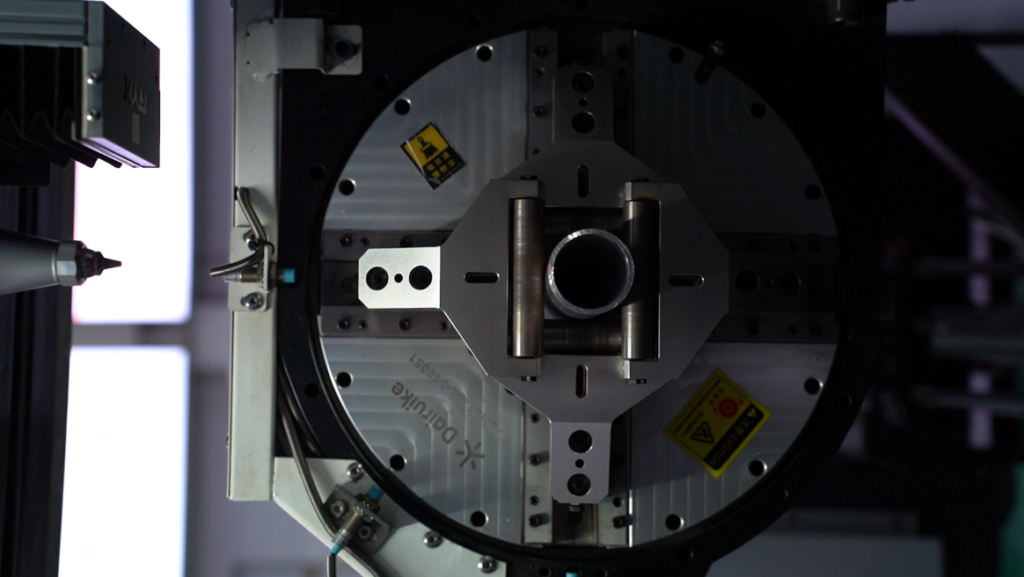
- Full-Stroke Precision Square-Hole Chucks
Those provide accurate clamping for any tubes (round, square, channel, and angle steel) on K12C. Consistent grips reduce vibration and misalignment. It means fewer reworks and tighter tolerances.
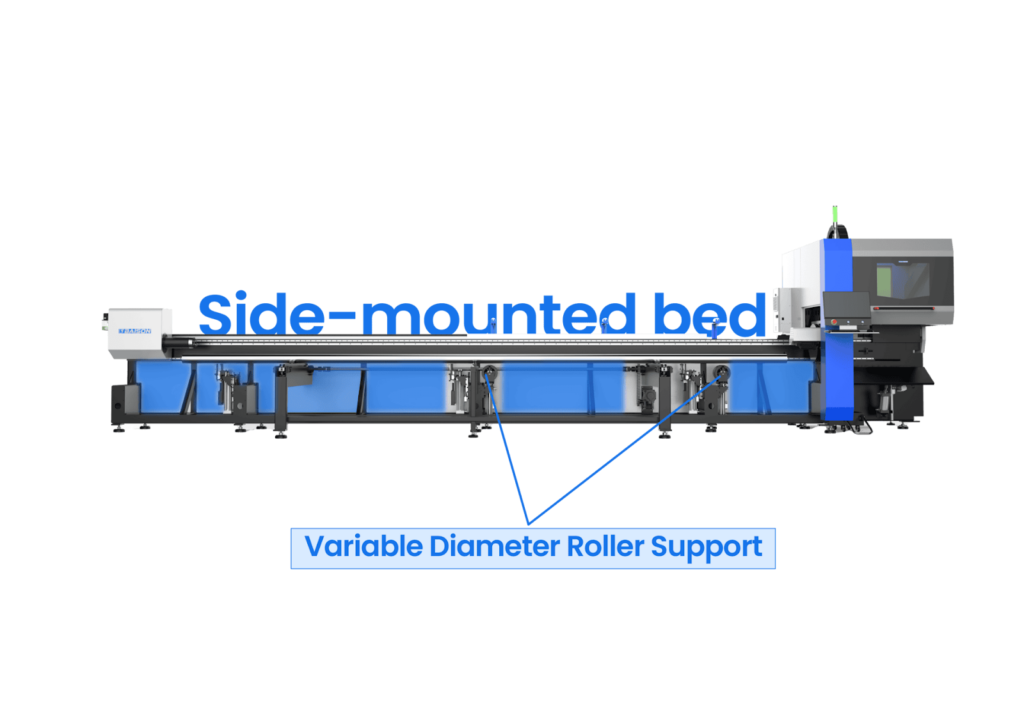
- Triangular Structure Side-Hanging Machine Bed
The structural design of K12C enables machine stability, especially during high-speed ops (up to 100 m/min). Stability translates into repeatable precision, matching every component to design specifications.
- Semi-Automatic Loading and Follow-Up Unloading Racks
An uninterrupted and steady material flow lets one operator manage multiple K12C machines simultaneously. It reduces dependency on manual labor, which is especially beneficial in facing rising labor costs or shortages.
- ±45° Bevel Cutting with Multi-Profile Compatibility
Supports complex joint geometries such as V-, X-, and K-seams in premium frames and supports. Bevel cutting reduces the need for secondary machining in K12C to save time with cleaner welds.
The K12C handles round tubes (φ10–120 mm), square tubes (10×10–120×120 mm), and channel/angle steel with nesting software. And designers can experiment with creative geometries.
Let’s take a look at some of the most persistent problems plaguing the modern furniture industry. Also, check out how K12C alone can resolve those burdens effectively.
K12C Tube Laser Cutter Solutions for Furniture Industry Pain Points
Improve Production Efficiency by 50% with Integrated Processing
- Integrated Multi-Function Processing
The K12C consolidates multiple steps like cutting, hole opening, hollowing, and more into a single operation. It eliminates separate machines or manual transfers to reduce the cycle times dramatically.
Manufacturers report up to 50% faster outcomes when switching to integrated laser systems. Factories can move from prototype to production without retooling, accelerating product launches.
- Square Chuck Structure for Versatility
The full-stroke square chuck design expands the cutting range. It can handle –
- Square tubes (10×10–120×120 mm),
- Round tubes (φ10–120 mm), and even
- Special-shaped tubes (channel steel, angle steel with nesting software).
Such versatility lets manufacturers process diverse tube profiles without changing the fixtures. And it supports creative furniture designs like modular shelving, angular frames, and hybrid structures.
3. Ultra-Fast Cutting Performance
1.5G lightning acceleration and a chuck speed of 180 r/min deliver a cutting experience that is fast and precise. Efficiency gets doubled compared to traditional tube cutting setups.
It further enables high-volume production without sacrificing accuracy. A production requiring 8 hours to process a batch of chair frames can complete the same workload in under 4 hours with the K12C.
Achieve Aerospace-Grade Precision for Welding
- Automatic Centering and Compensation
The K12C supports automatic centering and automatic compensation to confront tube errors. Tubes, even with the slightest dimensional variations, get processed accurately.
The laser cutter enables repeat positioning accuracy of ±0.03 mm. Therefore, every segment of each part remains consistent to reduce potential assembling mismatches.
Such exaggerated precision is comparable to aerospace-grade tolerances, far exceeding traditional standards. Even complex modular furniture systems can be assembled without manual adjustments.
- Dual-Row Roller Clamping for Stability
The dual-row roller clamping system in the chuck prevents tube shaking during high-speed cutting. Stable clamping initiates smoother cuts, tighter tolerances, and reduced vibration-induced errors.
Appropriate clamping is particularly needed for thin-walled tubes used in minimalist furniture. Even the slightest instability can lead to significant deformation or massively uneven cuts.
Minimalist steel frames dominate the European furniture markets. Stable clamping is mandatory to hold structural integrity and aesthetic appeal for the manufacturers.
- Smooth Cuts Without Burrs
The K12C always delivers a clean (zero burrs) cut to eliminate grinding or secondary finishing. Parts can undergo direct welding as well. It should accelerate production cycles with improved joint quality.
Such measures save labor, enhance weld strength, and provide better fusion for welding. Switching to burr-free laser cutting can reduce the post-processing time by over 40% to enable faster delivery.
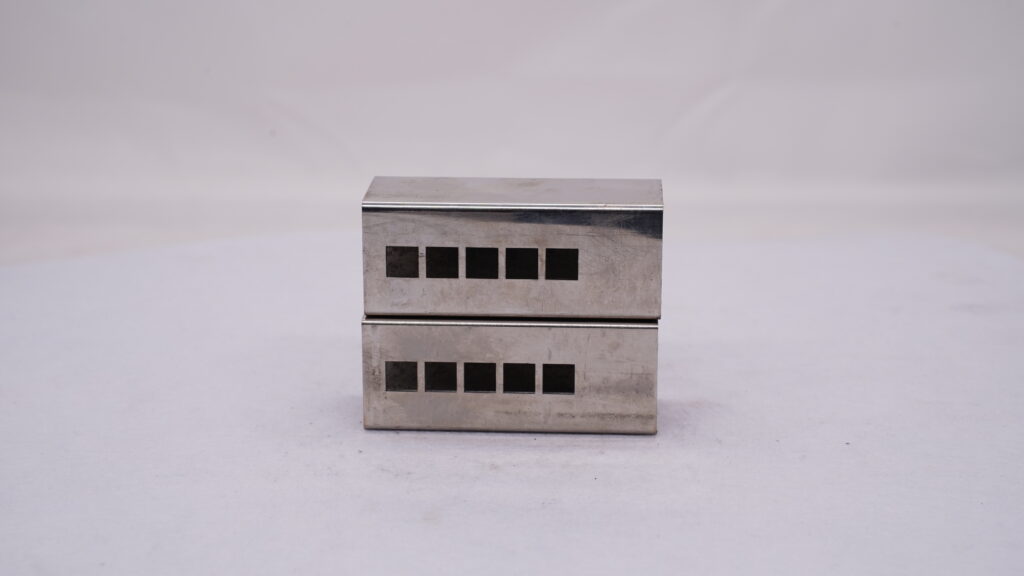
Non-Contact Cutting for Thin-Walled Tubes (No Deformation)
- Non-Contact Laser Cutting with Stable Chuck Clamping
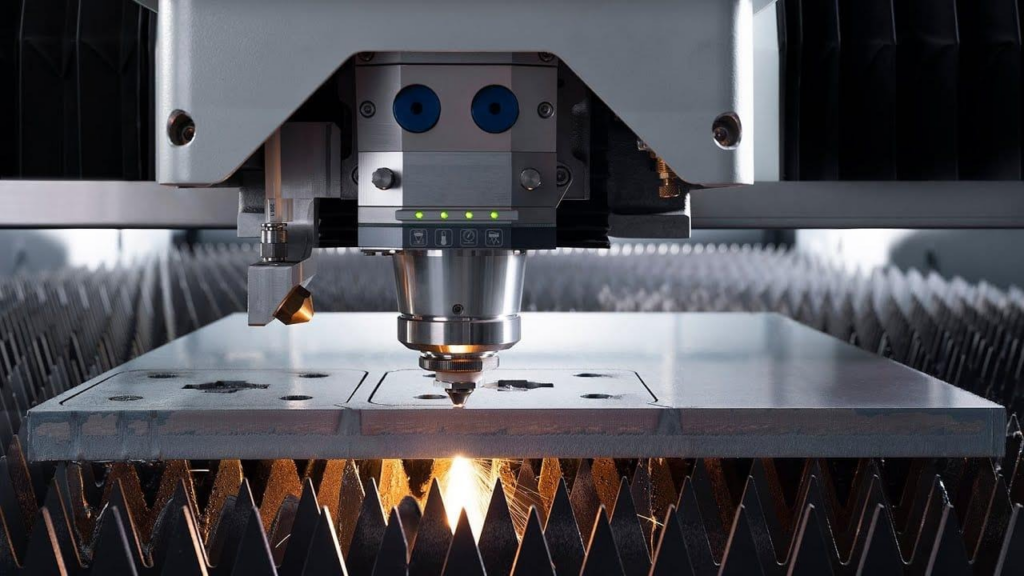
The K12C’s non-contact laser cutting immediately eliminates the mechanical stress on the tube surface. Its stable chuck clamping enables secure positioning without manual intervention.
It even has delicate, thin-walled tubes to get processed with consistent precision and clean edges. Therefore, no more scratches or deformation.
Non-contact cutting is especially valuable for high-end furniture where visible surfaces must remain flawless. With K12C, there are no dents, scratches, or grinding marks.
- Standard Claw Fixtures with Full-Stroke Claws
The machine’s full-stroke claws provide a large clamping range, accommodating tubes of φ10–120 mm. That too, without the need to replace claws frequently.
Such versatility perfectly supports multi-specification and small-batch production. Manufacturers can reduce the setup time and tooling costs.
Many manufacturers produce diverse furniture SKUs. And this peculiar feature grants rapid adaptation to design changes and customization demands.
- Variable Diameter Wheel Auxiliary Support
Long tubes often sag due to poor rigidity, affecting cut precision. The K12C’s variable-diameter wheel auxiliary support stabilizes tubes, reducing whipping and sagging.
It effectively ensures dimensional accuracy across the entire length. Ultimately, the steady variation is critical for furniture frames, shelving systems, and modular structures.
Auxiliary support can reduce potential tube sagging errors by over 35%. It significantly improves the assembly fit and reduces rework in export-bound modular furniture.
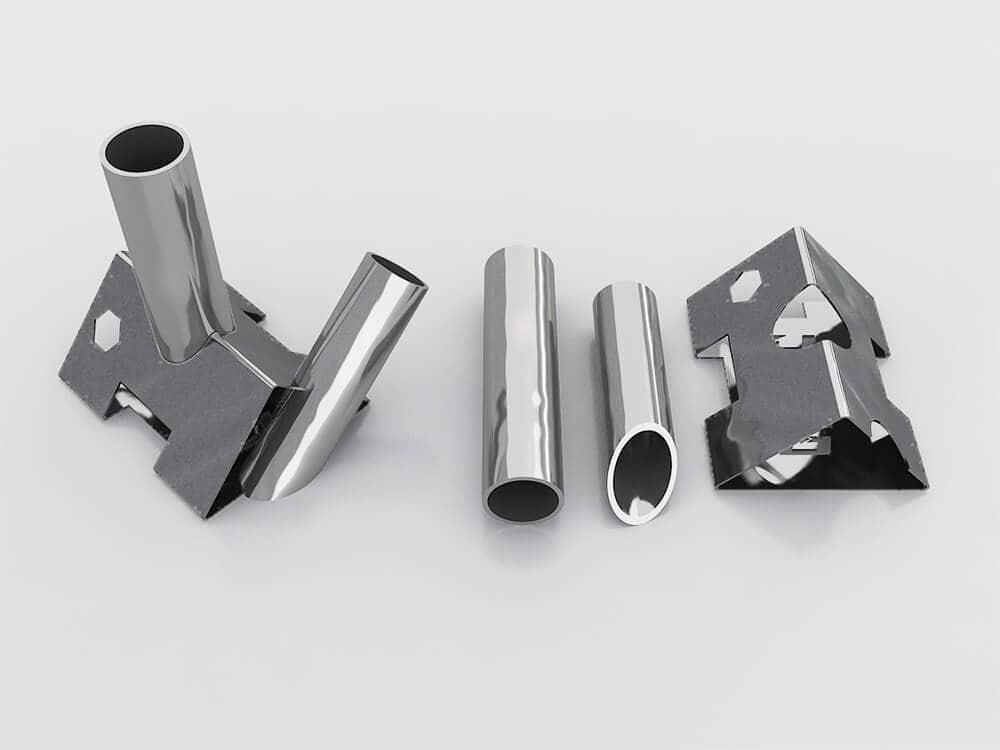
Process Complex Graphics with Zero Mold Cost
- Intelligent Operating System
The K12C’s intelligent operating system integrates a library of rich processing techniques. Operators can call or modify these techniques with a single click for rapid adaptation to new design requirements.
The adjustments instantly eliminate the need for making costly molds. Producing small-batch and/or personalized production becomes economically viable.
Manufacturers are trying to leverage pre-programmed cutting techniques. Even the ones in K12C can reduce setup times by up to 60%. It should make the transition from design to finished product smooth.
- Support for Diverse Graphic Parts
The system supports processing of special-shaped holes, contours, and hollow patterns from digital files. Furniture makers can experiment with creative geometries to expand their portfolio.
From lattice-style shelving to decorative perforations and artistic hollow frames, production becomes easy without additional tooling. Precision laser cutting ensures clean edges and repeatable accuracy.
Customized furniture accounts for nearly 30% of the European market. And the ability to process diverse graphics directly from CAD files provides a competitive advantage from the start.
- Flexibility for Personalization and Customization
The intelligent system also makes personalized designs scalable, even in small batches. Makers respond quickly to consumer demands for unique furniture pieces (custom panels or artistic frames).
Such flexibility aligns with the ongoing global trends. In fact, the mass customization market is projected to grow at 15% annually, driven by consumer demand for individuality in home products.
A furniture company may decide to implement the K12C for custom hollow-patterned parts for clients. Zero mold costs can reduce the production expenses by 25% for the premium + personalized designs.
Reduce Material & Labor Costs by 5%-25%
- Chuck Over-Position Cutting for Maximum Material Utilization
Extremely short tail material cutting by K12C takes a minimum tail length of 65 mm. It maximizes tube utilization with a notable reduction in scrap and raw material procurement costs.
A production line can consider reducing tail waste from 150mm to 65mm while processing 10,000 meters of tubing per month. It can save about 5% – 7% of the material costs in high-volume ops.
- Intelligent Operating System – Easy to Learn, Easy to Use
The K12C’s intelligent operating system simplifies programming and operation. Even beginners can master it quickly, reducing reliance on highly skilled technicians.
It democratizes operations, lowering training costs while expanding the labor pool. You can easily scale the entire production.
- Multi-Machine Operation with Automated Loading/Unloading
The K12C allows one operator to manage multiple machines with its standard chain rolling loading rack and follow-up unloading rack.
Batch loading reduces manual handling, freeing up the workforce and saving time. Factories adopting automated loading/unloading can achieve labor savings.
K12C Tube Laser Cutting Machine Specs & FAQs (Q&A)
- How does the K12C improve productivity?
K12C features a maximum movement speed of 100 m/min and a chuck rotation speed of 140 r/min. Such speed rates reduce the cycle time by up to 2x higher output.
- What tube weight capacity does the K12C support?
The K12C can process tubes weighing up to 80 kg per piece while ensuring stability and precision. The rated capacity is ideal for industrial-style furniture frames and shelving systems.
- How reliable is the K12C in long-term production?
The side-hanging machine bed with a triangular structure enhances stability and durability. Its built-in design minimizes vibration for consistent precision over extended runs.
- How does the K12C reduce operational costs?
Its short-tail cutting (minimum 65 mm) maximizes material utilization. An easy-to-learn operation and multi-machine management reduce material + labor costs.
Conclusion
Summed up, the K12C is not just another random laser cutter to meet your product specs. Instead, it’s an intelligent platform to offer optimal precision cuts to cope with modern furniture trends worldwide. You can enjoy premium metal elements, faster launches, and repeatable craft quality.
Elevate Your Furniture Business with BAISON K12C
Huibaisheng K12C laser cutter at Baison is durable, precise, and reliable at its core. When you need a breakthrough for your furniture business, choose K12C to let its intelligent feature get the job done. Contact us now, and our teams will stand with you to get that ultimate breakthrough.