In today’s fast-changing global metal processing market, many manufacturing enterprises are facing unprecedented survival pressure: shorter order delivery cycles, exponential increases in customer demands for cutting precision and edge quality, while raw material and labor costs remain high. Against this backdrop, production stagnation and high maintenance costs have become two major barriers blocking enterprises from achieving scale expansion.
Many factories still rely on outdated, inefficient cutting equipment, which fails to meet high-end custom demands for precision and continuously erodes net profit margins like a “bottomless pit” due to severe auxiliary material consumption, frequent downtime failures, and low energy conversion rates. To break this vicious cycle of internal competition, upgrading productivity tools brooks no delay.
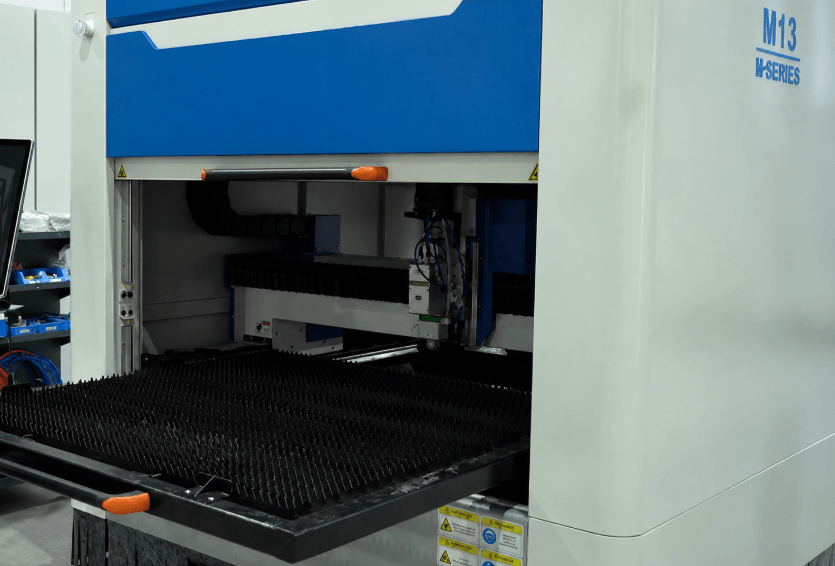
Market Pain Points: The Hidden Losses of Laser Processing
In actual industrial production, low-end or outdated equipment lacking core technology often exposes the following frustrating hidden losses during daily operation:
- Positioning Deviation & Severe Material Waste: Under long-term heavy-load and high-speed operation, many traditional guide rails and machine bed structures easily generate mechanical fatigue and micro-deformations. This causes cutting trajectories to drift, directly producing massive amounts of scrap metal and driving up procurement costs.
- High Lens & Consumable Maintenance Costs: Equipment lacking heavy gas-circuit protection is extremely prone to back-reflection burns on lenses when cutting high-reflectivity metals (like aluminum and brass). Frequent burning causes unexpected equipment downtime and exorbitant replacement costs.
- Complex Process Tuning Relying on Manual Expertise: When facing different thicknesses and materials, if the CNC system lacks intelligence, operators waste time on repeated manual test cutting. Dross, oxidation, or excessive taper triggers secondary grinding or rework, vastly increasing labor inputs.
- Low Energy Efficiency Leading to High Operating Costs: Insufficient photoelectric conversion efficiency leads to excessive power consumption per working hour. Amid soaring global energy costs, these extra electricity bills directly drag down the factory’s Return on Investment (ROI).
- Thermal Deformation Out of Control & Unstable Yield: Machine beds lacking strict heat treatment undergo irreversible physical deformation from heat accumulation during continuous operation. This results in shifting product precision between morning and afternoon shifts, undermining batch quality consistency.
These pain points evolve into a lingering “profit black hole” on the factory floor. Without resolving these equipment DNA defects, enterprises cannot achieve true cost reduction, efficiency enhancement, and sustainable growth against fierce international competition. This is why more industry leaders are turning to the Baison M13 laser solution, featuring superior stability and smart manufacturing DNA.
Baison M13 Advantage: The ROI Multiplier
As an industry-leading laser manufacturing expert, Baison delivers far more than just a piece of machinery. Through comprehensive technological innovation, we introduce a system that guarantees a measurable productivity multiplier right on your factory floor.
Baison M13 Core Advantages & Market Comparison
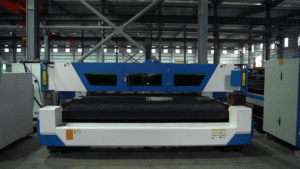
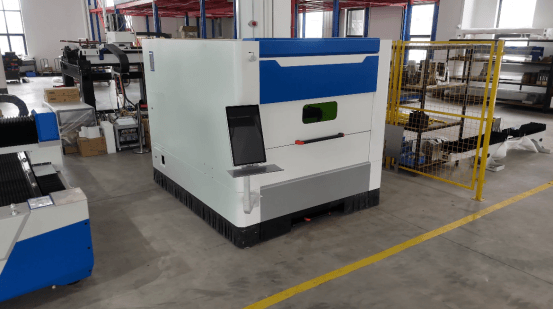
Especially with its core model M13, its exceptional industrial design and intelligent features make it the top choice for numerous customers:
- ±0.03mm Industrial-Grade High Precision: Utilizing an integrated aviation aluminum crossbeam and high-precision servo drive system, it delivers high dynamic response while fundamentally eliminating structural shaking under high-speed movement, ensuring micron-level perfection for every workpiece.
- Full-Chain Smart Gas Circuit & Lens Protection: Baison’s exclusive multiple pressure monitoring and gas flow stabilization technology effectively blocks debris when cutting high-reflectivity materials, significantly extending lens lifespan and slashing daily maintenance frequency for high-efficiency production.
- Massive Smart Process Database: Built-in cutting processes derived from thousands of global manufacturing practices. For carbon steel, stainless steel, and aluminum, operators simply “one-click apply” optimal parameters on the interface, drastically reducing reliance on skilled master craftsmen.
- Ultra-High Photoelectric Conversion Efficiency: Through deep optimization of the core optical transmission system and laser generator, the Baison M13’s photoelectric conversion efficiency remains stable above 30%-40%, achieving superior eco-friendly performance of delivering more power while consuming less electricity.
- Rigorous Thermal Deformation Control: Every Baison M13 bed undergoes large-scale high-temperature annealing and vibratory stress relief, completely releasing internal stress. Even under 24/7 heavy-load operations, the bed remains rock-solid, guaranteeing long-term high geometric stability.
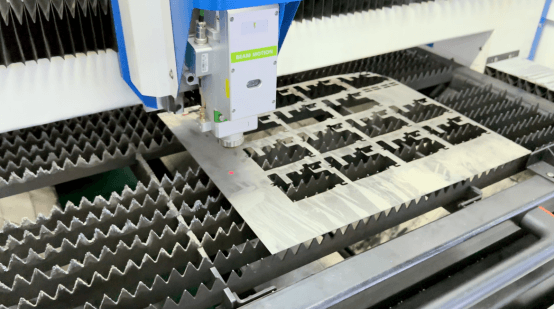
Baison’s technical advantages go far beyond surface parameters, genuinely diving into the core physics and process layer of laser cutting. By perfectly fusing high precision, long lifespan, intelligence, and high energy efficiency, Baison builds a solid technical barrier, enabling customers to achieve maximum output at the lowest marginal cost in fierce market competition.
Market Flaws & Performance Comparison Analysis
Currently, the laser cutting equipment market is a mixed bag. To fight price wars, many manufacturers cut corners to drastically lower initial purchase costs—such as using simple welded thin-walled iron pipes without stress-relief annealing for the bed, low-grade transmission components, and omitting smart temperature control or gas protection.
While these machines seem to save money in the first few months, half a year later the beds suffer severe deformation and collapse, positioning drops drastically, lenses burn out, and scrap rates skyrocket.
To help your enterprise make the most far-sighted capital decision, please refer to the table below for an in-depth lifecycle dimension comparison between common market models and the Baison M13:
Baison M13 vs. Standard Budget Models: Lifecycle Performance Comparison
| Comparison Dimension | Standard Low-Cost Models | Baison M13 High-End Model |
| Bed Structure & Stability | Simple welding, no heat treatment, prone to thermal deformation after half a year. | High-temperature annealing + vibratory stress relief, durable and long-lasting without deformation. |
| Repeat Positioning Accuracy | Around $\pm0.1\text{ mm/m}$, heavily impacted by payload and mechanical fatigue. | $\pm0.03\text{ mm}$ industrial-grade high standard, maintaining precision long-term. |
| Maintenance & Consumable Costs | High lens burn rate, large auxiliary material consumption, frequent repair downtime. | Multiple lens protection and smart gas circuits, slashing maintenance costs by 60%. |
| Automation & Focus Capability | Manual focusing or basic electric focus, time-consuming and laborious parameter adjustment during material switching. | High-precision intelligent automated closed-loop focusing, one-click process switching. |
| Full Lifecycle ROI | Extremely fast depreciation, high scrap rates, massive hidden labor and repair costs. | High residual value, multiplied comprehensive production efficiency, truly worry-free and cost-saving. |
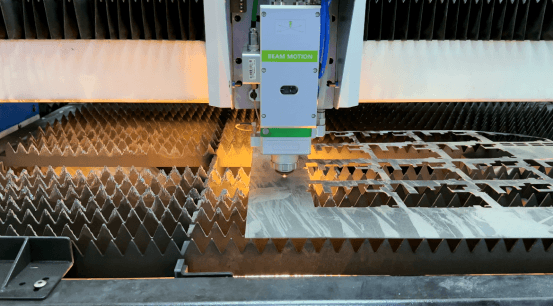
Conclusion & Global Success Stories
Through the comprehensive comparison above, we reach a clear conclusion: while so-called low-end models on the market appear to save budget during initial procurement, their high downtime maintenance rates, staggering consumable wear, high scrap disposal rates, and heavy reliance on manual tuning labor mean their actual Total Cost of Ownership (TCO) far exceeds quality equipment.
Choosing the Baison M13 is not merely purchasing a processing tool; it is introducing a high-ROI asset investment built on lean manufacturing principles. The true value of Baison Laser lies in its ability to translate “cutting speed” into “profit speed” through exceptional industrial design, rock-solid manufacturing strength, and precise intelligent process control.
For any manufacturing enterprise striving to break through homogeneous competition and pursue sustainable profit growth, the Baison M13 resolves production line pain points while building an unassailable efficiency moat with ultra-low failure rates and enduring high precision.
Global Applications & Customer Testimonials
Using precision engineering technology to help global manufacturers conquer production challenges, the Baison M13 demonstrates exceptional problem-solving capabilities across diverse overseas markets:
- German Elevator Manufacturing: Addressing customer pain points of heavy dross and burrs when processing thick steel plates, along with a 15% scrap rate requiring extensive manual secondary grinding, the M13 utilized intelligent auto-focus cutting heads and optimized gas circuit controls to achieve one-shot smooth piercing cuts, practically eliminating manual rework and boosting overall production efficiency by 25%.
- Southeast Asian Steel Structure Construction: Confronted with delivery delays caused by unstable equipment uptime and frequent maintenance, customized operator training, optimized maintenance workflows, and an automated lubrication system shortened annual maintenance downtime by 40%, ensuring a highly stable production rhythm.
- North American Automotive Parts Processing: Tackling high material loss and squeezed profit margins in custom metal blanking, the M13’s high-precision drive architecture and thin-plate anti-vibration technology helped customers dramatically compress nesting spacing, lowering raw material annual loss rates by 12% and directly improving Return on Investment (ROI).
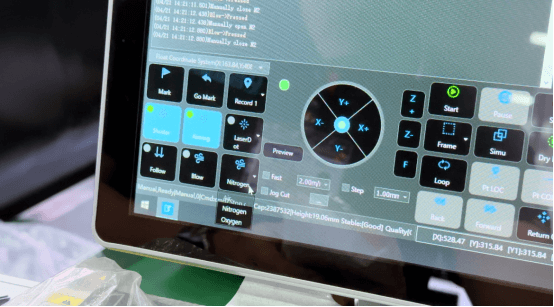
In terms of quality and compliance, Baison strictly adheres to international safety, performance, and reliability standards, ensuring equipment seamlessly meets the access requirements of major mainstream markets.
The entire manufacturing process strictly complies with international quality management systems, while placing high importance on the safety protection of front-line operators to ensure the machine bed complies with rigorous industrial safety and environmental regulations.
FAQs
What industries is the M13 suitable for?
It is suitable for high-precision processing fields such as automotive parts, precision instruments, medical devices, and hardware manufacturing. (For process parameters of certain special steel materials that need fine-tuning based on the environment, click to get a customized solution.)
Does the M13 support customization?
Yes, we support it. We provide modular upgrade solutions tailored to specific capacities and materials. (For process parameters of certain special steel materials that need fine-tuning based on the environment, click to get a customized solution.)
What are common mistakes when choosing an industrial laser machine?
Blindly pursuing ultra-low prices while ignoring machine bed thermal stability, leading to out-of-control later-stage maintenance costs. (For process parameters of certain special steel materials that need fine-tuning based on the environment, click to get a customized solution.)
How does the M13 reduce operating costs?
With photoelectric conversion efficiency above 30%–40% and a smart process database, it drastically reduces power consumption and labor reliance. (For process parameters of certain special steel materials that need fine-tuning based on the environment, click to get a customized solution.)
How long can equipment precision be maintained?
Through high-temperature annealing and vibratory stress relief treatment, the M13 can maintain micron-level geometric precision long-term. (For process parameters of certain special steel materials that need fine-tuning based on the environment, click to get a customized solution.)
Conclusion: Reshape Industrial Competitiveness with Baison M13
In today’s fiercely competitive global manufacturing environment, enterprises should pursue far more than low initial procurement costs—they need long-term Return on Investment (ROI) spanning the entire equipment lifecycle.
Blindly chasing low-end equipment invariably brings hidden increases in scrap materials, frequent downtime maintenance, and highly unstable production outputs. These “hidden costs” act as profit predators, constantly threatening an enterprise’s core competitiveness.